

Commentary
Catherine Fieschi
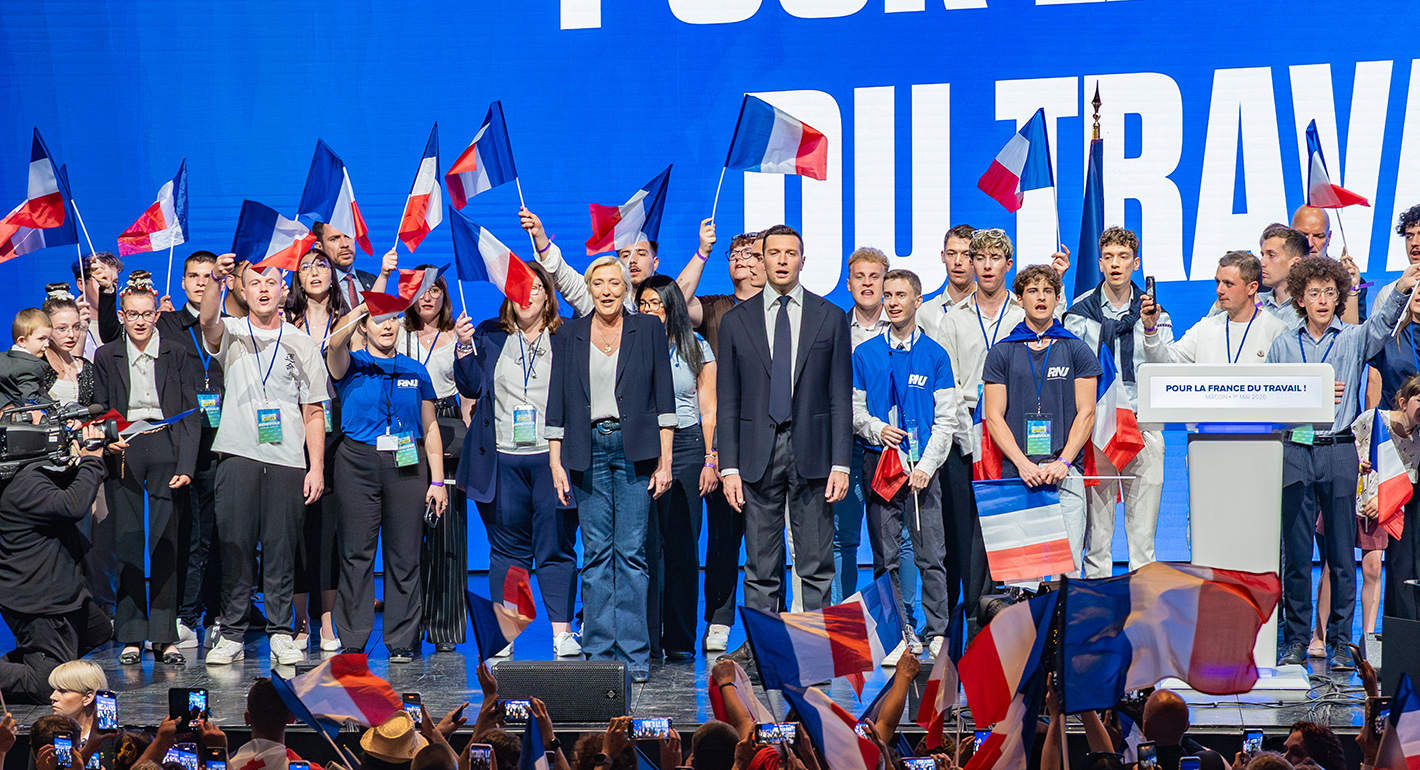
Source: Getty
The National Rally’s electoral strength, coupled with its internal fragility at a crucial political juncture, contributes to foreign policy vagueness.
This paper is part of “The Populist Turn in Middle-Power Diplomacy,” a Carnegie Endowment series on the international impacts of right-wing populism. Focusing on middle powers, the series explores how populist leaders reshape foreign policy, build transnational networks, and advance shared agendas across borders.
France occupies a singular position in Europe when it comes to right-wing populist and far-right politics. The country is home to one of the oldest and most electorally successful far-right and populist traditions in Western Europe—from its pre–Second World War thinkers such as Charles Maurras and groups such as Action Française to the tax revolt movement of Pierre Poujade in the 1950s and now the political party known as the Rassemblement National (National Rally)—yet no right-wing populist or far-right party has captured the presidency since the Second World War. At the same time, in France of all European countries, such a takeover would have the most immediate and consequential foreign policy effects, given the extraordinary concentration of diplomatic and military authority vested in the French presidency itself.
The case of the National Rally offers a useful window into the intersection of populism, foreign policy, and strong presidentialism. Specifically, it highlights the difficulties populist leaders encounter in building alliances, both globally and within Europe, and helps explain why populists may end up hedging on key foreign policy positions. The possibility of a Marine Le Pen or Jordan Bardella presidency, moreover, underscores a broader risk: that right-wing populism in middle powers could erode the very international order that has enabled middle powers to attain and sustain their influence.
The differences between the National Rally’s two leaders—Marine Le Pen and Jordan Bardella—are also emblematic of a broader divide among right-wing populists in Europe: On the one side, there are those who aim to reshape Europe from within by steering EU institutions in a conservative-national direction. Hungary’s ousted Viktor Orbán and Italy’s Prime Minister Giorgia Meloni loosely embody this side, which in France is represented by Jordan Bardella. On the other side, there are those who reject the EU’s supranational constraints altogether. Matteo Salvini, Italy’s deputy prime minister, represents the latter, which in France is closer to Le Pen. What makes France distinctive is that this divide exists within a single party and between its two potential presidential candidates for 2027—with Le Pen retaining the loyalty of much of the party’s cadre, but with Bardella, despite internal resistance, also commanding broad electoral support.1
In France, the question of who will campaign for the presidency will therefore be critical.2 Le Pen—and her “brand”—remains the party’s strongest electoral asset and would likely have a better chance of winning a presidential election than Bardella. Yet her instincts remain more confrontational toward Europe and multilateral institutions. By contrast, while Bardella is more market-friendly and potentially less disruptive internationally, he remains—despite his popularity with voters—untested in the uniquely demanding environment of French presidential campaigning.
The French Fifth Republic concentrates power in the presidency to an extent rarely matched in other European democracies. This is especially true in foreign policy. From Charles de Gaulle onward, French presidents have personally shaped the country’s strategic doctrine and diplomatic posture. Nuclear policy, relations with NATO, Middle East policy, and European integration have all been presidential domains. Parliamentary opposition exerts limited influence over these decisions, even in the face of considerable polarization and fragmentation. To date, the National Rally’s foreign policy positions have been fluid and lacked impact on actual policy, but France’s strong presidency means that a National Rally president would amount to a radical shift.
The French Fifth Republic concentrates power in the presidency to an extent rarely matched in other European democracies.
The institutional strength of the presidency produces a paradoxical situation for the National Rally: On the one hand, despite being the largest single party in the National Assembly in recent years, the National Rally has had minimal direct impact on foreign policy. On the other hand, should the National Rally capture the presidency, the impact would be immediate and profound. French foreign policy would effectively pivot in line with the populist president’s preferences.
The Fifth Republic’s constitution also suits populist politics well: Populism thrives on the idea of a direct relationship between a leader and “the people,” bypassing intermediary institutions. French presidential elections reinforce precisely this relationship through highly personalized campaigns and direct popular elections. Given the absence of proportional representation in parliamentary elections, a majority in the National Assembly reinforces the president’s power. A populist president could credibly claim an exceptional mandate—especially in the domain of foreign policy.3 The implications are stark.
Historically, foreign policy played little role in French far-right and populist mobilization, a pattern mirrored across much of Europe. The founder of the National Rally and the far right’s previous leader, Jean-Marie Le Pen, focused almost exclusively on immigration, national identity, and law and order issues. Foreign policy themes were largely filtered through the lens of decolonization, particularly France’s domestically controversial withdrawal from Algeria (which Le Pen himself opposed4) and hostility to immigration from former colonies.5
In the first decade of this century, globalization altered this landscape. The National Rally intensified its attacks on immigration and the large Islamic presence in France, both of which it systematically linked to terrorism. This focus eventually allowed for a reversal of the right’s stance on Israel and Jewish communities more broadly: Whereas the National Rally’s predecessor, the old Front National, was overtly antisemitic,6 from 2011 onward Marine Le Pen repositioned the party as a defender of Jewish communities against Islamist extremism—at first gradually, and then more decisively from 2023 onward. This shift allowed the National Rally simultaneously to distance itself from its own past while intensifying its anti-Islam and anti-immigrant rhetoric. In essence, it has swapped a historical enemy for a more contemporary one.
After the Hamas attacks of October 7, 2023 (and the subsequent rise in antisemitic incidents in Europe), National Rally figures publicly condemned Hamas, framed the conflict as part of a broader struggle against Islamism, and argued that Jewish communities were targeted by the same “extremist ideologies” and “woke agenda” the party claimed to oppose domestically.7 In this context, Le Pen’s controversial presence at a large march in Paris against antisemitism in November 2023 was symbolically significant, further entrenching this realignment.8
When the Russian invasion of Ukraine began, the party framed sanctions against Russia and military aid to Ukraine as harmful to ordinary French voters—citing increased energy prices and the risk of retaliation. This reflected a consistent populist pattern: reliance on narratives of persecution and victimhood of “ordinary people.” Here and in other instances, National Rally leaders downplayed the relevance of issues of international order that other parties emphasized, portraying them as irrelevant to the nation and focusing exclusively on the domestic consequences of global developments.
Over time, and in line with the dynamics of globalization (specifically since the terrorist attacks in Paris in 20159), the boundary between foreign and domestic issues has blurred. External conflicts—in the Middle East, where conflicts have threatened increased migration flows or terrorist retaliation, and in Ukraine, where Russia’s invasion has created mass flight—have increasingly been used to reinforce existing National Rally claims that the far left is pro-migrant, Islamists are plotting against France, and elites are privileging multilateral commitments or abstract human rights norms over the interests of the French people.10
The National Rally has seized upon foreign policy issues that map onto an already polarized electorate—especially those issues that divide the left (wedge issues).11 For instance, it has used the war in Ukraine to stoke tensions among center-left actors who support Ukraine in the name of sovereignty and far-left actors who view Russia as a counterweight to Western capitalism.12 Similarly, it has sought to use the Israel-Hamas war to drive a wedge into a French left torn between combating antisemitism and expressing solidarity with Palestinians.
While these global shifts and the right’s growing willingness to address foreign policy issues have served the National Rally well in terms of mobilizing and broadening its electoral appeal, they also create new constraints. Engaging seriously with foreign policy requires building alliances, sustaining relationships, and navigating competing national interests. This creates a core dilemma for the National Rally (and other nationalist parties). While populists are drawn to the political style and communication of other major populists such as U.S. President Donald Trump and Russian President Vladimir Putin, they must distance themselves when the behavior of such strongmen either undermines their own claims to national sovereignty or risks alienating segments of their electorate.
Engaging seriously with foreign policy requires building alliances, sustaining relationships, and navigating competing national interests. This creates a core dilemma for the National Rally.
The National Rally’s relations with the United States and Russia illustrate this core foreign policy dilemma for the party. Donald Trump embodies political values that resonate with the National Rally’s base, including (what they see as) a willingness to upend the status quo in defense of national interests, strongman tactics, disregard for liberal norms, and anti-intellectualism. Although Trump remains deeply unpopular in France overall—with favorability ratings regularly below 20 percent—his approval among National Rally voters often exceeds 40 percent.13 Trump is popular among far-right voters even though French nationalists across the political spectrum have long been suspicious of the United States and supported an independent foreign policy—positions that shape the National Rally’s thinking and messaging.
At the same time, however, Trump’s policies and rhetoric that challenge European sovereignty, disrupt trade, and undermine economic stability are threatening the economic and national interests of the voters the National Rally seeks to represent. Trump’s hostility toward Europe and willingness to impose tariffs are especially problematic for a party that seeks to protect French purchasing power and industry.
National Rally figures have thus often publicly distanced themselves from Trump and the broader MAGA ecosystem—such as Le Pen’s condemnation of the Venezuela operation, Bardella’s hasty withdrawal from the Conservative Political Action Conference (CPAC) in Budapest following Steve Bannon’s apparent Nazi salute, and more recently Le Pen’s condemnation of the Iran war, calling it a mistake and Trump’s goals erratic.14 Questions remain, however, as to whether this distancing is substantive or merely a cosmetic move aimed at reassuring French voters.
The party’s relationship with Putin presents a similar tension. Under Le Pen’s leadership, the party’s ties with Moscow became noticeably closer, as Putin’s image as a defender of national sovereignty resonated strongly with National Rally narratives. These links culminated in 2014, when the party furtively obtained a 9 million euro ($10.5 million) loan from the Moscow-linked First Czech-Russian Bank.15 Le Pen also met Putin in the Kremlin during the 2017 presidential campaign, further highlighting the relationship.16
Russia’s invasion of Ukraine, however, fundamentally altered the political environment in France: Public opinion turned sharply against Moscow, making overt sympathy for the Kremlin politically costly—even for the far right. Since then, the National Rally has been caught in the dilemma of supporting Putin the strongman while avoiding the political costs of that support. It has sought to moderate its position and attenuate ties, condemning aspects of Russian aggression while stopping short of full-throated opposition to Moscow. National Rally representatives have repeatedly voted against or abstained from measures supporting Ukraine—military assistance packages to Ukraine and expanded sanctions on Russia, for example—both in the European Parliament and the French National Assembly, while never publicly agreeing with Putin.
The National Rally’s contentious relationship with the European Union remains the cornerstone of its foreign policy thinking—and the issue where internal party divisions, and the evolving preferences of its voters, are most clearly exposed. It remains Euroskeptic and seeks to normalize Euroskepticism. Yet the party has gradually moved away from advocating withdrawal from the eurozone or the EU à la Brexit, recognizing that the prospect of economic disruption alarmed voters and damaged Le Pen’s credibility in the 2017 presidential campaign. This shift has also revealed an emerging divide within the party, reflected in the differing positions of its traditional leader, Marine Le Pen, and its current leader and potential presidential candidate Jordan Bardella. The two can be situated along a continuum: At one end there is a strongly moral form of populism, with a strong ideological core—represented by Le Pen. At Bardella’s end, there is a thin-centered form of populism (as defined by Cas Mudde17) that operates more as a political style and, in Bardella’s case, is layered onto a traditional right-wing conservative worldview. Were Le Pen to win, the moral core would likely dominate her foreign policy stance, producing a more radical break from current policy. By contrast, if Bardella were to run and win, the rupture would likely be less stark.
Le Pen remains instinctively sovereigntist. Her family heritage and her political trajectory were shaped in opposition to European integration, and she continues to view EU institutions as unacceptable constraints on French sovereignty. At the core of National Rally policy lies the restoration of what it calls the primacy of national sovereignty over European law.18
The party’s program (still a direct reflection of Le Pen’s views and priorities) is scant on details, but advances a clear rationale for this position: asserting the superiority of French law over EU law in select areas, restoring national border controls, restricting immigration independently of Schengen rules, prioritizing French citizens in access to welfare and employment (called “national preference”), and renegotiating EU budgetary and regulatory constraints deemed harmful to the domestic economy.19
For Le Pen, the EU may be a useful channel but, if given a choice, she would rather undermine it than reform it from within—unlike, for example, her Italian alter ego, Meloni. Nor does she share Orbán’s vision of a Christian Europe. Le Pen’s primary commitment is to France, not to Europe. For her, references to “European civilization” serve largely as a rhetorical device to oppose Islam, rather than a basis for a Europe-wide project of civilizational renewal. The focus remains national—on what France can extract from the EU without being constrained by it. In many respects, Le Pen’s fraudulent use of EU parliamentary funds to fund her own national party is one of the clearest illustrations of her true positioning.20
Were she to become president, confrontation with Brussels would likely intensify. Even absent formal withdrawal from the EU, France under Le Pen would probably find itself in repeated conflict with EU rules and institutions,21 producing a de facto weakening of France’s leadership role in Europe—in an attempt to strengthen its own voice on the international stage.
Even absent formal withdrawal from the EU, France under Le Pen would probably find itself in repeated conflict with EU rules and institutions.
Le Pen’s brand of populism could produce, at least initially, a distinctly sovereigntist foreign policy—rooted in her clear “neither left nor right” stance. Indeed, for all her efforts to renovate the party’s image, Le Pen remains very much an heir to her father Jean-Marie Le Pen, whose populism centered on a fundamental divide between the people and the establishment, with the partisan concepts of left and right treated as, at best, superficial distinctions and, at worst, a manipulative fiction created by political elites to fragment the people. In this view, the people are the only source of the legitimacy of the nation, embodied in the French case by the president. This brand of populism, however misguided, possesses a strong moral core in which the people are conceived as a morally pure entity—a distillation of national virtues.22
This version of populism rejects alliances and resists bargaining and compromise. As a result, it may produce an erratic foreign policy where several key beliefs—skepticism of multilateral organizations that supposedly constrain national sovereignty (notably the EU and NATO), an exclusionary conception of citizenship, “national preference” policies for jobs and benefits, and a deep suspicion of free trade—collide with an attraction toward strongmen like Putin, whose agendas may conflict with the National Rally’s own claims to sovereignty and the interests of a middle power like France.
One paradox is that Marine Le Pen’s version of populism produces a striking vagueness about her policy aims. To this day, despite the size of the National Rally’s electoral base and personnel, it remains difficult—even off the record—to get a straight answer from any National Rally member of parliament, member of the European Parliament, or party cadre aligned with Le Pen on foreign policy. The National Rally may have mainstreamed many of its positions, but in practice—especially in foreign policy—it continues to operate with a high degree of opacity, revealing little and largely eliding a clearly articulated foreign policy program. Le Pen has not revealed how far she would go in reshaping France’s relationship with multilateral institutions like NATO or the UN, nor the extent to which she would be willing to disrupt the relationship with the EU (having essentially lost the 2017 election after committing to leaving the eurozone). This produces a form of tactical ambiguity that is characteristic of a populist opposition party with potentially radical foreign policy ideas.
By contrast, Bardella is in little need of populism’s fig leaf of ambiguity: His ideological commitments are comparatively clear and are shared by a significant portion of the mainstream conservative right. Bardella shares Le Pen’s cultural conservatism, but without its deep Euroskepticism. He is comfortable courting business interests and is acutely aware that French economic prosperity depends heavily on EU market integration. In contrast to Le Pen’s hostility toward Europe, his messaging increasingly links “France and Europe.”23
In practice, this means that, much as Bardella is willing to seek a broad alliance between the far- and center-right at the national level, he is also comfortable doing so at the European level. This makes him a clear illustration of what some scholars term populism’s thin-centeredness—that is, a weak ideological core that can attach itself to established ideologies on the right or the left.24 A good illustration is Bardella’s recent meeting with the German ambassador in Paris, as well as the interview he granted to the Frankfurter Allgemeine Zeitung in which he positions himself as close to German Chancellor Friedrich Merz’s (and the European People’s Party’s) policy lines. Courting Germany’s political elite signals his wish to distance himself from Merz’s foe, the Alternative for Germany (AfD), and his apparent willingness to pursue a more traditional right-wing—rather than far right—agenda.25 However, it is worth noting that the content of the interview suggests that Bardella is either unaware of the impact his milder policies would have or is simply disingenuous.
A Bardella presidency would therefore likely seek to leverage EU institutions when useful—especially on migration and trade—while avoiding moves that could destabilize markets or harm business. He has actively courted business leaders and engaged with employer organizations, reassuring investors about his commitment to fiscal discipline.26 He has also distanced himself from earlier National Rally proposals perceived as economically destabilizing, including withdrawal from the eurozone, and business media have increasingly reported a gradual normalization of his image among corporate elites.27 Bardella’s positioning is in this way similar to that of Italy’s Meloni, who has reassured the business community through relatively moderate economic policies while maintaining conservative cultural politics.28
Right-wing populist successes across the globe, particularly in advanced democracies, have created the impression of an unstoppable wave that could enable greater cooperation and policy convergence across like-minded parties in Europe. The added dimension of heightened U.S. rhetorical and campaign support29 for European populists under the second Trump administration further suggested that these actors might seek closer ties with their MAGA counterparts. Some European populist leaders have done so—most conspicuously Meloni, who has attempted to balance relations between the EU and Washington, as well as Orbán in Hungary and Robert Fico in Slovakia. More recently, however, U.S. support has proven to be a double-edged sword, prompting some right-wing populists to distance themselves from Trump. Notably, Orbán was defeated in Hungary despite backing from Trump and Vice President JD Vance. The National Rally has thus maintained more limited ties to MAGA, and its international linkages in general remain weaker than some other European parties—arguably, now, to its advantage.
For years, right-wing populist party groupings within the European Parliament appeared prone to fail, often imploding under the weight of internal accusations of fascism or corruption. However, over the past two or three parliamentary terms (since roughly 2014), these groupings have gained prominence as their representation has grown, accounting for approximately 27 percent of seats.30 With increased numbers, the incentives for cooperation have become clearer: access to influential committee positions and the ability to form credible, if largely tactical, alliances with the center-right on issues such as immigration and opposition to the European Green Deal. As a result, although the populist right remains divided across multiple parliamentary groupings, hostility among the parties has diminished.
The National Rally has helped strengthen cooperation: It is one of the largest and most influential contingents of members of the European Parliament and has played a key role in fostering greater cooperation on the right. Bardella is the chair of the parliament’s third-largest party group—the Patriots for Europe, which brings together pro-Russia parties such as the National Rally, the Freedom Party of Austria, Hungary’s Fidesz, and Italy’s League for Salvini Premier—and has become a significant actor in the parliament.
But these are developments about which the National Rally is extremely cautious. Since 2011, the party has endeavored to shed its antisemitism and racism; Marine Le Pen has expended most of her energy on mainstreaming her party’s appeal. This has de facto led the National Rally to be very picky about alliances, hence the rejection of joining a group that contained the AfD, a party viewed as far too radical and unsavory. And this is true both of Le Pen and Bardella. They have above all sought to protect their brand. This caution, however, has been balanced by seeking to leverage their party’s position inside the European Parliament. The result has been a rather half-hearted set of alliances.
Le Pen and Bardella . . . have above all sought to protect their brand.
As a result, the tensions are at least as revealing as the alliances. The National Rally’s relationship with Meloni’s Fratelli d’Italia has been strained since 2022, when Meloni refused to endorse Le Pen’s presidential bid—two competing models of national conservatism jostling for the same European leadership space. With British parliamentary representative Nigel Farage, the story is almost comical: After years of mutual admiration, Farage publicly dismissed the National Rally’s economic agenda as a “disaster” for France in 2024,31 but Bardella was back in a room with him by December 2025, talking about a “patriotic alliance.”32 In a word, these are rather tactical—thus often short-lived—maneuvers rather than deep ideological partnerships.
Shared rhetoric on migration, terrorism, insecurity, the EU, and other issues constitutes the most visible form of transnational linkage among European far-right populist parties. The National Rally has drawn on a well-established French right-wing intellectual ecosystem, including New Right thinkers and concepts such as differential racism, to develop and disseminate its ideology.33 This ecosystem has served as a reservoir of ideas, providing the party with the intellectual scaffolding to frame, for example, immigration as a threat to European civilization, to challenge EU bureaucratic regulations, and to frame climate policy as an elite agenda.34 The National Rally’s early entry into the European Parliament in 1984 has meanwhile allowed it to define the core discursive repertoire of the European far right and to play a foundational role in shaping the broader far-right agenda—especially on immigration, insecurity, and law and order.
Personal relationships among populist leaders frequently substitute for institutional cooperation, reflecting a broader distrust of formal institutions. Marine Le Pen’s closest and most durable international relationships are within the European far and populist right, where party-to-party and leader-level cooperation has gradually stabilized over the past decade. Among individual leaders, Le Pen’s most consistent partnership has been with Italian Deputy Prime Minister Matteo Salvini. Le Pen’s relationship with Salvini highlights her distance from Meloni, who is in a less Euroskeptic grouping. Salvini and Le Pen have repeatedly appeared together at high-profile rallies and alliance-building events—notably during the 2019 European election campaign, when they presented themselves as leading figures of a nationalist bloc seeking to reshape EU politics. And for Le Pen, relationships with other figures such as Geert Wilders in the Netherlands are part of the same consolidation aimed at building parliamentary leverage and signaling ideological affinity.
Personal relationships among populist leaders frequently substitute for institutional cooperation.
On the other hand, Le Pen has maintained greater distance from Germany’s AfD and from more openly extremist currents within the European far right. She is acutely aware that association with such actors, and their explicitly pro-Nazi references, would undermine her long-running strategy of political normalization in France.
Outside Europe, the National Rally’s personal linkages with other right-wing populists are even weaker. While Brazil’s former president Jair Bolsonaro has publicly expressed sympathy toward Le Pen, there is no evidence of direct meetings between them, and Le Pen has consistently maintained her distance. Overall, Le Pen’s strongest and most functional international relationships are in Europe, while connections further afield (like, for instance, with Trump) tend to be opportunistic, symbolic, and carefully managed to avoid domestic backlash.
Bardella’s international positioning reflects his attempt to project a more modern and less ideologically confrontational version of the National Rally. He has placed himself at the center of efforts to build durable far-right parliamentary influence in Brussels through the Patriots for Europe, which he chairs. Unlike Le Pen, and perhaps because of his more recent emergence in Brussels, his closest relationships are institutional rather than personal. At the same time, Bardella appears even keener than Le Pen to avoid the overtly pro-Russia or pro-Trump associations that once characterized parts of the National Rally’s international posture, instead preferring partnerships that reinforce the party’s image as a legitimate governing force rather than a protest movement.
Neither Le Pen nor Bardella, nor the National Rally more generally, is deeply embedded in the U.S.-led CPAC international circuit or in transnational conservative think tank ecosystems.
The most significant extra-European connection runs through former Trump aide Steve Bannon, who spent years attempting to position the National Rally as the anchor of a global populist international program. His “movement,” headquartered in Brussels, was an explicit attempt to stitch together a transnational network of nationalist right-wing parties capable of resisting what he called “the party of Davos.”35 The National Rally was a natural centerpiece: large, electorally credible, and led by someone who had already done more than anyone in Europe to demonstrate that the far right could make a serious bid for power.
But this connection has always been as much a liability as an asset for the National Rally, and the party knows it. The optics became painfully clear in February 2025, when Bardella traveled to Washington, DC, for CPAC only to cancel his speech and fly home after Bannon performed what was widely described as a Nazi salute from the stage.
One connection that deserves more analytical attention than it typically receives is the connection with Likud, the leading party in Israel’s governing coalition. In February 2025, at a Make Europe Great Again rally in Madrid organized by Patriots for Europe, Likud was announced as the first observer member of the movement’s associated organization. This was a significant geopolitical realignment that reflected the new far right’s privileging of Islamophobia as its primary civilizational antagonism, which also creates surprising room for alignment with the Israeli nationalist right. The enemy of my enemy, refracted through the lens of the “clash of civilizations” framework, makes for strange bedfellows.
The National Rally is embedded in a genuinely transnational far-right ecosystem—but that ecosystem functions more like a contagion than an organized conspiracy.
What the evidence suggests, taken together, is that the National Rally is embedded in a genuinely transnational far-right ecosystem—but that ecosystem functions more like a contagion than an organized conspiracy. The same themes, the same rhetorical moves, and the same institutional templates circulate from one country to another through a diffuse network of conferences, platforms, and personalities. The National Rally benefits from this climate without controlling it—and frequently prefers to keep the more embarrassing parts of the network at arm’s length, precisely because its strategic priority remains the construction of domestic governmental credibility. As a result, the National Rally’s international alliances are built primarily in European parliamentary arenas rather than through formal policy or intellectual networks, and it remains one of the European parties with the least developed transnational networks.
France’s far-right and right-wing populist forces, including movements beyond the National Rally, are regularly portrayed as an unstoppable force poised to reshape the country’s politics and, by extension, Europe’s strategic direction.36 However, closer scrutiny reveals a more complex and unstable picture.
Distrust in institutions, coupled with Le Pen’s skepticism toward cooperation and her tendency to view foreign powers as potential adversaries, limits the National Rally’s capacity to elaborate—let alone fully develop—a coherent long-term foreign policy. The party’s electoral strength, coupled with its internal fragility at a crucial political juncture, contributes to foreign policy vagueness. This is reinforced by internal differences. As a result, the National Rally is frequently perceived in French political debate as lacking foreign policy fluency—a perception that, given Europe’s current security environment, may prove electorally consequential.
The National Rally’s foreign policy record ultimately reveals a party that has never had a coherent international vision. From Jean-Marie Le Pen’s near-total indifference to anything beyond immigration and national identity, to Marine Le Pen's opportunistic flirtations with Putin and her carefully calibrated distances from Trump, and Bardella’s thin-centered pragmatism dressed up as European realism, foreign policy has functioned less as a domain of strategic thinking than as a reservoir of wedge issues—a toolkit for dividing opponents and mobilizing voters, deployed and abandoned when politically expedient, and in particular in the run-up to major elections. The National Rally has used Ukraine to fracture the left, the Israel-Hamas war to reclaim a republican credential, and Russia to signal antiestablishment credentials to a base suspicious of Western elites. What it has conspicuously never done is think seriously about what France is in the world: a nuclear power, a permanent member of the UN Security Council, a pillar of European defense, and the anchor of whatever autonomous European strategic capacity exists or might yet exist.
To govern France is to govern not just a nation-state but a European power of the first order—one whose credibility, commitments, and capacity for strategic initiative underpin the security architecture of an entire continent. The party has spent decades treating foreign policy as electoral positioning, with genuinely opaque positions on NATO, nuclear deterrence, alliances, and multilateral burden-sharing—to say nothing of how it oscillates on Russia out of reputation management. Such a party arriving in the Élysée would represent a complete disappearance of foreign policy direction.
To govern France is to govern not just a nation-state but a European power of the first order.
In a European security environment already strained to the point of fracture, with American reliability in question and Russia’s war of attrition ongoing, a French presidency that treats foreign policy with such simple political logic would bring consequences far beyond France’s borders, and far beyond whatever electoral cycle produced it.
The case of the National Rally illustrates a broader takeaway about contemporary right-wing populism: These parties are hardly singing from the same hymn sheet. While they share narratives about sovereignty, migration, and elite betrayal, their national interests often diverge sharply. So, too, do their foreign policy priorities. They may jointly erode liberal international norms, but they rarely cohere around a shared alternative order. Their ideological impact—for instance, in widening the Overton window on migration—or their stylistic impact in redefining acceptable behavior may matter more, however fleetingly, than any concrete policy alignment.
Indeed, the dynamic is often one of dealignment rather than alignment. In other words, right-wing populists share enough ideological overlap—skepticism toward multilateral institutions, rejection of international rules and norms, and (in Le Pen’s case) hostility to the EU—to undermine existing forms of cooperation. But they lack sufficient shared priorities to build a durable alternative. In this sense, right-wing populism in middle powers is internally contradictory: It undermines the very international order that has enabled these states to attain—and preserve—their middle-power status.

Visiting Scholar, Carnegie Europe
Catherine Fieschi is a visiting scholar at Carnegie Europe and the author of Populocracy (2019).
Recent Work
Catherine Fieschi
Catherine Fieschi
Carnegie does not take institutional positions on public policy issues; the views represented herein are those of the author(s) and do not necessarily reflect the views of Carnegie, its staff, or its trustees.
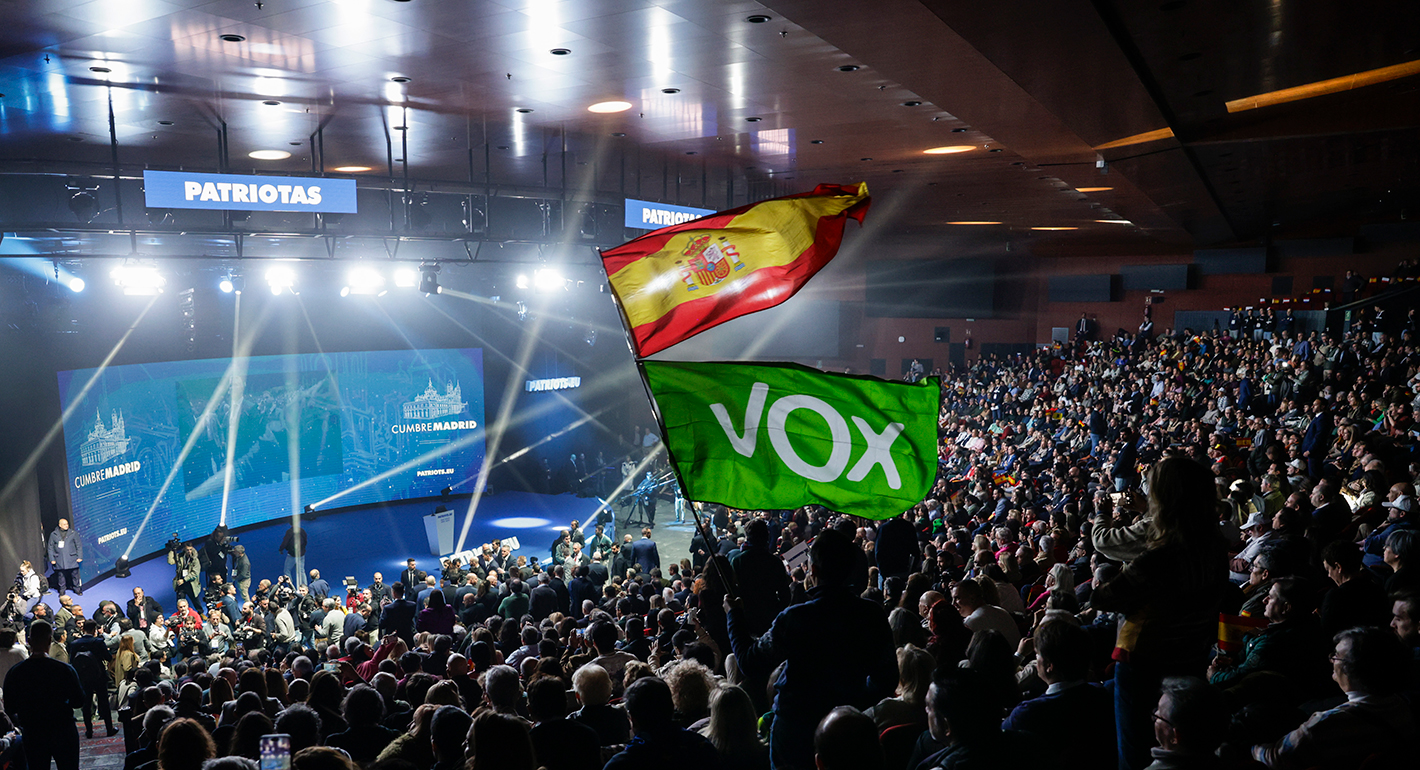
There is a transnational far-right populist movement that links middle powers in a global movement that extends well beyond Trump.



Christopher S. Chivvis, Rohan Mukherjee, Milan Vaishnav
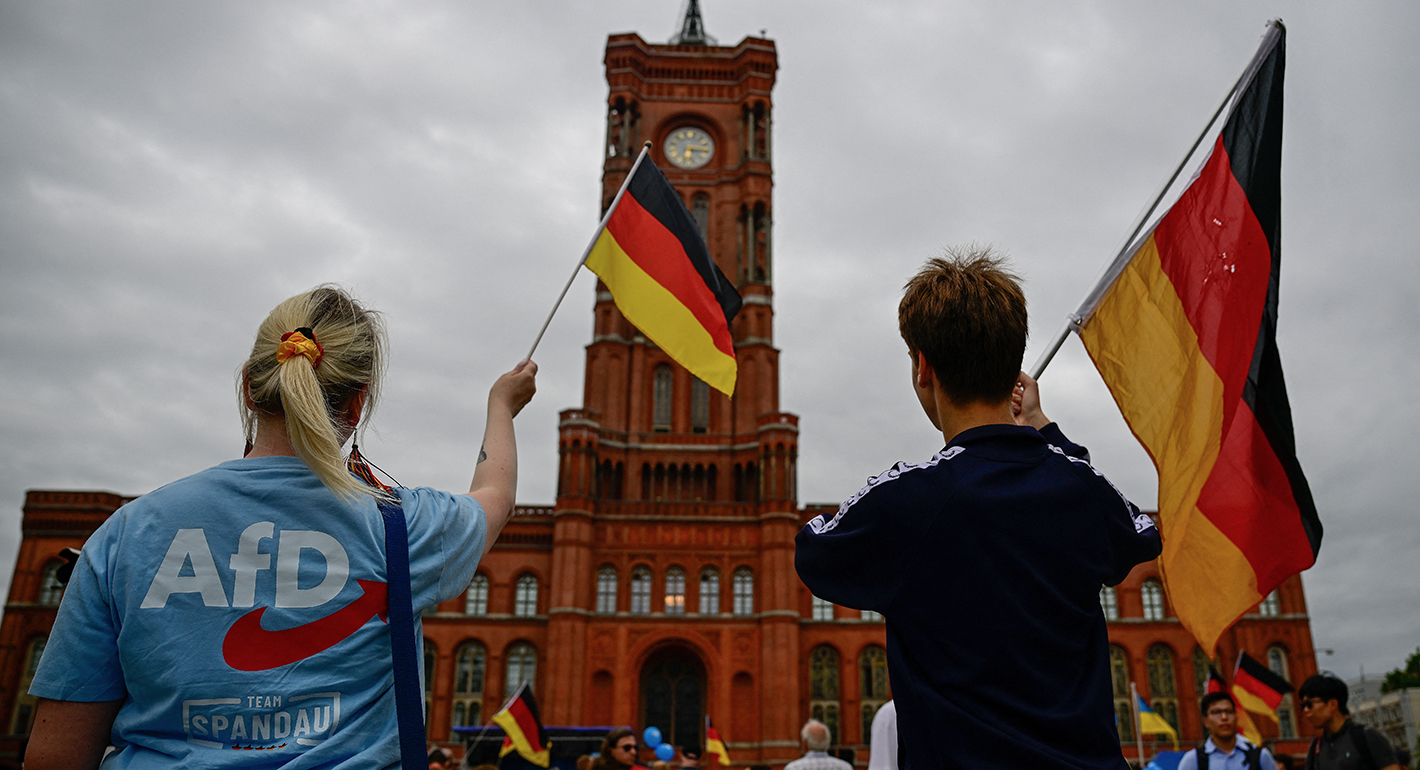
Unresolved tensions within the AfD may ultimately constrain the its potential as a leader among European and global populist forces.
Jeremy Cliffe
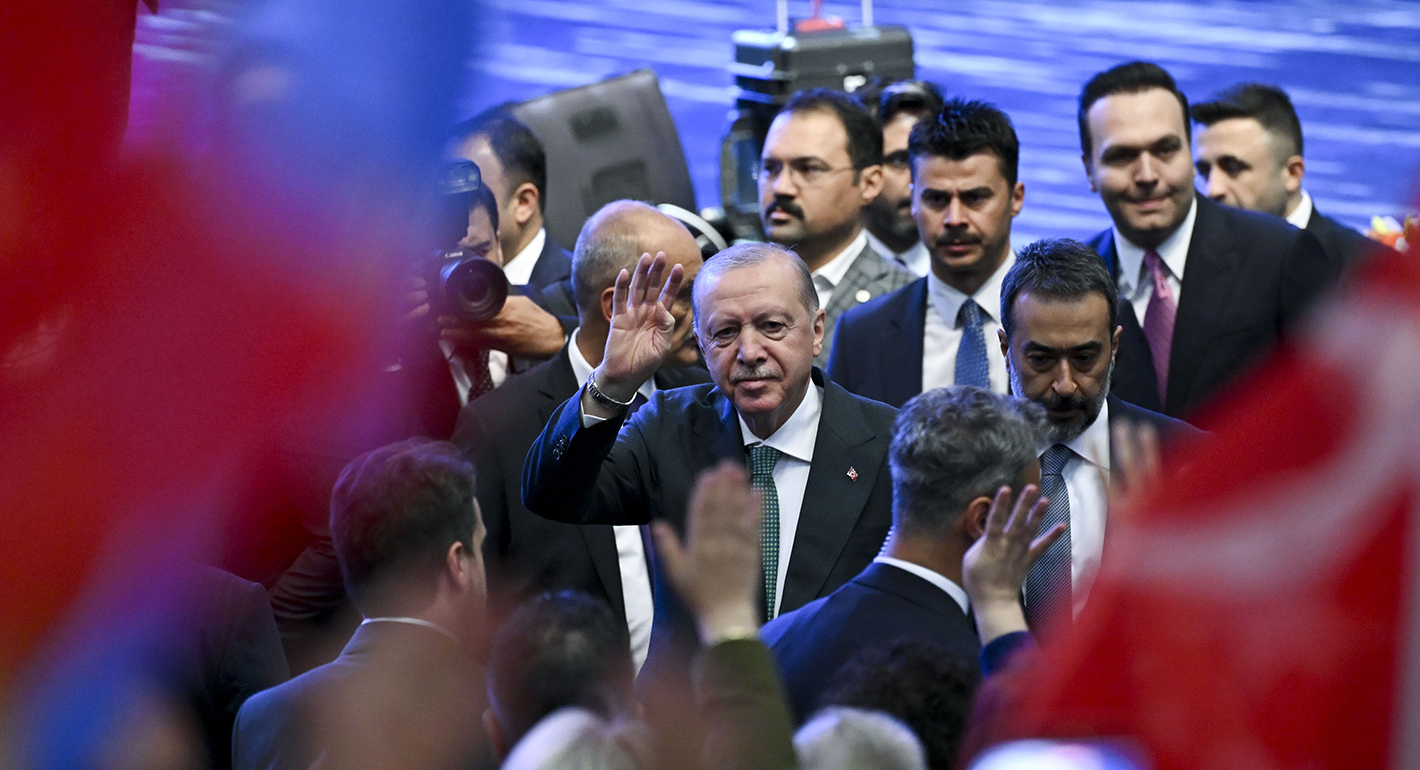
Turkish right-wing populists have been trying to advance the country’s middle-power goals based on perceptions of what the public wants, but they have been doing so in ways that reinforce their project of autocratic political consolidation.

Murat Somer
Hungary under Viktor Orbán deployed right-wing populism as a foreign policy strategy, embedding the country in a web of illiberal transnational networks whose legacy will endure even after his April 2026 electoral defeat.
Zsuzsanna Végh
In the Philippines, Duterte-era discourse emphasizing sovereignty, anti-Western skepticism, and strongman diplomacy mirrors tenets of populist foreign policy around the world.

Aries A. Arugay