

Commentary
The Bureau of Industry and Security needs to adjust its focus and practices to maintain its position as the U.S. government’s primary champion of international technological competition.
Geoffrey Irving
Source: Getty
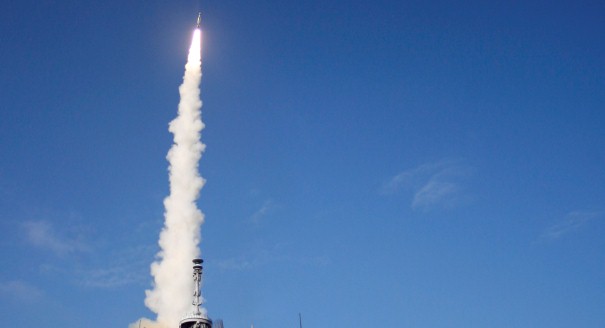
The development of a NATO-Russia joint missile defense system is not currently viable, primarily because of political constraints and a lack of trust between the two sides.
Source: Carnegie Moscow Center Working Paper

"We agreed to discuss pursuing missile defense cooperation. We agreed on a joint ballistic missile threat assessment and to continue dialogue in this area. The NRC will also resume Theater Missile Defense Cooperation. We have tasked the NRC to develop a comprehensive Joint Analysis of the future framework for missile defense cooperation."
More than a year and a half after the Lisbon summit, however, the NATO-Russia negotiations for cooperation on missile defense have yet to produce a serious breakthrough. Initially, Medvedev proposed that NATO and Russia should build a “sectoral” missile defense shield; according to the sectoral approach, the two sides would jointly develop a system with full-scale interoperability that would protect both NATO’s European territories and Russian territories against ballistic missile threats posed by Iran and other states. A sectoral missile defense system would purportedly give Russia “red button” rights, thus allowing Russia and NATO to assume responsibility to defend against incoming missiles over a specific sector of Europe. Medvedev’s sectoral approach was a nonstarter for the Alliance, which supports a fundamentally different approach: the development of two independent missile defense systems that will coordinate with each other.
Subsequently, missile defense became a source of acute tension between Russia on the one hand and NATO and the U.S. on the other. Ultimately, NATO officially rejected Medvedev’s plans in June 2011. “Our territorial missile defense system will be part of our collective defense framework. We cannot outsource our collective defense obligations to non-NATO members,” NATO Secretary General Anders Fogh Rasmussen stated during a speech on missile defense at the Royal United Services Institute. NATO’s vision entails the deployment of “two separate systems with the same goal, which could be made visible in practice by establishing two joint missile defense centers, one for sharing data and the other to support planning.”
For their part, Russian political and military leaders have waged a fierce campaign against NATO missile defense plans. The nucleus of the problem is that despite assurances by both NATO and U.S. officials that the system aims to protect against a growing ballistic missile threat, especially against an Iranian missile threat, Russia claims that the planned system is targeted against it and will negate its nuclear deterrent. Russia’s syllogism is as follows: Iran does not pose a threat to the U.S. and its European allies; therefore, the only reason to deploy the system is to target Russia. In particular, Moscow has not stopped its demands for a legally binding pledge that the missile defense will not negate its strategic deterrent. After Spain reached an agreement with the U.S. to host elements of the planned missile defense system on its territory, the Russian Ministry of Foreign Affairs issued an announcement urging Washington to provide legal guarantees that the planned missile defense system will not be directed against Russia’s strategic nuclear forces. Moscow issued a similar statement following Bucharest’s agreement to deploy a missile interceptor base.
Senior Russian government officials also voiced their opposition to the European missile defense plans. “Any attempts by those in NATO who dream of neutralizing our strategic potential will be futile,” said Russia’s former Envoy to NATO and current Deputy Prime Minister Dmitry Rogozin. Then-President Medvedev even went as far as to say that failure to reach agreement on missile defense might provoke a new arms race: “In the next 10 years, the following alternatives await us – either we reach agreement on missile defense and create a full joint cooperation mechanism, or, if we don’t go into a constructive agreement, a new phase of the arms race might begin.” In a more recent statement, labeled by many analysts as “Cold War rhetoric,” Medvedev stated: “If the situation continues to develop not to Russia’s favor, we reserve the right to discontinue further disarmament and arms control measures.” The Russian Chief of the General Staff Nikolay Makarov argued that “the unilateral measures taken by NATO do not promote security and stability in the region.”
Currently, talks on missile defense are progressing, but very slowly, mainly because Russia remains unconvinced that its deterrent will not be undermined – a position consistently and repeatedly stated by top-level Russian officials.
At present, the development of a NATO-Russia joint missile defense system is not a viable option, mainly due to political, not technical, constraints. In short, the level of trust between the two sides prohibits such an undertaking. The aim of a joint missile defense shield would be to protect against a common threat, and Russia’s and NATO’s threat perceptions differ significantly. What is more, the joint deployment of a missile defense would imply that NATO and Russia have a genuine security partnership, like the one enshrined by the Alliance’s Article 5. Unfortunately, this is not the case.
However, one need not conclude that NATO and Russia cannot cooperate on missile defense. So far the two sides have managed to cooperate successfully on a series of issues of mutual concern: Russia is a valuable partner supporting the NATO-led International Security Assistance Force (ISAF); it cooperates with NATO in the fight against terrorism; it works together with NATO allies to train Afghan and Central Asian forces in counter-narcotics operations; it cooperates with NATO in counter-piracy initiatives; and finally, NATO and Russia have a history of cooperation in the field of theater missile defense (TMD).
In the sphere of missile defense, the best way to move forward would be to implement confidence-building measures (CBM) that will allow for greater transparency regarding the system’s capabilities and contribute to strengthening mutual relations. It is important to note that even legally binding agreements can be scrapped. Given that Russia is particularly worried about the system’s latest phases – the deployment of which will take place in the 2018 time frame – the two sides should proceed with the implementation of confidence-building measures in the interim and then reassess the missile threat as well as the potential for coordination between Russia’s newly created Air-Space Defense (Vozdushno-Kosmicheskaya Oborona – VKO) and the European missile defense system.
This paper seeks to analyze the factors behind Russia’s concerns and claims. In doing so, it will address the following questions:
For the purposes of this analysis, a time frame up to the year 2020 is adopted for the following reasons: first, the New START Treaty (Treaty between the United States of America and the Russian Federation on Measures for the Further Reduction and Limitation of Strategic Offensive Arms) will expire in 2020, which subsequently means that both Russia and the U.S. will not be constrained by the Treaty and will be able to build up their nuclear potential; second, the time frame for the completion of the EPAA’s fourth and last phase is 2020; third, completion of Russia’s military modernization under the latest State Armaments Program is scheduled for 2020.
Ioanna-Nikoletta Zyga is the director of outreach of the Stanford U.S.-Russia Forum (SURF). She was an intern at the Carnegie Moscow Center.
Ioanna-Nikoletta Zyga
Carnegie does not take institutional positions on public policy issues; the views represented herein are those of the author(s) and do not necessarily reflect the views of Carnegie, its staff, or its trustees.

The Bureau of Industry and Security needs to adjust its focus and practices to maintain its position as the U.S. government’s primary champion of international technological competition.

Geoffrey Irving
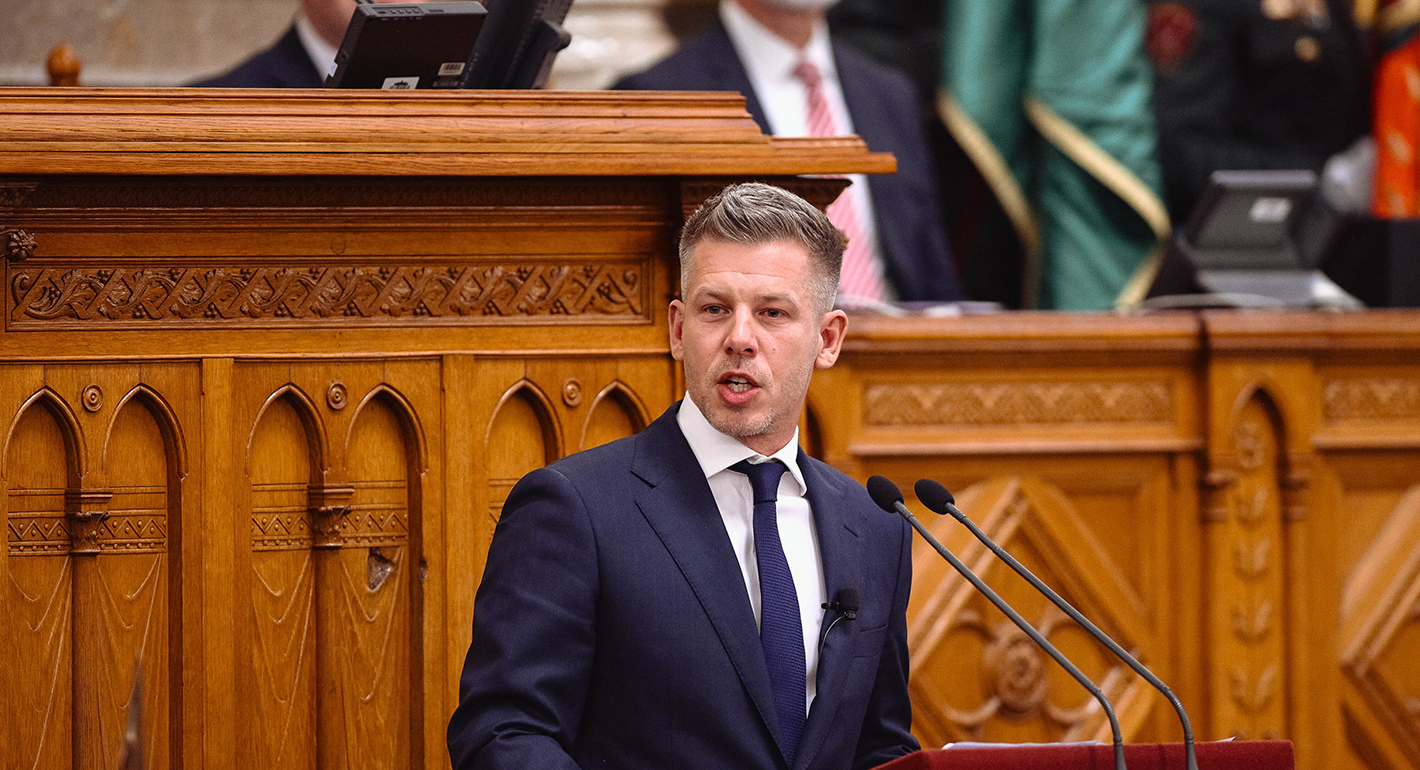
Despite myriad challenges and occasional stumbles, the new Hungarian government is moving ahead with energy and conviction to uproot years of illiberalism and corruption and rebuild Hungarian democracy.

Thomas Carothers

European Commission President Ursula von der Leyen is about to give her annual address on the state of the EU. Here’s what she won’t—but should—say.

Rym Momtaz

Depleted financial reserves and a shrinking tax base mean it is no longer possible to simultaneously deliver high defense spending, price stability, and economic growth.

Alexandra Prokopenko

Radical-right parties are expected to do well in upcoming elections in four of the EU's biggest member states. If successful, they could prevent the union from addressing key challenges ahead.

Stefan Lehne