

Commentary
The books, podcasts, and films that explain the world it made.
Andrew Leber
Source: Getty
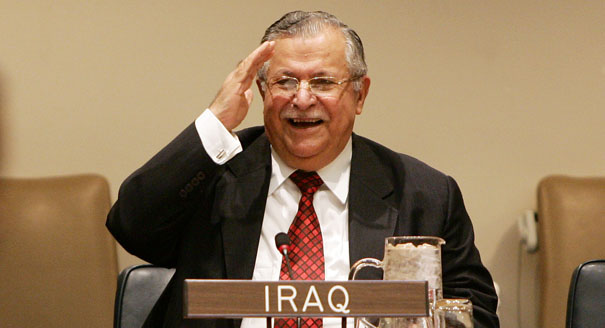
Good news from the Middle East is rare these days. But Iraq's ratification of its Additional Protocol safeguards agreement with the International Atomic Energy Agency is certainly something to celebrate.
Good news from the Middle East is rare these days. But Iraq’s ratification of its Additional Protocol safeguards agreement with the International Atomic Energy Agency (IAEA) is certainly something to celebrate. At a time when the nuclear nonproliferation regime continues to suffer from extended compliance crises with Iran, Syria, and North Korea, this good news deserves to be highlighted.
Additional Protocol ratification completes the turnabout in Iraq’s nuclear program that began in the early 1990s. The world was shocked to discover after the first Gulf War in 1991 that for more than ten years, Iraq had been developing a massive clandestine nuclear-weapons program totally separate from its declared civilian nuclear activities. Iraqi officials and scientists were able to build this program despite the implementation of “comprehensive” safeguards by the IAEA.
Until that point, the standard safeguards practice was for the IAEA to verify that countries did not divert declared nuclear material from peaceful nuclear activities to the manufacture of nuclear explosives. By this method the IAEA could assess the correctness of a state’s nuclear declaration but not its completeness. The Iraq case underlined the need to go further and verify that no undeclared nuclear material and activities exist in a state as a whole.After six years of difficult negotiations, IAEA member states approved a new approach informed by the lessons learned in Iraq—the model for the Additional Protocol. The protocol grants IAEA inspectors the authority and tools to draw the conclusion that declarations of nuclear activities are both correct and complete and that there are no undeclared nuclear material and activities in a given state. Most countries now consider the Additional Protocol the standard in international safeguards.
Although the IAEA General Conference and the 2010 Review Conference of the Parties to the Non-Proliferation Treaty (NPT) encouraged all states to ratify the Additional Protocol as soon as possible, a number of prominent countries with significant nuclear programs have not yet done so. Some argue that there is no international legal instrument that requires the ratification of the Additional Protocol; others oppose it on principle. Opposition seems particularly acute in the Middle East, where four NPT states with significant nuclear activities have not yet ratified the Additional Protocol: Algeria, Egypt, Iran, and Syria (Bahrain, Jordan, Kuwait, Libya, Morocco, Turkey, the United Arab Emirates, and now Iraq have).
Algeria is making progress on this front. It submitted a draft Additional Protocol for IAEA approval, which the IAEA Board of Governors endorsed in September 2004 but Algiers has yet to sign and ratify. Algeria is also the only one of these four states that has ratified the Comprehensive Nuclear-Test-Ban Treaty banning all nuclear explosions.
The situation with Iran and Syria is not promising. The IAEA Board of Governors found both countries to be in noncompliance with their safeguards agreements. Their refusal to ratify and fully implement the Additional Protocol is perceived by many as a strong indication that Tehran and Damascus have something to hide from IAEA inspectors.
Egypt is an interesting and important case. In a February 2005 report to the IAEA board, then IAEA director general Mohamed ElBaradei stated, “to date, the Agency has identified a number of failures by Egypt to report to the Agency in accordance with its obligations under its Safeguards Agreement.” It concluded that “irrespective of the current status of the previously undeclared activities and the small amounts of nuclear material involved, the repeated failures by Egypt to report nuclear material and facilities to the Agency in a timely manner are a matter of concern.”
Reports in subsequent years have not repeated these concerns—perhaps indicating that Egypt has corrected these failures and that all open questions have been resolved. But without an Additional Protocol in force the IAEA will not be in a position to draw the conclusion that Egypt has declared correctly and completely all of its nuclear activities.Egyptian officials have long stated that Egypt will not ratify the Additional Protocol until Israel joins the NPT as a non-nuclear-weapon state. Indeed, since 1974 Egypt has advocated the creation of a nuclear-weapon-free zone in the Middle East. Arguing that the NPT is not universally applied and pending Israeli accession, Egypt has also refused to sign the Chemical Weapons Convention and to ratify the Comprehensive Nuclear-Test-Ban Treaty, the African Nuclear Weapon-Free Zone (the Pelindaba Treaty), and the Biological and Toxin Weapons Convention. It has yet to be demonstrated that Egypt’s refusal exerts more pressure on Israel than if Egypt would otherwise lead by example and join all of these important nuclear instruments.
Today, 119 states have Additional Protocols in force, including Iraq, whose clandestine nuclear program set in motion the development of a higher safeguards standard. Now, the IAEA can evaluate both the correctness and the completeness of Iraq’s nuclear declarations, and it is in a position to confirm that Baghdad no longer generates suspicions of clandestine nuclear activities.
A dark page in the history of nuclear proliferation has certainly been turned—but so long as other states in the Middle East refuse to implement the Additional Protocol, suspicions about nuclear intentions in the region will persist.

Former Nonresident Senior Associate, Nuclear Policy Program
Goldschmidt was a nonresident senior associate at the Carnegie Endowment.

Senior Fellow and Co-director, Nuclear Policy Program
Toby Dalton is a senior fellow and co-director of the Nuclear Policy Program at the Carnegie Endowment. An expert on nonproliferation and nuclear energy, his work addresses regional security challenges and the evolution of the global nuclear order.
Carnegie does not take institutional positions on public policy issues; the views represented herein are those of the author(s) and do not necessarily reflect the views of Carnegie, its staff, or its trustees.

The books, podcasts, and films that explain the world it made.

Andrew Leber
Congress should ask tough questions about the agreement’s more unique features and whether they advance U.S. interests or compromise them.

Jane Darby Menton
Amid celebrations of bilateral ties was a deeper focus on stability in the Middle East.

Amr Hamzawy

Middle Eastern states should welcome an accelerated U.S. disengagement from their region.

Michael Young
Can economic ties help contain conflict between Egypt and Israel, or do they simply postpone confrontation? Drawing on the German-Russian experience, the article examines how the gas deal creates mutual dependence, keeps channels of cooperation open, and raises the cost of conflict, without necessarily delivering lasting peace.

Nourhan Hefzy