

Commentary
Alexey Malashenko
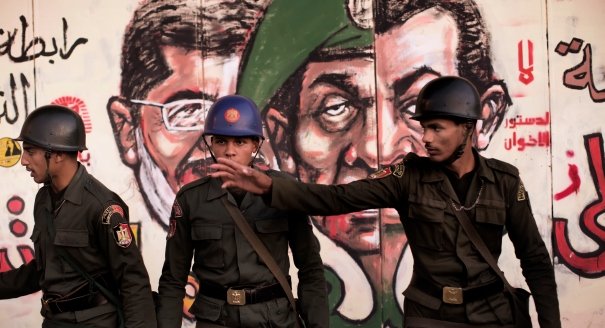
Source: Getty
Developments in Egypt will not only affect the country's own future, but also that of the wider Middle East and the rest of the world.
There is a new round of instability in Egypt. The opposition is protesting against President Mohammed Morsi’s attempt to significantly enlarge his powers as well as his scheduling a referendum to approve the new constitution. Developments in Egypt not only affect its own future but also the situation in the Middle East on the whole, and thus, to some extent, the situation in the rest of the world.
If by striking a deal with the military Morsi is able to keep the situation under control and avoid direct confrontation with the new opposition, he will ensure the stability of the current Islamist regime, prove himself as a charismatic leader on a national level, and demonstrate that the Islamists enjoy the support of the military.
The last point is especially important given the fact that the military establishment from the eras of Gamal Abdel Nasser, Anwar Sadat, and Hosni Mubarak no longer exists. The military is run by the Defense Minister Abdul-Fattah el-Sisi and the Chief of Staff Sedky Sobhi, who are both known for their pro-Islamist leanings. It is worth noting that the nascent political system in Egypt should not be compared with the Turkish one. The Turkish military has long opposed the local Islamists, while the Egyptian officer corps has stronger ties to the Islamist movement.Although Morsi annulled the decree that granted him near unlimited powers, he did not cancel the referendum on the new “Islamicized” constitution. By acting as the intermediary between Morsi and his secular opponents, the military has deprived him of unlimited powers, while allowing him to move closer toward the Islamization of the country’s political system. As a result, liberals, who were desperately trying to stop the Muslim Brotherhood and their allies’ triumphant march, ended up losing.
The success of Islamists in Egypt will encourage their counterparts in Tunisia, Libya, Syria, and Jordan. The revolution is not yet over in Libya, and it appears that the Islamists there are optimistic for their future. The Islamists in Syria are still bracing themselves for the division of the spoils after Bashar al-Assad’s likely exit. In Jordan, they are gathering strength before what they expect to be a decisive clash with King Abdullah II.
Hamas is also closely monitoring the situation in Egypt.
In short, Morsi’s success will be seen as success for Islamists in the entire region—and even beyond. For instance, Russian Muslims can see how respectfully Morsi is treated by the Kremlin. Many do not understand how the Russian leadership can be friendly with a man who until very recently had been a member of the Muslim Brotherhood, an organization that is declared terrorist and banned in Russia, and whose plans are supported by the Egyptian Salafis, the movement with the almost same views as those of the North Caucasian Islamic radicals—enemies of the Russian regime.
For external actors, including the United States, the European Union, Russia, and China—whose new leadership will undoubtedly attempt to strengthen its relations with the new elites of the Middle East—the Islamization of the Egyptian regime will be seen as a sign of Islamism’s stability on the global stage. The thought that a Muslim Brotherhood member may become the president of Egypt seemed absurd ten years ago. But it happened.
However, an important caveat is necessary. A belief has been gaining currency among politicians in non-Muslim countries that the Islamist elites in the region are becoming entrenched and will be ruling for a long time. Just as it was previously thought in the United States and Europe that the Muslim Brotherhood and its allies would never come to power—some now believe that they have taken power all but for good. In reality, the Islamists have a tough road ahead of them. They will have to painstakingly prove their effectiveness in governing. If they fail to deal with key socioeconomic problems, they may lose the power they gained as a result of the Arab Spring.
Thus, the question of who the West, Russia and China will be dealing with remains open. The situation in the Middle East, North Africa, and the entire Muslim world is fluid and likely to undergo numerous fluctuations.
However, the Islamists will remain a permanent fixture on the political scene even if they lose power and bear the brunt of public discontent. Their influence may wax and wane, but it will always be present. In a way, Islamism is akin to the leftist social movement in the West: it is driven by the same ideals of social justice and struggle for the rights of the disenfranchised.
Israel might face a serious problem in the near future given the dynamics of the current developments in Egypt and other neighboring countries—it might find itself surrounded by Islamist regimes. Of course, the Islamists’ potential for consolidation should not be overstated; nevertheless, confronting Israel is perhaps the most likely case to be made by those seeking to fuel such consolidation. Islamists from other parts of the world may also join the Islamists in the Middle East. Therefore, the formation of a single anti-Israeli Islamist front is not out of the question.
This Israeli context, as well as other factors described above, demonstrate how developments in Egypt are set to prove central to the future of Middle Eastern politics.
Former Scholar in Residence, Religion, Society, and Security Program
Malashenko is a former chair of the Carnegie Moscow Center’s Religion, Society, and Security Program.
Recent Work
Alexey Malashenko
Alexey Malashenko
Carnegie does not take institutional positions on public policy issues; the views represented herein are those of the author(s) and do not necessarily reflect the views of Carnegie, its staff, or its trustees.

Huawei pushed hard to enter the Egyptian data centers market, until the Americans made a better offer.

Angie Omar

In the tenth year of his presidency, President Mirziyoyev’s system is becoming even more personalized than that of his predecessor Karimov.

Galiya Ibragimova
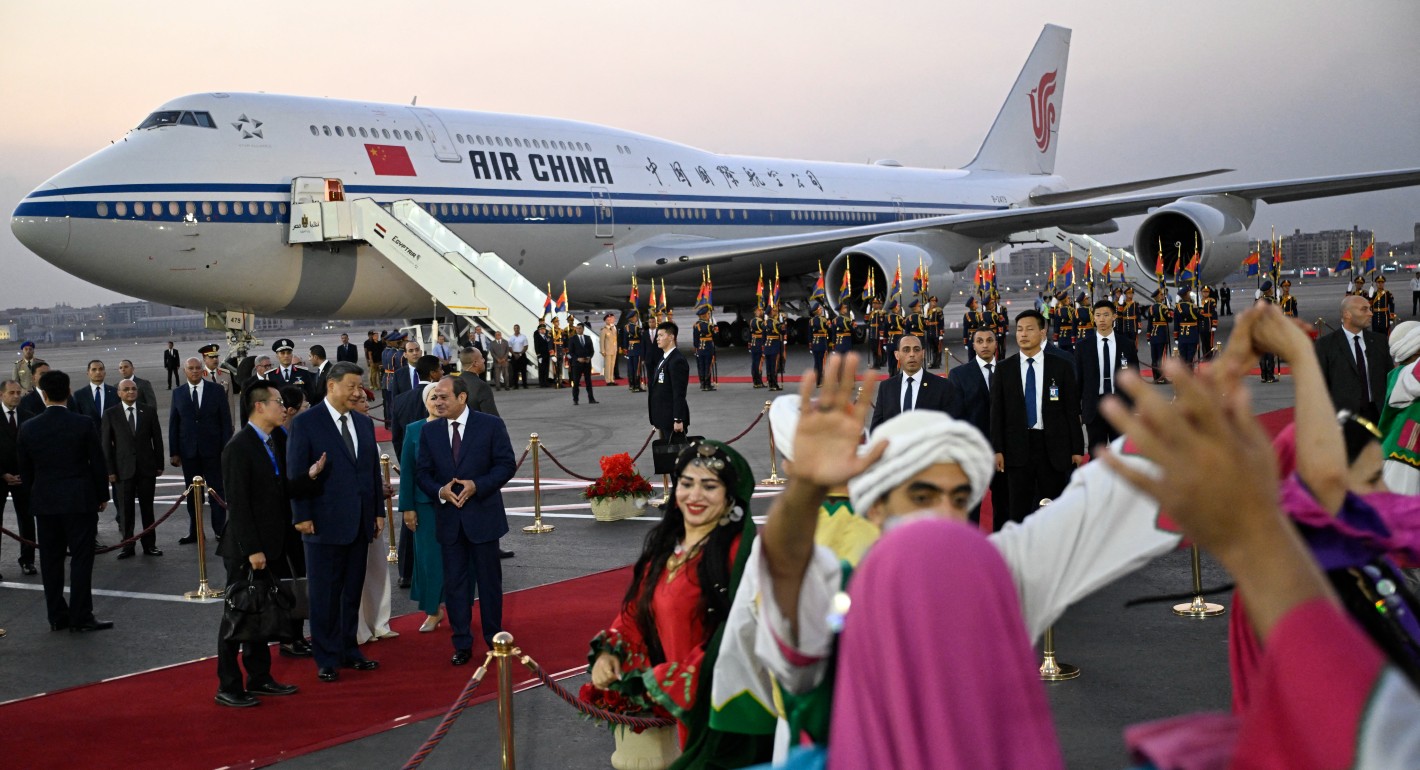
Amid celebrations of bilateral ties was a deeper focus on stability in the Middle East.

Amr Hamzawy
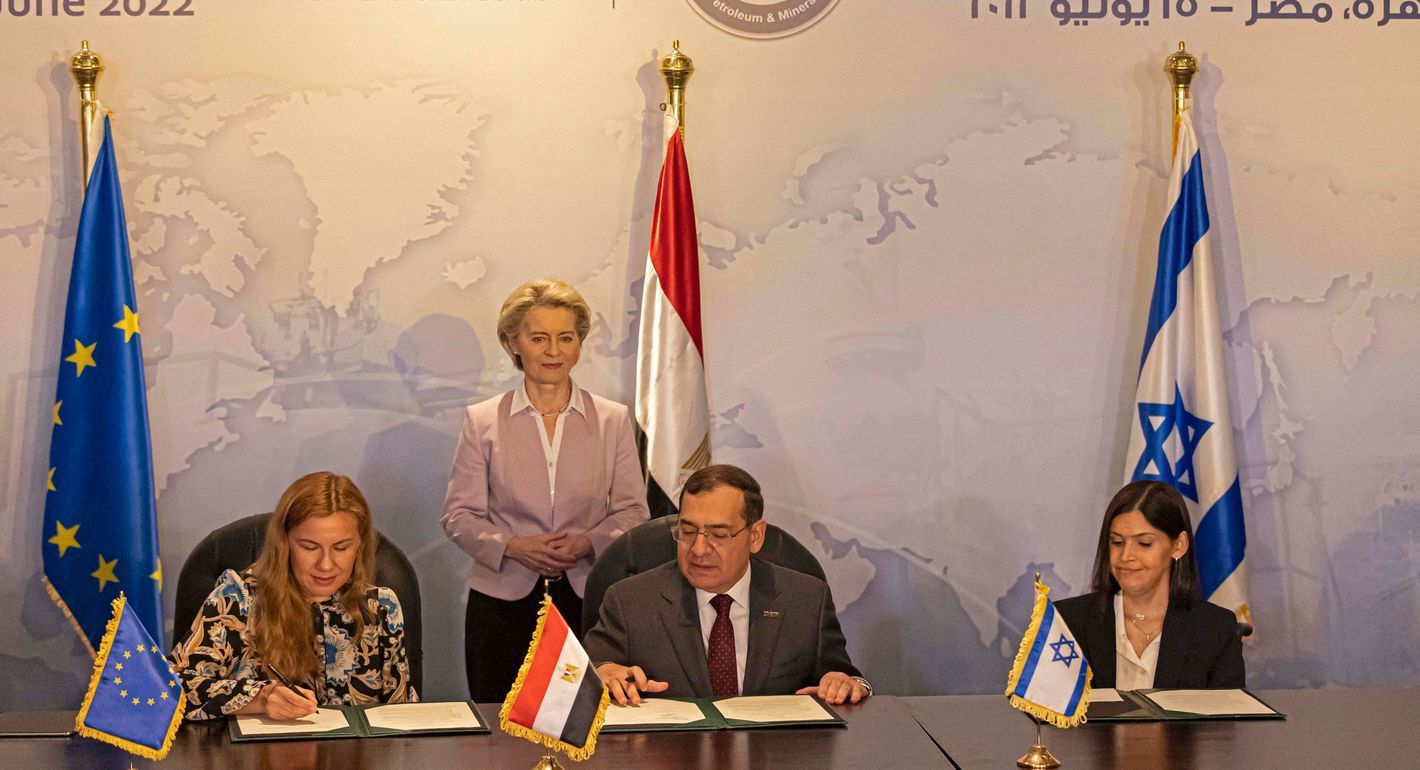
Can economic ties help contain conflict between Egypt and Israel, or do they simply postpone confrontation? Drawing on the German-Russian experience, the article examines how the gas deal creates mutual dependence, keeps channels of cooperation open, and raises the cost of conflict, without necessarily delivering lasting peace.

Nourhan Hefzy

The greater threat to Zelensky comes not from Fedorov alone, but from the convergence between the former defense minister’s political campaign and the anti-corruption investigations moving ever closer to the presidential administration.

Balázs Jarábik