

Article
Economic recovery has brought Sri Lanka a modicum of stability, but domestic strains and great-power rivalry could test how long it lasts.
Avinash Paliwal

An analysis of the emergence of the Indian Ocean as security complex and a strategic space of central importance and its prospective future.
Source: Palgrave Macmillan
This book analyses the emergence of the Indian Ocean as security complex and a strategic space of central importance and also looks at its prospective future. As well as US-China rivalry, the India-China rivalry is now the defining factor in the Indian Ocean – irrespective of the strategic asymmetry. This new situation has opened a space for middle-powers, old and new, to intervene. The authors argue that this situation may turn into an additional source of instability and that the creation of an inclusive and comprehensive regional security architecture, as well as the strengthening of regional multilateralism, should be the priority of all stakeholders in the coming decade.

Former Nonresident Senior Fellow, South Asia Program
Frédéric Grare was a nonresident senior fellow at the Carnegie Endowment for International Peace, where his research focuses on Indo-Pacific dynamics, the search for a security architecture, and South Asia Security issues.
Jean-Loup Samaan
Carnegie does not take institutional positions on public policy issues; the views represented herein are those of the author(s) and do not necessarily reflect the views of Carnegie, its staff, or its trustees.

Economic recovery has brought Sri Lanka a modicum of stability, but domestic strains and great-power rivalry could test how long it lasts.

Avinash Paliwal

The nuclear relationship between China and the United States is increasingly shaped by widening perception gaps rather than deliberate strategic design.

Tong Zhao

U.S. trading partners in Asia are closely watching the dispute for signs of how it may affect their own interests.

Barbara Weisel
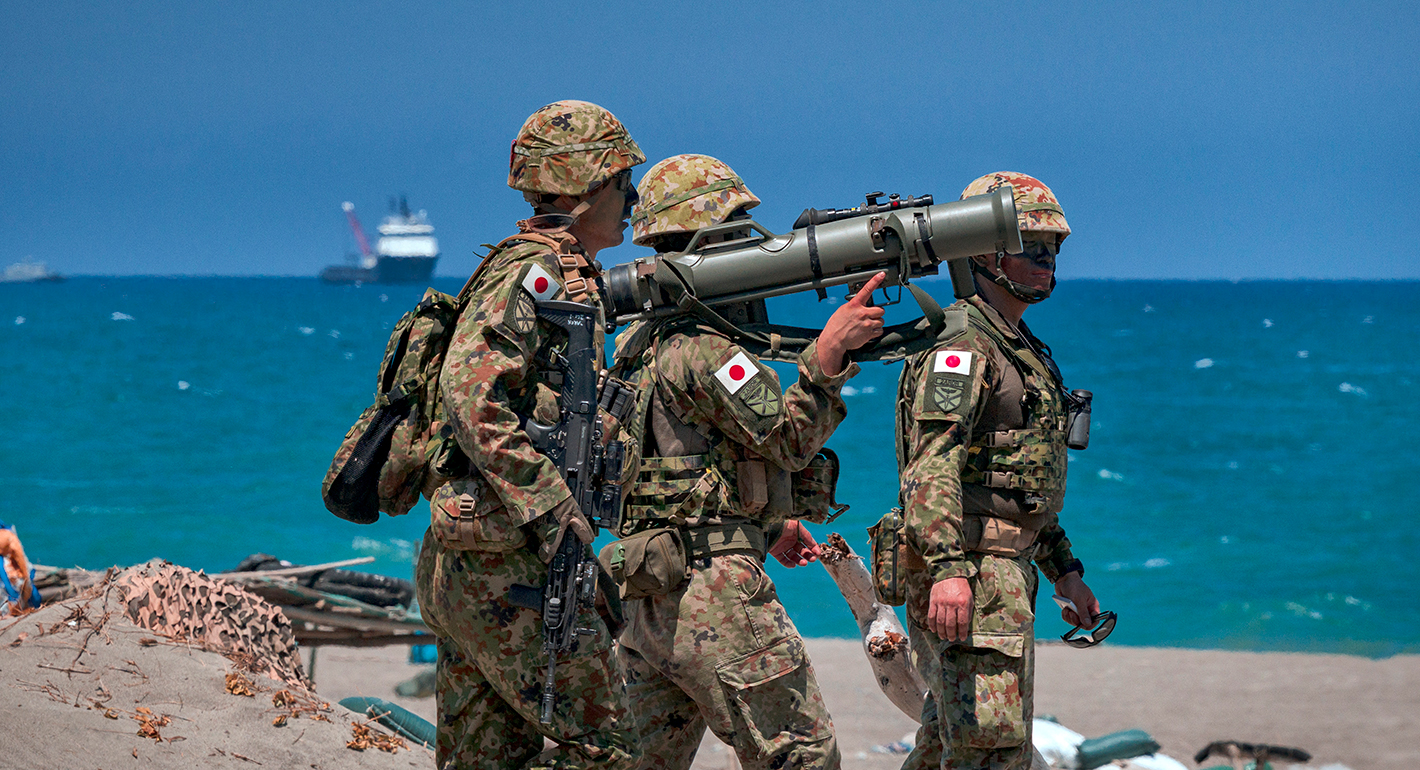
Japan’s revision of its three strategic documents reflects an intention to keep the United States engaged in the region while Japan fills any vacuums of U.S. power to preserve the Indo-Pacific order.

Ryo Sahashi

Chinese biotech companies have been on the receiving end of U.S. economic coercion. Yet their responses have differed significantly because firm and state interests are not uniformly aligned. For Washington, treating all Chinese tech firms the same, irrespective of their actual interests, risks pushing them farther into Beijing’s corner.

Xue Gong