

Commentary
Despite its flop at the box office, the film raises important questions for the climate community to answer.
Leonardo Martinez-Diaz
Source: Getty
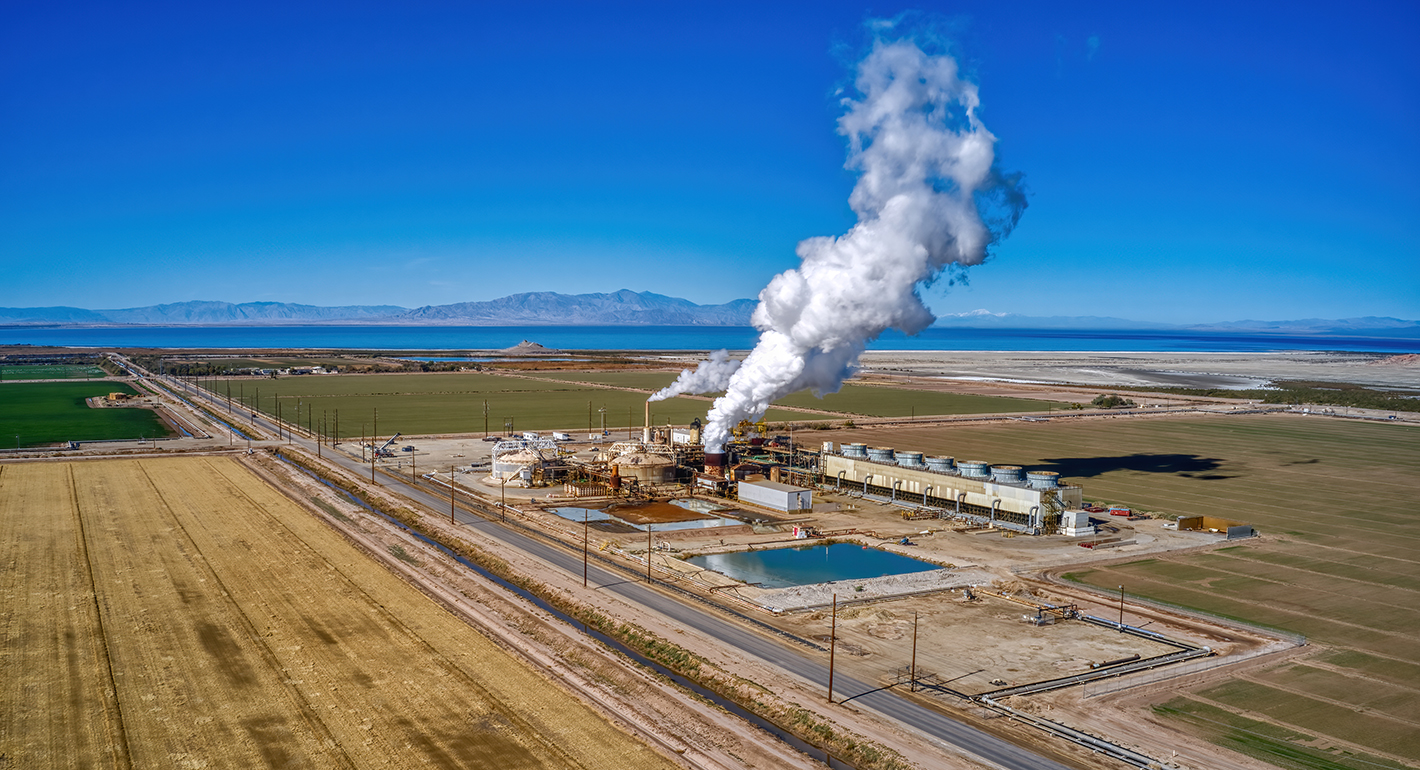
The DFC should focus on advanced, low-carbon energy sources, prioritizing areas where the United States has comparative advantages.
The world is entering the Age of Electricity, driven by demand for cooling, computing, electric vehicles, and the electrification of industry. The International Energy Agency (IEA) projects that electricity consumption will grow two and a half times faster than overall energy demand in the next five years.1 In this environment, the availability of reliable, low-carbon power will shape the geography of industrial production, the durability of alliances and partnerships, and the terms of economic engagement for decades to come. A state’s electricity system, and its ability to help partners deliver electricity, will be an increasingly important determinant of national power.
The United States, despite retaining meaningful advantages in certain advanced energy technologies, does not operate with as much coherency as Russia, and especially China, when it comes to financing clean energy projects in partner countries. Moscow and Beijing, as well as U.S. allies like South Korea, use state finance and state-owned firms to support the adoption of their clean energy technologies abroad.
In this landscape, the U.S. International Development Finance Corporation (DFC) can play a critical role. Its recent reauthorization by Congress raised its portfolio cap to $205 billion, created a revolving fund for equity investments, and afforded regional flexibilities to the agency. The DFC has therefore materially expanded American capacity to operate in capital-intensive energy markets.2 These expanded authorities create an opening to pursue a more deliberate and strategic approach to the international deployment of advanced energy.
This paper focuses on strategic U.S. engagement in geothermal and nuclear energy, two sectors with bipartisan support and where U.S. firms retain some competitive advantages; indeed, in next-generation geothermal energy, the United States currently leads the world. While the DFC has a substantial track record in solar, with at least forty-three active solar-related projects—supporting this low-cost clean energy technology has made sense from a development perspective—China’s entrenched dominance in conventional, crystalline silicon solar, coupled with solar’s relatively limited significance for national security objectives, suggests that the agency could have greater impact in geothermal and nuclear markets.3
Solar power is growing at unprecedented rates because it is competitive and cheap. The DFC has an opportunity to concentrate on areas where its limited capital can be catalytic: early in project development, across both established and emerging technologies, and in markets where competition will determine strategic alignment. Such an approach would both fit the trend in Washington to ensure that development institutions do more to prioritize U.S. tech exports to a wider range of countries and meet the need for the United States to help scale up emerging technologies that are a crucial part of the net-zero puzzle.4
With domestic and global power demand rising fast, geothermal energy is drawing bipartisan attention as a low-carbon, firm source of power that can meet the moment.5 The DFC is an important instrument for bringing U.S. geothermal technologies to international markets.6
Geothermal technology draws on heat stored beneath the earth’s surface. Conventional hydrothermal plants tap naturally occurring reservoirs of hot water and steam, but the paucity of good locations means that geothermal energy currently only supplies a tiny fraction of global power.7 The promise of a new generation of technologies—including enhanced geothermal systems (EGS) and closed-loop systems—is poised to make geothermal commercially viable in nearly any country in the world.8 U.S. firms hold meaningful advantages in these technologies, with Fervo Energy set to deliver power from the world’s first commercial-scale EGS facility in Utah by the end of 2026.9 Because these firms are best-in-class, they are well-positioned to benefit from DFC financing, even though, unlike the U.S. Export-Import Bank, DFC is not legally obligated to restrict its financing to the purchase of U.S.-origin goods and services. Some financing could flow to non-U.S. players such as the closed-loop geothermal developer Eavor (Canadian) or the turbine manufacturer Turboden (Italian).
The reasons for these U.S. advantages are manifold. The very same advancements in drilling technology and techniques that enabled the United States’ shale revolution—including fracking and horizontal drilling—can be redeployed to enhanced geothermal systems, offering U.S. firms a ready-made toolkit of technical resources.10 The United States has ample hot dry rock resources and a significant oil and gas workforce with skills and equipment transferrable to the geothermal industry.11
Perhaps most importantly, the United States also has deep capital markets willing to finance geothermal firms throughout the project’s lifetime, even at the riskiest and most capital-intensive stages. Fervo’s trajectory serves as proof: In March 2026, the company was able to secure $421 million in nonrecourse debt financing for the EGS facility (Cape Station) in Utah. Fervo went on to raise $1.89 billion in its initial public offering and received an initial valuation of approximately $7.7 billion, indicating confidence among a wider base of investors.12 The DFC can help spread geothermal to other countries with shallower capital markets.
Despite the promise of next-generation geothermal technology, the DFC should maintain a diversified portfolio that also includes conventional geothermal. Leading American firms are unlikely to pursue ambitious next-generation projects abroad until at least 2030. Fervo is proof: The company’s existing project pipeline centers completely on projects in Utah, Nevada, and Idaho and has explicitly indicated it does not plan to pursue international deployment in the short-term.13 The DFC should therefore start looking for projects on EGS and closed-looped systems, while simultaneously supporting conventional projects in places like Kenya, where approximately 90 percent of geothermal resources remain untapped.14 The DFC has a limited but largely successful track record with conventional geothermal: In 2024, it supported one major conventional geothermal power project—Balwan Ijen in Indonesia—which reached commercial operation in early 2025.15 DFC’s predecessor, the Overseas Private Investment Corporation, supported the Olkaria III project in Kenya in 2012.16
A mixed strategy (both conventional and next-generation geothermal) would have both immediate and long-term benefits: It would bring online previously unexploited energy sources, but it would also allow the U.S. to further experiment with new means of discovering geothermal resources relevant to conventional and next-generation projects alike. For example, American startups like Zanskar have developed new methods to probe the subsurface for energy troves by using artificial intelligence.17 Scaling and internationalizing these techniques will create an architecture from which EGS can eventually build.
The DFC’s comparative advantage in geothermal lies in de-risking the drilling phase, where capital requirements are high, resource outcomes are uncertain, and private financing is limited.
The DFC’s comparative advantage in this sector lies in de-risking the drilling phase, where capital requirements are high, resource outcomes are uncertain, and private financing is limited. Concentrating the agency’s toolkit at this stage, within a coherent interagency pipeline and with a disciplined geographic strategy, would allow the United States to position its technology in key markets.
A geothermal project’s development can run four to seven years, from initial exploration to commercial operation, and the risk profile shifts dramatically across that arc.18 The standard phases of development include preliminary reconnaissance, pre-feasibility analysis, surface exploration, exploration drilling to confirm the resource, full feasibility study and project design, and finally production drilling and construction.19 Each phase calls for different forms of financial support.
Exploration drilling is the phase where private capital is most limited.20 Drilling costs can account for up to 80 percent of total project costs, and those costs must be committed before there is certainty about the subsurface.21 Outcomes are close to binary—a well either confirms a viable resource or it does not—and the commercial feasibility study requires the findings of exploration drilling.22 The IEA has described this as a “technology valley of death” where venture capital is insufficient to absorb project costs and commercial lenders are reluctant to underwrite returns contingent on subsurface discovery.23 The DFC can help close this gap.
Exploration drilling for a single geothermal well can cost $5 to $20 million per well. If the resource is confirmed, the project can proceed to full feasibility and financing; if it is not, those costs are typically sunk.24 Worldwide exploration success rates hover around 60 percent, meaning that roughly four in ten wells in a typical portfolio will fail to return capital.25 This profile sits uneasily with commercial lenders and venture investors, and it is a key reason geothermal deployment has moved more slowly than other technologies.
Other jurisdictions have developed public instruments to address this challenge. Indonesia’s Geothermal Resource Risk Mitigation facility, supported by the World Bank, uses public capital to finance early-stage exploration and confirmation drilling, with repayment tied to project success.26 Germany’s drilling insurance program, run by the KfW with Munich Re, compensates developers for unsuccessful wells up to defined thresholds.27 France provides grant guarantees for deep geothermal projects, paying up to 17 million euros to compensate for failed drilling.28 Together, these models demonstrate that public capital structured around contingent repayment can mobilize private investment in a sector that could otherwise remain undeveloped.29
Core instrument: a contingent recovery loan. The DFC should build on these precedents and establish a geothermal resource risk facility. Its core instrument would be a contingent recovery loan that finances exploration drilling and requires full repayment only if a resource is successfully confirmed and the project advances into construction. If a covered developer drills an unsuccessful well, 90 percent of the value of the loan would become a grant. Developers would face only small costs for failed drilling attempts—enough to have some skin in the game—and successful projects would return capital to the facility, which could then be recycled into new drilling campaigns.30
Structure: a revolving, publicly capitalized fund. As a substantial share of loans in a geothermal risk facility would not be repaid, the facility should be structured as a revolving fund, analogous to the DFC’s recently authorized equity revolving fund.31 Federal credit rules require instruments with a high probability of nonrepayment to be scored on expected losses. But the cost Congress appropriates is not the principal of each loan; it is the credit subsidy, the net present value of those expected losses across the portfolio.32 That distinction is what gives the instrument its leverage. An appropriation of $150 million in credit subsidy would, at an illustrative subsidy rate of between 33 to 50 percent reflecting the high failure rate of early-stage exploration drilling, support a loan portfolio of between $300 and 450 million. That’s enough to demonstrate the model at scale without exceeding the DFC’s current “program funds” envelope.33 Geothermal deserves a large share of U.S. finance for energy projects abroad.
Leverage: a first-loss tranche. A first-loss tranche would allow DFC capital to absorb initial losses and crowd in private and multilateral co-investment. First-loss structures are standard instruments in blended finance, used to improve risk-adjusted returns for senior investors.34 In geothermal, where the main constraint is early-stage risk, such a structure could allow relatively modest amounts of public capital to mobilize multiples of private and multilateral co-financing.35
Complementary drilling insurance. A contingent recovery loan facility should be paired with a drilling insurance program modeled on the French and German schemes.36 Political risk insurance is already among the DFC’s most valuable instruments, accounting for roughly 18 percent of the agency’s exposure and carrying a long history of revenues exceeding claims.37 Political risk insurance, however, covers noncommercial risks—expropriation, political violence, currency inconvertibility—but not resource risks.
Drilling insurance would be a distinct instrument, compensating developers for unsuccessful wells up to defined thresholds and addressing a technical risk typically excluded from commercial insurance markets. Unlike political risk insurance, which stays solvent because the events it covers are rare, resource cover insures a routine outcome of exploration: failure. Premiums could defray but not eliminate its costs, so the program would need public capital standing behind it. Paired with contingent recovery loans, it would give the DFC a coherent toolkit for the development stage where resource risk is the binding constraint on deployment.
These instruments would likely require congressional action. The BUILD Act authorizes loans but does not contemplate repayment tied to project outcomes, and resource-risk cover is unlikely to fall within the political risk insurance the DFC already provides. A narrow amendment to the BUILD Act (perhaps as part of the 2027 NDAA), paired with dedicated appropriations, could establish a resource-risk facility. This is the same route Congress took in the 2025 reauthorization when it amended the Act to create a dedicated Treasury account for the DFC's equity investments, an instrument that would otherwise not have been compatible with the agency’s ordinary self-sustaining model.
Where would quality projects worth DFC support likely be located? The most likely candidates are Indonesia, the Philippines, Kenya, and Mexico. Indonesia holds one of the world’s largest geothermal resource bases and ranks among the top producers by installed capacity, yet much of its potential remains undeveloped.38 As one of Washington’s closest treaty allies in the region, the Philippines sits in a theater where energy infrastructure increasingly reflects broader economic alignment. The USTDA has already funded feasibility work that the DFC could potentially use.39 Geothermal accounted for roughly 49 percent of Kenyan electricity generation in 2024,40 and the country’s institutional capacity and project track record make it one of the few African markets where geothermal projects can reach commercial financing on relatively compressed timelines. Finally, Mexico is a large, proximate market with a long-established geothermal industry and significant untapped potential located in ideal regions.41
A coherent DFC geothermal strategy rests on four propositions:
The global market for nuclear energy is larger, more urgent, and more contested than at any point in decades. The IEA reports that global interest in nuclear power is surging, with the World Bank estimating that electricity demand in developing countries will more than double by 2035.42 Nearly fifty countries could be viable nuclear markets by 2030, with up to ninety-nine potentially ready within twenty-five years and with the global nuclear market anticipated to be approximately $380 billion annually by 2050.43 For the United States, which now enjoys bipartisan support for nuclear energy and a pipeline of next-generation technologies, this represents an opportunity to expand the global market for this clean power source, secure decades-long partnerships, and deliver industrial growth at home and reliable power abroad.44
The U.S. government does not currently offer comprehensive, turn-key construction financing packages for nuclear reactor projects abroad.
Yet America is not currently poised to supply that massive demand. Despite interest signals from both DFC and EXIM, the U.S. government does not currently offer comprehensive, turn-key construction financing packages for nuclear reactor projects abroad. China and Russia, however, do (see figure 1). China is on course to overtake the United States in installed nuclear capacity by 2030 and is foremost in the world in new large-reactor construction.45 Russia, despite its war in Ukraine, still has at least twenty reactor units under active construction in seven countries.46 Both China and Russia offer state-backed, full-service, and more affordable packages that appeal to developing nations.47 U.S. partner South Korea is also a world leader in building nuclear abroad, having in 2025 delivered the Barakah plant in the UAE on schedule and under budget, a rarity for nuclear projects.48
The consequences of these relationships are long-lasting. Once a country selects a supplier, switching becomes prohibitively costly—fuel is technology-specific and construction timelines, maintenance, and other obligations entrench relationships that last decades.49
In this context, the DFC can play a meaningful, though limited, role. With its recently expanded authorities, the DFC (alongside EXIM) is better poised to support the deployment of U.S. technologies into global markets with consequential implications for U.S. industry, global energy security, and U.S. leadership in the world.50 Partner countries won’t choose U.S. financing or technologies because they are the cheapest option: Russia and China underwrite export bundles on favorable terms for the recipient,51 whereas the DFC cannot offer finance below the U.S. government’s own cost of borrowing. The Chinese state can also borrow on much cheaper terms than the United States: In May 2026, the ten-year U.S. Treasury yield was over 4.5 percent compared to Chinese ten-year yields of less than 2 percent.52 The opening for the United States is to partner with countries who care about non-price, geopolitical criteria, who want to partner with a democracy that may be on their side in a dispute with an authoritarian power.
The DFC lifted its ban on financing foreign nuclear projects in 2020, under the first Trump administration, in recognition of the energy needs of developing countries and the potential of next-generation technologies.53 While the DFC has since signed letters of interest for nuclear projects in Indonesia, Poland, Romania, and South Africa, none have progressed to financial support.54 In a 2024 report to Congress, the agency laid out its difficulties.55 Nuclear projects are among the most capital-intensive investments in any sector, potentially requiring significant tradeoffs in the DFC’s limited portfolio. Technology for small modular reactors (SMRs), though promising for developing countries, remains commercially unproven. Early-stage project support was limited by the strict treatment of the DFC’s equity authority, which the Office of Management and Budget scores as grant assistance rather than as an investment with expected returns.56
In 2025, however, two developments meaningfully altered the financing landscape for nuclear energy. First, the DFC’s reauthorization in December 2025 raised the agency’s portfolio investment cap to $205 billion, expanded its geographic flexibility, authorized a $5 billion revolving fund for equity, and permitted a minority equity take of up to 40 percent.57 These changes expand the DFC’s ability to support nuclear power. Second, the World Bank ended its own decades-long ban on nuclear financing in June 2025, a signal to other international financial institutions to follow suit.58 The Asian Development Bank subsequently made a similar decision.59 These shifts improved the broader financing environment for nuclear energy, increasing the likelihood that DFC participation could play a catalytic role alongside a broader range of multilateral and private financing partners.
Given the scale of nuclear project costs—tens of billions for conventional reactors and multibillions for SMRs—the DFC’s principal value does not lie in large-scale debt financing. It is instead in patient capital and political signaling.60 Even a modest equity stake or subordinated debt can signal long-term U.S. commitment, helping to crowd in private capital and reassure host governments on projects that rarely prevail on purely commercial terms.61 That catalytic role extends beyond the capital stack itself to the enabling infrastructure that determines whether projects advance at all—particularly the “front of the meter” investments, such as transmission, that shape early project viability.62
As the IEA has noted, public financing alone will not be sufficient to support nuclear generation globally, as long permitting and construction timelines deter commercial lenders.63 In this context, even a sizable DFC commitment would likely represent only a fraction of total project cost while consuming a significant portion of the agency’s balance sheet. This reinforces the case for a more catalytic role earlier in project development, where the DFC’s participation can shape financing structures, mobilize additional capital, and support the front-end infrastructure that enables a project to reach bankability.
In interviews with industry and former government officials, two pathways emerged as areas where DFC support could prove most consequential. The first is through equity investments and subordinated debt. The second is through supporting front-end infrastructure.
Equity and subordinated debt. The DFC’s equity authority allows it to take ownership stakes in companies and projects or to provide indirect support through funds. Subordinated debt occupies a critical middle layer in the capital stack, below senior debt but above equity, absorbing losses after senior lenders in the event of a default. In both cases, the U.S. taking a riskier capital position makes a deal more attractive to senior private lenders by demonstrating Washington’s long-term investment and willingness to assume greater risk.64 Industry officials described the absence of a U.S. equity position as a significant disadvantage, particularly against state-backed packages of competitors.65
For equity to be fully deployed, however, its budgetary treatment would need to align with the Federal Credit Reform Act (FCRA), which scores investments against expected net cost over time rather than full face value.66 Under current practice, equity is effectively treated as a total loss at obligation, sharply limiting its use.67 An FCRA-aligned approach would instead require appropriations of only the expected cost over time, accounting for returns and recoveries, allowing the DFC to deploy equity at a much greater scale. This change would meaningfully expand the DFC’s ability to crowd in private capital and compete with state-backed financing packages. However, achieving this reform has proven difficult: Appropriators and the Congressional Budget Office have consistently resisted adjustments to equity scoring, wary of setting a precedent that could open FCRA’s framework to broader revision across other federal programs. The Joe Biden administration’s 2024 proposal to circumvent FCRA and enable more equity deployment also failed to become law.68 The 2025 reauthorization’s equity revolving fund creatively works around the FCRA problem by capitalizing a pool DFC can draw from and replenish. But it did not resolve it.69
Front-of-the-meter infrastructure. Infrastructure preparation, an area of comparative strength for the DFC, is integral to nuclear project viability. Industry has described a clear role for DFC support in site characterization, feasibility assessments, civil works on the nuclear island, grid and connectivity infrastructure, and site engineering—activities that determine whether a project becomes commercially viable but occur before power generation begins. These “front-of-the-meter” investments shape project bankability and timing, yet can be underfinanced because they precede revenue generation. This is a domain where the DFC can deploy its tools to meaningful effect, without relying on still-developing in-house nuclear expertise.70
The DFC’s 2024 report to Congress pointed to SMRs as a stronger fit for its portfolio than conventional reactors, given lower capital requirements and greater potential for private sector participation.71 Smaller reactors suit countries with more limited grids, can be prefabricated and shipped for onsite assembly, and offer faster construction timelines than their conventional counterparts.72 The lower cost of individual units also means that DFC support, however limited, would represent a larger share of the project and carry greater catalytic weight.
However, uncertainty around next-generation technologies remains substantial, with first-of-a-kind projects not yet complete. Expert estimates for a commercially viable U.S. SMR, which is ready for export, range from seven to ten years or longer.73 Russia and China have operationalized just one commercial SMR each, and while Russia is advancing a design for deployment in Uzbekistan, the project has faced delays over technical readiness and financing.74
Conventional reactors, meanwhile, remain proven technologies with continued relevance in markets with stronger institutions and mature regulatory environments, particularly in Central and Eastern Europe. Experts caution against prematurely dismissing conventional systems, noting that if regulatory processes can be streamlined and allied partnerships leveraged, larger reactors could remain commercially competitive.75
The DFC should therefore seek to finance both large-reactor projects, with technologies proven to deliver clean power at commercial scale, and SMRs, whose emergence would support U.S. technological leadership. A dual-track approach allows the DFC to support the projects that are most viable now, while building the institutional capacity to engage in next-generation technologies over time. The U.S.-Japan-South Korea joint framework for developing SMRs in the Indo-Pacific signed in July 2026 is an appealing model; the United States will likely lead on reactor design and early-project development, Japan can provide key reactor components and manufacturing cpabilities, and South Korea can leverage the support of its construction capacity and existing nuclear manufacturing supply chain.76
Given the time and capital-intensive nature of nuclear deployment, the DFC should be deliberate about where it directs resources. Geographic prioritization should be guided by three factors: strategic value, likelihood of project execution, and energy demand that requires public finance.
Geographic prioritization should be guided by three factors: strategic value, likelihood of project execution, and energy demand that requires public finance.
In the near term, this points to countries that have already assembled the basic preconditions for nuclear cooperation. These preconditions include an appropriate intergovernmental framework, specifically a Section 123 agreement or a credible pathway toward one; a regulatory environment capable of licensing, oversight, and project management; and sufficient host-government commitment to sustain a project over the long term.77 Under these conditions, DFC engagement can accelerate project formation and financing. In less mature, strategic markets, the DFC can still participate selectively, particularly in front-end activities. However, these markets will require a sustained, whole-of-government investment to become commercially viable.78
The key region for nuclear investment is Central and Eastern Europe, where diversification from Russian energy remains a driving imperative, and the political, regulatory, and institutional preconditions are more fully in place. Poland has selected Westinghouse AP1000 technology with financing from the U.S. Export-Import Bank, and the DFC has provided a separate letter of interest.79 EXIM has a long history of financing nuclear projects; the DFC can become a supporting tool in the U.S. kit. A second consequential region for DFC investment is Southeast Asia—particularly Indonesia, the Philippines, Thailand, and Vietnam—where strategic competition with China, accelerating electricity demand, and the potential applicability of smaller reactor technologies converge.80
A sensible DFC nuclear strategy rests on four propositions:
The United States retains real advantages in next-generation geothermal and advanced nuclear technologies. These technologies will shape the future of global decarbonization, industrial capacity, and strategic partnerships. And given how far the United States has fallen behind China when it comes to batteries, wind, and solar, it is essential that Washington protect its remaining strengths. Advanced energy technologies will underpin economic growth in the decades ahead.
China and Russia have approached this contest with greater clarity. Both have constructed state-backed models that integrate technology, financing, and diplomacy into a coherent offer. This necessitates a discipline the United States currently lacks. America’s fragmented toolkit will not be sufficient in markets where competitors arrive with speed, scale, and cohesion.
The DFC can be a critical instrument in this contest. Its value lies in how it deploys its limited capital—early enough to shape project trajectories, flexibly enough to crowd in additional financing, and credibly enough to signal sustained U.S. commitment to foreign partners. Across both geothermal and nuclear energy, that logic points to a targeted strategy: placing equity and subordinated debt at the center of the DFC’s nuclear toolkit; focusing on front-end infrastructure and project viability; maintaining a technology-neutral posture; establishing a geothermal resource risk facility and complementary insurance mechanisms; and, critically, embedding these tools within a coherent interagency pipeline that is navigable for U.S. firms and foreign partners alike.
The United States is capable of meeting this moment. It has the technologies, financial capacity, and a network of partners that few competitors can match. Realizing that potential, however, will require a shift toward government action that is more deliberate, coordinated, and able to operate at the pace that competition now demands. Development finance can serve as a proving ground for that shift, positioning U.S. firms in critical energy markets and demonstrating that the United States can compete in the clean energy markets of the twenty-first century.
At a time when the two major U.S. political parties are bitterly divided, geothermal and nuclear energy are some of the rare policy fields that enjoy bipartisan support: The 2026 National Defense Authorization Act that included DFC reauthorization passed with a seventy-seven to twenty majority in the Senate. This provides a good foundation for any follow up legislation to help America support clean energy abroad, open export opportunities for American firms, and compete with China on advanced energy technologies, even before the DFC needs reauthorizing by the end of 2031.
This paper benefited significantly from research and drafting by Afreen Akhter during her time at the Carnegie Endowment.
Former Fellow, Sustainability, Climate, and Geopolitics Program and Fellow, Europe Program
Noah J. Gordon was a fellow in the Sustainability, Climate, and Geopolitics Program at the Carnegie Endowment for International Peace in Washington, DC.
Liana Schmitter-Emerson
Former James C. Gaither Junior Fellow, American Statecraft Program
Liana Schmitter-Emerson was a James C. Gaither Junior Fellow in the Carnegie American Statecraft Program.
Carnegie does not take institutional positions on public policy issues; the views represented herein are those of the author(s) and do not necessarily reflect the views of Carnegie, its staff, or its trustees.

Despite its flop at the box office, the film raises important questions for the climate community to answer.

Leonardo Martinez-Diaz

A deep dive into the policy ecosystems behind battery development in China, South Korea, Japan, the European Union (including some of its member states), the United States, Canada, and India.



Milo McBride, Herbert Crowther, Darcie Draudt-Véjares, …
They face an uphill climb, but they could draw on a strategy that other diplomats have used in the past.


Shana Tabak, Alejandro Martin Rodriguez

Understanding the climatic pain points is necessary for policymakers hoping to minimize the war’s negative environmental consequences.


Alejandro Martin Rodriguez, Joy Arkeh, Sarah Yerkes
Congress needs to step up and make EXIM a low-carbon financing powerhouse.
Jesse Young