

Commentary
Despite its flop at the box office, the film raises important questions for the climate community to answer.
Leonardo Martinez-Diaz
{
  "authors": [
    "Shana Tabak",
    "Alejandro Martin Rodriguez"
  ],
  "type": "commentary",
  "blog": "Emissary",
  "centerAffiliationAll": "dc",
  "centers": [
    "Carnegie Endowment for International Peace"
  ],
  "englishNewsletterAll": "ctw",
  "nonEnglishNewsletterAll": "",
  "programAffiliation": "SCP",
  "programs": [
    "Sustainability, Climate, and Geopolitics"
  ],
  "topics": [
    "Security",
    "United Nations",
    "Climate Change"
  ]
}
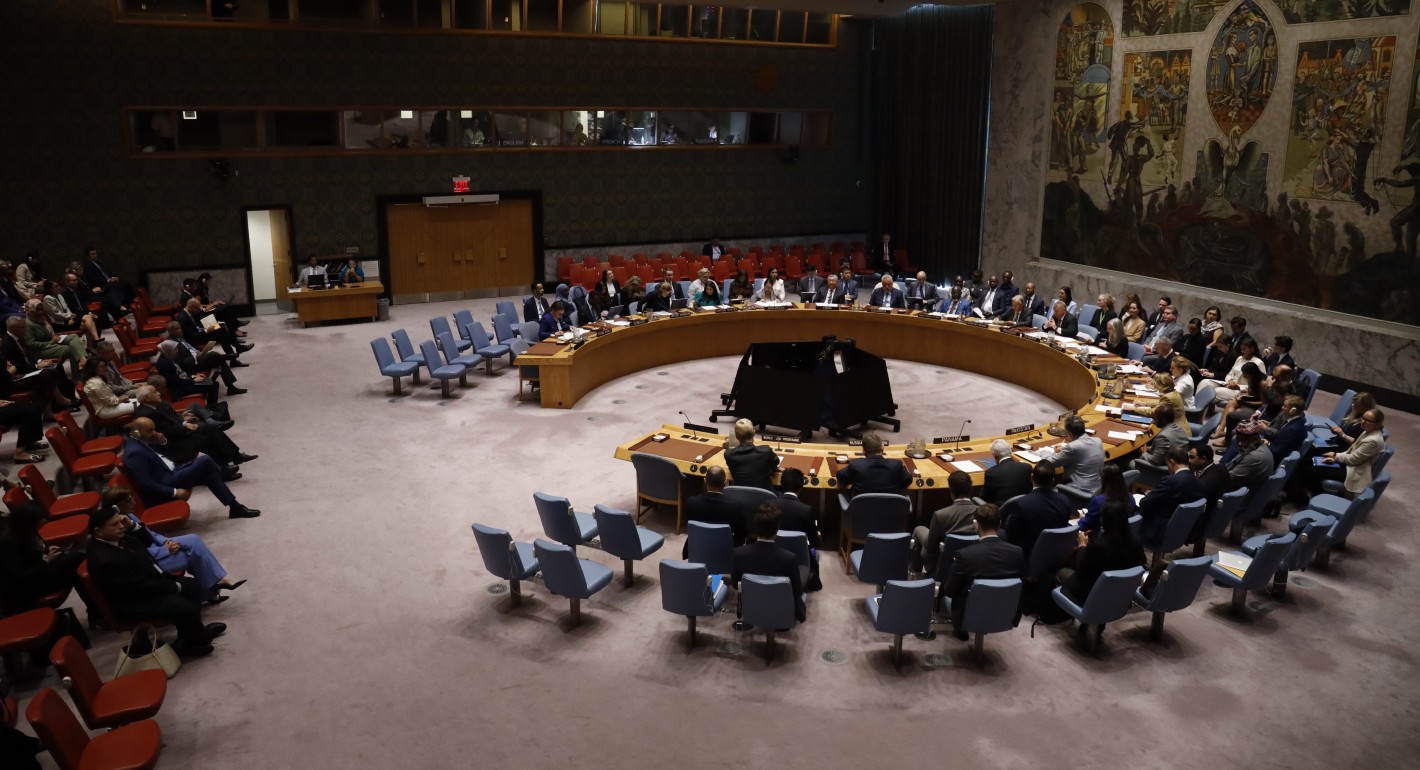
A UN Security Council meeting on August 25, 2026. (Photo by Xie E/Xinhua via Getty Images)
They face an uphill climb, but they could draw on a strategy that other diplomats have used in the past.
Amid geopolitical uncertainty, the United Nations Security Council faces a demanding agenda—yet its permanent members appear to be in a permanent deadlock. This paralysis may be most noteworthy over the conflicts in Ukraine, Gaza, and Iran, but it has permeated another pressing geopolitical arena: the security implications of climate change.
Issues such as increased competition over natural resources, backlash against displaced people, weaponization of food security, and strained access to food and water increasingly exacerbate security challenges—and they are deeply intertwined with a changing climate. However, the United States, Russia, and China—three of the five permanent members with veto powers—keep opposing council action on climate, leaving opportunities to integrate climate-related security risks into the council’s core functions limited.
Next year, the Security Council will welcome five newly elected nonpermanent members: Austria, Kyrgyzstan, Portugal, Trinidad and Tobago, and Zimbabwe. All expressed support for integrating climate, peace, and security as part of the Security Council’s agenda during their campaigns for the seats. Even though they face an uphill climb on this issue, they could draw on a strategy that other diplomats have used in the past—what we’re calling a “cumulative normative strategy.”
This strategy advances gradually stacked rules, standards, and expectations that could produce long-term systemic shifts. This strategy is forward-looking, offering proposals for how this approach could build the foundation of climate knowledge and provide the incentive and pathway for the Security Council to act when the next window opens. It is also backward-looking, identifying a previously existing but, until now, unnamed strategy that member states have undertaken to advance climate action in the face of roadblocks. Below, we outline four pathways for new members to advance this strategy.
Despite opposition to the explicit recognition of climate change as a driver of conflict and fragility by its members in the past, including most recently the United States, the Security Council has been able to pass more than 130 decisions with references to climate, peace, and security—the UN term for the intersection of these three overlapping issues. These documents request that concerned parties respond to these links with “adequate risk assessments and risk management strategies.” Although the importance of these resolutions should not be overstated, they have proven able to bypass political barriers and to draw attention to the need to manage the impacts and associated risks of climate change. These decisions have most notably led to the incorporation of seven climate, peace, and security advisers into different UN missions and allowed for better reporting and strategy coordination in UN mission-led efforts on this topic. In South Sudan, for instance, such efforts have allowed for the mapping of traditional pastoralist patterns of movement as well as the integration of climate, peace, and security perspectives in community peace dialogues.
In recent years, debates at the Security Council have featured intense opposition to retaining some of this language in key resolutions, in part on the grounds that the council is not the right forum for action. New members should continue the effort to include such language. If possible, they should work to expand it to include other language that might encounter less resistance, including around food, water, or resilience that could enhance mandates for UN bodies to address the impacts of climate change on these dimensions.
As part of its functions and powers, the Security Council may investigate any dispute or situation that might lead to international friction. Given that previous council conversations have been criticized for a lack of empirical evidence of the relationship between climate, peace, and security, engaged members could focus on proposing investigations (including data-driven reports and fact-finding missions) on how such a relationship plays out in specific contexts.
Investigations featuring climate-related language focusing on impacts—such as drought in Central Asia, water scarcity in Yemen, or food insecurity in the Sahel—might have better chances of avoiding a permanent member’s veto. New members could propose language around these impacts with clear evidence-gathering framings to help reinforce the cumulative normative strategy approach. This effort could build on and expand the previous establishment of the Informal Expert Group on Climate, Peace, and Security, allowing the council to take a more direct role in assessing how extreme weather and resource competition spark conflict in fragile regions.
If an official Security Council investigation isn’t viable, newly elected members could propose informal, nonbinding gatherings convened by one or more members—known as Arria-formula meetings—to discuss existing research by other actors. This avenue allows members to elevate the climate, peace, and security agenda and integrate it into the Security Council’s ecosystem, even when opposed by a permanent member. It’s been used before, such as in the 2022 meeting convened by Albania and France on ensuring accountability for atrocities committed in Ukraine following Russia’s full-scale invasion, as well as for meetings on climate-related security risks over the past decade, contributing to the cumulative normative strategy.
The next secretary-general will have sole authority to select and create offices for special advisers, envoys, or representatives, but the Security Council has the authority to request the creation of such offices. A new office proposed by the council on security and resilience could help advance the climate, peace, and security mission—but the title would instead focus on building resilience rather than on the more controversial climate framing.
Establishing such an office could create a strong working relationship with a new secretary-general, who will need to rely on the Security Council to navigate security challenges associated with climate change. This special adviser’s mandate would focus on building resilience to climate impacts with special attention to monitoring global situations to flag potential incoming threats. This mandate would also differentiate it from the existing special adviser on climate action and just transition, whose focus is on climate finance. The mandate also could include the production of research, analysis of data, and policy engagement to help the broader United Nations system coordinate its responses to climate-related security risks. The special adviser could also act as a high-level diplomat assisting the secretary-general in strategic coherence and engagement efforts.
The Security Council also has the capacity to advance procedural actions that govern how the body operates. These procedural actions differ from substantive policy recommendations, as they are not subject to the veto power of permanent members. This allows the council’s presidency and other nonpermanent members to schedule high-level open debates and briefings, such as those convened by Sierra Leone on climate, peace, and security and on conflict-related food insecurity in November 2025.
These efforts have contributed to the cumulative normative strategy and can lead to stronger opportunities to integrate the climate, peace, and security agenda into substantial and legally binding efforts in the future. Integrating language that focuses on anticipatory action and resilience is critical, as this can allow the Security Council and the UN system as a whole to assist countries in managing climate risks and limit potential causes of displacement and insecurity.
The Security Council is the UN institution with the clearest mandate as a guarantor for peace and security in the multilateral system, yet it has struggled to position itself as an actor delivering on its role in a world that is becoming more insecure due to, among other factors, a changing climate. The council’s new members have an opportunity to continue to build for a more resilient future, guided by the four pathways above. These steps toward a cumulative normative strategy can lay the groundwork for a more ambitious climate role for the Security Council, once geopolitical dynamics are ready to confront the security realities of a warming planet.
Understand the world with the latest from our scholars around the world.

Senior Fellow and Director, Climate Mobility Project, Sustainability, Climate and Geopolitics Program
Shana Tabak is senior fellow and director of the Climate Mobility Project at the Carnegie Endowment for International Peace.

Fellow, Sustainability, Climate, and Geopolitics Program
Alejandro Martin Rodriguez is a fellow in the Sustainability, Climate, and Geopolitics Program at the Carnegie Endowment for International Peace. His research focuses on the social dimensions of climate change, and he manages projects on climate mobility, peace, and security.
Carnegie does not take institutional positions on public policy issues; the views represented herein are those of the author(s) and do not necessarily reflect the views of Carnegie, its staff, or its trustees.

Despite its flop at the box office, the film raises important questions for the climate community to answer.

Leonardo Martinez-Diaz
By focusing only on hard security, the Shield ignores the conditions that fuel cartel power.
Alejandro Martin Rodriguez, Kayly Ober

Over the past decade, China has moved from marginal player to major producer of all things batteries. The United States, Europe, and others are aiming to balance the market.

Milo McBride
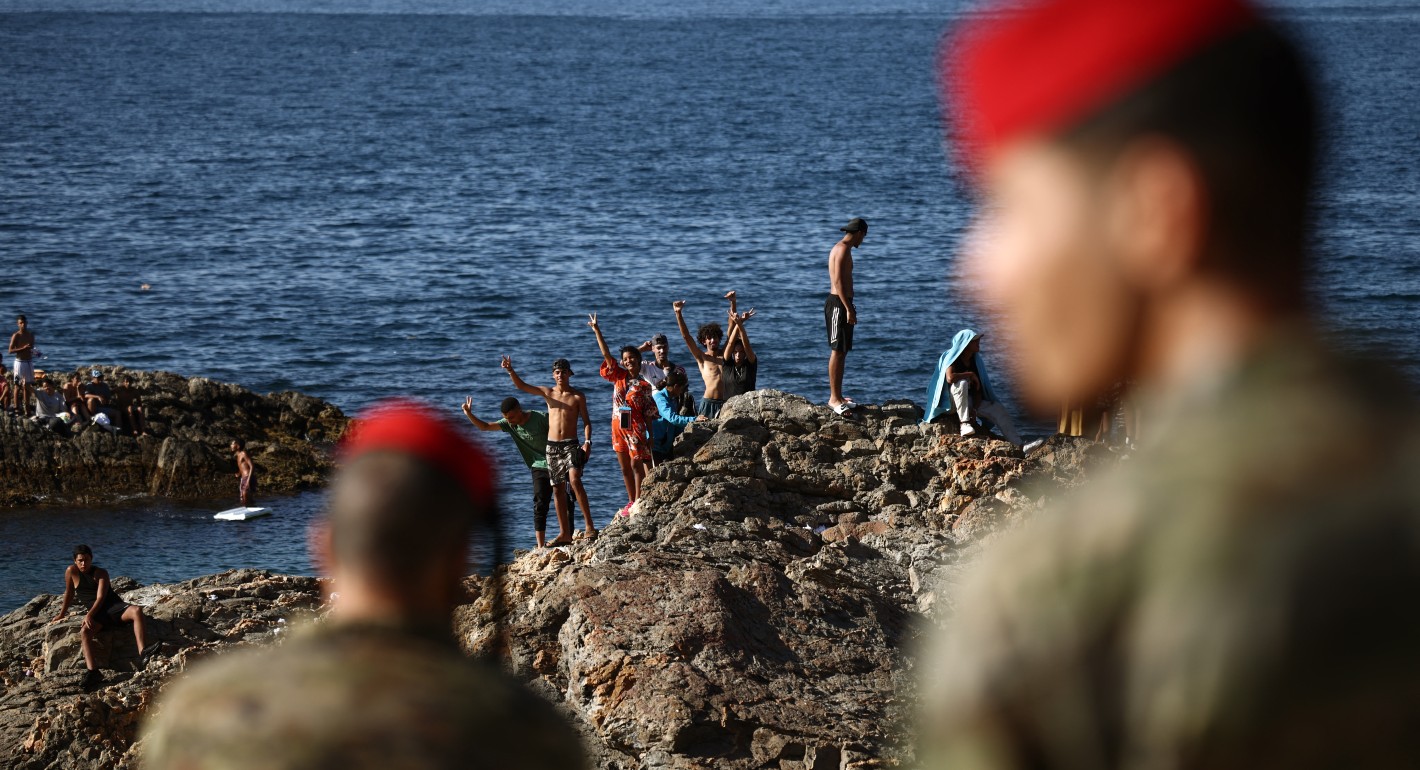
Most migrants may have left Ceuta, but the effects may linger.

Alejandro Martin Rodriguez, Sarah Yerkes
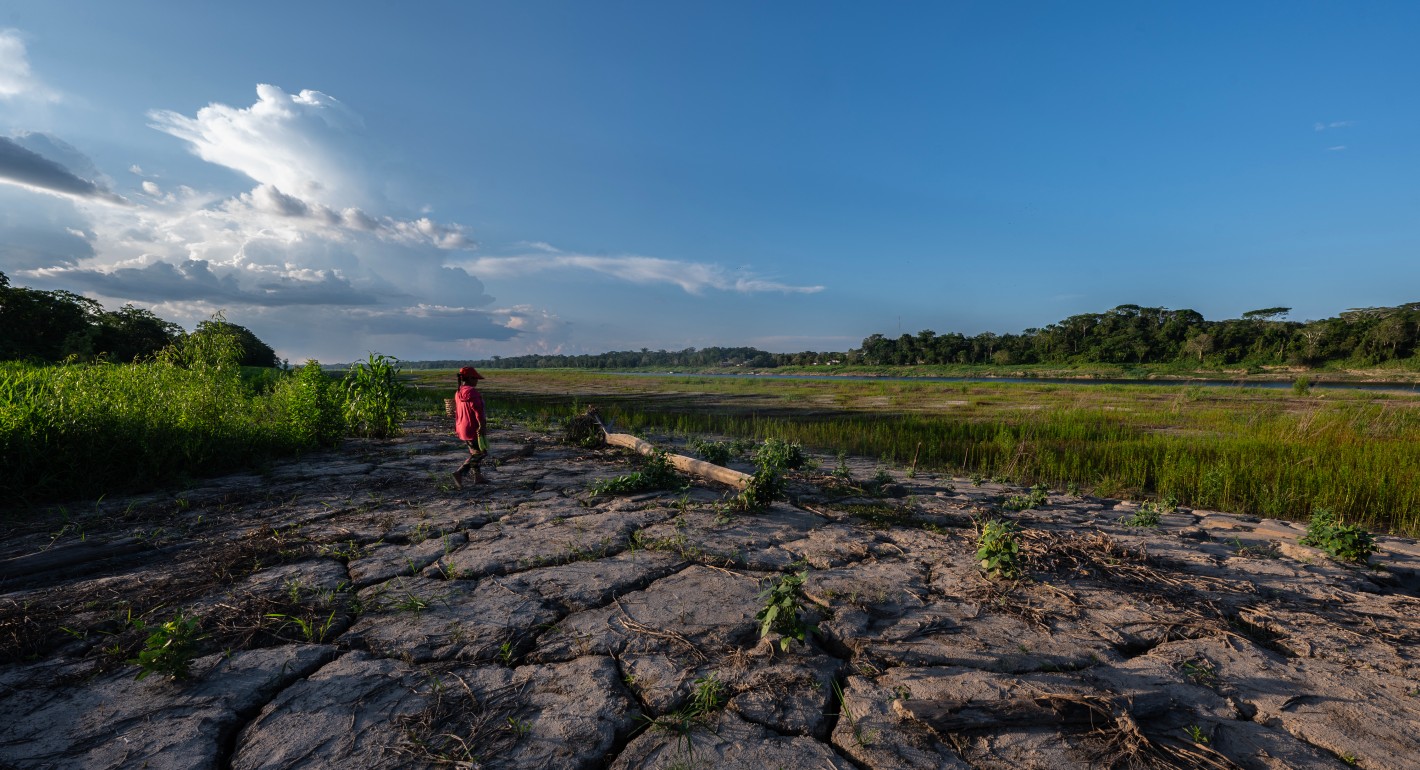
The groundbreaking legislation faces an uphill battle, but it creates a framework for others to follow—especially as the effects of climate change intensify.

Liliana Gamboa, Kayly Ober