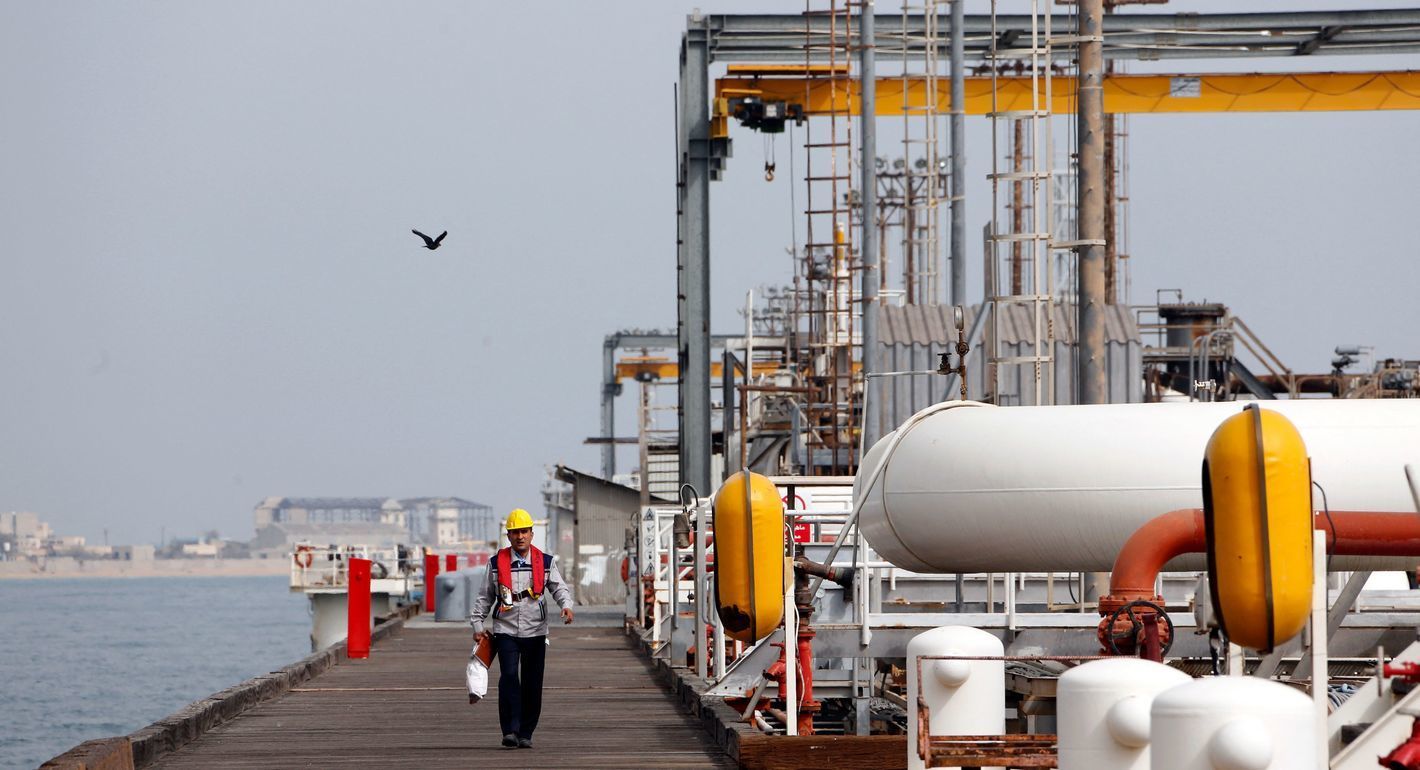
As part of its emergence from political and economic isolation, Libya is converting to an open-market economy after decades of socialist-style policies. Among the most unpopular steps taken by the government so far has been cutting subsidies, which has triggered widespread anger among Libyans.
Between soaring oil prices and the removal of UN and U.S. sanctions—lifted after Libya made amends for the 1988 Pam 103 bombing and abandoned its weapons of mass destruction programs—Libya's economy is booming. Gross Domestic Product climbed by 9 percent in 2003 and by a healthy 4.5 percent in 2004. According to UN estimates of foreign direct investment (FDI), foreign investors have poured into Libya about $4 billion in investments in 2004, making Libya the top recipient of foreign investment in Africa. This amount accounted for one-fifth of all the FDI inflow into the continent—not bad for a previous rogue state. According to Libyan economists, however, the majority of Libyan households have not yet felt the impact of such growth; they live on an average of $200 per month, as public wages have not risen in 30 years and unemployment stands at about 25 percent.
Reformist Prime Minister Shoukri Ghanem, a Harvard-educated economist known for his support of open-market policies, has led Libya 's path to economic openness. Since Ghanem's appointment in June 2003, Libya has unveiled its most sweeping proposals for economic reform in 35 years. Over the next five years, Libya plans to privatize 360 state-owned companies and enterprises. As part of liberalization, Ghanem last November announced plans to cut some $5 billion worth of subsidies. For decades, the state has been subsidizing 93 percent of the value of basic commodities, notably fuel.
Subsidy cuts became a reality in early May when the Libyan authorities imposed a 30 percent hike on fuel prices and a 6 percent increase on diesel prices. During the same month the government doubled the price of electricity for consumers of more than 500 kilowatts per month. Such increases have set off rises in the price of many goods and services as well.
Higher fuel prices have particularly affected Tripoli 's taxis and taken a heavy toll on citizens depending on taxis. Akhbar Libya, a Libyan opposition electronic publication, remarked that the increase in fuel prices came at a time when there are no public transportation alternatives for the Libyan citizen. “Subways and buses are almost nonexistent. Before the price hike, taxi prices were already expensive, as employees would have to spend more than half of their monthly salaries on taxis,” Akhbar Libya claimed.
Another aspect of economic reform has been the easing of restrictions on imports, and recently foreign companies were granted licenses to export to Libya through local agents. As a result, products from all over the world have flooded the previously isolated Libyan market, raising questions about the fate of workers in Libya 's factories, which are unequipped to face competition.
Expressing public anger, press campaigns against Ghanem have recently increased. On May 11, Libyan writer Ezz Al Din Al Lawag wrote in the daily Libya Al Youm that limited-income citizens regard Ghanem as public enemy number one because they view his policies as directed against them. “Ghanem increased fuel and electricity prices and he plans to further cut subsidies and wants to implement a huge plan of privatizing public enterprises that would leave thousands of our laborers jobless,” Al Lawag wrote.
Although Ghanem has said that there are plans to raise public wages and cut taxes, so far such benefits have not materialized. Meanwhile Ghanem has held firmly to the need to restructure the economy, stating publicly in early June that Libyan citizens would have to share the costs. It remains to be seen whether the benefits of reform will trickle down to the Libyan public before the costs lead to much stronger demonstrations of discontent—and perhaps demands for political as well as economic change.
Eman Wahby is an Egyptian journalist.