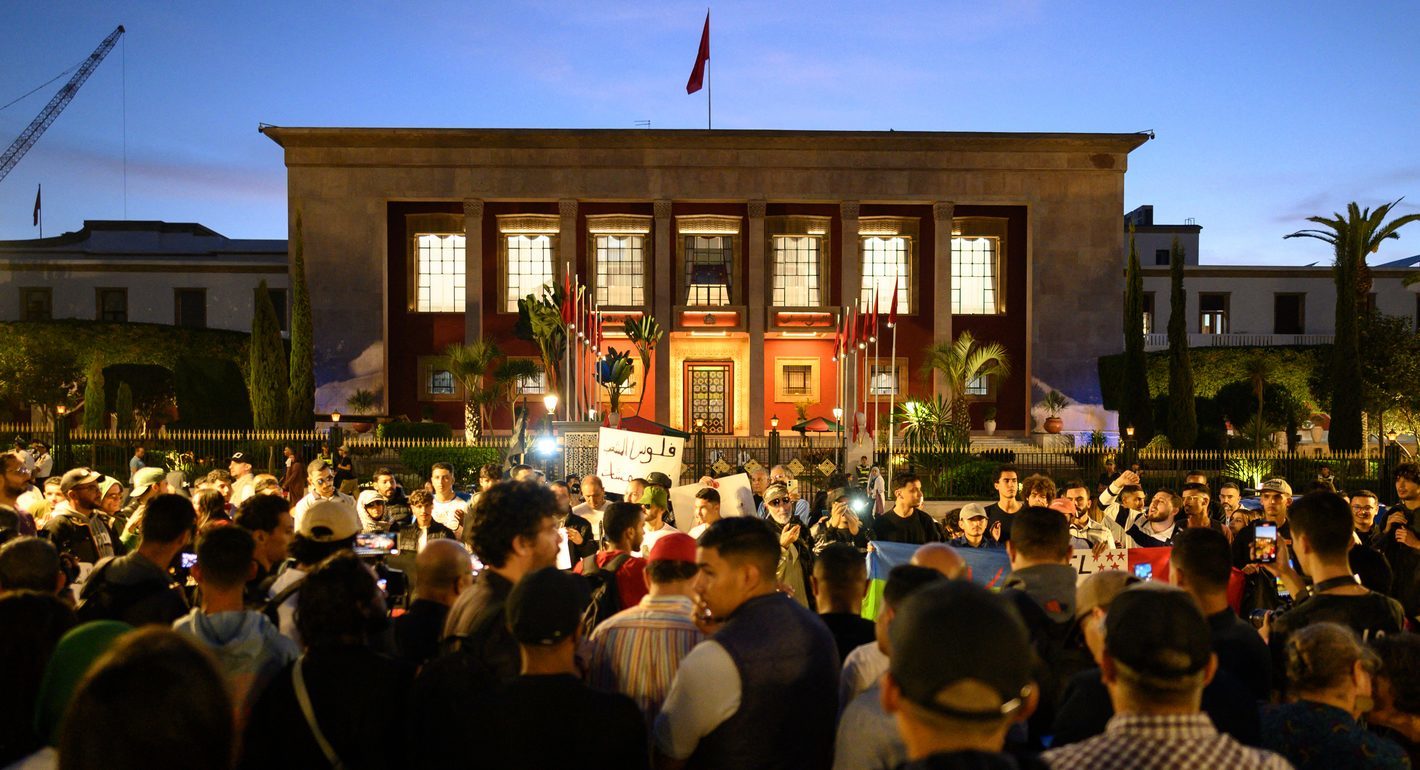
In November 2024, Emirati officials stood around a glowing touchscreen fixed atop a beige podium. Chinese government representatives lingered in the background, smiling as the press documented the event. By the touch of a button, Sheikh Mansour bin Zayed al Nahyan, who also serves as Chairman of the UAE Central Bank, sent 50 million dirhams to China. While Chinese-Emirati financial transactions are commonplace given the massive energy trade between the two countries, this transaction was notable for settling directly in renminbi and dirham, thus completely circumventing dollar intermediation. The optics of this event beg the following question: how has China promoted renminbi use in its bilateral relationships with Gulf states, and what impact has this had on dollar dominance?
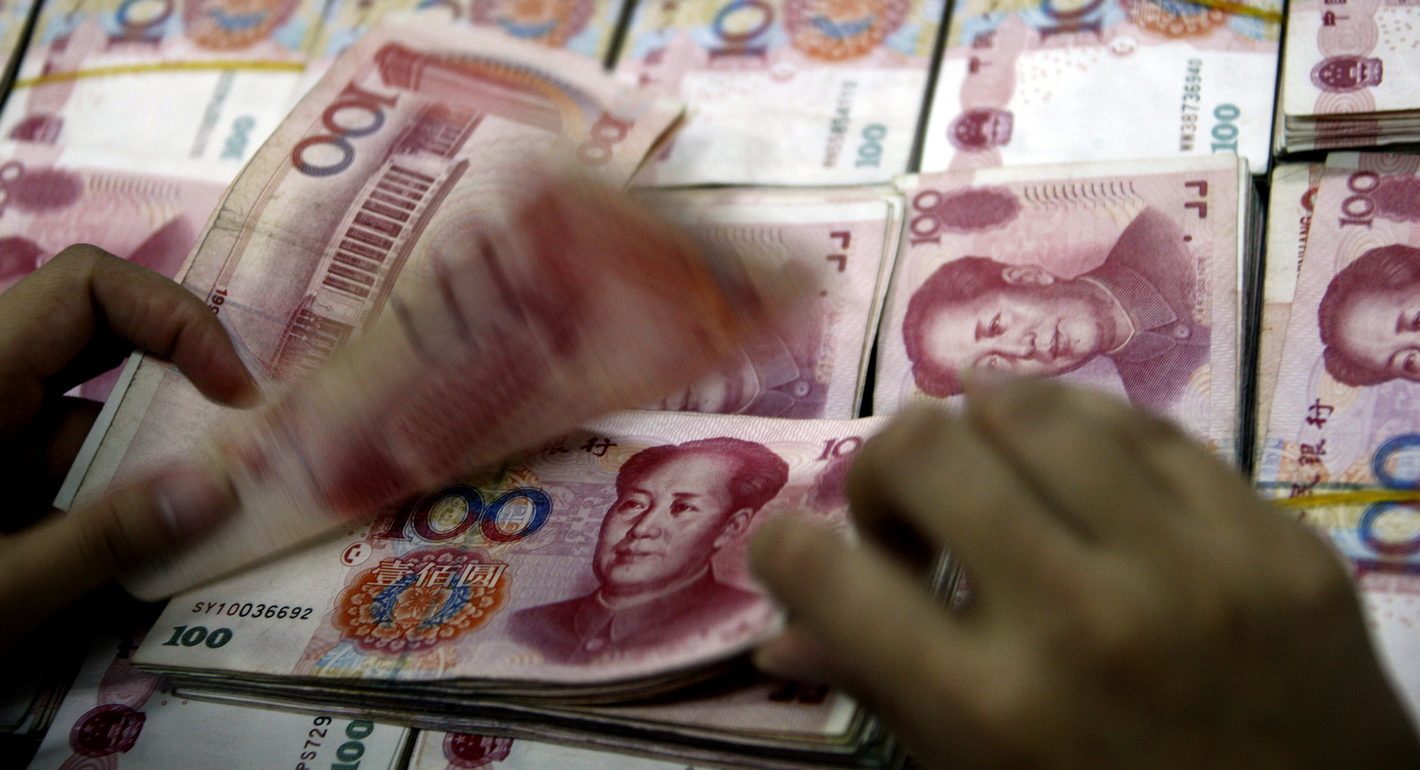
In the past few years, Chinese-Gulf financial connectivity has expanded through a variety of channels. The growth of renminbi (RMB) use cases in the Gulf constitutes an apparent fulfillment of President Xi’s stated aim to make the RMB a “powerful currency,” and it aligns with what many analysts consider to be Chinese officials’ broader ambition of undermining dollar dominance. The twin possibilities of RMB internationalization and de-dollarization have long captured the attention of politicians and commentators alike. However, much of the rhetoric surrounding these issues, both within and outside the Gulf, is hyperbolic and reductive, often prematurely declaring the end of dollar dominance or neglecting the role of other currencies in the global financial system.
The relationship between China-Gulf currency dynamics and the monetary ambitions of U.S. and Chinese officials is far more multifaceted than simply Saudi banks deciding whether to allocate reserves between RMB and USD. An examination of trade clearing and settlement mechanisms, financial flows, and digital payments between the Gulf and China brings greater clarity to the interplay between de-dollarization and RMB internationalization. This study also examines the RMB’s individual progress in the three functions of money: unit of account, medium of exchange, and store of value.
In reality, the contest between the two currencies bears greater resemblance to a multi-front conflict with numerous actors than it does to a simple bilateral war of attrition. Appreciating this complexity is necessary to evaluate the effectiveness of policies pursued by China, the United States, and Gulf states, whether to stimulate investment in Gulf fintech firms, preserve dollar dominance, or hedge against potential U.S. sanctions.
Currency Dynamics in Trade Settlement:
General mechanisms:
Out of the “impossible trinity” of controlled exchange rates, monetary autonomy, and capital mobility, China has selected the first two. Limiting how much RMB foreigners can purchase appears to directly contradict the Chinese government’s aspirations of integrating its currency into international payments. However, the Chinese government has partly sidestepped this obstacle by partitioning the RMB into two separate markets: the domestic market (the CNY) and the offshore market (the CNH). The People’s Bank of China (PBoC) fully controls how much CNY leaves China to influence the exchange rate and protect against capital flight, among other things. However, the PBoC provides only limited guidance to the CNH, leaving it largely subject to market forces. This dual system supposedly enables the Chinese government to promote both Chinese exports through CNY management and RMB globalization through CNH availability.
To incorporate the RMB as a unit of account and medium of exchange in actual trade relationships, Chinese officials have set up bilateral clearing and settlement infrastructure with several Arab Gulf countries. Bilateral clearing mechanisms and banking arrangements enable Gulf nationals and their Chinese counterparts to offset mutual obligations and denominate them in RMB rather than U.S. dollars, while bilateral settlement arrangements allow the actual exchange of RMB to fulfill those obligations. The UAE and Qatar host RMB clearing centers, while the First Abu Dhabi Bank directly participates in China’s Cross-Border Interbank Payment System (CIPS), the official cross-border payment infrastructure for RMB. On the settlement side, Chinese officials have established settlement arrangements with all six members of the Gulf Cooperation Council (GCC). The Chinese government also maintains swap lines with Saudi Arabia, the UAE, and Qatar, likely to allay liquidity concerns associated with increased RMB use.
The establishment of clearing mechanisms may sound like a simple way to displace the dollar’s function as a unit of account in Gulf-related transactions. However, price discovery of the USD relative to the RMB is a market-driven process, in part due to the openness of the U.S. capital account that allows more traders to participate in the buying and selling of dollars. Many international investors thus consider the resulting exchange rates to be fairer and less affected by the preferences of government officials than they do RMB exchange rates. This lack of trust limits RMB clearing and settlement volumes. Chinese officials can create financial infrastructure for currency flows between China and Gulf countries, but other forces would have to stimulate, guide, and maintain these flows.
Sectoral initiatives:
In addition to setting up the fundamental financial architecture necessary to support RMB integration into cross-border payments, Chinese officials are also targeting specific segments of the trading relationship, notably the energy market. Gulf countries have been settling energy transactions in dollars for decades, most famously since the arms-for-dollars understanding emerged between U.S. and Saudi officials in the 1970s. This arrangement created the “petrodollar” system, in which Gulf states cleared and settled oil exports mainly in USD and then recycled excess revenues into other dollar-denominated assets. However, China has ranked as the world’s largest importer of crude oil since 2017 and of liquefied natural gas (LNG) since 2021, though Japan briefly surpassed it in 2022. Simultaneously, all Gulf states make an outsized portion of their income from energy exports, particularly crude oil and LNG, and the United States has become a net petroleum exporter due to the shale revolution. China’s position as the largest buyer of Gulf energy potentially affords it leverage that it could use to encourage the settlement of energy purchases in RMB rather than USD. The resulting “petroyuan” system would significantly and consistently contribute to the RMB’s use as a unit of account and a medium of exchange.
Chinese officials have made some inroads in promoting the RMB in energy markets. In March 2018, the Shanghai International Energy Exchange (INE) launched RMB-denominated crude oil futures contracts that complemented the United States’ West Texas Intermediate (WTI) and the United Kingdom’s Brent. Rather than competing directly with WTI’s and Brent’s pricing of all crude oil, INE filled a market gap by pricing medium sour crude oil while WTI and Brent deal primarily with light sweet crude. Additionally, in 2023, Chinese firm CNOOC made the first RMB-based purchase of UAE-sourced LNG, an instance that marked a small yet meaningful aberration from the typical USD settlement of such purchases.
As Chinese demand for energy imports grows, so too will the opportunities for petroyuan promotion. In poorer Gulf countries, Chinese officials could tie the use of petroyuan to favorable investment terms, such as offering more competitive pricing of Belt and Road projects in exchange for a quota of RMB-settled energy sales. In wealthier Gulf countries, these officials could advertise the petroyuan as a means of consistently diversifying foreign reserves, thereby hedging against potential U.S. sanctions.
Nonetheless, significant obstacles remain to the viability of a petroyuan. First and foremost, Gulf states would struggle to recycle the RMB they earn into other transactions. Perhaps they could use a portion of these RMB holdings to pay for Chinese contractors, imports, or investments. However, by doing so, Gulf states would relegate the RMB to Chinese-exported goods and services while other exports would largely continue to be cleared and settled in dollars; this transaction pattern would not displace the powerful networking effect maintained by the dollar. The Gulf states could exchange unwanted RMB for dollars, but that would nullify the overarching purpose of the petroyuan.
Another factor limiting petroyuan ambitions is that all Gulf states except Kuwait peg their currencies to the USD. By creating a seamless connection between energy sales and the value of their currencies, these states ensure that exchange rate fluctuations do not affect the domestic value of export revenues. Conversely, if Gulf states adopted a petroyuan, exchange rate fluctuations between the RMB and Gulf currencies would introduce undesirable uncertainty for those dependent on energy sales.
The sale of energy commodities constitutes but one segment of China-Gulf trade in which RMB internationalization could occur. Given the strategic importance of this trade as well as potential U.S. retaliation in the case of declining petrodollars, Chinese and Gulf officials may explore RMB promotion in other significant trade segments, such as plastics or organic chemicals. RMB internationalization efforts in these export categories would surely face their own obstacles and opportunities, but similar constraints, like currency pegs to the U.S. dollar, would persist.
Financial Flows:
Beyond the commodities markets, China has bolstered capital market ties with Gulf states. In 2019, China-based MSA Capital and Bahrain-based Al Salam Bank jointly launched a $50 million venture capital fund, which Al Salam Bank stated will involve “Chinese and Middle Eastern capital” and will “target investment opportunities that put innovative Chinese technologies and business models to work within the [Middle East].” Likewise, in 2024, the China Investment Corporation and Bahrain-based Investcorp launched a $1 billion platform to invest in high-growth startups within China and the Gulf. If these funds involve Gulf and Chinese currencies rather than U.S. dollars, and if the volume of these investment transactions reaches a certain threshold, investees may try to find ways to actually use RMB in markets other than those of foreign exchange.
The RMB is also making inroads in the Gulf’s private equity markets. Before Investcorp announced its venture capital fund, the company publicized plans to raise between two and four billion yuan in its first private equity fund denominated in RMB. While U.S. private equity firms like Blackstone Group, KKR & Co. Inc., and Apollo Global Management dwarf Investcorp’s initiative, the Bahraini fund marks a step in the RMB’s potentially expanded use within Gulf capital markets. That said, private equity investments have long time horizons, typically spanning seven to ten years. While these investments would increase the amount of RMB held in the Gulf, they would not contribute to its ongoing circulation and use.
Unlike venture capital and private equity funds, stock markets process numerous transactions every hour. Furthermore, stock markets involve large trading volumes, meaning the RMB does not face a tradeoff between transaction value and frequency within this segment of the capital market. Most of China’s stock market connectivity is with the Gulf’s financial powerhouse: the UAE. In 2014, the UAE’s NASDAQ Dubai listed a one-billion-RMB bond by the Agricultural Bank of China, making the UAE the first Gulf country to list a Chinese bond on a stock exchange and increasing opportunities for regional investors to acquire RMB-denominated assets. Additionally, in 2024, the Shenzhen Stock Exchange and the Dubai Financial Market signed a Memorandum of Understanding (MoU) to promote cooperation in exchange-traded funds (ETFs), among other areas.
China also enjoys growing stock market connections with Saudi Arabia. In September 2023, the Hong Kong Stock Exchange (HKEX) formally recognized the Saudi Stock Exchange. Just two months later, HKEX debuted Asia’s first ETF tracking stocks listed on Saudi exchanges. Then, in 2024, the Shanghai and Shenzhen Stock Exchanges launched the first ETFs in mainland China tracking Saudi-listed shares. These three ETF launches facilitate Saudi officials’ goal of attracting investment for projects such as those tied to Vision 2030, though they do not directly increase Saudi exposure to RMB-denominated assets.
The strengthened connections between stock markets in China and the Gulf coincide with increased investment by Gulf parties in China. The UAE’s Mubadala Investment Company opened an office in Beijing in 2023, and the Saudi Public Investment Fund subsequently opened offices in Beijing and Shanghai. Private UAE-based funds have reportedly acquired equity stakes in several major Chinese companies. Additionally, last year Qatari Holding LLC, a subsidiary of the Qatar Investment Authority, became the third-largest shareholder in China’s second-largest mutual fund company, ChinaAMC, after acquiring a 10 percent equity stake in the firm. These investments indicate the potential for Gulf investors to increasingly view RMB-denominated assets as stores of value through their provision of dividend payments and capital gains, among other things. This perspective could drive more momentum towards RMB clearing and settlement between China and the Gulf.
One capital-market segment in which the RMB has made less progress, in the Gulf or almost anywhere outside of mainland China, is sovereign debt. U.S. Treasuries are widely considered the deepest, safest, most liquid assets in the world, and their market amounts to almost $31 trillion as of June 2026. The Chinese Ministry of Finance also issues government bonds, with about $18 trillion outstanding as of March 2026. However, capital controls and concerns about state intervention all reduce this market’s attractiveness. Perhaps Xi Jinping’s stated goal of making the RMB a reserve currency will lead to an alteration of these dynamics, but a significant change in the current structures of the U.S. and Chinese economies would likely have to occur for investors seeking a financial haven to flee to Beijing instead of Washington.
Gulf and Chinese capital market connectivity is indeed deepening. However, this connectivity consists of a diverse array of initiatives that promote the RMB rather than a sustained and across-the-board preference for Chinese assets compared to their U.S. counterparts. For meaningful RMB internationalization to occur in capital markets, Gulf and Chinese parties would have to agree to clear and settle an enormous quantity of shorter-term and longer-term investments in RMB. Such agreements would entail significant economic and political risks, including likely U.S. retaliation, such as the suspension of defense or investment agreements.
Crypto Competition:
Chinese officials have also worked with their Emirati and Saudi counterparts to incorporate crypto innovation into financial transactions. Under the auspices of the Bank for International Settlements (BIS), China, Hong Kong, and the UAE initiated a project titled “mBridge” in 2021 to promote bilateral central bank digital currency (CBDC) settlement. Saudi Arabia joined the project in late 2024. The fact that only the UAE and Saudi Arabia joined the project is unsurprising. Just a few years earlier, these two countries experimented with their own bilateral CBDC settlement project, which they termed “Project Aber.”
Project mBridge held the promise of bypassing SWIFT, the dominant international payments messaging system and a key underpinning of dollar dominance. Additionally, it potentially would have built on China’s CIPS by integrating secure digital payment rails into RMB-denominated cross-border transactions. In January 2024, through Project mBridge, Emirati officials sent $13.6 million in Digital Dirhams to China over digital payment rails. However, Russian President Vladimir Putin’s increasingly vocal advocacy for a payment alternative to SWIFT preceded BIS officials’ abandonment of mBridge in October 2024. Most likely, the Switzerland-based organization did not want to seem like it was shepherding the development of an anti-USD financial system. However, even without the BIS’s assistance, RMB-denominated transactions through mBridge continue to increase.
Transitioning from traditional to digital payment rails will increase the speed and decrease the cost of cross-border payments between China and its Gulf partners. However, this innovation would not overcome all of the aforementioned structural barriers to RMB internationalization. Additionally, there is no global push for CBDC-based transactions, and businesses across the world seem willing to continue using traditional payment rails. Many companies may view digital payment rails as a beneficial update to the global financial system, as they shrink the gap between invoicing, clearing, and settlement. However, except for those wanting to avoid sanctions through unregulated cryptocurrencies such as Bitcoin, this innovation most likely would not meaningfully alter businesses’ calculus regarding which currencies to use for clearing and settlement.
At most, crypto innovation would signal the RMB’s ability to innovate relative to the USD. However, Chinese officials do not appear to be at the forefront of this payment revolution: the Trump Administration has postured itself as pro-crypto, and Chinese officials have largely restricted domestic crypto payments. The concomitant expanded use and legality of dollar-backed stablecoins further complicate aspirations for dollar displacement by the RMB. As of October 2025, the market for CNH-backed stablecoins was approximately $3.2 million, while that of USD-backed stablecoins was approximately $103 billion.
Conclusion:
Chinese officials have had varying levels of success in promoting the RMB within the Gulf’s commodities and capital markets. Furthermore, the transaction channels for RMB internationalization and de-dollarization are varied and not necessarily interconnected. RMB may begin to circulate more frequently within Saudi stock markets or Bahraini private equity funds, but the energy trade may continue to be consistently cleared and settled in U.S. dollars. That said, sufficient RMB promotion across markets could have a cumulative displacement effect that countervails the dollar’s network effect. If the RMB starts flowing into the gold trade, for example, it could spill over into other reserve assets, like Bitcoin purchases. However, talk of straightforward RMB displacement of the USD does not reflect the reality of currency dynamics. These findings have implications for Gulf, U.S., and Chinese policymakers.
Gulf policymakers should understand the difference between monetary architecture and financial flows. MoUs for stock market connectivity or initiatives with China to develop digital payment rails may serve important signaling functions, such as deterring U.S. policymakers from the use of financial sanctions. However, they do not necessarily result in a reallocation of settlement activity from USD to RMB. Accordingly, Gulf policymakers may want to develop metrics that more accurately gauge RMB usage, such as certain measurements of trade settlement volumes or portfolio investments. These policymakers may also want to increase the interoperability of USD-, RMB-, and local currency-based payment systems, as doing so would avoid the dilemma between USD-based dependency or an RMB-based one.
U.S. policymakers can apply these findings in their efforts to preserve dollar dominance. Ultimately, it is the nature of the dollar system, including the belief that the United States will always make good on its obligations, that encourages the international community to use this currency. Instead of trying to impede Chinese officials’ RMB promotion efforts, U.S. officials may more significantly increase the dollar’s attractiveness by maintaining the liquidity, openness, and credibility of its market. They can do so by avoiding the excessive weaponization of the dollar through sanctions as well as by maintaining a predictable regulatory environment.
Chinese policymakers may want to shift their sights beyond diplomatic initiatives to the fundamental constraints on CNH use. One of these constraints is the Chinese government’s tendency to intervene in the CNH markets in ways disadvantageous to CNH investors. Chinese officials must abstain from such activity and instead seek regulatory reforms to both the CNH and CNY markets that encourage international participation. Global investors’ positive experiences with a reformed investment environment would gradually give rise to RMB’s greater credibility.
An appreciation for this multifaceted relationship may cause discussions about currency to adopt the same qualified tone that is commonly manifest in analyses of diplomatic or security posturing. Within the Gulf, which is actively navigating great power competition on all fronts, such nuance is essential to perceiving the region’s monetary reality.
AI was used for editing this article.