Educational reforms in Gulf Cooperation Council states are often attributed to U.S. pressure, as many in Washington believe that curricula in these countries have encouraged extremism and terrorism. In fact, economic globalization and changes in domestic politics have motivated educational change even more than external pressures related to terrorism. The ascendant, ambitious Gulf countries, especially those with skyrocketing revenues and rapid economic development, are eager to reshape and enhance their international image and fulfilling labor market requirements in a competitive international environment. Politics also have changed in these states, with the Arab-Israeli conflict now taking a back seat to domestic issues and growing nationalist sentiment.
Gulf educational development projects in many cases go well beyond curricular reform and adopt a holistic approach addressing teacher training, instructional methodology, assessment procedures, school buildings, responsiveness to labor market requirements, and foreign language education. It is true that some countries—Saudi Arabia in particular—are modifying their curricula. In the Kingdom, curricula for various religious subjects (Qur’an, Qur’anic recitation, theology, jurisprudence, and studies of the Prophet Muhammad) and the Arabic language have been reorganized and rewritten. Other subjects also have been consolidated and new topics, such as human rights, have been added. Other Gulf countries generally have needed to make only minor changes in religion and Arabic language.
Among the striking shared aspects of educational reform in all of the Gulf countries has been the frankness with which ministries of education have acknowledged poor performance to date. In fact, they sometimes seem to be competing to outdo one another in self-criticism, while agreeing on the need for development and launching various initiatives.
The small Gulf States have been particularly nimble in getting educational initiatives off the ground, focusing on the goal of founding top-notch schools. The United Arab Emirates began in 1999 with the “Vision 2020” plan. It now has “Partnership Schools,” “Schools of Tomorrow,” and “Model Schools;” there are also individual educational councils in each emirate carrying out development plans in cooperation with the UAE ministry of education. In Qatar, there is the “Education for a New Era” initiative overseen by the Supreme Education Council (established in 2002), as well as the “Independent Schools” initiative, in which schools are given broad powers to develop educational methodologies and curricula without centralized government control. The goal is for all Qatari schools to become independent in the coming years. In Bahrain, there are the “Schools of the Future” (established 2004), and the “National Project to Develop Education,” directed by Australian education expert Martin Forest.
In all of these schools, English language education occupies a special place. Math and science education in English have absolute priority in the UAE and Qatari plans, while technology appears to be a prominent feature of the Bahraini experiment. In all three countries foreign experts have a noticeable presence, as do global consulting companies. Officials frequently invoke the experiences of countries notable for educational success—such as Singapore, Canada, and New Zealand—and seek to carry out joint programs with such countries or at least replicate their practices.
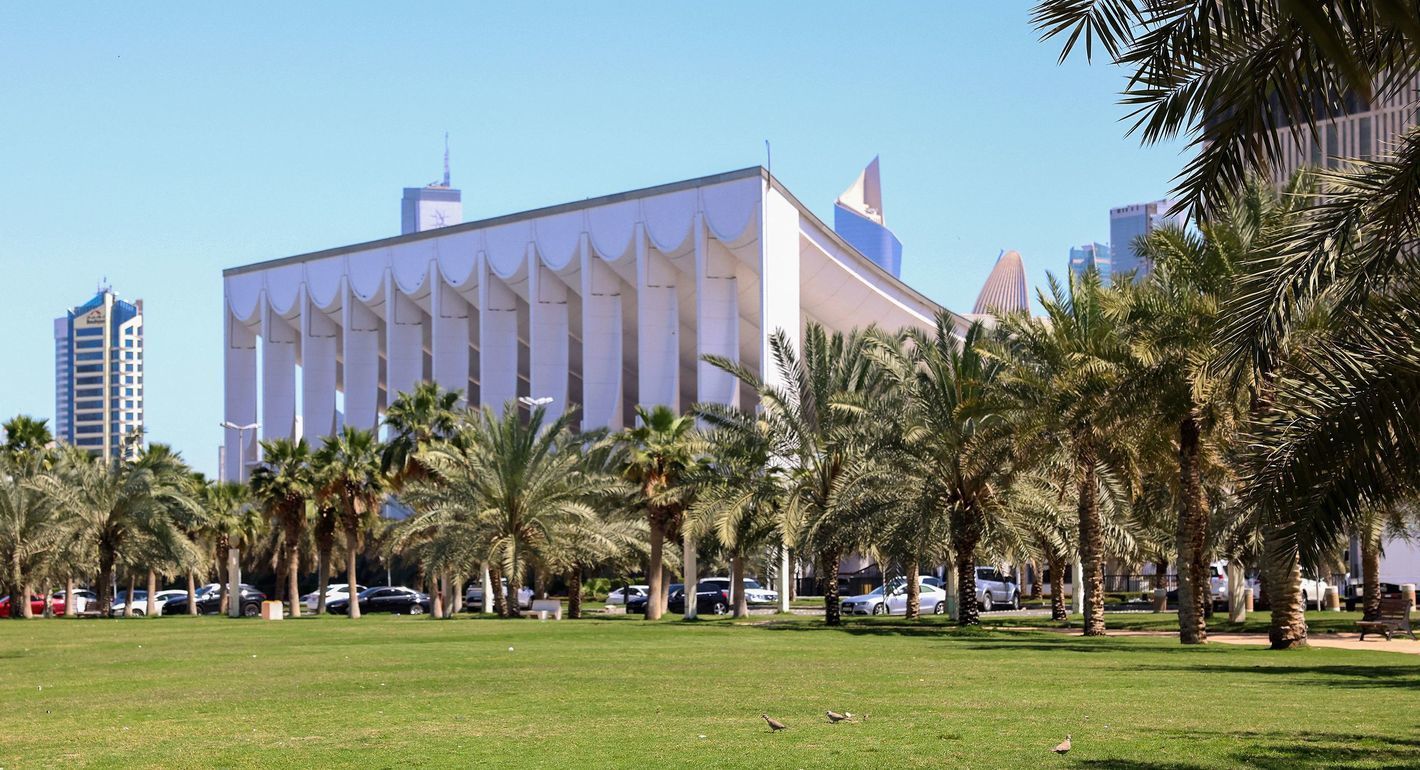
In Kuwait, which has huge oil revenues, the cabinet in 2003 adopted the “Education Development Strategy 2005-2025,” and there is talk of other initiatives, but apparently without trying to approach educational problems in depth or apply experiments as extensive as those in the UAE and Qatar. The debate over education in Kuwait is constrained by ideological confrontations between Islamists and liberals, and dominated by issues such as the mixing of the sexes rather than concern about upgrading quality. In Saudi Arabia and Kuwait, it seems that long educational histories have made the bureaucratic legacy an impediment to far-reaching initiatives, while ideological disputes prevent the emergence of new ideas.
Saudi Arabia has been slower than the small states in introducing educational reform and so far its programs have been less comprehensive. In mid-2007, the “King Abdullah Project for Education Development” was announced; so far the project consists of general principles without operational plans, although 9 billion riyals ($2.3 billion) over six years have already been earmarked.
The fact is that Saudi Arabia’s problem is complicated, for in a country where school students number some five million and teachers are underpaid (monthly salaries at private schools run 2,000 riyals, or U.S. $550; public school salaries are about double that), any reform attempt will be fraught with economic dangers. Any attempt to evaluate teachers and eliminate unqualified ones, for example, would be controversial. In addition there are strong religious currents wary of educational reform. Expanding English language education, for instance, would require fighting major battles on that front.
The educational reforms being introduced by the smaller Gulf countries—flush with hydrocarbon revenues and with a limited number of schools to be reformed—appear promising, but the results of development efforts are still unknown. Previous initiatives have fizzled despite heavy investments and it will be some time before it becomes clear whether the current experiments are succeeding.
Amal Sakr is an Egyptian political researcher specializing in the Gulf. Paul Wulfsberg translated this article from Arabic.