• Research
  • Emissary
  • About
  • Experts
Carnegie Global logoCarnegie lettermark logo
DemocracyIran
  • Donate
{
  "authors": [
    "Abdullah Shayji"
  ],
  "type": "commentary",
  "blog": "Sada",
  "centerAffiliationAll": "",
  "centers": [
    "Carnegie Endowment for International Peace"
  ],
  "collections": [],
  "englishNewsletterAll": "",
  "nonEnglishNewsletterAll": "",
  "primaryCenter": "Carnegie Endowment for International Peace",
  "programAffiliation": "",
  "programs": [],
  "projects": [],
  "regions": [
    "Kuwait"
  ],
  "topics": [
    "Political Reform",
    "Security"
  ]
}

Attribution logo

Source: Getty

Commentary
Sada

Kuwait: A Democratic Model in Trouble

When does contestation between the legislative and executive branches become too much of a good thing?

Link Copied
By Abdullah Shayji
Published on Feb 3, 2009
Sada

Blog

Sada

Sada is an online journal rooted in Carnegie’s Middle East Program that seeks to foster and enrich debate about key political, economic, and social issues in the Arab world and provides a venue for new and established voices to deliver reflective analysis on these issues.

Learn More

As Kuwait heads once more for parliamentary elections in 2009—having held such elections just last year—repeated clashes between the executive and legislative branches are creating doubts about the Kuwaiti model, once a source of inspiration to many in the Gulf and beyond. The Kuwaiti parliament has begun to be seen as an institution obstructing the investment that the Emir hopes can further develop his country’s economy. The fact that the National Assembly has been dissolved three times in nine years, that four governments have stepped down and five others have been formed in less than three years, and that interpellation of ministers has often ended with the government resigning or the National Assembly being dissolved has stripped the Kuwaiti experiment of much of its appeal.

Kuwait can claim some real achievements in political life. From the early 1960s, when Kuwait adopted its first written constitution and its National Assembly was elected by direct secret ballot, the Kuwaiti system has stood out from those of its Arab peers. Although parliamentary life was suspended from 1976-81 and 1986-91 and the Assembly has been dissolved many times, Kuwaitis have elected twelve Assemblies and parliamentarians have questioned more than 40 ministers over the years, including members of the ruling al-Sabah family. Kuwait finally extended the vote to women in 2006, though none have yet been elected to the parliament, and the parliament played a critical role in steering succession in 2006 and revising the electoral law in 2008.
 
In some ways, the existence of a lively political life helps the Emir’s plan to transform Kuwait in the upcoming years into a financial and commercial hub for the region. In January 2009 the country hosted the first Arab summit on economic and social development, asserting the need to gauge development’s role in Arab societies. The Kuwaiti model of freedoms was also on display; after an unprecedented leap in the number of daily newspapers (now fifteen Arabic language and three English language dailies), Kuwait took first place among the Arab countries in the 2008 Press Freedom Index.
 
The free-wheeling Kuwaiti system is more often blamed, however, for impeding economic development.For example, in order to avoid a confrontation between the government and the National Assembly, the Supreme Petroleum Council recently cancelled a multi billion-dollar deal with Dow Chemical to which the state-owned Petrochemicals Industries Co. had agreed in November 2008. The Popular Action bloc had  declared it would insist on questioning the Prime Minister on the deal if it was not cancelled. Similar political pressures jeopardize other projects, including a $15 billion project to build refineries.  The debate has heated up, and the government that  resigned in 2008 singled out three reasons for the current state of affairs: the deteriorating level of dialogue, the arbitrary use of constitutional tools, and the inability of the government to work with the National Assembly in the current atmosphere. In an exceptionally harsh attack, the government blamed the Assembly for “chaos and deviancy in parliamentary practices” after the Assembly insisted on questioning Prime Minister Sheikh Nasser Muhammad Al-Sabah, leading to his resignation—and subsequent reappointment by the Emir.
 
There is not much optimism in Kuwait that the upcoming elections will end this stalemate between the executive and legislative branches. MPs and hopefuls are preparing their campaigns in a somewhat grim atmosphere, and some political figures are declining government positions in order to avoid entering the battle. There is even fear that the Emir might again suspend parliamentary life, which would be a severe blow to the system.
 
Kuwaitis and outside admirers of its political participation model are taking a step back and asking whether  the country is still on course. Some officials, members of the general public, and even intellectuals in Kuwait and the region no longer regard it as an inspirational paradigm, especially compared to Dubai, Abu Dhabi, and Qatar’s versions of capitalist development without the tumult of Kuwaiti politics. The situation is neatly summarized by a new saying in the Gulf: “Kuwait is the past, Dubai the present, and Qatar the future.” Surely this is too harsh a judgment of the Kuwaiti experiment, which deserves more serious examination and revision so that it can again become a workable model and inspiration to the region.

Abdallah Shayji is professor of International Relations at Kuwait University. Paul Wulfsberg translated this article from Arabic.

About the Author

Abdullah Shayji

Abdullah Shayji
Political ReformSecurityKuwait

Carnegie does not take institutional positions on public policy issues; the views represented herein are those of the author(s) and do not necessarily reflect the views of Carnegie, its staff, or its trustees.
More Work from Sada

  • Commentary
    Sada
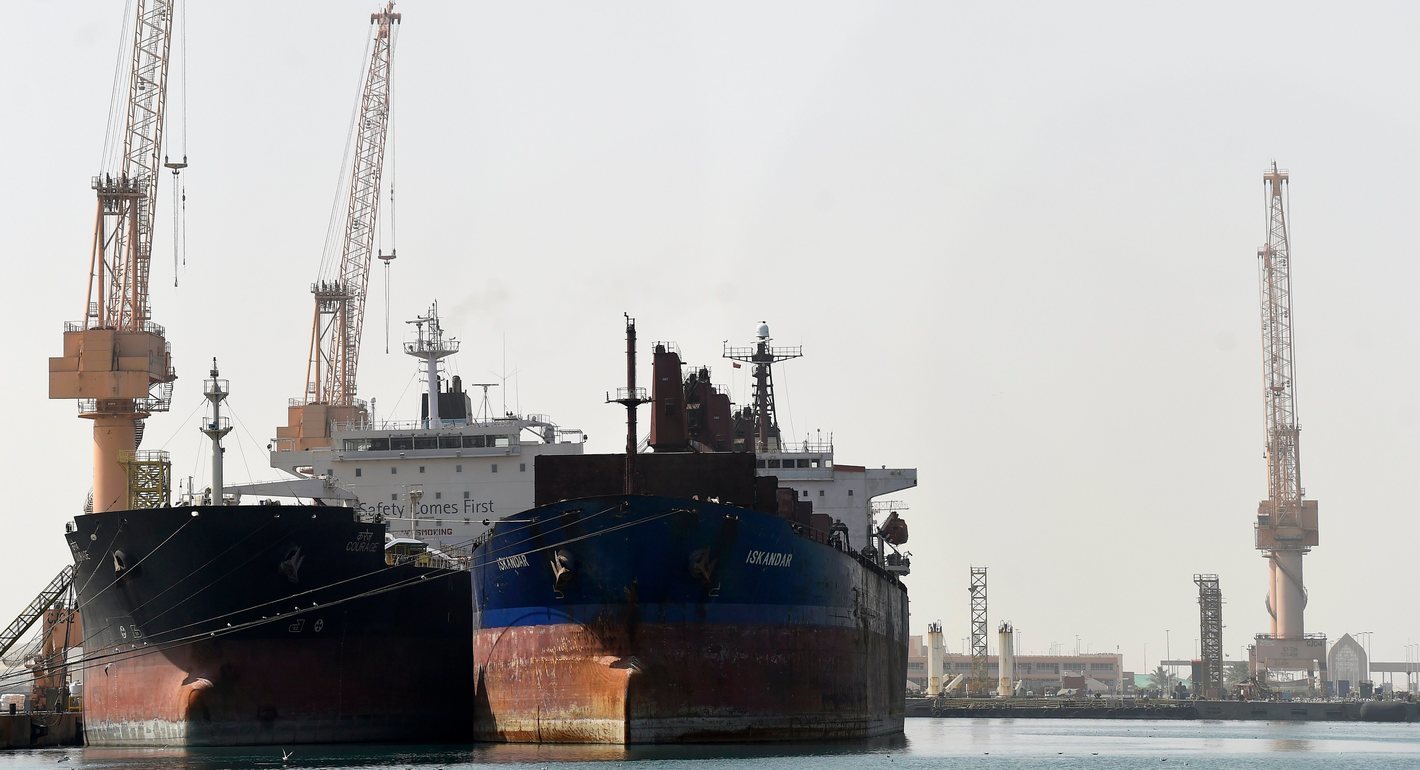
    Duqm at the Crossroads: Oman’s Strategic Port and Its Role in Vision 2040

    In a volatile Middle East, the Omani port of Duqm offers stability, neutrality, and opportunity. Could this hidden port become the ultimate safe harbor for global trade?

      Giorgio Cafiero, Samuel Ramani
  • Commentary
    Sada
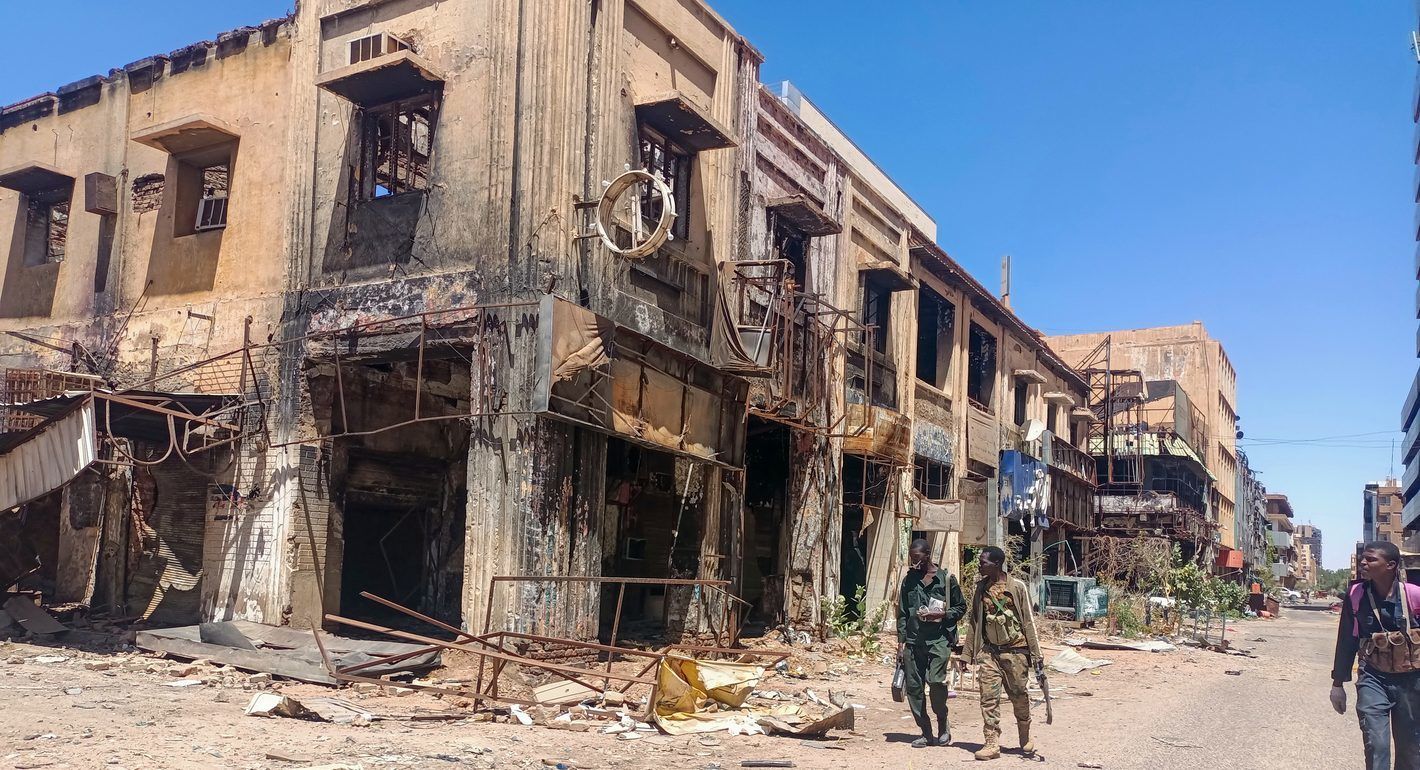
    A War Fueled by Hate Speech: Sudan’s Fall into Fragmentation

    Hate speech has spread across Sudan and become a key factor in worsening the war between the army and the Rapid Support Forces. The article provides expert analysis and historical background to show how hateful rhetoric has fueled violence, justified atrocities, and weakened national unity, while also suggesting ways to counter it through justice, education, and promoting a culture of peace.

      Samar Sulaiman
  • Commentary
    Sada
    Disarming Palestinian Factions in Lebanon: Can a Security Experiment Evolve into Sovereign Policy?

    The August 2025 government decision to restrict weapons to the Lebanese state, starting with Palestinian arms in the camps, marked a major test of Lebanon’s ability to turn a long-standing slogan into practical policy. Yet the experiment quickly exposed political hesitation, social gaps, and factional divisions, raising the question of whether it can become a model for addressing more sensitive files such as Hezbollah’s weapons.

      Souhayb Jawhar
  • Commentary
    Sada
    Kuwait’s Bureaucracy at a Crossroads: Why Government Innovation Stalls and How Analytics Can Reignite Reform

    Kuwait’s government has repeatedly launched ambitious reforms under Kuwait Vision 2035, yet bureaucratic inefficiency, siloed institutions, and weak feedback mechanisms continue to stall progress. Adopting government analytics—real-time monitoring and evidence-based decision-making—can transform reform from repetitive announcements into measurable outcomes.

      Dalal A. Marafie

  • Commentary
    Sada
    Sana'a: The Crisis of Chaotic Street Naming and Absent Urban Planning

    The chaos of street naming in Sana’a reflects the deep weakness of the Yemeni state and its failure to establish a unified urban identity, leaving residents to rely on informal, oral naming systems rooted in collective memory. This urban disorder is not merely a logistical problem but a symbolic struggle between state authority and local community identity.

      Sarah Al-Kbat

Get more news and analysis from
Carnegie Endowment for International Peace
Carnegie global logo, stacked
1779 Massachusetts Avenue NWWashington, DC, 20036-2103Phone: 202 483 7600Fax: 202 483 1840
  • Research
  • Emissary
  • About
  • Experts
  • Donate
  • Programs
  • Events
  • Blogs
  • Podcasts
  • Contact
  • Annual Reports
  • Careers
  • Privacy
  • For Media
  • Government Resources
Get more news and analysis from
Carnegie Endowment for International Peace
© 2026 Carnegie Endowment for International Peace. All rights reserved.