• Research
  • Emissary
  • About
  • Experts
Carnegie Global logoCarnegie lettermark logo
DemocracyIran
  • Donate
{
  "authors": [
    "Ronald Bruce St John"
  ],
  "type": "commentary",
  "blog": "Sada",
  "centerAffiliationAll": "",
  "centers": [
    "Carnegie Endowment for International Peace"
  ],
  "collections": [],
  "englishNewsletterAll": "",
  "nonEnglishNewsletterAll": "",
  "primaryCenter": "Carnegie Endowment for International Peace",
  "programAffiliation": "",
  "programs": [],
  "projects": [],
  "regions": [
    "North Africa",
    "Libya"
  ],
  "topics": [
    "Political Reform"
  ]
}

Attribution logo

Source: Getty

Commentary
Sada

A Defining Moment for the Libyan “King of Kings”

Libyan leader Qaddafi's realization of his dream of African leadership and concurrent celebration of forty years in power offer a chance to redefine his impact on Libya.

Link Copied
By Ronald Bruce St John
Published on Mar 9, 2009
Sada

Blog

Sada

Sada is an online journal rooted in Carnegie’s Middle East Program that seeks to foster and enrich debate about key political, economic, and social issues in the Arab world and provides a venue for new and established voices to deliver reflective analysis on these issues.

Learn More

Muammar al-Qaddafi celebrates his fortieth year in power in 2009, the same year in which he savors the personal triumph of election to leadership of the African Union (AU)—twenty-five years after he was the first and only African leader who sought but was denied the leadership of the Organization of African Unity, predecessor to the AU. Qaddafi has pledged a “year of serious work,” and yet it is unclear whether his energies will be directed toward the African continent only or will also be applied to his own country’s economic and political dilemmas.

Statesman in Waiting
 
In addition to being the self-proclaimed “King of Kings” of Africa, Qaddafi is the chief promoter of a United States of Africa, complete with central bank, parliament, standing army, and single currency and passport. Some of the poorer states of Africa, many of whom have benefited from Libyan largess, support his proposal. Larger states such as Nigeria are less enthusiastic, favoring sub-regional integration as a building block to continental integration at a later stage.
 
The interests of the United States are at stake in the ongoing debate. A proponent of “Africa for the Africans,” the Libyan leader has opposed U.S. initiatives such as the Trans-Sahara Counter-Terrorism Partnership and the U.S. Africa Command (AFRICOM). In turn, Washington worries about Tripoli’s involvement in the domestic affairs of African states, its courtship of minority groups in the Sahel-Sahara region, and its involvement in regional peace-keeping efforts. Libya can be expected to continue to cooperate with the United States in areas such as counterterrorism and trade, but Qaddafi’s AU role gives him a bully pulpit to challenge other U.S. initiatives. In a likely harbinger of the future, Libya recently blocked a UN Security Council statement, supported by the United States, which would have condemned the escalating civilian losses in Darfur.
 
Economic Backsliding at Home
 
But will Qaddafi also make his fortieth anniversary a year in which to come through on the reforms he has been promising to Libyans? Outside the petroleum sector, recent attempts at economic liberalization have been correctly characterized as uncoordinated, hesitant, and piecemeal. And the situation looks set to get worse. Charging that government ministries are centers of mismanagement and graft, Qaddafi has promised to dismantle them, distributing direct to the Libyan people the monies they controlled. In mid-February 2009, he again called on Libyans to endorse his proposal to dismantle the government and redistribute oil wealth. The Basic People’s Congresses considered the idea in February, as the General People’s Congress will do in March. If implemented, the redistribution of oil revenues directly to Libyan citizens will create short-term chaos. By fueling inflation and encouraging capital flight, it will also do considerable long-term damage to the economy.
 
Even reforms to the petroleum sector, long considered a success in terms of efficiency and transparency, have stalled and are now at risk. Faced with declining oil prices, the Libyan leader has threatened to nationalize the oil and gas industry. At the same time, the National Oil Company (NOC) has forced foreign oil producers to renegotiate the terms of agreements concluded in recent years, a move that threatens the sanctity of international contracts. To reduce the oil take of foreign producers from as much as 49 percent to less than 20 percent, NOC has negotiated revised contracts with Eni, Occidental Petroleum, Petro-Canada, and Total, to name a few. If nationalization does occur, it will return Libyan petroleum policy to the 1970s, undermining the positive economic reforms of the last few years.
 
A Constitution?
 
Political reform remains a promise but not a reality, and Qaddafi continues to promote his system of direct democracy as the solution to the world’s political problems. Speaking at the recent African Union summit in Addis Ababa, he decried multi-party democracy, arguing that the Libyan system of direct democracy was the best model for Africa. As for the long-promised new Libyan constitution, the details of the draft document remain a closely guarded secret. Available evidence suggests that when it emerges, the constitution will be more of a social contract—a philosophical statement of governance à la Jean-Jacques Rousseau--than a practical document outlining a system of representative democracy.
 
With those involved in drafting the document citing certain red lines that cannot be crossed—notably Qaddafi’s collected thoughts in The Green Book—it is highly unlikely that the constitution will include core elements of democracy such as the separation of powers, checks and balances, political parties, and free elections. It is equally unlikely that any document released will make more than superficial changes to the formal system of direct democracy created by Qaddafi and used by him to mask an informal, all-powerful government based on family and tribal ties.
 
Defining Moment
 
Through a combination of design and happenstance, 2009 offers the Libyan leader fresh opportunities to redefine himself and his revolution, a remake he has pursued since the turn of the century. Will Qaddafi continue to promote quixotic economic policies, repressive political institutions, and idiosyncratic foreign policies? Or will he take advantage of his new role to build on recent efforts to increase his international stature and return Libya to the global mainstream? It is too early to tell which path Qaddafi will take, but indications so far are not encouraging. Whichever direction he turns, the year 2009 will be a defining moment in his long and controversial career. 
 
Ronald Bruce St John served on the Atlantic Council Working Group on Libya and the International Advisory Board of The Journal of Libyan Studies. He is the author of six books on Libya, including Libya: From Colony to Independence (Oneworld Publications, 2008).

About the Author

Ronald Bruce St John

Ronald Bruce St John
Political ReformNorth AfricaLibya

Carnegie does not take institutional positions on public policy issues; the views represented herein are those of the author(s) and do not necessarily reflect the views of Carnegie, its staff, or its trustees.
More Work from Sada

  • Commentary
    Sada
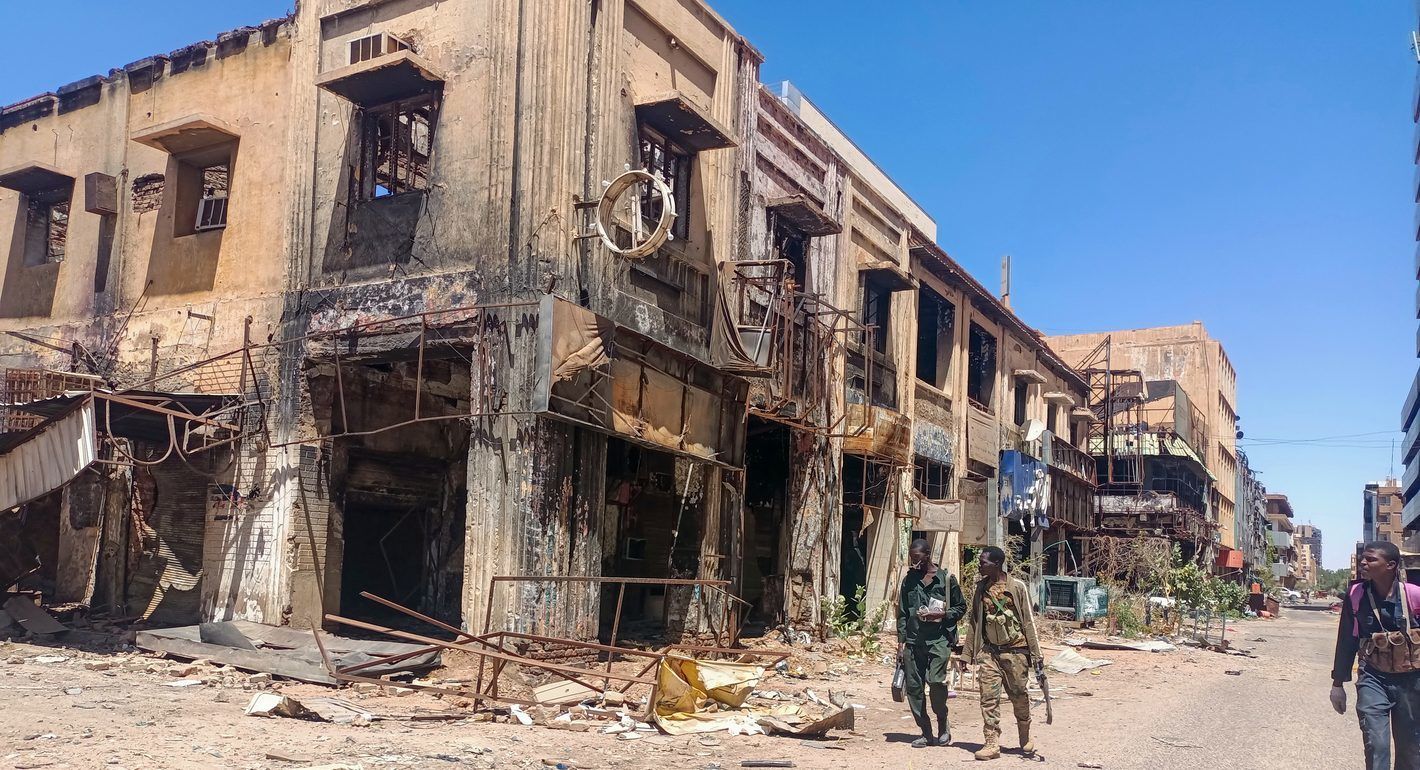
    A War Fueled by Hate Speech: Sudan’s Fall into Fragmentation

    Hate speech has spread across Sudan and become a key factor in worsening the war between the army and the Rapid Support Forces. The article provides expert analysis and historical background to show how hateful rhetoric has fueled violence, justified atrocities, and weakened national unity, while also suggesting ways to counter it through justice, education, and promoting a culture of peace.

      Samar Sulaiman
  • Commentary
    Sada
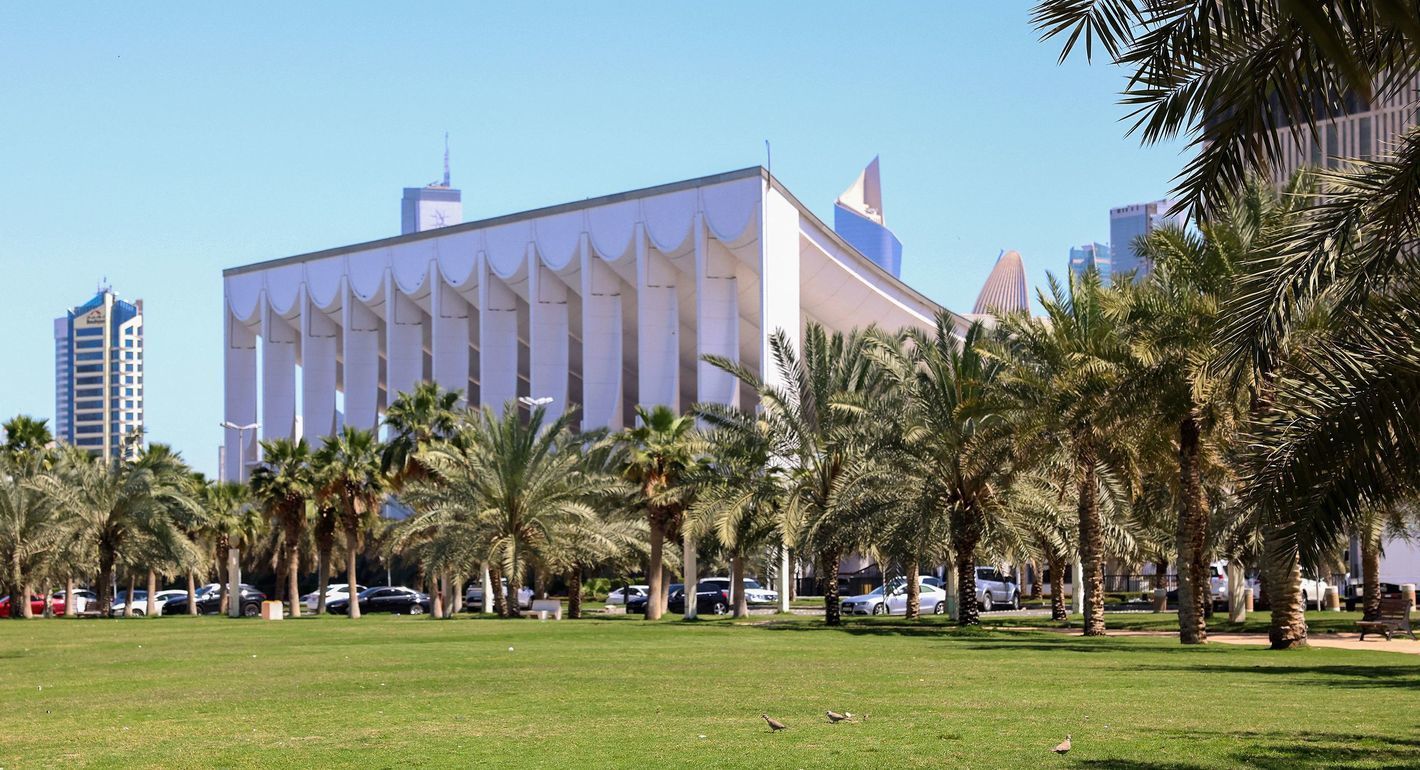
    Kuwait’s Bureaucracy at a Crossroads: Why Government Innovation Stalls and How Analytics Can Reignite Reform

    Kuwait’s government has repeatedly launched ambitious reforms under Kuwait Vision 2035, yet bureaucratic inefficiency, siloed institutions, and weak feedback mechanisms continue to stall progress. Adopting government analytics—real-time monitoring and evidence-based decision-making—can transform reform from repetitive announcements into measurable outcomes.

      Dalal A. Marafie
  • Commentary
    Sada
    Sana'a: The Crisis of Chaotic Street Naming and Absent Urban Planning

    The chaos of street naming in Sana’a reflects the deep weakness of the Yemeni state and its failure to establish a unified urban identity, leaving residents to rely on informal, oral naming systems rooted in collective memory. This urban disorder is not merely a logistical problem but a symbolic struggle between state authority and local community identity.

      Sarah Al-Kbat
  • Commentary
    Sada
    The Political Economy of Social Data: Opportunities and Risks of Digitizing Morocco’s Social Targeting System

    While Morocco’s shift to a digitized social targeting system improves efficiency and coordination in social programs, it also poses risks of exclusion and reinforces austerity policies. The new system uses algorithms based on socioeconomic data to determine eligibility for benefits like cash transfers and health insurance. However, due to technical flaws, digital inequality, and rigid criteria, many vulnerable families are unfairly excluded.

      Abderrafie Zaanoun

  • Commentary
    Sada
    Saudi Arabia's Cautious Approach to the Syrian Kurds: Balancing Stability and Geopolitical Interests

    Saudi Arabia’s cautious stance on the Syrian Kurds reflects a delicate balance between leveraging Kurdish autonomy to counter Iran’s influence and managing the risks of destabilizing Syria’s territorial integrity. While Saudi Arabia seeks to safeguard its interests in the region, it remains wary of the potential internal and external consequences of supporting Kurdish autonomy.

      Mohammad Salami

Get more news and analysis from
Carnegie Endowment for International Peace
Carnegie global logo, stacked
1779 Massachusetts Avenue NWWashington, DC, 20036-2103Phone: 202 483 7600Fax: 202 483 1840
  • Research
  • Emissary
  • About
  • Experts
  • Donate
  • Programs
  • Events
  • Blogs
  • Podcasts
  • Contact
  • Annual Reports
  • Careers
  • Privacy
  • For Media
  • Government Resources
Get more news and analysis from
Carnegie Endowment for International Peace
© 2026 Carnegie Endowment for International Peace. All rights reserved.