

Commentary
Syria's transition promised a fresh start. But are old habits of power making a comeback? This analysis looks at the warning signs and what it will take to build a more accountable state.
Sima Beitinjaneh
{
  "authors": [
    "Maâti Monjib"
  ],
  "type": "commentary",
  "blog": "Sada",
  "centerAffiliationAll": "",
  "centers": [
    "Carnegie Endowment for International Peace"
  ],
  "collections": [],
  "englishNewsletterAll": "",
  "nonEnglishNewsletterAll": "",
  "primaryCenter": "Carnegie Endowment for International Peace",
  "programAffiliation": "",
  "programs": [],
  "projects": [],
  "regions": [
    "North Africa",
    "Morocco"
  ],
  "topics": [
    "Democracy"
  ]
}

REQUIRED IMAGE
The Moroccan regime has employed roundabout methods to strengthen its grip over the institutions still most capable of criticism: the independent and international press.
As political parties have become discredited in Morocco, the state has turned its attention increasingly to independent and international media as the remaining critical voices to be silenced. The police temporarily banned the daily Akhbar al-Youm in October 2009, and its editor was prosecuted on charges that he had illicitly bought a house for less than market value. The headquarters of Le Journal Hebdomdaire was shut down in January 2010 for good due to its accumulated debts, among other justifications. The newspaper al-Michaal was blocked from publishing on the grounds that its editor had been sentenced in November 2009 to a year in jail for disseminating false information about the king’s health. The Arabic-language magazine Nichane, the best selling weekly publication in Morocco, shut down its operations in October 2010 due to an economic boycott by the public sector and companies close to the state after running afoul of high-ranking officials. Most recently, al-Jazeera’s activities in Morocco were suspended indefinitely as of the end of October. By looking at these cases and many others, the methods used to quash criticism become clear.
Stifling the Press, Tunisian-style
Moroccans call it “the Tunisian method:” using roundabout means to portray targeted newspapers or journalists as having violated the law, morals, sacred taboos, or national values. Once such a smear campaign has been launched, the government can claim that prosecution is a routine legal matter entirely unrelated to the defendant’s political stance or editorial line. State-owned television channels, radio stations, and the official news agency all can spread this “news,” as the public still largely draw its information from the audio-visual media (more than 90 percent of information produced and distributed in Morocco is drawn from official or semi-official sources).
State-owned stations have also manipulated popular figures to mobilize public opinion. For example, in the case of Aboubakr Jamai, the editor of Le Journal Hebdomdaire, state-owned TV channel 2M accused Le Journal of having published the Danish caricatures insulting the Prophet, even though this was demonstrably false. 2M then asked the popular singer Omar Sayed for his opinion about the caricatures being re-published, which he condemned without realizing that 2M was using the issue to discredit Le Journal.
There are also several other means Moroccan authorities use to exert pressure on independent newspapers or to incite public opinion against them before delivering the coup de grace. In advertiser boycotts, for example, the state pressures top businessmen and companies to withdraw advertising from the offending newspaper. Some public relations companies reportedly even have semi-official lists with newspapers out of official favor marked with an “X” to indicate that they should not advertise with them.
The flip side of the boycott involves encouraging wealthy businessmen close to the government to create well-funded media groups that pour millions of dirhams into officially-sanctioned advertising in newspapers that might have a circulation of no more than 2,000. Favored newspapers are then able to pay journalists handsome salaries that many of the independent newspapers cannot match.
Questioning the patriotism of journalists who criticize the regime’s authoritarianism or accusing them of disparaging Islam or morality is a tried-and-true method. This is what happened with Nichane and the prominent journalists Zineb al-Rhazoui, Driss Ksikes, and Ali Amar in various cases from 2007 to 2010. The targeted publication, particularly if it is of a progressive slant, might also be accused of evading taxes and social security payments, and could even be shut down under this pretext, as happened with Le Journal Hebdomadaire.
It is also possible to accuse journalists critical of the monarchy of anti-Semitism. This happened in the case of Ali Lmrabet (former editor of Le Journal Hebdomdaire and Demain) who ironically had earlier been accused of being pro-Israeli after becoming the first Moroccan journalist to interview Benjamin Netanyahu.
Finally the government sometimes purchases an independent newspaper in order to dictate its editorial line, or pushes it into bankruptcy by imposing steep fines. Nearly $1 million in fines were imposed on both al-Massae and Economie & Entreprises.
Pressing the Foreign Media
With foreign media outlets that cover Moroccan domestic affairs, the government begins by trying to indirectly impose the hiring of pro-regime journalists. The ministry of communications is wont to refuse to issue accreditation to members of the media who are hand-picked by the foreign media organization itself. This is happening currently with AFP, which was informed by the minister of communications that the journalist Omar Brouksi was unacceptable to the authorities.
Al-Jazeera had a similar experience. When it protested that it would not fire journalists simply because the government rejected them, the government responded by closing al-Jazeera’s office in Rabat at the end of October 2010. The ministry of communications issued a statement saying that al-Jazeera had “deviated from the rules of serious and responsible journalism” and that al-Jazeera’s editorial line towards Morocco “blatantly damaged its interests, most notably its territorial integrity, which enjoys a firmly established national consensus amongst all segments of the Moroccan people.” Oddly, al-Jazeera had shown itself to be rather neutral towards the Western Sahara issue, and if anything, due to its Arabist, Islamic slant, regularly defends the unity of Arab countries, whether in Sudan, Morocco, or Yemen. But the aim of the government statement was less to make an accusation than to drum up public opinion against the most popular foreign channel in Morocco.
Why is this media crackdown happening? And why are Moroccan authorities focusing their ire on the international media, in particular broadcast media? The answer to the second question is that the Moroccan printed press overall still has a quite limited mass impact. The total daily circulation of the country’s newspapers is only 330,000, which is a mere 1.1 copies for every 100 citizens. Regarding the first point, media crackdown campaigns are not at all new in Morocco. But in recent years, the independent press has played an increasingly prominent political role. In Morocco’s last legislative elections in 2007, the ruling establishment was able to push the overwhelming majority of the parties with significant popular support to join the government – a weak government unable to set the country’s political agenda or to take action without a signal directly from the king or one of his influential advisers. For the past two years, the establishment has been trying its utmost to strengthen its grip over the institution still most capable of criticism: the independent press.
Dr. Monjib is a political analyst and historian (University of Mohammed V-Rabat). He is the author of Islamists versus Secularists in Morocco (ed.): Amsterdam, IKV, 2009.
Maâti Monjib
Maâti Monjib is a political analyst, human rights activist, and historian at the University of Mohammed V-Rabat.
Carnegie does not take institutional positions on public policy issues; the views represented herein are those of the author(s) and do not necessarily reflect the views of Carnegie, its staff, or its trustees.
Syria's transition promised a fresh start. But are old habits of power making a comeback? This analysis looks at the warning signs and what it will take to build a more accountable state.
Sima Beitinjaneh
From anime heroes to online gaming communities, Morocco’s Gen Z is building a new protest culture. What does this digital imagination reveal about youth politics, and how should institutions respond?
Abdelilah Farah
Is Morocco’s migration policy protecting Sub-Saharan African migrants or managing them for political and security ends? This article unpacks the gaps, the risks, and the paths toward real rights-based integration.
Soufiane Elgoumri
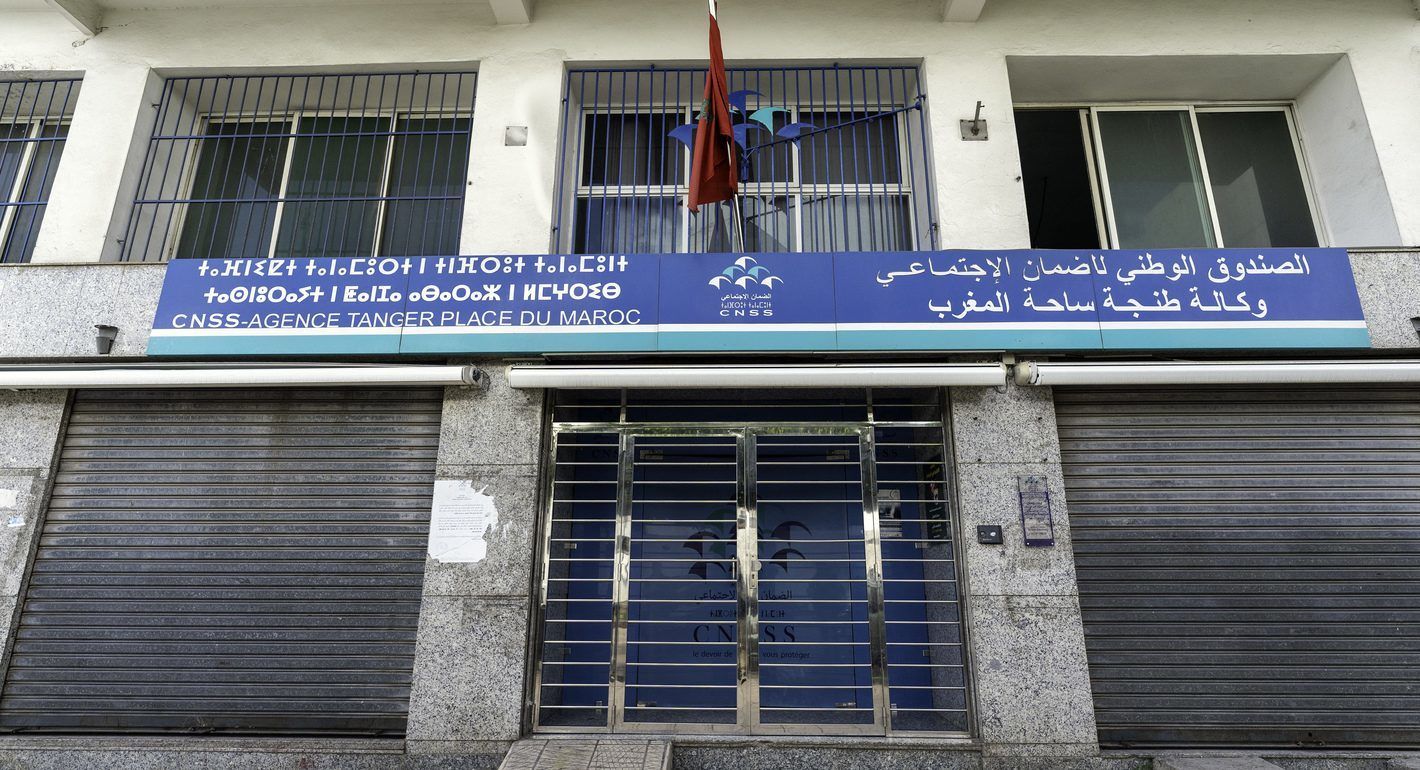
While Morocco’s shift to a digitized social targeting system improves efficiency and coordination in social programs, it also poses risks of exclusion and reinforces austerity policies. The new system uses algorithms based on socioeconomic data to determine eligibility for benefits like cash transfers and health insurance. However, due to technical flaws, digital inequality, and rigid criteria, many vulnerable families are unfairly excluded.
Abderrafie Zaanoun
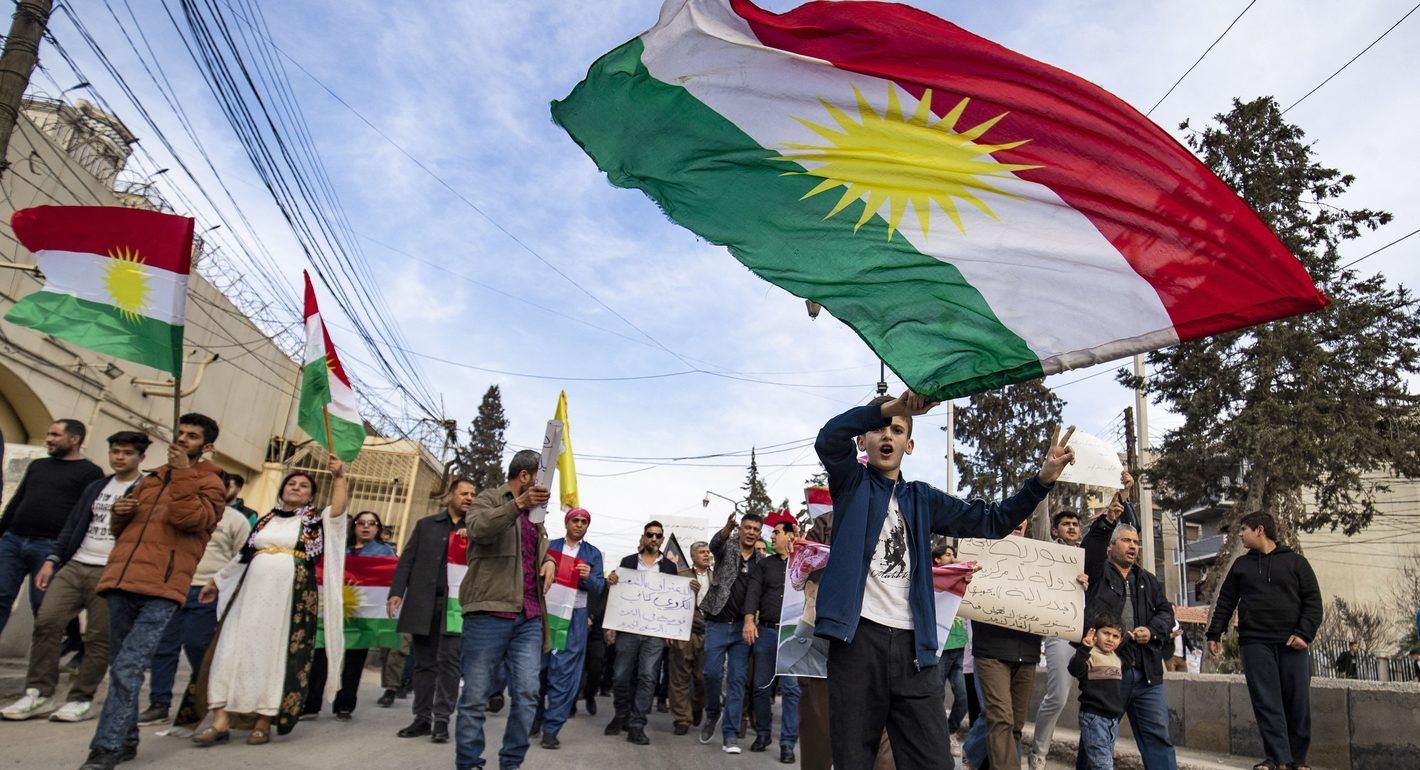
Saudi Arabia’s cautious stance on the Syrian Kurds reflects a delicate balance between leveraging Kurdish autonomy to counter Iran’s influence and managing the risks of destabilizing Syria’s territorial integrity. While Saudi Arabia seeks to safeguard its interests in the region, it remains wary of the potential internal and external consequences of supporting Kurdish autonomy.
Mohammad Salami