

{
  "authors": [
    "Suliman Baldo"
  ],
  "type": "commentary",
  "blog": "Sada",
  "centerAffiliationAll": "",
  "centers": [
    "Carnegie Endowment for International Peace"
  ],
  "collections": [],
  "englishNewsletterAll": "",
  "nonEnglishNewsletterAll": "",
  "primaryCenter": "Carnegie Endowment for International Peace",
  "programAffiliation": "",
  "programs": [],
  "projects": [],
  "regions": [],
  "topics": []
}
Source: Getty
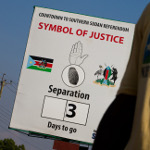
What to Expect after the South Sudan Referendum
The likely vote for secession by south Sudan on January 9 raises questions about whether the two sides will be able to work out viable border arrangements, whether the south can remain politically cohesive and become economically viable, and how the north will handle other separatist movements.
It is a foregone conclusion that southerners will opt for independence from the North in the January 9 referendum on self-determination. How the ruling National Congress Party (NCP) will react to the secession of the resource-rich south and whether the internal cohesion of the southern Sudanese People’s Liberation Movement (SPLM) will survive beyond the referendum, on the other hand, are fuelling deep anxieties locally, among Sudan’s Arab and African neighbors, and within the international community. It was difficult enough getting to this juncture; intense regional and international pressure on and cajoling of the parties into signing the 2005 Comprehensive Peace Agreement (CPA) were required to ensure a peaceful process.
Preparations for the referendum started late and negotiations on critical issues proceeded slowly. Mediated by the African Union (AU), the talks on the status of the disputed Abyei region and the inter-related issues of north-south border demarcation, citizenship, and the sharing of oil revenue inched forward haltingly, with both parties showing little disposition to compromise. Initially, Khartoum hardliners appeared to be spoiling for a fight over the predictable outcome. Particularly distressing were statements made by several NCP government and party officials calling for the expulsion of the estimated two million southerners living in the north in retaliation for a vote for secession. While the NCP later reined in statements from officials overtly hostile to southerners, it did continue to use citizenship as a political tool in the final status negotiations; the north will deny southerners living there the freedoms of residency, work, movement, and property extended, for example, to Egyptian residents in Sudan.
The hardening of positions on citizenship would hurt populations on both sides of the border, as many southerners are economically integrated in the rural economies of adjacent northern communities, mainly as agricultural and manual laborers. A likely response from the SPLM to the threatened massive denaturalization and expulsion of southerners living in the north would be to attempt to block the seasonal migration of northern pastoralist groups whose livelihoods depend on spending part of the year in the south with their animals, a sure recipe for disaster. In order to ensure the wellbeing of their populations, the NCP and the SPLM will need to agree on a soft border, allowing free movement and economic exchanges, as recommended by AU mediators.
Divisive public statements and hostile official propaganda notwithstanding, pragmatic considerations pushed the SPLM and NCP to agree, however reluctantly, on outstanding issues. Southern Sudan remains entirely dependent on oil revenues, which must be split equally with Khartoum under CPA provisions, while Khartoum too had come to rely on revenues from the southern oil fields, which represent three quarters of national oil production. Khartoum’s interest in an agreement was obvious, but the SPLM needed the agreement because the south is landlocked and must depend on refineries and pipelines in the north to get the oil to market.
By year’s end, the NCP appeared resigned to the prospect of an independent south Sudan. Fearing a predictable weakening of its grip on power in the rest of Sudan following the separation of the south, however, it pulled out of the Darfur peace talks jointly mediated by the AU and the UN and facilitated by Qatar. The security situation has deteriorated in Darfur as government forces seek to crush and punish the supporters of the Justice and Equality Movement and the two factions of the Darfur Sudan Liberation Movement. Such groups are biding their time, hoping that an independent southern Sudan will back their demands for genuine power- and wealth-sharing arrangements for Darfur as well as meaningful reparations for victims of the war, which the government has been reluctant to concede so far.
Moreover, other large minority groups in the Nuba Mountains and the South Blue Nile, states where the SPLM was a governing partner with the NCP during the six-year transition but where it has not demobilized tens of thousands of its fighters, have strong ethnic and political ties to the south. Top SPLM leaders recently made a thinly disguised threat to return to war if hard-won gains for minority interests in the north were abandoned after the referendum. Converging insurgencies in the Darfur, Nuba Mountains, and South Blue Nile regions would spell doom for northern Sudan, the other new state emerging from the January referendum.
In the south, two major concerns are whether the current unity of purpose created by the referendum will survive beyond it and how the independent south will achieve economic prosperity. Ethnic and political tensions that continue to stoke localized intercommunal violence in the region are likely to be further exacerbated in the emerging new state. SPLM leaders will need to cease high-handed dealings with opponents and independent voices and become more inclusive and accommodating of the multiple constituencies of the south to ensure peace and stability within the new state. Furthermore, the southern Sudanese have waited in vain for economic peace dividends during the interim period, as SPLM leaders wasted valuable resources on vanity projects and perks for the ruling elite. The new state will need to adopt transparent and democratic governance standards, as well as zero tolerance for official corruption, if it hopes to avoid the prospect of state failure.
Suliman Baldo is director for Africa at the International Center for Transitional Justice.
About the Author
Suliman Baldo
Carnegie does not take institutional positions on public policy issues; the views represented herein are those of the author(s) and do not necessarily reflect the views of Carnegie, its staff, or its trustees.