Lebanon is often susceptible to wider regional instability but has remained stable since the start of the Arab uprisings. Should the country experience spillover effects from continued popular unrest in the Levant, most Lebanese expect the Lebanese Armed Forces (LAF) to play a stabilizing role. The LAF has demonstrated a consistent preference for minimizing and containing the effects of regional unrest that could destabilize the country’s fragile post-war political order. Unlike most state institutions, it has operated with relative independence from sectarian politics since the end of the civil war. However, political forces are increasingly trying to penetrate the military—working hard to “capture” at least part of the institution so as to foil the military’s attempts to check civilian autonomy.
Lebanon has a long history of precarious civil-military dynamics—a direct byproduct of the country’s sectarian system. Lebanon’s post-independence sectarian factions have traditionally been the country’s most important centers of political power. With few exceptions, weak state structures serve as arenas for contestation between competing sectarian and cross-sectarian political forces. The LAF is no exception, though unlike most state institutions it has had more episodes of relative autonomy: it briefly played a major role in national politics in the late 1950s and 1960s, and during the presidency of General Fuad Chehab, the first commander of the newly formed LAF, the military and its intelligence branch, the Deuxieme Bureau, attempted to regulate political life in Lebanon. This in turn triggered a backlash supported by many of the country’s political forces during the 1970-1976 Franjieh Presidency. The replacement of key Deuxieme Bureau senior officers and the sidelining of “Chehabist” officers signaled the downgrading of the military’s role in Lebanese politics.
Lebanon’s 15-year civil war presented yet another key setback to the military. During the conflict, the LAF experienced internal pressures that led eventually to its partial fragmentation. Sectarian forces and their militias played the leading role in shaping domestic and security politics in Lebanon, and in the wake of the civil war, Syrian hegemony regulated both state-society and civil-military dynamics; Syria’s military and intelligence apparatus vetted high level administrative appointments, streamlined Lebanon’s foreign policy orientation, and maintained a check on the country’s sectarian political forces, as well as sustaining the neopatrimonial networks that served Syria’s interests. The withdrawal of Syrian forces from Lebanon in 2005 allowed Lebanese sectarian politics to re-assert its roles in shaping state-society and civil-military relations. Although the military in post-war Lebanon is no longer a political force to be reckoned with, the country’s dominant communities distrust state institutions they were unable to capture outright in the wake of Syria’s withdrawal.
There have been competing efforts to penetrate and shape the orientation of the military, first by the pro-Western March 14 Alliance from 2005-2009, and since 2009 by the March 8 Alliance aligned with Syria and Iran. During the first period, officers trained in Syria or with ties to pro-Syrian political forces were marginalized or encouraged to retire, while during the second, officers who had received US military education (or were suspected of ideologically supporting Washington) were similarly sidelined. During both periods, officers viewed as ideologically compliant or supportive were solicited for information about the military’s internal mechanics and efforts were made to promote their professional advancement.
As a result of the repeated political buffeting since 2005, the LAF has struggled to maintain morale. As less capable or under-qualified officers seek the support of competing elites to prolong their careers and ensure their futures, patronage is more widespread than ever. Within the LAF, Christian officers (who regard themselves as the ideological and qualitative backbone of the LAF officer corps) grow increasingly frustrated; due to divisions among Christian political forces, these officers are not as explicitly linked to specific feudal political elites, unlike some of their Sunni, Shi‘a, or Druze counterparts. As one senior Christian officer put it, “They have nowhere to go" referring to Christians’ weakened political role in post-Ta’if Lebanon, broad dissatisfaction with the state of post-war Christian politics, and a desire to bolster the role of the state. Across communal lines, there are officers who want the military to be better insulated from politics and play a more prominent role in shaping stability.
Across the country’s political spectrum, these dynamics create apprehension about the future role and development of a military that no single community controls and that could one day serve to check party political autonomy. As a consequence, civil-military efforts remain atrophied and devoid of trust—lacking adequate coordination or cross-confessional support on military development, budgeting, or organization of future defense needs. Despite repeated requests, the LAF could not secure even modest national funding for military development and procurement. The country’s political actors have also excluded the military from even a consultative role in formal discussions of Lebanon’s future national defense strategy in the context of the National Dialogue. Long-term challenges are likely to remain largely unaddressed: the absence of a monopoly on military power relative to Hezbollah; uncertainty over how to address the overstaffed senior officer corps; and the transformation of the military into a welfare structure (as more officers turn to lifelong careers as a means of socio-economic advancement and financial security).
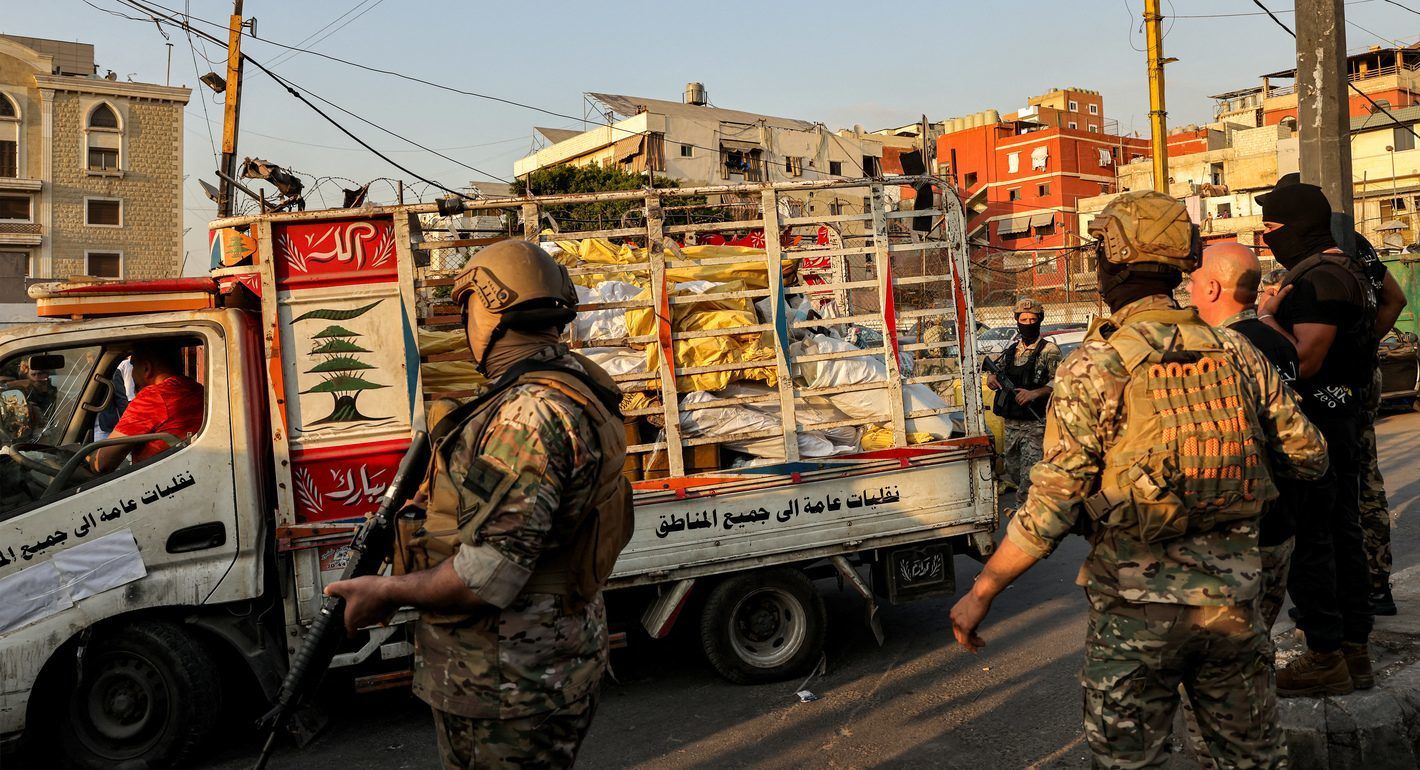
Today, the struggle for political power between Lebanon’s Shi‘a and Sunni communities and the risk of sectarian conflict in Syria only serves to further aggravate an already tenuous order and pose key challenges to internal security. Given popular mistrust of the Internal Security Forces (ISF) due to perceived links to Sunni politicians, the LAF as a cross-confessional institution has little alternative but to secure the “least worst” common denominator by remaining centered on keeping the peace and limiting the risk of escalation: containing growing fault lines among communities by deploying units to where tensions rise. This includes, of course, the Alawite-Sunni hotspots in the north and the closely packed and mixed Sunni-Shi‘a communities of Beirut, but also among co-religionists as well—as is the case of competing Christian political forces.
Since national independence in 1943 and the subsequent deepening of the Arab-Israeli conflict, Lebanon has been largely unable to insulate itself from the Israeli-Palestinian conflict, the asymmetric contest between Israel and Syria, and (more recently) strategic competition between the United States and Iran. In the case of Syrian instability and military incursions along the Bekaa Valley, the LAF cannot but engage bilaterally with the Syrian military. Much of the reporting on Syrian incursions into Lebanon has done little to underscore the fact that Lebanon and Syria have yet to agree on a permanent border. Meanwhile, in the south, the LAF will also continue to take part in tripartite discussions with the Israel Defense Forces (IDF) and the United Nations (UN). Despite some qualitative military improvements in terms of command and control, as well as the ability to sustain four or more brigades south of the Litani River, the LAF remains an expeditionary force in its own country. Still-limited offensive and defensive capabilities and the continued absence of much-needed infrastructure (barracks and training facilities) mean that the tripartite framework remains the only option available to mitigate the risk of another Israel-Hezbollah confrontation along the UN Blue Line.
There are real risks that regional turbulence and popular upheaval will have long term implications for Lebanese security and instability. Instability in the Alawite-led regime of Bashar al-Assad and the rise of predominantly Sunni political forces in Damascus could serve to embolden Lebanon’s Sunni community and deepen the risk of Sunni-Shi‘a political miscalculation and violence. The risk of war between Israel and Hezbollah are also informed by Syrian instability. The Lebanese experience holds stark lessons for other cases with atrophied state structures and strong political forces divided along communal, tribal, or religious lines outside the state: the Iraqis, the Palestinians, the Yemenis, and the Afghans.
Aram Nerguizian is a Resident Scholar with the Arleigh A. Burke Chair in Strategy at the Center for Strategic & International Studies (CSIS), where his work focuses on Middle East & North African military development. This article is based on interviews the author conducted with senior Lebanese military personnel, most recently in October 2011.