Kuwait’s February 2 parliamentary elections were held under exceptional circumstances. For the fourth time in six years, the government organized early elections (previous ones were held in 2006, 2008, and 2009) after vicious political infighting among deputies and with the government—particularly the former prime minister—prevented previous legislatures from completing their four-year terms. Dissolution of parliament is no novelty in Kuwait: the constitution grants the emir power to dissolve the legislature and, since the 1960s, more than half of all parliaments have not finished their mandates. But while previous dissolutions resulted from MP-government showdowns, this most recent election was a result of popular demands to disband both parliament and the government—and return from there to the polls.
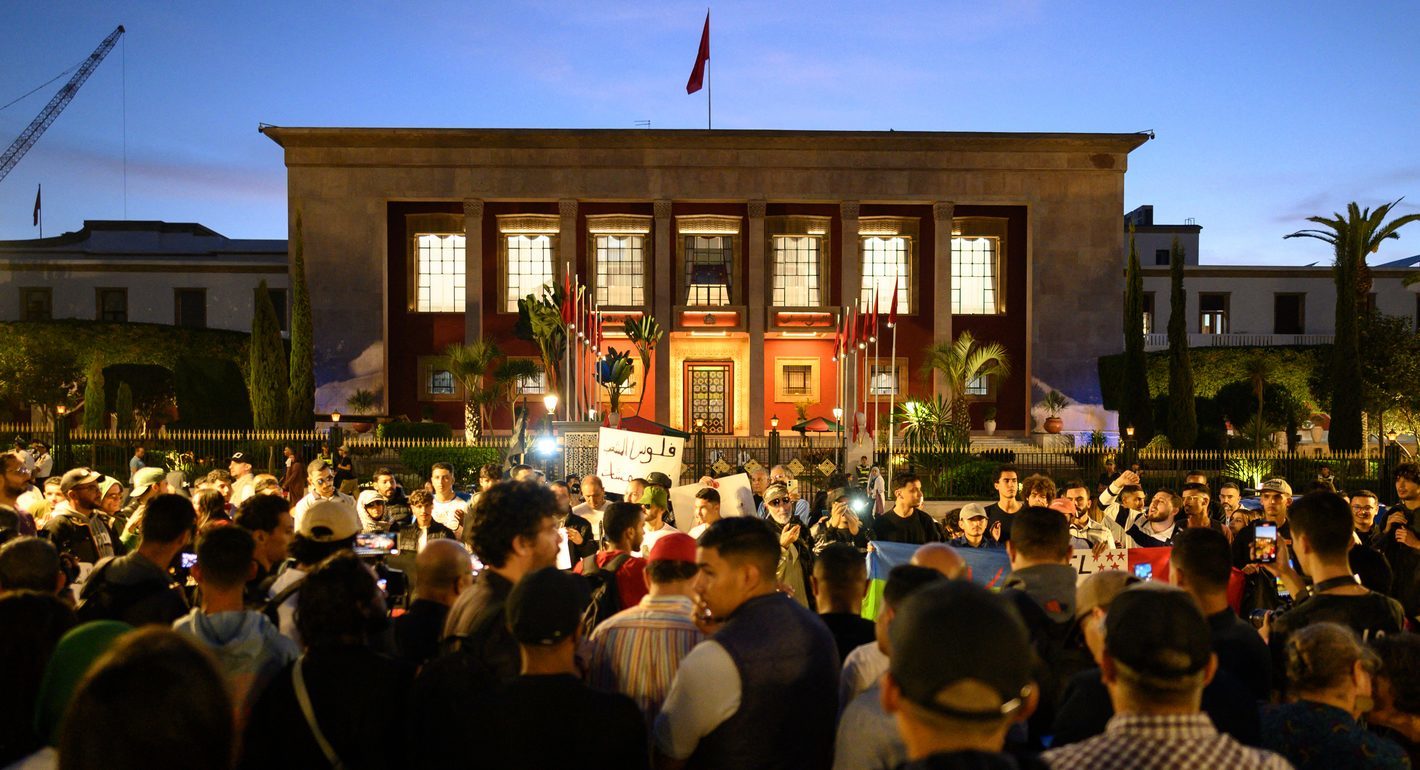
This popular movement, which was very successful in rallying against the former prime minister’s agenda, preceded the Arab Spring, and the ceiling for its demands is still within the constitution’s limits. But the youth groups have definitely arrived, and their vision for Kuwait goes beyond the traditional proposals of Kuwait’s established political organizations. Activism has been spurred mainly by an outcry toward financial and political corruption—especially after local banks reported the deposit of millions of dollars into the accounts of thirteen (of 50) deputies. These deputies were referred to the prosecution for a money laundering investigation and although the investigation is still ongoing, the issue has turned into a political trial. The majority of the 13 deputies did not run in February’s elections, and those who did lost their races, such that only two of the 13 have been re-elected.
The elections have strengthened the hand of politicians who tend to oppose the government. Although they refer to themselves as “the opposition,” this is a misnomer: the various factions (political parties are illegal) do not share a common platform beyond opposition to the former prime minister. In fact, the new parliament might be less able to put forth unified positions. The current assembly is more polarized than previous ones because many successful candidates ran on factional and sectarian rhetoric—riding the wave of sectarian tension generated by regional events (particularly in Bahrain and, to a lesser extent, in Syria). Liberal MPs did not do well but managed to keep five seats.
Additionally, Islamist parties fared better than in previous races. The Muslim Brotherhood (represented by its political organization, Hadas) won 5 seats (four more than in the previous parliament), the Salafi Block (the main Salafi party) took 5 seats. The Shi‘a-led Islamic National Alliance Party gained another 2 seats. Contrary to what some observers have argued, however, the Islamists’ showing in Kuwait is not an extension of the Islamist victories in Egypt and Tunisia. Kuwaiti Islamists have been politically active as Islamists in parliamentary elections since 1981, and have since witnessed fluctuating results—rather than a steady presence: for example, the Muslim Brotherhood won six seats in 2003, three in 2006, two in 2008, one in 2009—and now five in 2012.
Women are arguably the elections’ biggest loser, not only failing to win a single seat (the previous parliament included four female deputies), but also not having even a female minister named to the executive branch—unlike every other government formed since women’s suffrage in 2005.
But perhaps it is the government’s formation that followed that reveals more interesting developments of Kuwait’s political climate. Several traditional assumptions that governed this process have been relinquished: most notably the flexibility enjoyed by the prime minister in appointing ministers. Prime Minister Sheikh Jaber al-Mubarak (designated as such in December following a public outcry against the former prime minister) is constrained on many fronts. Dissent within the ruling family abounds, and the new PM feels threatened by several of his cousins—namely, the former prime minister and the former deputy prime minister—who seem to be attempting to force him out.
In addition, increasing pressures from the parliament characterized the government formation process from beginning to end. In formal discussions with MPs, a number of deputies took the opportunity to float fairly radical proposals; MPs suggested that someone from outside the ruling family be appointed to the crucial posts of interior minister and first deputy to the prime minister. The opposition groupings in parliament also demanded nine ministerial posts (of 16), which led to the breakdown of talks: the prime minister rejected all these proposals and swiftly appointed a cabinet composed of technocrats.
What does the current technocratic government mean for the expected life span of this parliament? The specter of dissolution always hangs over parliament in Kuwait, but the present cabinet is (at least) less political and gives more room for negotiations with parliament—rather than open confrontation. Its stance on the election for speaker of parliament (in Kuwait, the speaker is elected by MPs as well as cabinet members) was a sign in this direction. The election was held in a charged atmosphere as MP Ahmed al-Saadoun, a former speaker and long-time opposition deputy, faced off against liberal independent MP Mohammed Jassim al-Saqer. The government did not force its ministers to vote as a single bloc, allowing al-Saadoun to finally retake the speaker position he lost in 1999 to government candidate Jasim al-Khurafi.
Ultimately, all depends on whether or not the government hastens initiatives addressing parliament’s demands. Initial signs are promising: the creation of an anti-corruption watchdog and an independent electoral commission. It would be wise to continue in this vein, and parliament will certainly hold them to it—as will the emboldened youth movement that played such a prominent role in jumpstarting the political process.
Ghanim Alnajjar is a professor of political science at Kuwait University.
This article was translated from Arabic.