The Syrian civil war is not a rallying call for the region’s Shia communities in the same way that it is for foreign Sunni jihadis. The involvement of the region’s Shia actors—Iran, Lebanon’s Hezbollah, and Iraqi groups—is often presented in religious terms. But the motivations of Shia fighters in Syria (or at least of those states or groups who send them there) are nuanced, and owe more to a number of factors such as geopolitics, a sense of self-preservation, and defense than it does to clear-cut sectarianism—as it is often presented.
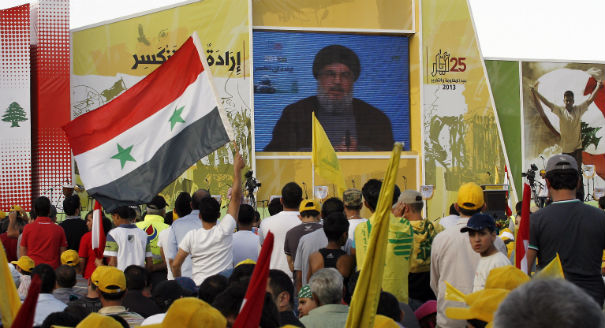
While Hezbollah’s Secretary-General Hassan Nasrallah speaks of the takfiri threat to the community, for example, he also talks of the need to defend Syria from the dangers of international and regional attacks. In a speech in September Iran’s Supreme Leader linked the problems in Syria to the aggressively pursued interests of the United States, Zionists, and, somewhat unusually, capitalists, while downplaying the sectarian nature of the conflict. The speech was no doubt self-serving, but it did show that, because they are a minority, Shia actors understand that in any significant intra-Muslim conflict they should downplay this element.
Politically, for Iran and its allies it is the defense of the pro-Iranian Assad regime that drives their support; this is for geo-strategic reasons rather than out of any sense of religious solidarity. The loss of Syria from its sphere of influence would reduce Tehran’s clout in the Arab world and impinge on its ability to support Hezbollah logistically. There is no substantive sense of religious fraternity between the “Twelver” Shia of Iran, Lebanon, and Iraq and the Alawites who dominate the Assad regime. Although Sayyid Musa al-Sadr and Ayatollah Hassan Shirazi separately declared the Alawites to be Shia Muslims during the 1970s, this was done to support the Assad regime by giving them and their close confidantes religious legitimacy, rather than as an expression of spiritual or ideological solidarity.
That is not to say that Syria has no religious significance for the Shia. Rather, in contrast to some of the more avowedly Sunni Islamist groups among the opposition, who see in Syria the opportunity to establish an Islamic state as part of a broader regional caliphate, the Shia fighting in this conflict don’t appear to approach it as part of a broader Shia project. Insofar as there is a Shii religious reason for joining the fight in Syria, it is largely seen as a secondary and defensive one. The shrine of Sayyida Zeinab is extremely important to the religious faithful, and since the 1980s it has become both an important pilgrimage site as well as a center for religious scholarship. Consequently, some Shia see the defense of the shrine from Sunni Islamist forces as a legitimate reason for taking up arms. The targeting of shrines has great historical relevance for the Shia; they remember the Wahhabi sacking of Karbala in 1801, and how two centuries later in 2006 the Askari mosque in Samarra was badly damaged as Iraqi Sunni insurgents attempted to initiate a sectarian conflict by targeting religiously significant sites. So when reports of a Salafi desecration of a minor Shia shrine in Syria emerged, accusations that Salafis were targeting Sayyida Zeinab began to resonate with sections of the Shia community.
Furthermore, not all Shia view the situation in Syria, or their need to intervene, in the same light. The focus on Syria from the regional Shia community depends largely on their own circumstances and the way in which they see events in Syria impacting them. In Lebanon for instance, there is a feeling that the rise of the Salafis in Syria represents an existential threat to their community. If they aren’t stopped in Syria (the theory goes) they will have Lebanon in their sights as the next target for “Sunnization.”
In Lebanon, the two sectoral elements (pro-Hezbollah and non-Hezbollah Shia) have different responses though, reflecting their particular circumstances. The offensive actions taken by Hezbollah in support of the Syrian military in places such as Qusayr are broadly seen in a positive light; however, the non-militarized elements of the Lebanese Shia community confine themselves (at least publicly) to providing individuals to assist in the security of Sayyida Zeinab in southern Damascus. Their protection of the shrine is seen as a largely defensive action, with an easily understood objective. Without a natural ideological affinity with the Syrian Alawite community, or clear sympathy for Iranian political objectives, it has been difficult for Lebanese Shia to gain broader support within their community for anything more active than this type of defensive response.
Some Iraqi Shia do travel to fight in support of the Assad regime—but they do so without the support of Ayatollah Ali al-Sistani, who sees no reason to support it—and some pro-Iranian Shia groups in Iraq have been providing fighters for the same pragmatic political reasons Iran has. Although public pronouncements may sometimes be shrouded in religious terms, the motivation remains broadly defensive, as it is seen as halting Saudi and other Sunni actions against the Alawite regime in Syria. The Shia “call to arms,” such as it is, does not really involve other large communities of Shia from states such as Bahrain or Pakistan, where the respective communities face their own distinct political and security challenges. Perhaps realizing that contributing in any meaningful way to the fighting in Syria would worsen the problems they already experience at home, they have chosen to provide largely moral support.
Despite the religious or sectarian undertones of the conflict, portraying Syria as a focal point for an international Shia jihad misunderstands the motivations of the actors involved. For Iran it is largely a political calculation—they have invested in the country as part of their regional efforts to establish as broad a sphere of influence as possible. Those Shia who are allied to Iran’s worldview provide military support to the Assad regime for the same reason. Others fear (particularly in the case of Lebanon) that any potential success that Salafis in Syria may enjoy will lead them to pursue subsequent projects elsewhere. But the religious motivation of other Shia actors is much more limited. Their religious interest in Syria is largely circumscribed by the fate of Sayyida Zeinab, and to a much lesser extent the regime that supports it. These Shia do not consider the Alawites as fellow ideological travelers. They do, however, respect them for the assistance they provide to the Shia and for the fact that they stand up against the interests of Saudi Arabia and others whom the Shia community feels oppose them based on their religious identity. Such support for the Assad regime is not unconditional, and could always change depending on the particular national interests of countries such as Iran, but in the current environment it is sufficient to help maintain the regime.
Rodger Shanahan is a non-resident Fellow at the Lowy Institute for International Policy and a visiting fellow at the National Security College at the Australian National University.