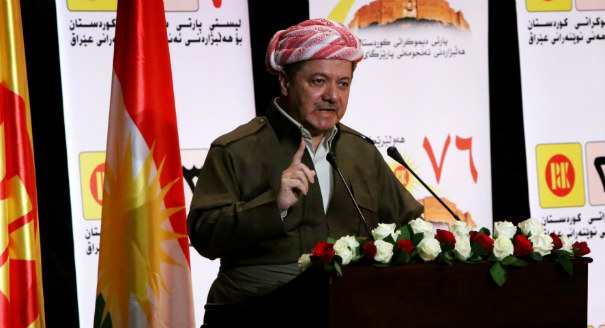
Over the past few weeks, disputes have grown over whether to extend Kurdistan Regional Government (KRG) President Masoud Barzani’s mandate for another two years. Barzani’s political rivals have sought to make any extension conditional on establishing a parliamentary system in Kurdistan. However, Barzani and his Kurdistan Democratic Party (KDP) are refusing to yield power or to introduce any of the meaningful changes demanded, insisting the president has every legal right to remain in office. The resulting deadlock has exposed divisions within the political elite and illustrated the extent to which political and personal interests are driving decisionmaking at the expense of pluralism and rule of law. The new dynamics among the Kurdish population and political class could eventually realign government and party structures, but the entrenched interests of both the KDP and its opponents are blocking this transformation. The missed opportunity for institutional reform will cost all political parties dearly.
Barzani’s term was already extended for two additional years in June 2013, despite the two-term limit imposed by the draft Kurdistan constitution. None of his adversaries—or occasional allies—expected him to step down at the end of the extension on August 19, 2015. Rather, the issue has been whether they could use the mandate’s renewal to wrest power from Barzani and the KDP. Their program to transform the regional government from its present presidential model to a more parliamentary one would severely limit Barzani’s power and significantly bolster the executive authority of the Kurdistan National Assembly and of the competing parties themselves. This would allow for a greater distribution of power between the KDP and other parties—something its biggest rivals, the Patriotic Union of Kurdistan (PUK) and the Gorran (Change) Movement, have sought to achieve for over five years.
Barzani and his party have consistently rejected calls for such a parliamentary system, which would challenge the exact power they seek to maintain. On August 19, the KDP prevented a quorum in parliament, blocking an initiative that would have reelected Barzani but stripped the presidency of key powers. The KDP has also refused to yield concessions during prolonged negotiations with the PUK and Gorran, reinforcing wider suspicions that the president and his KDP are determined to maintain the corrosive autocracy that has increasingly characterized the KRG. On August 10, Barzani publicly likened efforts to deny him an unconditional extension as a coup, and the peshmerga subsequently supported him with a very overt display of force in Erbil, further fueling the perception that neither Barzani nor his party is willing to accept reform.
The KDP’s rivals have contributed to the current impasse. The call for a parliamentary system was too much for the Barzani family, and the PUK and Gorran were unwilling or unable to offer a viable alternative, showing their own inability to compromise. The only potential deal revealed a divided opposition. The KDP did agree in principle to an initiative PUK Deputy Secretary-General Barham Salih proposed on August 10. Salih’s “Project for National Reform” would have established a senior committee (composed of the KRG president and prime minister, their deputies, and representatives of the major political parties) to oversee a two-year restructuring of Kurdistan’s judicial, security, and administrative institutions. Had parties and personalities united behind the plan, they might have forced Barzani and the KDP to make some gradual concessions, although critics of the initiative argued that it was overly conciliatory, leaving the president and his party in full control of key committees and the KRG itself in the interim. Ultimately, however, the plan collapsed under the weight of internal rivalries, both within the PUK and between Barham Salih and Noshirwan Mustafa, head of the Gorran Movement. Mustafa refused to support the plan, preferring instead to protect what he sees as the Gorran monopoly over reform in the Kurdistan Region.
The KDP has remained steadfast, refusing any deal that threatens the status quo. Party negotiators have said that the most they will accept is a national referendum to extend Barzani’s term (or even parliamentary elections), safe in the knowledge that the vote will go in the KDP’s favor. Time is on the KDP’s side. While the stalemate persists, Barzani will take advantage of his mandate’s legal ambiguity to continue to govern as before. The president and his party know that any eventual compromise will leave Barzani in place. Moreover, they may also be calculating that the longer it takes for the drama to unfold, the more impotent their rivals will appear. In the meantime fear of internal instability will grow, and the United States will reduce their own pressure on the KDP to compromise, fearing further distractions from the war against the Islamic State.
In the short term, despite infighting between the main parties, the KRG is likely to remain fairly stable. Extending the president’s mandate—with or without any concessions—will simply reinforce the popular perception that Barzani and the KDP are entrenched in power, discouraging popular critics from challenging the regime seriously. Although criticism of Barzani and the KDP has risen at the popular level, extensive patronage networks shore up their capacity to silence any dissent. Kurdistan’s economic success over the past decade, combined with the security threat posed by the Islamic State, will convince large swathes of the Kurdish population that there is enough value in the status quo to protect it, at least for now.
However, in the longer term the latest dispute will tarnish the public image of both the KDP and its rivals, potentially undermining their popular support. By refusing to consider a practical compromise, all parties involved—the KDP, PUK, Gorran, and others—have highlighted the chronic personal rivalries between them. If the PUK now acquiesces to an extension, it will leave itself open to allegations it is too close to the KDP—as happened when it blessed Barzani’s term extension in 2013. Public support for the party has declined significantly over the past two years, forcing them to resort to voter fraud.1 A weakened PUK could benefit Gorran, but it would be a pyrrhic victory. The episode has illustrated Gorran’s own opportunism, and for all its talk of reform, Gorran’s leadership has been putting personal politics first, robbing the party of a real opportunity to push collaboratively for gradual, well-defined changes.
Barzani and the KDP could end up paying the highest price. Their dogged determination not to yield to demands for change will cost the party (and, by extension, the KRG) broad popular support. The attempt by the PUK and Gorran to force the KDP’s hand on Barzani’s mandate may have been futile, but it nonetheless reflects their constituencies’ growing frustration with the KRG’s increasingly ineffective governance. Despite a KDP boycott of the Kurdish National Assembly in June, opposition parties still had enough seats to achieve quorum—a warning to Barzani that he cannot assume that things will always go his way.
The inability of the PUK and KDP to share power and govern effectively is also widening divisions between their popular bases. Public dissatisfaction among some party leaders could push the PUK and Gorran to seek greater autonomy for Sulaimaniya while the KDP barricades itself in Erbil and Dohuk. Beefed-up checkpoints remain along the unofficial internal border, and Gorran members were hassled on their way into Erbil. In addition, discontent with the political class as a whole is growing at the local level, due in part to months of unpaid salaries and shortages of electricity, water, and gas. Behind closed doors, even the peshmerga criticize the corruption, wasta-based appointments, poor chain of command, and a lack of training or supplies that has led to recent battlefield blunders and casualties. Like the civilian population, a large number of peshmerga are reportedly going AWOL and smuggling themselves to Europe.2
The Kurds face further challenges securing and governing the disputed territories, such as Nineveh and Diyala, that they have acquired over the past fifteen months. The KRG has never been good at governing large non-Kurdish or anti-KDP populations, and many Arabs and Turkmen who prefer not to live under Kurdish rule will chafe at—and ultimately challenge—KRG tutelage.
Deteriorating economic and fiscal conditions will further test KRG cohesion. Falling oil prices, interrupted exports via Ceyhan, and the reduction in budget transfers from Baghdad have hit the KRG treasury hard, leading to delays in paying public-sector salaries and a growing fiscal deficit. Fiscal pressure has played into the ongoing political crisis; last month, the (KDP) minister of natural resources and the (Gorran) minister of finance traded blame over which ministry was responsible for oil-receipt shortfalls. In addition, increasingly necessary austerity measures could impact party patronage and leave the KDP vulnerable to popular criticism, given how closely the KDP is associated with the current independent-export policy and overall fiscal control of the KRG.
Ultimately, the situation will undermine Barzani, his party, and the political class. The ongoing threat of the Islamic State will provide some short-term cover for the KDP, allowing it to use the security crisis to keep opponents at bay and to dampen dissent. However, the KDP’s rival-cum-allies will eventually seek to take full advantage of any perceived government failures to revive reform efforts.
Christine McCaffray van den Toorn is the Director of the Institute of Regional and International Studies at the American University of Iraq, Sulaimaniya. Raad Alkadiri is an analyst of Middle East and Iraqi politics and a former advisor to the UK Foreign and Commonwealth Office.
1. Based on author’s interviews conducted in the Kurdistan Region of Iraq in 2014.
2. Based on author’s interview with a member of the peshmerga.