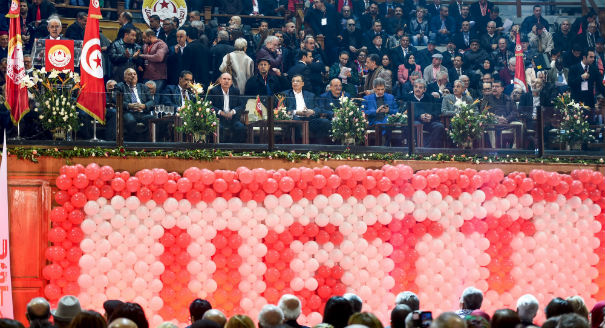
In his first year as Tunisia’s head of government, Youssef Chahed has faced massive economic policy challenges. On the one hand, his task has been to please international lenders who have increasingly pressured the government to treat the fiscal deficit as Tunisia’s primary economic challenge. On the other hand, he has had to personally visit socioeconomic hotspots where regional inequalities are driving protest movements and challenging the state’s redistributive model. While achieving both simultaneously is not impossible, they do represent distinct priorities that in practice are aligned with opposing economic ideologies: neoliberalism and a state-led model. Attempting to appease both these demands has eroded the political capital of a government that has based its legitimacy on a tenuous political consensus between internally divided political parties that lack voters’ confidence.
Almost six billion dinars ($2.4 billion) of Tunisia’s 32-billion-dinar ($13 billion) budget for 2017 is allotted to servicing public debt. Among Tunisia’s most demanding lenders is the IMF, which regularly and vocally outlines which policies—de facto loan conditions—the Tunisian government should enact, largely deregulation and privatization in accordance with neoliberal ideology. Ahead of the vote on the 2017 budget, Chahed’s government was under pressure from the IMF to raise revenue and cut spending, which manifested as a proposal for new taxes for a few key groups and a wage freeze for public sector workers. But Tunisia’s major labor union, the Tunisian General Labor Union (UGTT), had already been promised an increase in wages in an agreement signed with Habib Essid, Chahed’s predecessor. The UGTT succeeded in limiting the budget to less severe austerity measures—a freeze in public hiring and a spreading out of wage increases.
With fewer austerity measures than recommended for the budget, the IMF delayed the second tranche of its $320 million loan for Tunisia’s “lack of progress in reforms, including public sector wage bill, the public finances, and state banks,” according to then-Minister of Finance Lamia Zribi. The delay continued until the government reportedly promised in spring 2017 to eventually cut 10,000 public sector jobs and sell its stake in three state-owned banks. While the UGTT seems to have won the first round with the debate on the budget in late 2016, this year has seen Chahed’s government move to accommodate the IMF’s vision for “Tunisia’s economic transition”—which “requires a shift from the public sector towards a competitive private sector,” according to the IMF’s first review of its loan program.
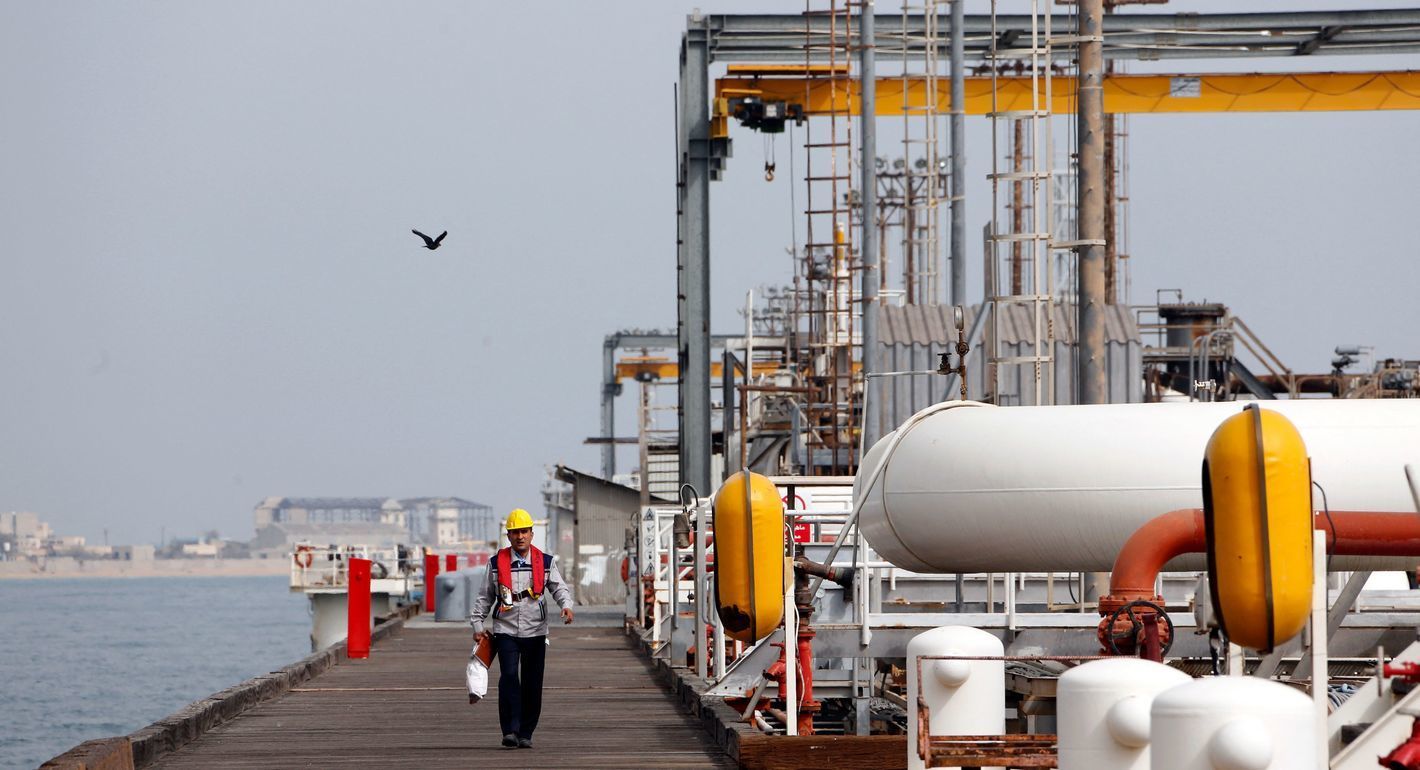
And yet socio-economic movements demanding the state provide jobs, investment, and a redistribution of resources continue to force Chahed’s hand—presenting a foil to the austerity policies and restructuring of the state’s economic role demanded by the IMF’s strict deficit-reduction approach. The most intense have been the protests in Tataouine and Kebili, beginning in April, that have blocked hydrocarbon extraction or transport. Minister of Energy Hela Cheikhrouhou claimed the blockages were costing the state as much as 24 million dinars ($9.8 million) a week. Demonstrators have enjoyed support from locals, who say that little of the wealth extracted from their region has returned as state development or public services, and requests have ranged from jobs and investment to more radical demands to renegotiate contracts between the state and foreign companies or nationalize Tunisia’s resources outright. When Chahed went to Tataouine try to restore trust between the state and protesters in late April and support negotiations, he was booed. Meanwhile, President Beji Caid Essebsi announced in a May 10 speech that he had decided to deploy the army, and a recent draft law under discussion this summer presented as protecting security forces “would authorize security forces to use lethal force to protect property” in broad language that could apply to hydrocarbon extraction equipment or extractive industry land concessions. Earlier protests in Kerkennah, again over hydrocarbon extraction and a local share in the wealth of extracted resources, have also demanded Chahed’s personal touch.
Other social and economic issues have been at the heart of many dismissals in Chahed’s cabinet over the last year. Khalil Ghariani, Chahed’s proposed minister of public service, reportedly drew the ire of the UGTT given his perceived liberal ideology—so Chahed got rid of the ministry entirely in March, transferring its functions to the prime ministry. Unionized teachers protesting the disjointed policies of Minister of Education Neji Jalloul played an important role in forcing his dismissal on April 30. The same day, Chahed fired Minister of Finance Lamia Zribi, whom critics alleged had helped accelerate the devaluation of the currency with a careless public statement on discussions to liberalize the dinar—though many Tunisians blamed the devaluation on the IMF’s consistent references to the dinar being “overvalued” (although IMF employees insist Zribi’s careless comments and subsequent rapid devaluation were a mistake and unhelpful).
While these socioeconomic protests, interest groups, and movements have directly pushed Chahed’s government into policies that grate against the macroeconomic transition advised by Tunisia’s lenders, some of these movements also have opposing counterparts in the established domestic business elites. Chahed personally visited the Libyan border town of Ben Guerdane on the one year anniversary of an attack on Tunisian security forces, which some analysts have described as an attempted insurrection that failed due to lack of local support. Ben Guerdane’s economy is dependent almost entirely on informal trade, what some label smuggling, bringing in consumer goods from Libya with little or no customs tariff. The economic interests of Ben Guerdane, which Chahed catered to in his visit, represent yet one more point of economic tug-of-war that Chahed has had to arbitrate, namely between formal economic actors and informal ones. Established business people working in the formal economy who have benefitted from the political resources and networks necessary to navigate Tunisia’s regulatory regime have consistently called on the government to crack down on the “parallel economy” and informal traders who undercut their profits. Once again, in the relationship of informal traders with the state, the economic challenge of regional inequality has imposed itself on economic policymaking—and despite his outreach, Chahed was booed on his visit to Ben Guerdane, reflecting distrust in both the government and state institutions.
This widespread distrust, which analysts and polls have pointed out with increasing alarm and frequency since the resolution of the 2013 political crisis, is rooted in the fact that multiple governments have not prioritized the daily economic and social challenges of ordinary citizens. Citizens feel viscerally that they are economically disempowered by the increasing prices for consumer goods; although this phenomenon has many causes, it has been exacerbated by subsidy cuts and the devaluation of the dinar—policy decisions guided by Tunisia’s lenders. Citizens see the government selling austerity while promising development, but they feel the former and not the latter. So while Chahed has taken a more direct approach to personally visit areas of socioeconomic unrest, often prioritizing dialogue and negotiations over a security response, this has not fundamentally shifted the perception that the political regime is primarily speaking and acting to appease its lenders and elite domestic actors.
Fadil Aliriza is an independent Tunisia-based researcher and journalist. Follow him on Twitter @FadilAliriza.
How effective have Youssef Chahed’s policies been at addressing Tunisia’s underlying issues? Read the rest of the debate below.