

Commentary
Syria's transition promised a fresh start. But are old habits of power making a comeback? This analysis looks at the warning signs and what it will take to build a more accountable state.
Sima Beitinjaneh
{
  "authors": [
    "Emir Sfaxi"
  ],
  "type": "commentary",
  "blog": "Sada",
  "centerAffiliationAll": "",
  "centers": [
    "Carnegie Endowment for International Peace"
  ],
  "collections": [],
  "englishNewsletterAll": "",
  "nonEnglishNewsletterAll": "",
  "primaryCenter": "Carnegie Endowment for International Peace",
  "programAffiliation": "",
  "programs": [],
  "projects": [
    "Tunisia Monitor"
  ],
  "regions": [
    "North Africa",
    "Tunisia"
  ],
  "topics": [
    "Political Reform",
    "Civil Society"
  ]
}
Source: Getty
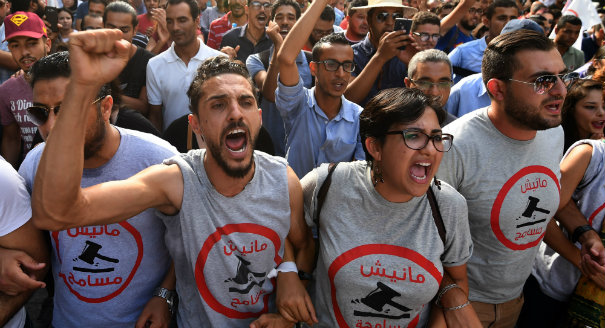
Tunisia’s cabinet reshuffle, Administrative Reconciliation Law, and election postponement are prompting fears of a return of the Ben Ali regime.
On September 11, 2017, the Tunisian Assembly of the Representatives of the People approved Prime Minister’s Youssef Chahed’s new government in the country’s eighth cabinet reshuffle since the 2011 revolution. Although Tunisian youth were initially optimistic about Chahed when he became prime minister in August 2016 at the age of 40, they now feel disappointed by his new cabinet, which includes ministers who used to be part of the old regime under Zine El Abidine Ben Ali. In his speech introducing the new government to parliament, Chahed declared that his “government of war” is expected to fight corruption, address social unrest in interior regions, and undertake “painful” reforms. Yet in the same week, two deeply unpopular political developments called the pursuit of Tunisia’s democratic transition into question. On September 13, parliament passed the Administrative Reconciliation Law, which offers amnesty to officials from the old regime suspected of or implicated in corrupt dealings if they return funds to the state. A few days later, on September 18, the Independent High Authority for Elections postponed local elections, originally planned for December, to an undetermined date. These recent moves have increased public discontent and raised concerns that the incoming government might usher in a new era of authoritarianism.
Chahed’s new government appears to maintain the political status quo, yet at a closer look this reshuffle indicates a consolidation of the Nidaa Tounes party’s position and the president’s attempts to bolster the power of his own office. While the new cabinet keeps positions for other unity government coalition partners—including ministers from Ennahda, Afek Tounes, al-Massar, and al-Joumhouri—it included more independents with closer ties to Nidaa Tounes. Among the ministers removed were two women: Sayida Ounissi, secretary of state for vocational training and entrepreneurship, from the Islamist Ennahda party and Faten Kallel, secretary of state for youth and sports, from the Afek Tounes party. Other ministers from the previous Chahed government—including Riadh Mouakher, minister of local affairs, and Mehdi Ben Gharbia, minister of relations with constitutional institutions, civil society, and human rights—were kept on even though they are suspected of ongoing corruption. Among the new ministers is Minister of Education Hatem Ben Salem. Ben Salem is an independent who had held the same office under Ben Ali from 2008 to 2011 and is widely seen as an apologist of the old regime for denying the Ben Ali regime’s human rights violations. Other new appointees include Minister of Finance Ridha Chalghoum, another independent who likewise held the same position during Ben Ali’s regime, is close to the Ben Ali family and suspected of helping their illicit enrichment before the revolution.
Yet, though the reshuffle has made Chahed a target of public ire, he is likely not its real architect. Instead, President Beji Caid Essebsi’s hand is clear in the ministerial choices. New appointees such as Minister of Finance Ridha Chalghoum and Minister of Public Health Slim Chaker were previously presidential advisors. New Minister of Defense Abdelkarim Zbidi and Minister of Interior Lotfi Brahem are also known to be close to Nidaa Tounes and Essebsi personally. This may be Essebsi’s attempt to influence more government institutions, especially since Nidaa Tounes has lost its parliamentary majority to internal divisions since 2014—from 85 seats out of 217 to 58, coming in second behind Ennahda with 68. The president’s own son Hafedh Caid Essebsi, a controversial figure who drove Nidaa Tounes’s internal divisions with his claims to its leadership, is also set to make his way into parliament. One day after the government reshuffle, Nidaa Tounes announced that Hafedh Essebsi is their nominee to fill a parliament seat left vacant after Hatem Ferjani, a Nidaa Tounes parliamentarian, was nominated as secretary of state for the minister of foreign affairs. Civil society has called out the nomination as yet another nepotistic move by the president and his son.
Essebsi’s attempts to reinforce his and his party’s position in government reflect his belief that the president has too “limited” a role within Tunisia’s semi-parliamentarian system, and he has indicated that it might be time to think about amending the constitution to concentrate more power in the executive branch. His influence is also visible in the two recent initiatives. The reconciliation law is based on the text the president presented to the house in 2015, though parliament amended it to apply only to public officials, not businessmen, from the Ben Ali era. Civil society criticized the government for pushing parliament to pass the bill instead of prioritizing more urgent legislation, such as the Code on Local Authorities, and paving the way for elections by appointing new members of the Independent High Authority of Elections to replace those who resigned in May. These local elections were expected to divert power away from the central government and to regional authorities—but, driven by political calculations that the party would not be able to secure many seats at the moment, Nidaa Tounes and the government it leads opted to postpone the elections.
Although these reforms reflect more the influence of Essebsi, Chahed is forced to accept and support them, because even though he had become more popular among Tunisians after declaring his war against corruption in May 2017, he is still reliant on the president for political support. The country’s fraught economic and political situation has exposed him to criticism from within his own political party and from opposition leaders. Furthermore, the recent reforms are eroding parliament’s support for Chahed and Nidaa Tounes and undermining plans to pursue painful IMF-imposed austerity measures in 2018. The latest major attack on Chahed came from his supposed ally the Ennahda Party, whose leader Rached Ghannouchi told Chahed on August 1 to forget about running in the 2019 elections, warning him not to “take advantage of the political situation.” Chahed has no choice but to be the “man of the president,” even though this is destroying his image among Tunisians, particularly the youth.
The postponement of local elections, which are expected to prompt greater local development and address the dire economic situation of Tunisia’s restive interior, and the passage of the deeply controversial Administrative Reconciliation Law have eroded faith in the government’s commitment to Tunisia’s democratic transition in general and the anti-corruption campaign in particular—leaving Tunisians, once again, angry and disenfranchised.
Emir Sfaxi is a Fulbright fellow at American University and a Public Policy consultant. Follow him on Twitter @EmirSX.
Emir Sfaxi
Carnegie does not take institutional positions on public policy issues; the views represented herein are those of the author(s) and do not necessarily reflect the views of Carnegie, its staff, or its trustees.
Syria's transition promised a fresh start. But are old habits of power making a comeback? This analysis looks at the warning signs and what it will take to build a more accountable state.
Sima Beitinjaneh
From anime heroes to online gaming communities, Morocco’s Gen Z is building a new protest culture. What does this digital imagination reveal about youth politics, and how should institutions respond?
Abdelilah Farah
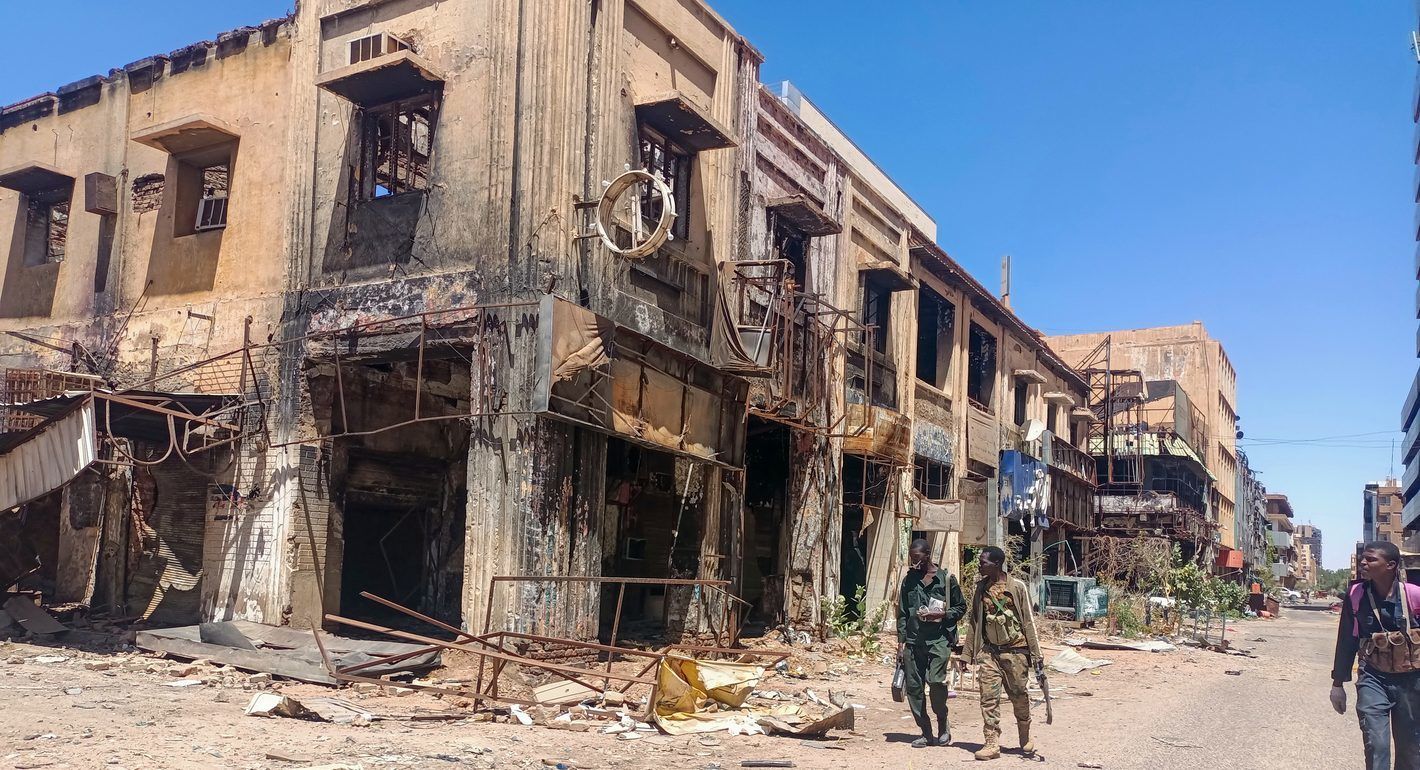
Hate speech has spread across Sudan and become a key factor in worsening the war between the army and the Rapid Support Forces. The article provides expert analysis and historical background to show how hateful rhetoric has fueled violence, justified atrocities, and weakened national unity, while also suggesting ways to counter it through justice, education, and promoting a culture of peace.
Samar Sulaiman
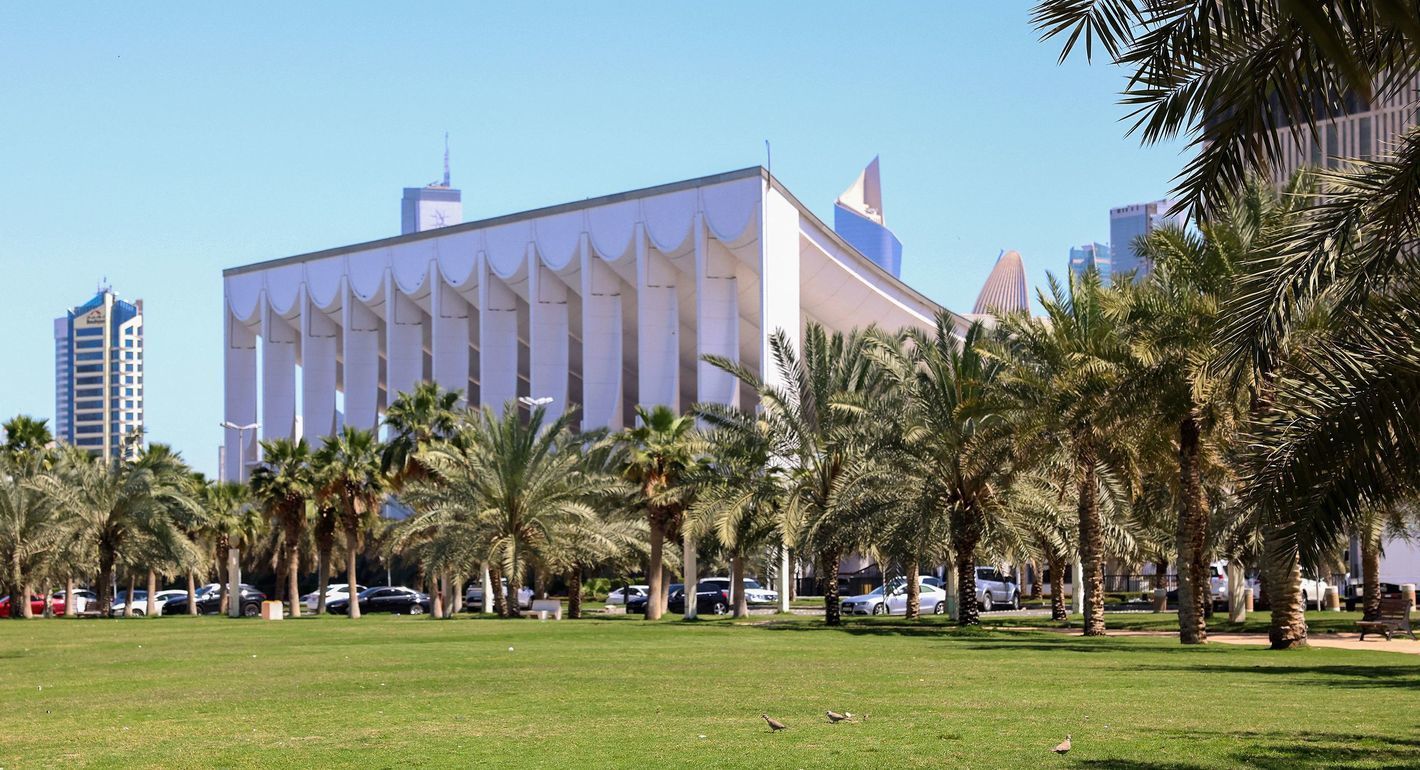
Kuwait’s government has repeatedly launched ambitious reforms under Kuwait Vision 2035, yet bureaucratic inefficiency, siloed institutions, and weak feedback mechanisms continue to stall progress. Adopting government analytics—real-time monitoring and evidence-based decision-making—can transform reform from repetitive announcements into measurable outcomes.
Dalal A. Marafie
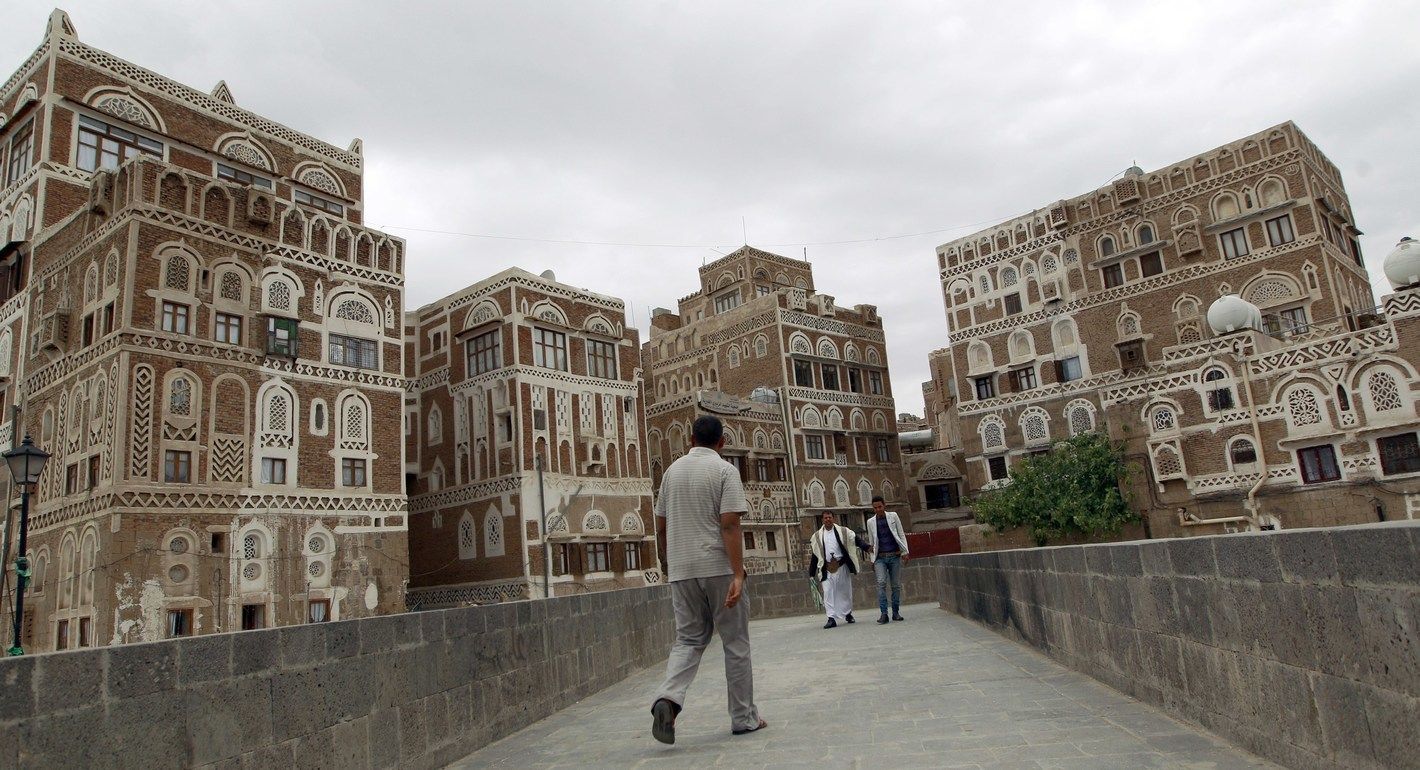
The chaos of street naming in Sana’a reflects the deep weakness of the Yemeni state and its failure to establish a unified urban identity, leaving residents to rely on informal, oral naming systems rooted in collective memory. This urban disorder is not merely a logistical problem but a symbolic struggle between state authority and local community identity.
Sarah Al-Kbat