

Commentary
Syria's transition promised a fresh start. But are old habits of power making a comeback? This analysis looks at the warning signs and what it will take to build a more accountable state.
Sima Beitinjaneh
{
  "authors": [
    "Sharan Grewal",
    "Matthew Cebul"
  ],
  "type": "commentary",
  "blog": "Sada",
  "centerAffiliationAll": "",
  "centers": [
    "Carnegie Endowment for International Peace"
  ],
  "collections": [],
  "englishNewsletterAll": "",
  "nonEnglishNewsletterAll": "",
  "primaryCenter": "Carnegie Endowment for International Peace",
  "programAffiliation": "",
  "programs": [],
  "projects": [
    "Tunisia Monitor"
  ],
  "regions": [
    "North Africa",
    "Tunisia"
  ],
  "topics": [
    "Democracy",
    "Civil Society"
  ]
}
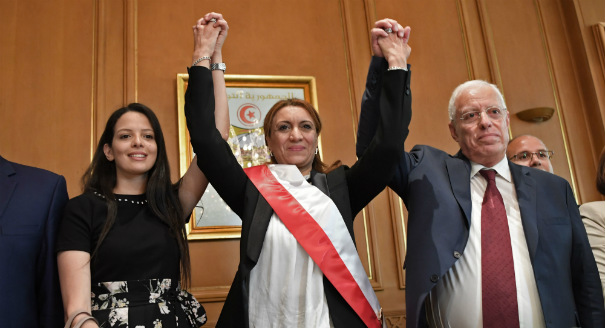
Source: Getty
While most residents of Tunis support a woman as mayor, a sizable minority does not, which may present obstacles for the newly elected Souad Abderrahim.
On July 3, the municipal council of Tunis elected Souad Abderrahim as the city’s first female mayor. Abderrahim, a 53-year-old pharmacist and former MP from the Muslim Democratic party Ennahda, is also the first elected female mayor of a capital city in the Arab world, and only the twentieth woman worldwide.
Abderrahim’s historic victory, however, came after a campaign marred by overt sexism. On May 8, Foued Bouslema, a spokesman for Nidaa Tounes, Ennahda’s primary political rival, claimed that Abderrahim’s candidacy was “unacceptable” in a Muslim country because as a woman “she cannot be present in the mosque on the eve of the twenty-seventh night of Ramadan.” While not an official duty, the mayor of Tunis—as the honorary “sheikh of the city”—traditionally attends a religious ceremony at the city’s Ezzitouna Mosque on Laylat al-Qadr, the most sacred night of Ramadan. These comments provoked considerable backlash on social media, forcing Nidaa Tounes, a secular party, to distance itself from Bouslema. Tunis’ municipal council likewise rejected Bouslema’s sexist criticism, with 5 secular councilors joining Ennahda’s 21 representatives to elect Abderrahim mayor by 26 votes to 22.
However, it is unclear to what extent Tunisians at large agree or disagree with these sentiments. Abderrahim was elected mayor by the city councilors, not directly by the people, and the May 6 municipal elections—in which the Ennahda list that Abderrahim headed received 33 percent of the vote—featured very low turnout. If many residents of Tunis agree that a woman is unfit to lead the city, then Abderrahim may face considerable popular resistance in her historic first term as mayor.
A recent survey of nearly 500 residents of Tunis provides some insights into how her constituents felt about Abderrahim’s candidacy ahead of the mayoral election.1 The majority of those polled—54 percent—supported a woman as mayor, disagreeing with the criticism that “Souad Abderrahim should not be permitted to be sheikh of the city because she is a woman.” This suggests that most residents of Tunis oppose the sexist criticism Bouslema leveled at Abderrahim, in line with Tunisia’s more progressive stance on women’s rights and its relatively high rate of women in parliament.

At the same time, a sizeable 36 percent of the sample agreed or strongly agreed that Abderrahim should not be allowed as mayor because of her gender. This is a surprisingly large percentage given that social desirability biases generally discourage survey respondents from openly embracing sexist sentiments.
Importantly, this sentiment appears to be shared by a range of Tunisians from different partisan backgrounds and cannot simply be attributed to opposition to Ennahdha. Sexist opposition to Abderrahim’s candidacy was similar among supporters of Nidaa Tounes (39 percent), other parties (34 percent), no party (36 percent), and even among Ennahda’s own supporters (34 percent).
This sexism cuts across demographic divides as well. Sexist opposition to Abderrahim differed only marginally between men (38 percent) and women (32 percent). Education appeared to matter only minimally, with opposition among graduate degree holders falling to 24 percent; respondents with a bachelor’s degree (39 percent) were equally as opposed as those with only a primary education or less (42 percent). Even Tunisians under 30 years old were only slightly less opposed to having a woman as mayor (36 percent) than respondents over 60 years old (42 percent). Sexist opposition toward Abderrahim, while thankfully a minority opinion, appears to transcend political and social divides.
These data suggest that Souad Abderrahim may have a difficult road ahead. As mayor, she has pledged to improve the city, invest in infrastructure, and increase access to services—making use of the mayor’s new powers under the April 26 decentralization law. To achieve these goals, she will need to carefully navigate the misogyny that persists among a sizeable minority of her constituency, which research suggests is likely to view her as “too aggressive,” “difficult,” or “abrasive,” even if she is applauded for delivering results.
Yet the mayoralty also offers Abderrahim a unique opportunity to shape attitudes in a more progressive direction. Competing research suggests that having women as local political leaders can “improve perceptions of female leader effectiveness,” weaken gender stereotypes, and provide role models for other women aspiring to leadership positions. These results provide hope that Abderrahim can indeed deliver on her pledge to dedicate her win “to all women who have struggled to be in such senior positions.”
Sharan Grewal is a PhD candidate at Princeton University. Matthew Cebul is a PhD candidate at Yale University. Follow them on Twitter @sh_grewal and @MatthewCebul.
1. We conducted the face-to-face survey with One to One for Research and Polling on 488 randomly selected pedestrians in downtown Tunis between June 25 and July 3. While not representative, the data provide a useful snapshot into how 500 Tunisians viewed Abderrahim’s candidacy immediately before her election. Our geographic limitation to downtown Tunis is also appropriate given that Abderrahim’s jurisdiction covers only downtown.
Sharan Grewal
Matthew Cebul
Carnegie does not take institutional positions on public policy issues; the views represented herein are those of the author(s) and do not necessarily reflect the views of Carnegie, its staff, or its trustees.
Syria's transition promised a fresh start. But are old habits of power making a comeback? This analysis looks at the warning signs and what it will take to build a more accountable state.
Sima Beitinjaneh
From anime heroes to online gaming communities, Morocco’s Gen Z is building a new protest culture. What does this digital imagination reveal about youth politics, and how should institutions respond?
Abdelilah Farah
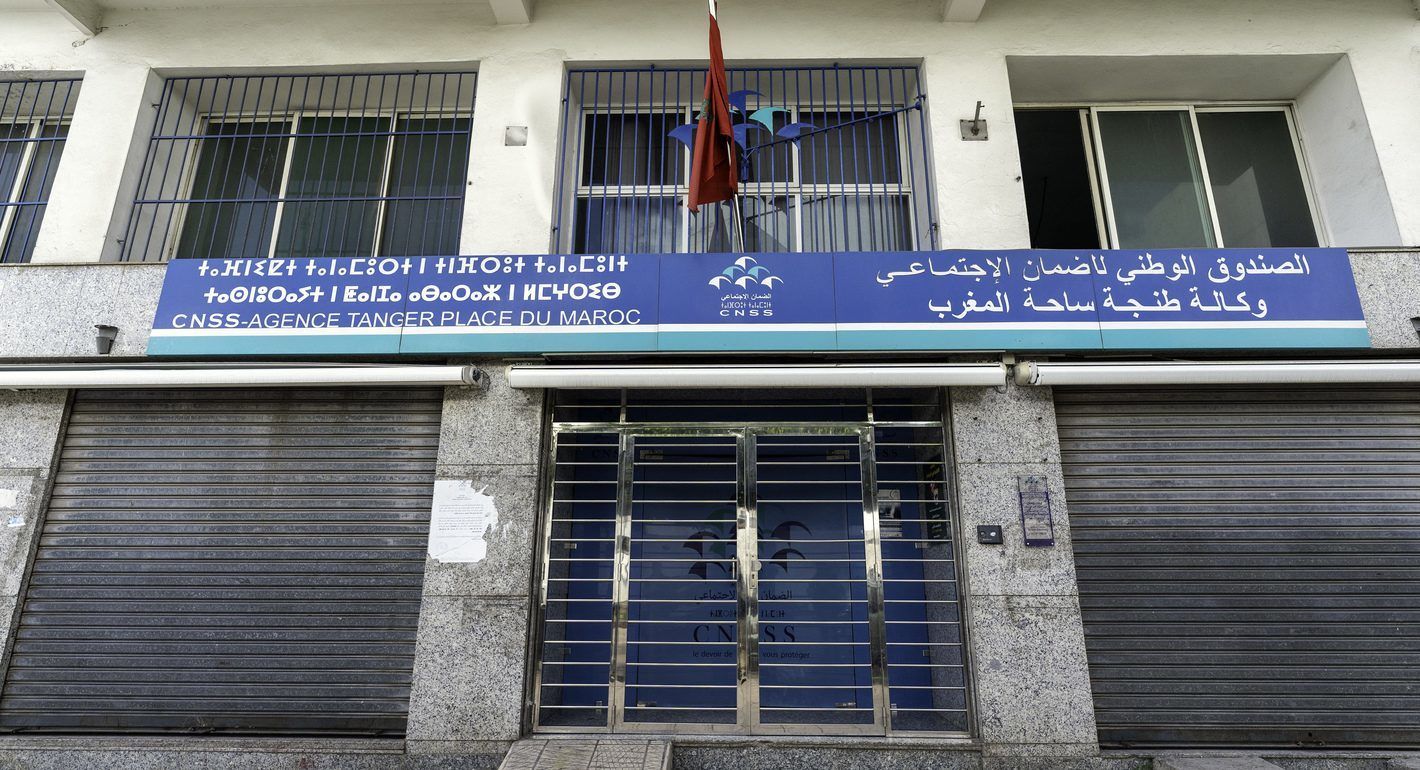
While Morocco’s shift to a digitized social targeting system improves efficiency and coordination in social programs, it also poses risks of exclusion and reinforces austerity policies. The new system uses algorithms based on socioeconomic data to determine eligibility for benefits like cash transfers and health insurance. However, due to technical flaws, digital inequality, and rigid criteria, many vulnerable families are unfairly excluded.
Abderrafie Zaanoun
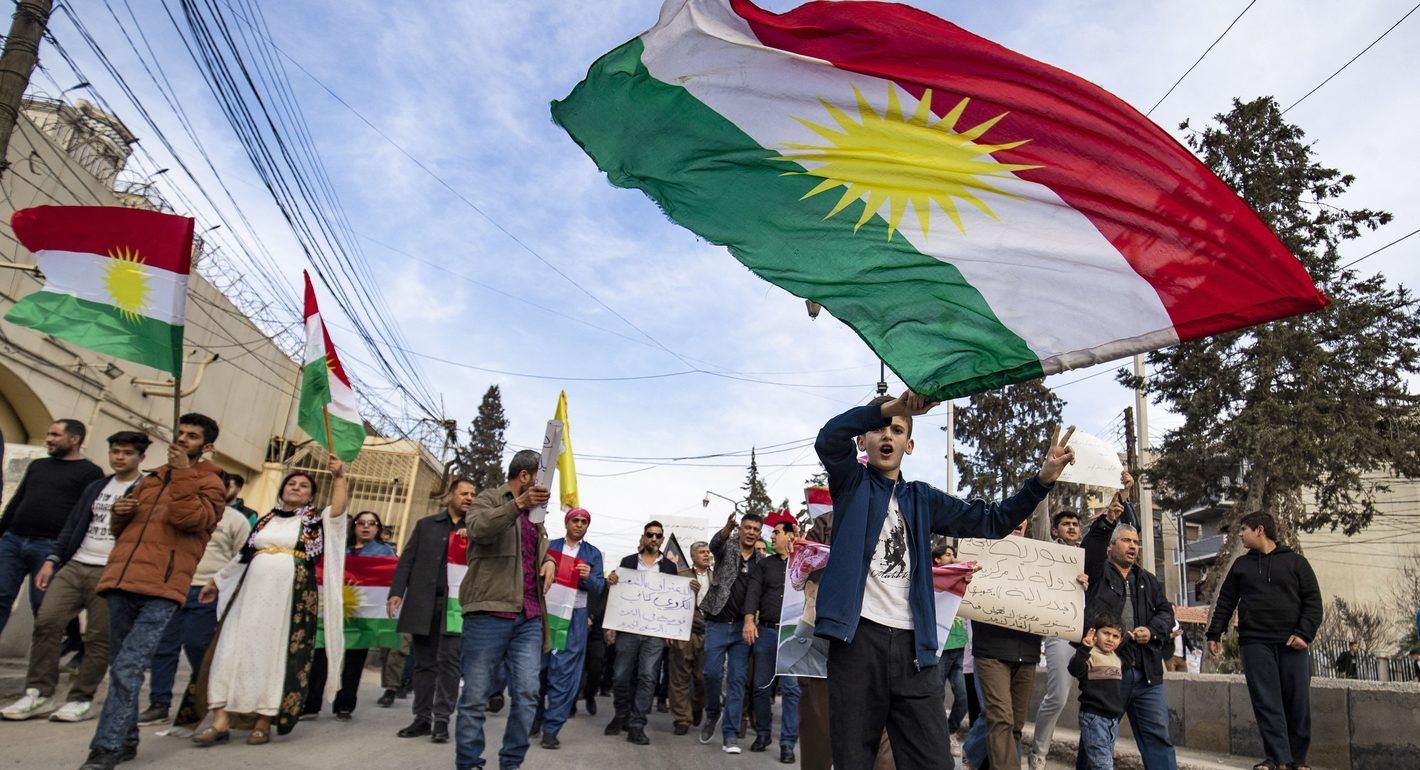
Saudi Arabia’s cautious stance on the Syrian Kurds reflects a delicate balance between leveraging Kurdish autonomy to counter Iran’s influence and managing the risks of destabilizing Syria’s territorial integrity. While Saudi Arabia seeks to safeguard its interests in the region, it remains wary of the potential internal and external consequences of supporting Kurdish autonomy.
Mohammad Salami
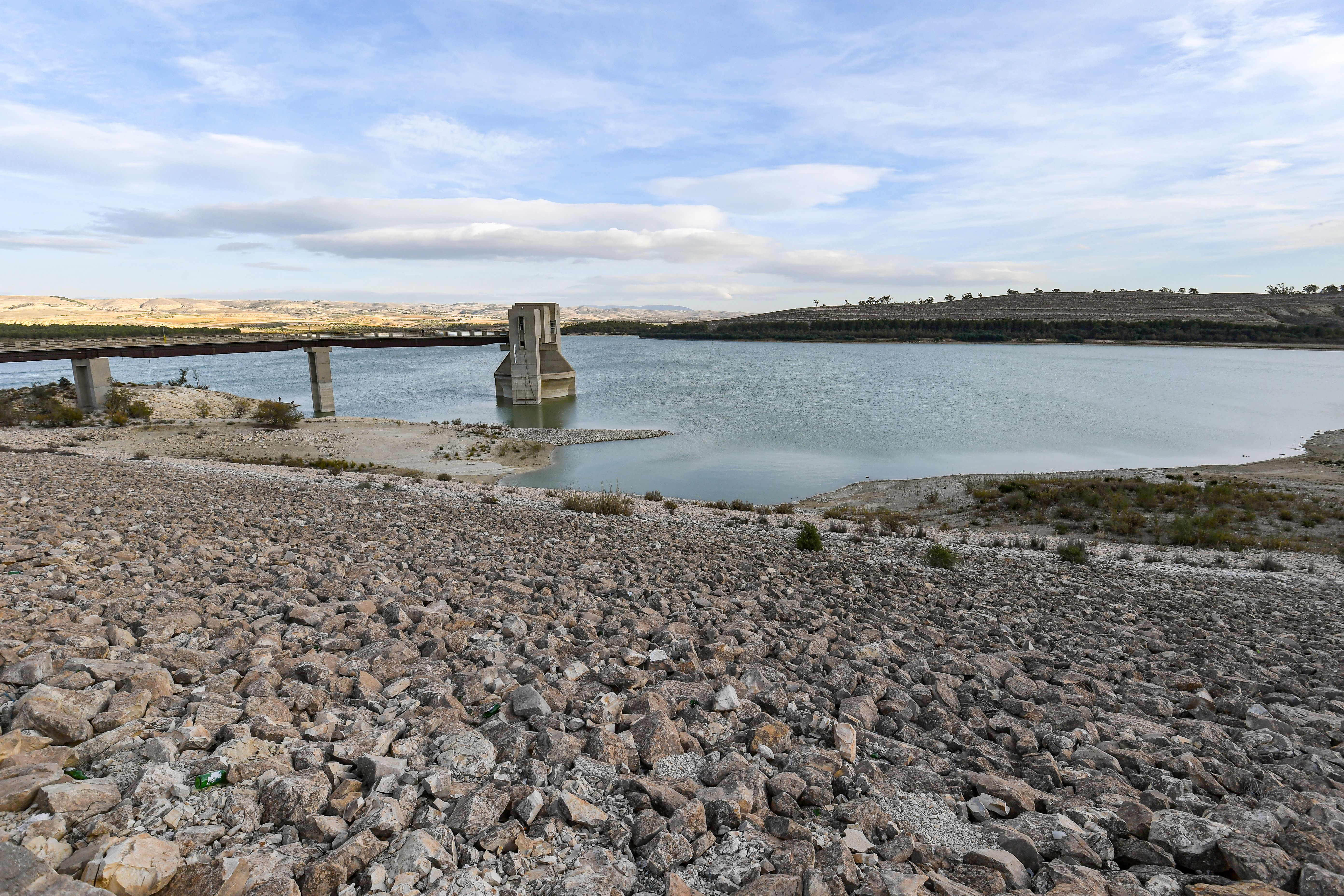
Tunisia is facing a worsening water crisis characterized by widespread protests over access to potable water, particularly in rural areas with underdeveloped supply networks. This situation is exacerbated by climate change, outdated agricultural policies, and industrial water consumption, necessitating comprehensive policy reforms to secure Tunisians’ constitutional right to water and ensure equitable access across the country.
Noura Omar