

{
  "authors": [
    "Souhayb Jawhar"
  ],
  "type": "commentary",
  "blog": "Sada",
  "centerAffiliationAll": "",
  "centers": [
    "Carnegie Endowment for International Peace"
  ],
  "collections": [],
  "englishNewsletterAll": "",
  "nonEnglishNewsletterAll": "",
  "primaryCenter": "Carnegie Endowment for International Peace",
  "programAffiliation": "",
  "programs": [],
  "projects": [],
  "regions": [],
  "topics": []
}
Source: Getty
Lebanon: New Strategic Base for Hamas
Recent Hamas leadership appointments reflect the movement’s eagerness to deepen its connections with Iran and Hezbollah.
Since huge protests over the dire economic and political situation erupted in Lebanon in 2019, Beirut has become a safe haven for Hamas leaders and an important hub for the organization’s political and security presence in the region. Moreover, coordination between Hezbollah and Hamas has been growing in strength since 2017, when Yahya al-Sinwar, the founder of the movement’s security apparatus, replaced Khaled Meshaal after years of Hamas support for the Arab Spring revolutions, particularly in Syria.
Beirut: The New Destination
Under al-Sinwar’s firm control, and with the election of Ismail Haniyeh as Hamas Political Chief, the movement started a strategic process of political repositioning and gradually gravitated further towards Iran. Then, following the 2017 blockade of Qatar by its Gulf rivals and their regional allies, and after Turkey’s recent rapprochement with Israel, Lebanon became the destination of choice for Hamas leaders who could no longer find refuge in those two countries.
Thus, in the summer of 2018, Saleh al-Arouri, deputy head of the Hamas Political Bureau, positioned himself in Beirut where he could freely pursue his political activities. Khalil al-Hayya, leader of Hamas’s Arab and Islamic relations, and Zaher Jabarin, in charge of issues concerning Palestinian prisoners in Israeli jails, followed suit shortly after the Turkish-Israeli rapprochement.
The fact that these men, along with many others, were forced out of Turkey as a result of Israeli conditions prompted Hamas to build a strong political, security, and military presence in Lebanon that became more widely visible after the tragic explosion at the weapons depot in the Burj al-Shemali camp at the end of 2021. The explosion resulted in the killing of Hamza Shaheen, a Hamas leader. His formal obituary never mentioned the cause of his death, but Israeli and Arab media reported that he died at the site.
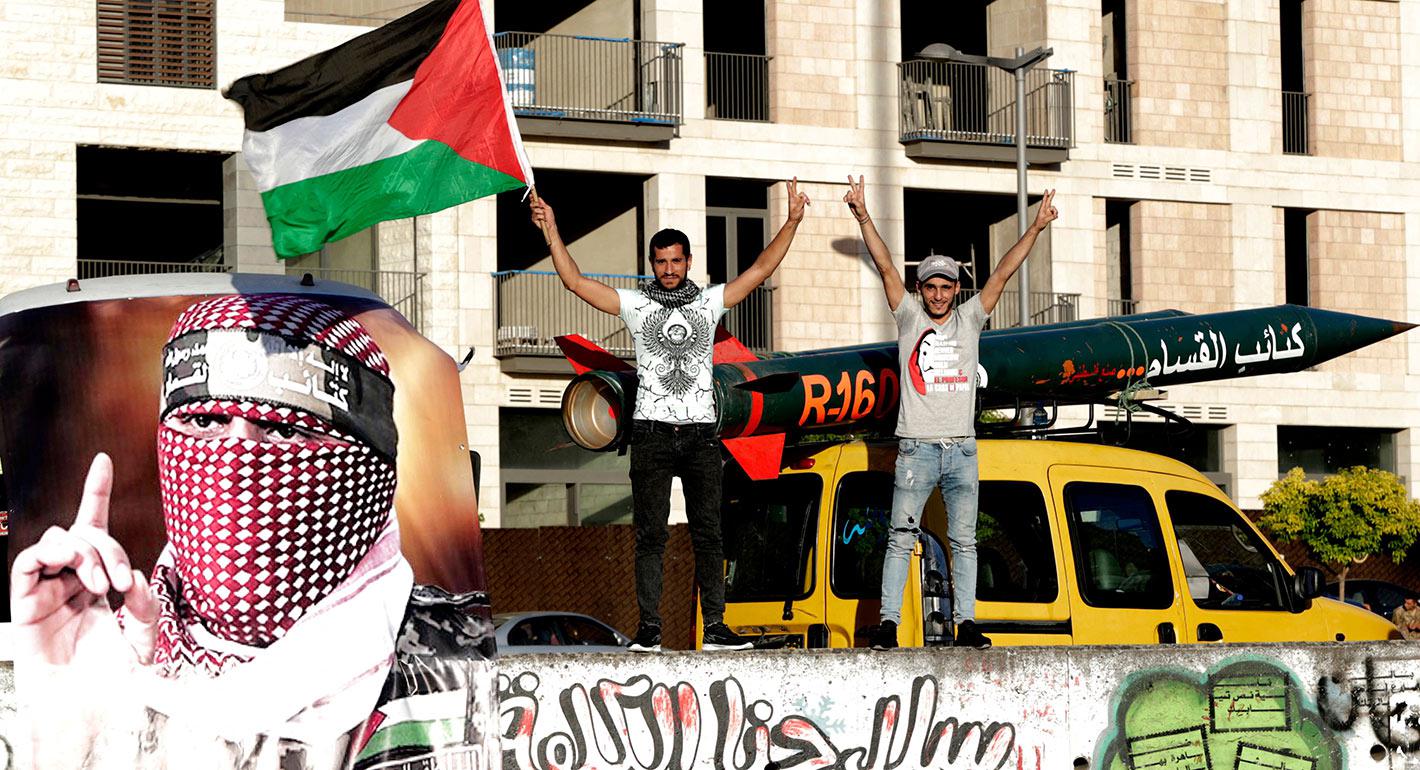
Ultimately, Hamas’s expansion of its security and military presence in Lebanon aims to create what the axis of resistance calls a “unified front” that can effectively target Israel. Thus, the movement’s new strategy under al-Sinwar seems determined to bring Lebanon into any potential future confrontation with Israel alongside Gaza, the West Bank, and the Israeli interior.
In fact, al-Sinwar, has not attempted to conceal the new alliance between Hamas and Hezbollah, and he even announced that a joint operations room, based in Lebanon and including officers from Hezbollah and the Iranian Revolutionary Guards, has supported the movement in the battle of “The Sword of Jerusalem.” Meanwhile, Israeli reports continue to warn about the involvement of Hamas elements in Lebanon in a potential confrontation in the Gaza strip. Israeli security forces are closely monitoring Hamas’s increased military activities in Lebanon as fears of an imminent strike against Israel intensify.
The Return to al-Assad
The presence of Hamas in Lebanon is not confined to the military realm; the movement has substantial political influence over Lebanon’s internal and regional affairs. Internally, Hamas oversaw the re-establishment of relations between Hezbollah and the Islamic Group which had been badly damaged in the aftermath of the Syrian revolution. Hamas worked hard to achieve this reconciliation by opening channels of political communication and dialogue between the two sides, and their efforts culminated in Ismail Haniyeh taking Azzam al-Ayoubi, the Islamic Group’s leader, to Lebanon to meet with Hezbollah Secretary-General Hassan Nasrallah twice.
According to recent reports, Hamas has ensured that the leadership of the Islamic Group in Lebanon includes loyal supporters who are on Hamas payrolls as full-time employees. This direct contribution to the Brotherhood in Lebanon ensures Hamas control over the group’s political orientation and decisions—such influence was recently demonstrated when Imad al-Hout, the Brotherhood's only representative in the Lebanese parliament, voted to re-elect Nabih Berri, an ally of Hezbollah, as parliament speaker for a seventh consecutive term. He then boycotted a meeting of Lebanese Sunni deputies hosted by the Saudi ambassador to Lebanon on September 24th and voted with a blank ballot during the September 29th parliamentary session to elect a new president. These actions highlight the direct impact of the rapprochement between the Group and Hezbollah under the sponsorship of Hamas.
Beirut also hosted the Hezbollah-arranged dialogue between Hamas and the Syrian regime ahead of the announcement of the restoration of ties between the two sides. Furthermore, although several meetings between the Syrian regime and Hamas have recently been announced, the most important was a meeting between Ismail Haniyeh and top-tier Syrian security officials that took place in Beirut; this represents a “political train” that will carry the movement back to Damascus.
The eagerness of Hamas’s new leaders, al-Sinwar and al-Arouri, for closeness with Iran and Hezbollah at this delicate stage of the movement’s history could be attributed to the fact that Hamas has found itself isolated after several Arab capitals normalized relations with Israel—a step which effectively curtailed these countries’ communication with Hamas. The same countries fear a potential Iranian expansion, coupled with the possibility of Iran signing a new nuclear agreement with Washington that will increase tensions in the region.
Consequently, Hamas is left between a rock and a hard place: the movement could either turn completely towards Tehran, the Syrian regime, and Hezbollah—an alliance that would cost Hamas the Arab Sunni majority that has served as a source of popular legitimacy for many years—or alienate itself from the Iranian axis at the expense of its rehabilitated relationship with the Syrian regime—a choice that could prompt Tehran to terminate its support for the movement.
As matters stand now, Hamas seems committed to benefitting from the new areas of operation that Iran has provided, and the movement displays no apparent willingness to reconsider its position despite Syria’s seeming lack of real enthusiasm for reconciliation.
Souhayb Jawhar is a Lebanese journalist and writer for a variety of Arabic sites, a producer of documentary films for Al Araby TV, and a researcher covering Islamist political movements.
About the Author
Souhayb Jawhar
Carnegie does not take institutional positions on public policy issues; the views represented herein are those of the author(s) and do not necessarily reflect the views of Carnegie, its staff, or its trustees.