

{
  "authors": [
    "Hamdullah Baycar"
  ],
  "type": "commentary",
  "blog": "Sada",
  "centerAffiliationAll": "dc",
  "centers": [
    "Carnegie Endowment for International Peace"
  ],
  "collections": [],
  "englishNewsletterAll": "menaTransitions",
  "nonEnglishNewsletterAll": "",
  "primaryCenter": "Carnegie Endowment for International Peace",
  "programAffiliation": "MEP",
  "programs": [
    "Middle East"
  ],
  "projects": [],
  "regions": [],
  "topics": []
}
Source: Getty
China-U.S. Rivalry Enters a New Phase in the Middle East
The recent deal in the heart of the Gulf has raised questions about the American position vis-à-vis China.
In March 2023, the headlines were interrupted by an incident that was thought by some to represent the end of U.S. hegemony in the Middle East. China, the United States’ biggest global rival, brokered a deal between Saudi Arabia and Iran, a major American partner and rival, respectively.
A closer look at the deal, however, shows that the Chinese role was relatively insignificant. Rather, the credit attributed to the Chinese was a gift offered by Saudi Arabia and Iran, and a result of the lack of a strategic and fair American diplomatic plan in the Middle East. Saudi Arabia’s emphasis on the Chinese role was a clear signal to the U.S. aimed at ensuring an upgrading of American commitments to the Kingdom, with Riyadh reportedly seeking to receive full and renewed assurance for security guarantees, as well as support for a civilian nuclear program.
Was it a Chinese Game?
The role of China is much more limited in this deal than media coverage indicated. The negotiations between the two parties have been ongoing for a long time with assistance provided by regional states. In facilitating talks between the two countries, Iraqi Prime Minister Mustafa al-Kadhimi hoped to achieve a better balance between Iran and the Arab Gulf states in Iraq, and decrease unilateral Iranian influence. Oman, which has a good record as a regional mediator, also played a major role in this rapprochement.
Moreover, rapprochement did not come as a massive surprise in a region that has experienced a relatively peaceful period since the outbreak of the pandemic in 2020. The long-running Gulf crisis between Qatar on one side, and the UAE, Bahrain, Saudi Arabia, and Egypt on the other, came to an end. Additionally, the UAE, Bahrain, and Morocco established relations with Israel while Turkey normalized its tense relations, rebuilding close ties with the UAE and Saudi Arabia.
Finally, diplomatic advances have changed regional calculations regarding Syria and Yemen, two countries where Iran and Saudi Arabia have collided since the Arab Spring. Syria has been welcomed back into the Arab League with Saudi approval, and Saudi officials have entered direct talks with the Houthis, a step that some believe could lead to a broader peace.
Is it Over for the United States?
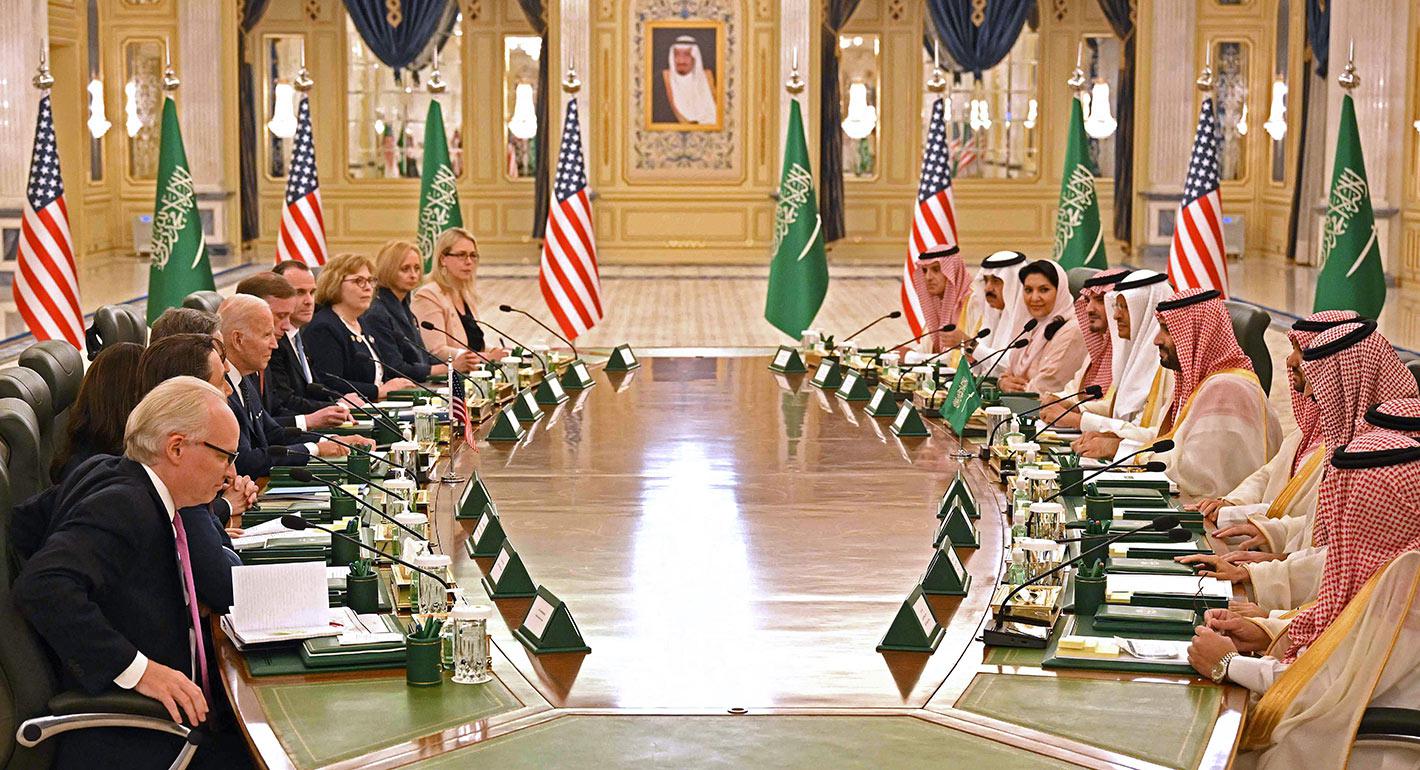
It is no secret that the current U.S. president and the Saudi leadership do not enjoy positive relations. During his campaign, Biden pledged that he would turn the Kingdom into a pariah—a stance he had to give up when the price of oil reached 120 USD per barrel after the Russian invasion of Ukraine. However, relations have not been warm following Biden’s visit to Riyadh in 2022, partly due to the United States’ patronizing attitude, which envisions that regional powers should follow the preferred American path even if it does not fit their national interests.
It is also important to remember that the U.S. has never been considered a just and fair mediator in Middle Eastern conflicts, given its close relations with Israel and its animosity towards Iran. Furthermore, the American abandonment of the JCPOA, along with its botched withdrawal from Afghanistan, have led to U.S. policies being referred to as “flip-flop” diplomacy for their reactionary and self-interested nature and the lack of consideration they show for allies.
By involving China in their recent deal, both Iran and Saudi Arabia want to give a clear signal to the U.S. that it can be replaced. Yet, whether it actually will be is still up for debate. While the Chinese economic footprint has grown in the region, Beijing does not appear willing to become more deeply involved in regional competition, at least for now. However, considering the attention that American media organizations and policymakers paid to the Chinese role in the deal, it is certain that the U.S. will be forced to reevaluate its relationships in the region and consider why a partner would turn to China in the first place.
Hamdullah Baycar is a PhD candidate at the Institute of Arab and Islamic Studies at the University of Exeter. His work focuses on identity politics in the Gulf and international relations.
About the Author
Hamdullah Baycar
Carnegie does not take institutional positions on public policy issues; the views represented herein are those of the author(s) and do not necessarily reflect the views of Carnegie, its staff, or its trustees.