

{
  "authors": [
    "Nouran Ahmed"
  ],
  "type": "commentary",
  "blog": "Sada",
  "centerAffiliationAll": "dc",
  "centers": [
    "Carnegie Endowment for International Peace"
  ],
  "collections": [],
  "englishNewsletterAll": "menaTransitions",
  "nonEnglishNewsletterAll": "",
  "primaryCenter": "Carnegie Endowment for International Peace",
  "programAffiliation": "MEP",
  "programs": [
    "Middle East"
  ],
  "projects": [],
  "regions": [],
  "topics": []
}
Source: Getty
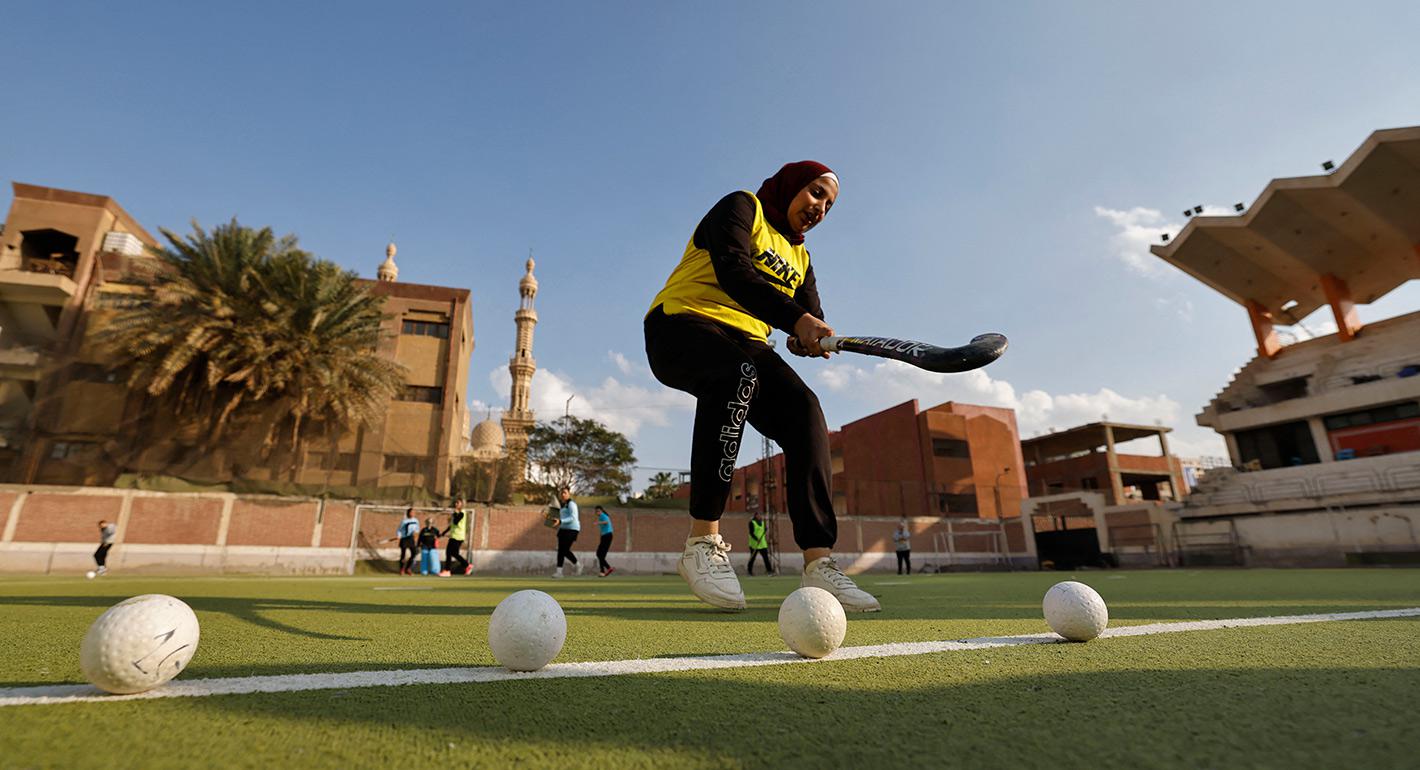
Rediscovering Sports in Egypt
The sporting sector in Egypt receives systematic government attention based on economic considerations that overlap with the political objectives of foreign and domestic policy.
The Egyptian government’s interest in sports is part of the country’s short and long-term economic strategy. Egypt’s 2030 Strategic Vision aims to create alternative sources of income to finance the Egyptian treasury as traditional streams of revenue witness decline. The vision lists sports as one of the fields that can generate consistent and sustainable economic benefits that will eventually help alleviate the country’s precarious financial situation.
The current economic crisis and the severe shortage in foreign currency are accelerating the state’s movement towards the growing and prospering global sports market. While investment in sports has reached a peak globally, Egypt is still striving to attract foreign investment to the various sectors of its sports market as a model for other categories of investment. Each sector generates a variety of job opportunities through an infrastructure of support services.
The government sees the large youth population in Egypt, and the corresponding vast market, as a huge investment opportunity. In order to take advantage of this opportunity, the Ministry of Youth has attracted private sector investment by using a usufruct system, in which investors are afforded the right to use property that they do not own for a time. This scheme achieved returns of 6 billion EGP following investment in sports facilities, which encouraged the state to continue in this direction.
Internal dynamics also play a role in encouraging decision-makers to support sports investment in Egypt. The Egyptian chambers of commerce and various industry bodies that specialize in sports supplies and services called on decision-makers to support and facilitate investment and growth opportunities in the large local market, and to take advantage of diplomatic relations with various African neighbors to access the African market and stimulate demand.
Such local factors are intertwined with regional developments such as the growing interest in sports in the Arab Gulf countries, which culminated in Qatar organizing the 2022 World Cup. This interest—and the success that followed—led the Egyptian state to try to learn from and replicate the Qatari experience. Luckily, this inclination coincided with the improvement of relations between Egypt and Qatar, which has resulted in the two countries exchanging experiences in the field of sports. However, despite the shared interests of the Arab Gulf countries and Egypt, challenges still exist, as the direct economic assistance that Egypt used to receive from these countries, which entailed limited conditionality, is no longer being offered.
This dynamic has pushed decision-makers in Egypt to look for more sustainable areas of cooperation with the Arab Gulf countries in which they can form equal economic partnerships while rigorously searching the region for competitive advantages that encourage these partnerships. For the Egyptian state, the ideal competitive advantage would be based on combining sports with other promising economic sectors that are currently regressing because of the critical economic situation. Such sectors include the information and communication technology sector, which offer the possibility of innovating and investing in electronic games, the sports medicine and pharmaceuticals sector, and the sporting facilities construction sector (which is currently stagnant in Egypt).
The ideal competitive advantage will also transform Egypt into a major sports hub in Africa and the Middle East. Egypt aims to lead in technical expertise, sports investments, innovation, and decision-making in the sports field. Therefore, local investors and economic bodies close to the state are working to devise models and patterns of sports investment and club ownership that can be tried locally before they are exported to surrounding African countries.
To achieve this goal, Egypt is adopting regional and international institutional frameworks such as UN goals that intersect with the African Union’s agenda for sports, Africa 2063, which aims to expand the African continent’s involvement in major sporting events and to integrate youth through sports. Egypt aspires to benefit from the implementation of these goals by strengthening sports cooperation with African countries, helping them to establish the needed sporting infrastructure, and supplying them with related industries and services.
The official agenda also aims to turn Egypt into an internationally reliable leader in areas such as anti-doping policies in Africa. This cooperation will improve Egyptian-African relations and will guarantee that Egypt receives much-needed African support following years of tension with the African Union as a result of the political upheaval that Egypt has witnessed over the past decade.
In parallel to diplomatic efforts, decision makers in Egypt are engaged in protracted negotiations with various international sports organizations and federations, and health and population programs, to convince them to choose Cairo as the headquarters of their regional offices to encourage investment opportunities and cooperation with the Egyptian state and to enhance Egypt’s regional and international status and legitimacy.
The most prominent political aim behind all of these plans is the creation of adequate job opportunities for a large segment of the population through local and foreign investment in sports. Many experts believe that increasing investment in sports and youth activities is an important way to improve the social and economic conditions of individuals working in these fields. The sports field is known to yield higher and faster financial returns compared to other sectors of the job market that require longer time frames, greater spending, and more significant political commitments from the state.
This neoliberal linkage to sports and money networks is intended to turn citizens into direct stakeholders in the long-term political and social stability of the country in order to sustain the injection of money into the Egyptian economic machine.
Nouran Sayed Ahmed is an Egyptian researcher and writer interested in sports politics, law, and religion in Egypt.
About the Author
Nouran Ahmed
Carnegie does not take institutional positions on public policy issues; the views represented herein are those of the author(s) and do not necessarily reflect the views of Carnegie, its staff, or its trustees.