

{
  "authors": [
    "Valerie Boutros"
  ],
  "type": "commentary",
  "blog": "Sada",
  "centerAffiliationAll": "dc",
  "centers": [
    "Carnegie Endowment for International Peace"
  ],
  "collections": [],
  "englishNewsletterAll": "menaTransitions",
  "nonEnglishNewsletterAll": "",
  "primaryCenter": "Carnegie Endowment for International Peace",
  "programAffiliation": "MEP",
  "programs": [
    "Middle East"
  ],
  "projects": [],
  "regions": [],
  "topics": []
}
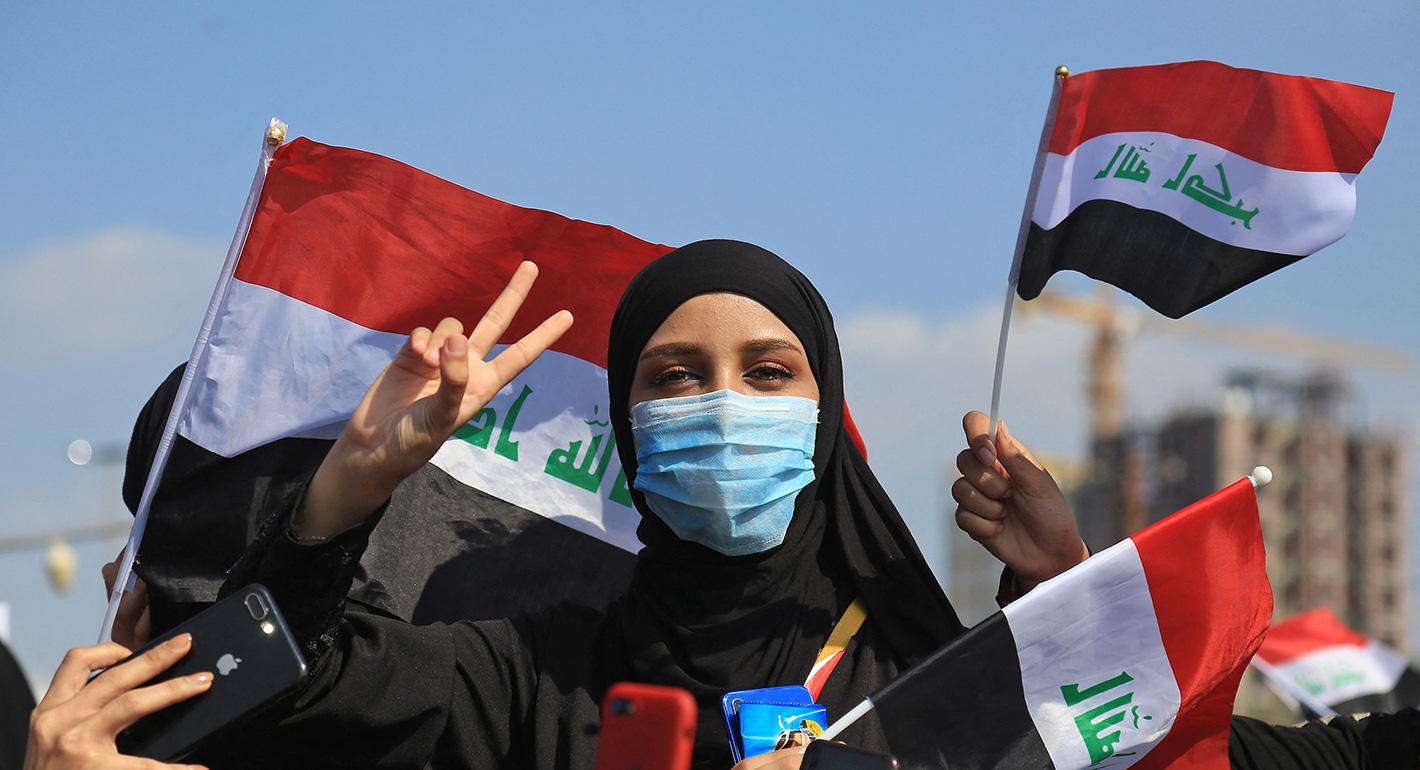
Source: Getty
Rethinking Youth Activism in the Middle East and North Africa
Recent public opinion surveys offer an opportunity to reevaluate youth political engagement across the region, a decade after the 2011 Arab Uprisings and waves of subsequent protest movements.
Over the last decade, the Arab Barometer’s surveys have captured youth public opinion in countries across the Middle East and North Africa (MENA). MENA youth have consistently raised concerns about their countries’ economic performance, job opportunities, quality of education, and political and civil rights. While a desire for change is present, and reform movements have developed in the wake of the 2011 Arab uprisings, MENA youth seem to be unable to exact meaningful political change. Following the second wave of protests in 2018–2019, MENA youth who were reengaged in revolutionary protests have now seemingly been demobilized. Thus, it comes as no surprise that there is an overwhelming desire to emigrate among youth across the region—indicative of a deep sense of resignation.
“Apolitical Activism”
After the 2011 Arab uprisings, scholars posited the idea of "apolitical activism" to account for MENA youth engagement outside of traditional political arenas, with a focus on development-oriented and community-based action. This has included coordinated humanitarian relief efforts at the municipal level in Syria, volunteer-based beautification efforts in underprivileged Lebanese cities, trash collection and land reclamation in poor neighborhoods in Beirut, the promotion of sustainable tourism in Algeria, and urbanization programs in slums in Algiers.
This form of activism often aimed to help those that do not receive any governmental support, such as those suffering from food insecurity. The goal was to produce meaningful change for ordinary citizens, without appealing to the authorities for systemic reforms. Youth engaged in these efforts claimed that this kind of social and cultural activism is “apolitical,” an attempt to mark a clear distinction between the governmental-political sector and their own practices. In this sense, youth activists hoped to override the socioeconomic patronage networks necessary to navigate state bureaucracies, in favor of collaborative, local community projects, outside of the constraints of formal “politics.”
Political Disenchantment and Emigration
The second wave of uprisings in 2019 saw a temporary resurgence in traditional means of political activism, but have been followed by widespread political demobilization and emigration from the region—especially in the wake of the COVID pandemic and its lingering economic effects. The Arab Barometer's 2019 research findings indicated that MENA youth are seemingly disengaged from both formal and informal politics, consistent with a wider regional trend of political disenchantment and disillusionment with the outcomes of the Arab Spring. This is detrimental as the region’s youth population encompasses 55 percent of the region’s demography.
Perhaps even more worryingly, the Arab Barometer fifth, sixth, and seventh wave of surveys have each affirmed MENA youth’s overwhelming desire to emigrate for better opportunities. In all countries that participated in the most recent surveys, youth ages 18-29 expressed a larger desire to emigrate than their older counterparts by a margin of at least six points. Among college-educated youth, more than half want to leave the Middle East entirely, increasing the likelihood of a regional “brain drain” with long-term negative effects.
The Future of Youth Activism
Despite the Arab Barometer’s recent findings on emigration and youth demobilization, the concept of "apolitical activism" could potentially remain a useful way of capturing MENA youth engagement today. Researchers cite systemic socio-economic inequality, the co-optation of reform agendas by political elites, and counterrevolutionary hijacking of political and social movements—factors that previously pushed youth towards non-traditional activism.
In other words, the causal factors that led to the rise of “apolitical activism” remain present, even after the revival of political protest during the second wave of Arab uprisings. However, the inability to engage with political institutions and implement direct reforms still leaves open questions about the future of MENA youth. While local reforms aid communities in an immediate fashion, long-term solutions cannot be achieved until pre-existing institutions are reformed directly.
Valerie Boutros holds a B.A. in political science and philosophy from the University of California, Irvine, where she wrote an award-winning undergraduate honors thesis on the Arab uprisings. She has research expertise in the MENA region, with a specialty in youth activism, and previously served as an intern in Carnegie's Middle East Program.
About the Author
Valerie Boutros
Carnegie does not take institutional positions on public policy issues; the views represented herein are those of the author(s) and do not necessarily reflect the views of Carnegie, its staff, or its trustees.