

{
  "authors": [
    "Mohammed Hassan"
  ],
  "type": "commentary",
  "blog": "Sada",
  "centerAffiliationAll": "dc",
  "centers": [
    "Carnegie Endowment for International Peace"
  ],
  "collections": [],
  "englishNewsletterAll": "menaTransitions",
  "nonEnglishNewsletterAll": "",
  "primaryCenter": "Carnegie Endowment for International Peace",
  "programAffiliation": "MEP",
  "programs": [
    "Middle East"
  ],
  "projects": [],
  "regions": [],
  "topics": []
}
Source: Getty
Why ISIS Cannot Bring the Caliphate Back to Life
Since the defeat of ISIS forces at Al-Baghouz in 2019, five factors have stymied the group’s revival in Syria and Iraq.
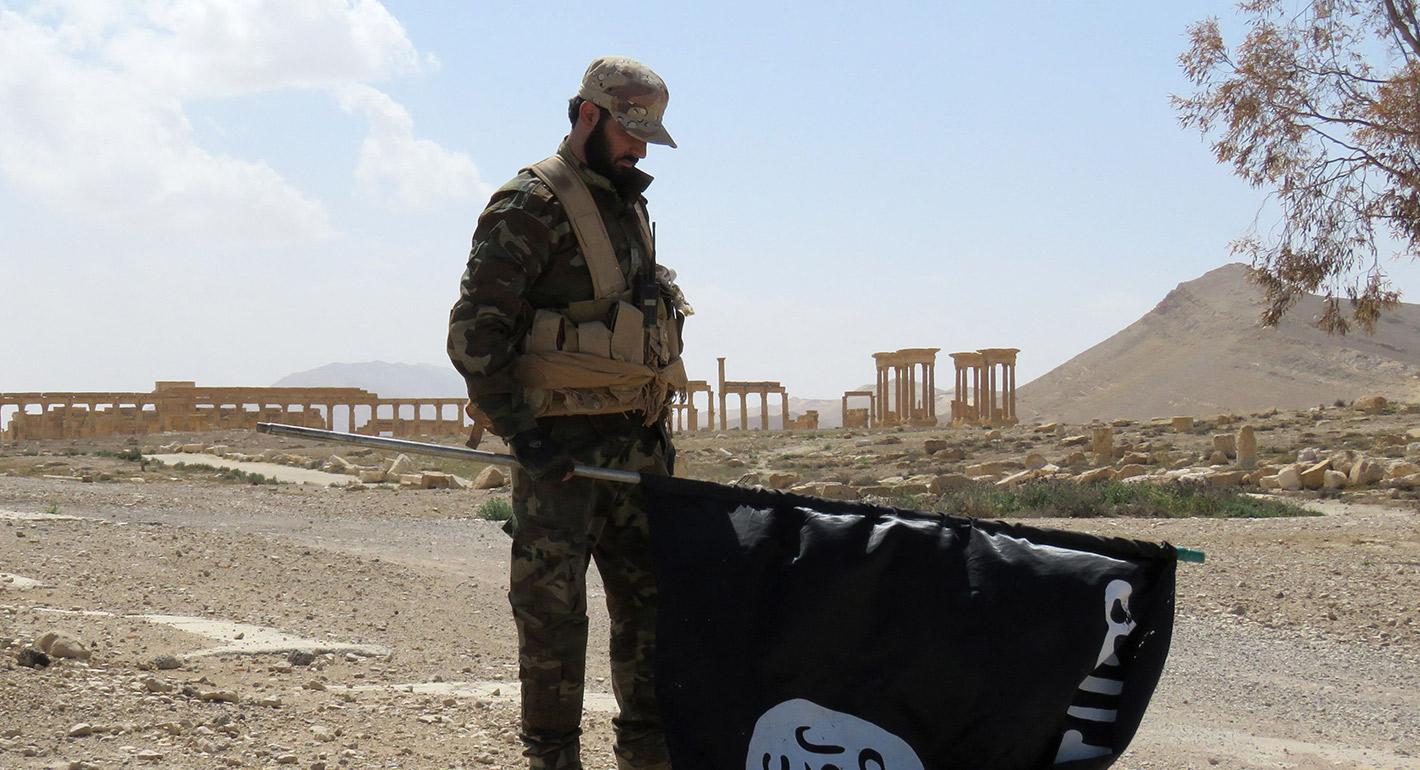
On March 23, 2019, the Syrian Democratic Forces (SDF), assisted by the U.S.-led Global Coalition, took control of the village of Al-Baghouz, the last stronghold of the Islamic State (ISIS) in Syria. The fall of Al-Baghouz was the final straw in a series of defeats that eliminated the group’s remaining territorial control in Syria and Iraq, where they had declared their caliphate in June 2014.
In the four years that followed its defeat, ISIS has tried to make a comeback, continuing to attack its adversaries in Syria and Iraq. They have been helped in this effort by several developments, including the Covid-19 pandemic, ongoing Turkish military operations in northwestern Syria, and the sectarian divisions fanned by the ruling authoritarian regimes. However, the group has failed to take advantage of these opportunities—and multiple factors could render a return to its pre-2019 status significantly difficult.
The first and most important of these factors is that local conditions in both Syria and Iraq have militated against ISIS’s return. When ISIS declared its caliphate in 2014, both countries were suffering the consequences of long-term instability caused by religious sectarianism, political division, and the aftermath of the 2011 Arab Spring. Now, the Syrian regime and its allies have regained control of many areas in the central and eastern regions of the country that they lost after 2011, and the Iraqi army and security services have been developing their military capacities—in part by cooperating with the dozens of local militias, directly supported by Iran, that operate in the country.
The second factor is the recent ebb of the Islamic tide, not only in Syria and Iraq but across the entire region. The popularity of extremist Salafi groups like ISIS and the Nusra Front has drastically declined, particularly within the communities which these groups controlled, which witnessed thousands of executions carried out against “infidels” and “traitors.” But these communities also became more committed to secular civil governance—especially in the light of the wider failure of political Islam movements, which many took to demonstrate that experiments in Islamic governance will not be allowed to flourish, regardless of their nature or direction.
The third factor preventing ISIS’s return is the nature of the population in the areas where the group is currently present. When the SDF and the Coalition forces recovered Iraqi and Syrian territory from ISIS, its local adherents—those who had directly worked for the organization, or others who had adopted its doctrines—were forced to flee to neighboring countries or regions controlled by other powers, such as northern Syria. With this migration, ISIS has become estranged from its popular base and exposed to further setbacks, especially since most of the population in the regions where ISIS is present, with some exceptions in SDF-controlled areas, are loyal to the existing authorities.
The fourth factor is ISIS’s inability to attract new recruits to supplement its ranks. The restoration of an ISIS caliphate would require significant manpower, and the lack of new conscripts prompted the organization to try to liberate thousands of its detained fighters in SDF prisons. On January 20, 2021, groups affiliated with ISIS attacked al-Sina Prison in Al-Hasakah, a city in Syria’s far northeast. However, the attack failed as the Coalition forces came to SDF’s assistance, and ISIS ultimately lost dozens of its fighters detained inside the prison.
The fifth and final factor that has thwarted the revival of ISIS as a political project is the decline in the proliferation of weapons and the loss of financial resources that previously filled its coffers. ISIS’s rise relied on large quantities of weapons, such as those it acquired upon its takeover of Mosul, and which sustained its presence until its downfall in Al-Baghouz. The current lack of weapons has stripped the organization of much of its military capabilities, and it will be forced resort to guerrilla tactics and attritional warfare—a strategy that keeps the organization alive, but only as an inconvenient nuisance, rather than a force capable of achieving significant gains.
Mohammed Hassan is a nonresident scholar at the Middle East Institute and a master's student in the Department of International Relations at the Higher School of Journalism in Paris. He has written for several Arab and Western outlets, including Al-Haya, Al-Modon, Daraj Media, and Chatham House’s Middle East and North Africa Program. Follow him on Twitter @mohammed_nomad.
About the Author
Mohammed Hassan
Carnegie does not take institutional positions on public policy issues; the views represented herein are those of the author(s) and do not necessarily reflect the views of Carnegie, its staff, or its trustees.