

{
  "authors": [
    "Aya Kamil",
    "Adele Malle"
  ],
  "type": "commentary",
  "blog": "Sada",
  "centerAffiliationAll": "dc",
  "centers": [
    "Carnegie Endowment for International Peace"
  ],
  "collections": [],
  "englishNewsletterAll": "menaTransitions",
  "nonEnglishNewsletterAll": "",
  "primaryCenter": "Carnegie Endowment for International Peace",
  "programAffiliation": "MEP",
  "programs": [
    "Middle East"
  ],
  "projects": [],
  "regions": [],
  "topics": []
}
Source: Getty
Climate Change and Gender in Morocco and Jordan
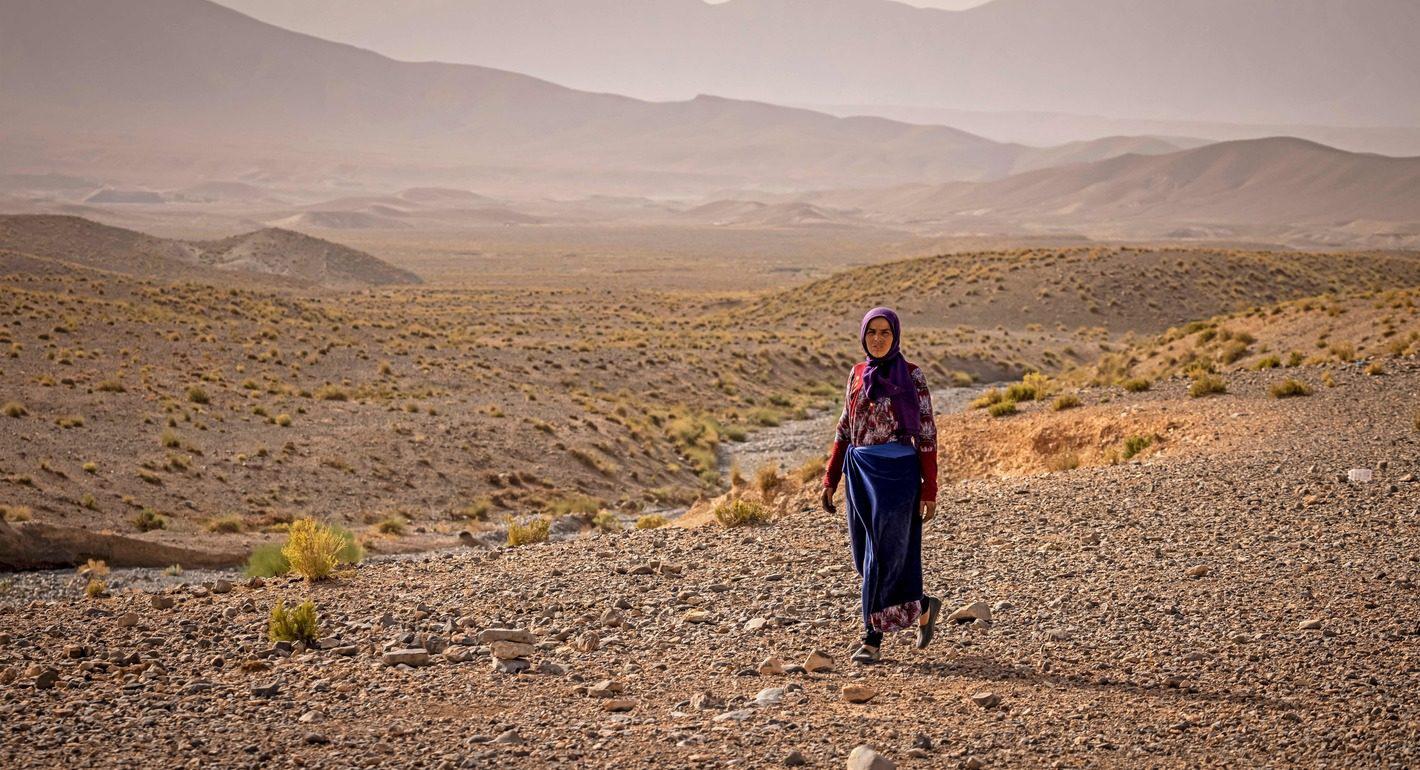
Climate change is an existential concern for countries across the Middle East and North Africa. Yet as governments invest in climate mitigation and adaptation, the specific impacts of a warming climate on women are often overlooked.
In this debate, Sada publishes two articles, written by junior fellows at Carnegie, that explore this dynamic in two countries particularly vulnerable to drought and heat waves.
In the first article, Aya Kamil argues that despite its role as a pioneer of progressive climate policy, Morocco has yet to take the climate-gender nexus into account. She shows how climate change will have disproportionate effects on women in a variety of sectors, from education and health care to agriculture and domestic labor. As the kingdom heavily invests in green industrial projects, Kamil affirms, women cannot be left behind.
The second article, by Adele Malle, explores the link between climate change and declining rates of women’s participation in the Jordanian workforce. Malle suggests that the burden of water scarcity in Jordan falls heavily on women, and likely helps to explain this phenomenon of growing economic inequality. Women’s absence from the workforce, moreover, has detrimental consequences for the Jordanian economy as a whole—making investments in gender equality an even greater priority.
The Climate-Gender Nexus: A Gap in Moroccan Policy

While Morocco has garnered international praise for its response to climate change, gender remains conspicuously absent from government plans.
Aya Kamil
Morocco is widely seen as a regional leader in the fight against climate change. Nearly a decade ago, the kingdom developed and published the Moroccan Climate Change Policy framework (MCCP). With “the fight against climate change as a top priority,” the MCCP details both climate adaptation and mitigation plans—how Morocco can adjust to climate change variability, but also mitigate its consequences by reducing greenhouse gas emissions. These proposals span across the country’s most vulnerable sectors, including water access, agriculture, and local fisheries. By taking governmental, socioeconomic, and environmental considerations into account, the MCCP became a leading reference for the development of national climate policy in countries across the Middle East and North Africa. However, this wide acclaim should not make us lose sight of the areas that the MCCP fails to address—in particular, the climate-gender nexus.
The impacts of climate change are gender-differentiated, and so effective climate adaptation and mitigation roadmaps must place gender at its core. Compounding climate threats accelerate preexisting vulnerabilities, putting women’s lives and livelihoods at risk. In rural Morocco, dire climatic conditions jeopardize women’s access to health services— especially in flood prone areas such as Figuig, Ten Drara, and Bou Arfa—with negative ripple effects on their overall mental health.
Education is another sector that directly bears the brunt of the effects of climate change. In the early 2000s, female literacy in Morocco was at a historic low, nearing 42 percent. Despite progress on this front over the last two decades, in 2021, Moroccan women still lagged behind men by nearly twenty percentage points. Climate change will only heighten these disparities, as drop-out rates for girls skyrocket during extreme weather scenarios.
Climate change will also likely impact women’s domestic roles in Morocco. Women are the primary earners in 15.6 percent of Moroccan households, and in rural settings, climate change may pose additional risks to female breadwinners. Heavily reliant on climate-sensitive livelihoods—especially in agriculture—women will be hindered from earning a living and supporting their families as vital natural resources continue to degrade. In turn, this increases the likelihood of their exposure to gender-based violence and food scarcity.
Without taking gender into account, Morocco’s ability to adapt to climate change will remain limited. The MCCP devalues the strategic importance of gender, in part by prioritizing climate adaptation and mitigation over climate risk prevention and reduction. The latter are critically necessary as resilience-building strategies for Moroccan women, especially in the context of disaster preparedness. For rural Moroccan women, reducing climate risk would involve targeted interventions such the distribution of drought-resistant crops and the relocation of women-only school dormitories to flood-free areas.
Through the MCCP, Morocco is making a significant effort to transition to a green economy, with substantive investments on renewable energy. The kingdom is home, for example, to the world’s largest concentrated solar plant in the Ouarzazate region. Yet the MCCP fails to take gender into account as part of this economic transition. Women’s absence from climate-friendly investment is a wider global problem: in the 2019-2020 fiscal year, global climate finance mobilized $632 billion, yet less than 10 percent of these funds reach women. In Morocco, the most recent estimates suggest that $50 billion will be spent on mitigation programs and another $35 billion on adaptation projects by 2030. However, with strategic priorities set on mitigating the effects of greenhouse gas emissions caused by power generation and transport, gender considerations are sidelined yet again.
Moroccan authorities should empower the financial sector to work towards closing the green investment gap—the financial assets required to meet climate goals, estimated at $24 billion in Morocco—and make private capital systematically gender inclusive. Such measures could include financial incentives, tax exemptions, or carbon credits for compliers. Gender-smart climate adaptation and mitigation goals will also require a deeper investment in social safety nets, access to green employment for women, and resilience-building and climate risk-reduction programs. The path that lies ahead is certainly arduous, but given Morocco’s strong record on climate adaptation, the kingdom is capable of leading the region in the drive for gender-inclusive climate action.
Aya Kamil was a James C. Gaither Fellow in the Middle East Program at Carnegie and an incoming 2023 MSc candidate in Middle East Studies at the University of Oxford. Her research interests include climate adaptation, human security and South-to-South regional integration.
Climate Change: The Lurking Variable in Jordan’s Gender Inequality

Declining rates of female participation in the Jordanian workforce may be linked to water scarcity, the primary effect of climate change in the kingdom.
Adele Malle
In recent years, a perplexing paradigm has emerged in Jordan. The kingdom has made extensive efforts to improve its dismal rates of female participation in the workforce, only for the rates to drop even lower. In 2014, 22 percent of Jordanian women participated in the workforce. By 2022, that number had fallen to 14.3, making Jordan among the most economically unequal countries in the world. Only 27 percent of Jordanian women have a bank account, a full eleven percentage points below the regional average for women. Yet several metrics show progress for Jordanian women in other areas: since the government’s 2016 pledge to close the gender equity gap by 2030, maternal healthcare, literacy, and education rates for women have all soared. Indeed, more Jordanian women attend university than men. Why then have women stayed out of the workforce?
Some experts argue that social norms, including “dominant traditions, social conservatism and tribalism,” keep women out of the workplace. But this does not explain why Jordan’s rates would be lower than other countries with similarly pervasive conservative social norms, including Saudi Arabia, where 22 percent of women participate in the workforce.
Instead, there is likely another lurking contributor to the backsliding in gender equality in Jordan: as climate change upends local economies, Jordanian women bear the brunt of the consequences.
Jordan is extremely vulnerable to climate change: already it is one of the top-five most water-stressed countries in the world. In studies from around the globe, researchers have found that water scarcity disproportionately affects women and girls, who largely assume the role of collecting water, face growing health risks from sanitation issues, and critically, according to UN Women, “take on increased domestic and care work as resources disappear.”
While there has not been a comprehensive study of water access and gender inequality in Jordan, more narrow studies have found compelling evidence that climate change is accelerating economic inequality. The Mercy Corps found that in one rural area in Jordan, women systematically received less water than men under the system of privatized water delivery that most rural Jordanians rely on. The all-male drivers of water delivery trucks reliably prioritized their male friends, under-delivering to households managed solely by women.
How does uneven water allocation affect employment statistics? Globally, women and girls spend 200 million hours a day collecting water. As water collection becomes more difficult, it requires more unpaid labor, forcing women and girls to deprioritize their education and employment. When families run out of water between biweekly deliveries, they have to buy additional water at a much higher cost. By raising the cost of housekeeping, water scarcity continually traps women and girls in unpaid – and increasingly difficult – domestic labor.
Water scarcity has even more insidious consequences for Jordan’s large refugee population. In the Azraq Camp, home to 35,752 refugees, the trek to water collection exposes women to sexual violence, forcing women to find safer routes and taking more time from school and work.
These studies indicate that water scarcity is deeply affecting Jordanian women, and likely helps to sustain pervasive economic inequality. Jordan was the first country in the Middle East to include a section on gender equality in its National Climate Change Policy, but despite this high-level awareness, no specific policies to advance this goal have been adopted.
Investing in gender-specific climate policy would have broad benefits to Jordan’s economy. Economic gender inequality has a corrosive ripple effect on the broader economy: the Middle East on average loses 38 percent of potential income due to gender participation gaps. According to UNICEF, a 25 percent increase in female participation in the Jordanian labor force over the next seven years would grow Jordan’s GDP by 5 percent annually. And as climate change accelerates, with increasingly lethal heat waves across the region, investments in gender equality are more urgent than ever before.
Adele Malle was a James C. Gaither Junior Fellow in the American Statecraft Program at the Carnegie Endowment for International Peace.
About the Authors
Aya Kamil
Former James C. Gaither Junior Fellow, Middle East Program
Aya Kamil was a James C. Gaither Junior Fellow in the Carnegie Middle East Program.
Adele Malle
Former James C. Gaither Junior Fellow, American Statecraft Program
Adele Malle was a James C. Gaither Junior Fellow in the Carnegie American Statecraft Program.
Carnegie does not take institutional positions on public policy issues; the views represented herein are those of the author(s) and do not necessarily reflect the views of Carnegie, its staff, or its trustees.