• Research
  • Emissary
  • About
  • Experts
Carnegie Global logoCarnegie lettermark logo
Democracy
  • Donate
{
  "authors": [
    "Reham Owda"
  ],
  "type": "commentary",
  "blog": "Sada",
  "centerAffiliationAll": "dc",
  "centers": [
    "Carnegie Endowment for International Peace"
  ],
  "collections": [
    "The Gaza War and Regional Reverberations"
  ],
  "englishNewsletterAll": "menaTransitions",
  "nonEnglishNewsletterAll": "",
  "primaryCenter": "Carnegie Endowment for International Peace",
  "programAffiliation": "MEP",
  "programs": [
    "Middle East"
  ],
  "projects": [],
  "regions": [
    "Palestine",
    "Middle East"
  ],
  "topics": []
}
Attribution logo

Source: Getty

Commentary
Sada

The Day After in Gaza: Four Post-War Scenarios

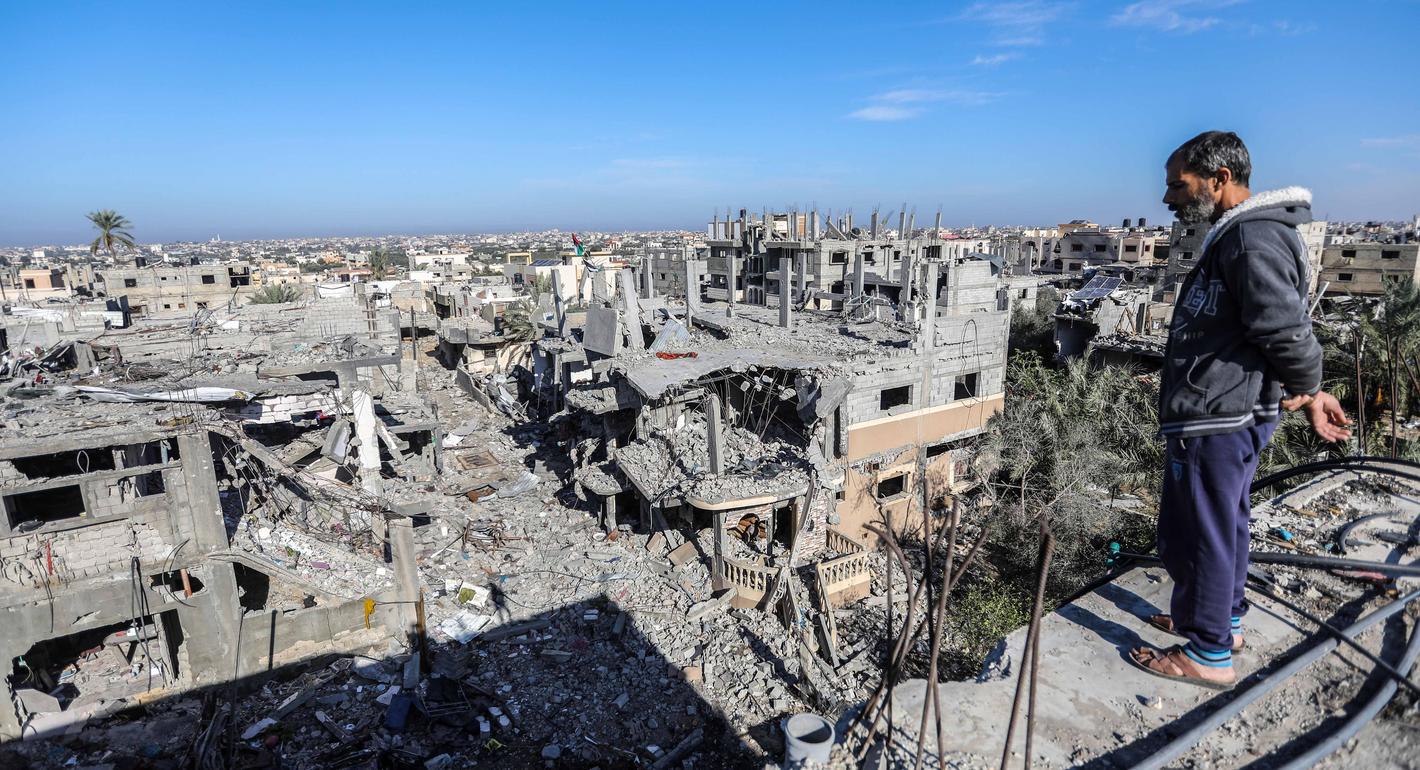
The war will likely continue for at least another several brutal months—and yet there remains an urgent need to consider the Strip’s political future.

Link Copied
By Reham Owda
Published on Feb 6, 2024
Sada

Blog

Sada

Sada is an online journal rooted in Carnegie’s Middle East Program that seeks to foster and enrich debate about key political, economic, and social issues in the Arab world and provides a venue for new and established voices to deliver reflective analysis on these issues.

Learn More
Program mobile hero image

Program

Middle East

The Middle East Program in Washington combines in-depth regional knowledge with incisive comparative analysis to provide deeply informed recommendations. With expertise in the Gulf, North Africa, Iran, and Israel/Palestine, we examine crosscutting themes of political, economic, and social change in both English and Arabic.

Learn More

Despite U.S. insistence on the need to plan for post-war governance in the Gaza Strip, Israeli Prime Minister Benjamin Netanyahu continues to refuse to outline any strategy for the day after or to cede control to the Palestinian Authority (PA). For its part, the PA also has rejected the idea that it will re-enter the Strip on the back of an Israeli tank. Under these circumstances, one of the following scenarios is most likely:

Local Administration Under Israeli Security Control

While Netanyahu has expressed a desire to transfer control of the Gaza Strip to a civilian government under Israeli security control, the feasibility of such a transition appears unlikely. All members of civil society, including local leaders and businessmen, are hesitant to collaborate with Israel as long as the devastating war continues, fearing accusations of national treason. However, in the absence of a functioning security infrastructure and reliable humanitarian aid, there is a possibility that Gazans would opt to establish a local body to oversee humanitarian affairs and emergency operations, aiming to prevent total chaos. This arrangement might allow the Israeli army to maintain control over the Strip's borders, and carry out limited ground incursions and aerial bombardments.

Tribal Protection Committees

The Israeli media has suggested coordinating with Palestinian tribes in Gaza to bring humanitarian aid into the Strip. In response, the tribal council issued an official statement rejecting post-war cooperation with Israel. But despite this position, the anticipated chaos after the war may compel the tribes to act to protect their extended families. This could take the form of protection committees, comprised of youth from each family, to defend property from theft and to facilitate access to humanitarian aid in coordination with international organizations, rather than with Israel. These committees may not have any political role but would instead focus on overseeing the general welfare of each clan, while the Israeli security presence in the Strip continues in some form.

International Coalition Management

Given the complexity of the situation in Gaza, the formation of an international coalition—in collaboration with NATO or any other global entity—could be the most pragmatic solution to minimize security risks. It would also spare the PA the embarrassment of directly returning to Gaza in collaboration with Israel. The recent visit of U.S. Secretary of State Antony Blinken to Turkey suggests a potential partnership between the two countries, given Turkey's significant role in NATO and its positive relationship with Palestinians. If accepted by the Palestinian public, these international forces could focus on limited roles such as maintaining security, facilitating humanitarian aid, and overseeing the reconstruction of Gaza. Subsequently, a national committee might be established to engage with the PA and gradually transfer control of Gaza, or to prepare for future parliamentary and presidential elections to usher in a new phase of governance.

Rule by Armed Militias

If the PA is prevented from returning to Gaza, and international forces are unable to enter the Strip, remaining members of Hamas and other militant factions may form armed militias. These groups could assume an unofficial role in governing the Strip, but intra-Palestinian violence would also flare up in the clash with perceived Israeli collaborators. If the Israeli army continues to conduct occasional ground and air operations in Gaza, conflict with these militias would also be inevitable. Consequently, the Israeli blockade would likely persist, with the Rafah crossing closed and the reconstruction of Gaza delayed until a comprehensive solution is reached—one that ensures the formation of a national government with formal authority over the Strip.

Ultimately, it must be affirmed that only Palestinians themselves, supported by Arab nations and members of the international community, should determine the shape of their government. External powers, including Israel, cannot dictate these decisions. However, facing the impact of a prolonged occupation and a devastating war, Palestinians might find themselves compelled to accept any scenario that promises a swift end to the intense conflict and a return to the homes from which they were displaced.

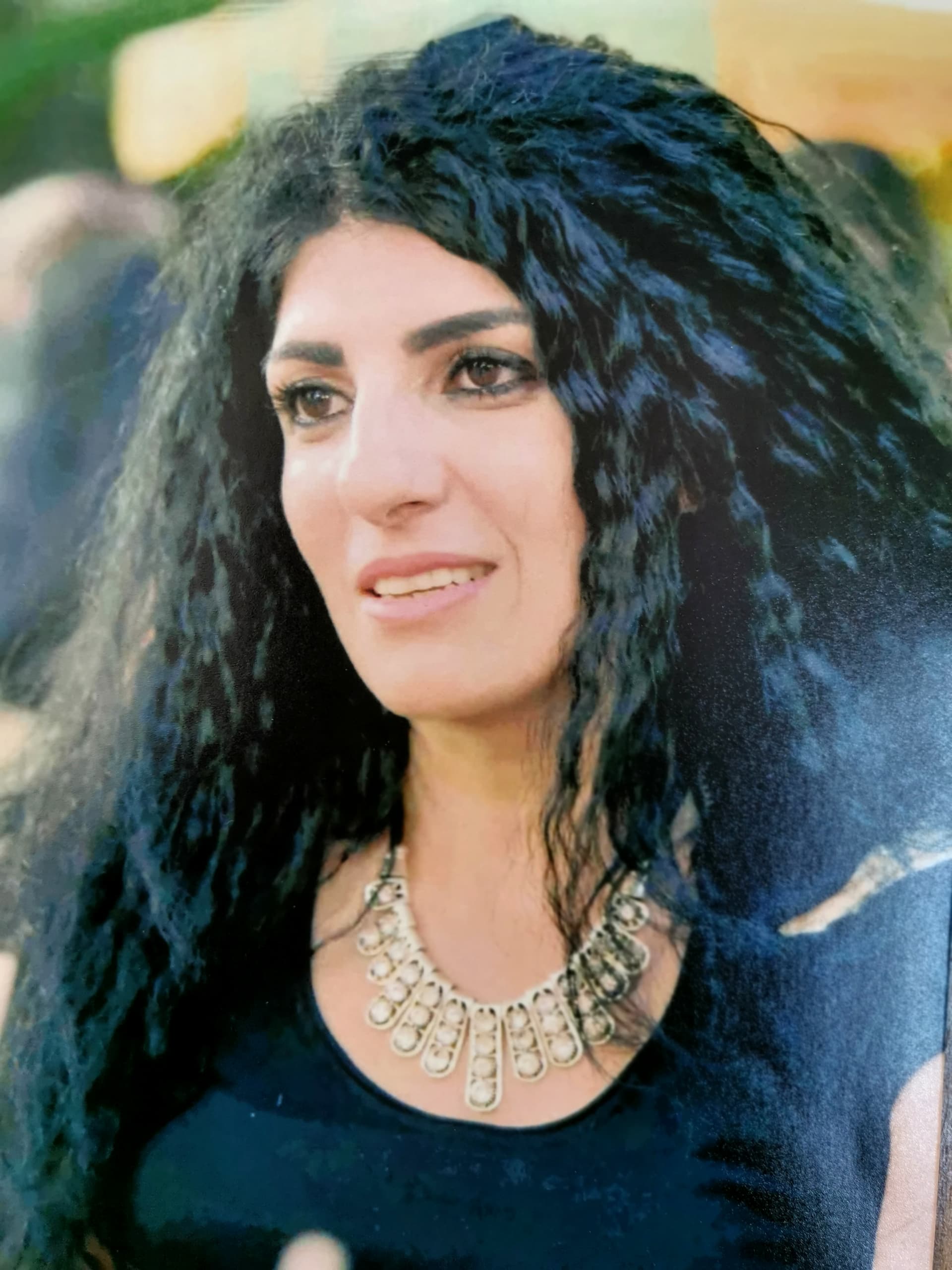
Reham Owda is an independent Palestinian author and political analyst from Gaza, with a Ph.D. in political science. Follow her on X @RehamOwda.

Reham Owda
PalestineMiddle East

Carnegie does not take institutional positions on public policy issues; the views represented herein are those of the author(s) and do not necessarily reflect the views of Carnegie, its staff, or its trustees.

More Work from Sada

  • Commentary
    Sada
    Sub-Saharan African Migrants in Morocco: Security Concerns and the Test of Human Rights

    Is Morocco’s migration policy protecting Sub-Saharan African migrants or managing them for political and security ends? This article unpacks the gaps, the risks, and the paths toward real rights-based integration.

      Soufiane Elgoumri

  • Commentary
    Sada
    A House Divided: How Internal Power Struggles Shape Iraq’s Foreign Policy

    Iraq’s foreign policy is being shaped by its own internal battles—fractured elites, competing militias, and a state struggling to speak with one voice. The article asks: How do these divisions affect Iraq’s ability to balance between the U.S. and Iran? Can Baghdad use its “good neighbor” approach to reduce regional tensions? And what will it take for Iraq to turn regional investments into real stability at home? It explores potential solutions, including strengthening state institutions, curbing rogue militias, improving governance, and using regional partnerships to address core economic and security weaknesses so Iraq can finally build a unified and sustainable foreign policy.

      Mike Fleet

  • Commentary
    Sada
    The Role of E-commerce in Empowering Women in Saudi Arabia: Assessing the Policy Potential

    How can Saudi Arabia turn its booming e-commerce sector into a real engine of economic empowerment for women amid persistent gaps in capital access, digital training, and workplace inclusion? This piece explores the policy fixes, from data-center integration to gender-responsive regulation, that could unlock women’s full potential in the kingdom’s digital economy.

      Hannan Hussain

  • Commentary
    Sada
    A War Fueled by Hate Speech: Sudan’s Fall into Fragmentation

    Hate speech has spread across Sudan and become a key factor in worsening the war between the army and the Rapid Support Forces. The article provides expert analysis and historical background to show how hateful rhetoric has fueled violence, justified atrocities, and weakened national unity, while also suggesting ways to counter it through justice, education, and promoting a culture of peace.

      Samar Sulaiman

  • Commentary
    Sada
    Disarming Palestinian Factions in Lebanon: Can a Security Experiment Evolve into Sovereign Policy?

    The August 2025 government decision to restrict weapons to the Lebanese state, starting with Palestinian arms in the camps, marked a major test of Lebanon’s ability to turn a long-standing slogan into practical policy. Yet the experiment quickly exposed political hesitation, social gaps, and factional divisions, raising the question of whether it can become a model for addressing more sensitive files such as Hezbollah’s weapons.

      Souhayb Jawhar

Get more news and analysis from
Carnegie Endowment for International Peace
Carnegie global logo, stacked
1779 Massachusetts Avenue NWWashington, DC, 20036-2103Phone: 202 483 7600Fax: 202 483 1840
  • Research
  • Emissary
  • About
  • Experts
  • Donate
  • Programs
  • Events
  • Blogs
  • Podcasts
  • Contact
  • Annual Reports
  • Careers
  • Privacy
  • For Media
  • Government Resources
Get more news and analysis from
Carnegie Endowment for International Peace
© 2026 Carnegie Endowment for International Peace. All rights reserved.