

{
  "authors": [
    "Mehmet Alaca"
  ],
  "type": "commentary",
  "blog": "Sada",
  "centerAffiliationAll": "dc",
  "centers": [
    "Carnegie Endowment for International Peace"
  ],
  "collections": [],
  "englishNewsletterAll": "menaTransitions",
  "nonEnglishNewsletterAll": "",
  "primaryCenter": "Carnegie Endowment for International Peace",
  "programAffiliation": "MEP",
  "programs": [
    "Middle East"
  ],
  "projects": [],
  "regions": [],
  "topics": []
}
Source: Getty
U.S. Air Defense Systems for Iraqi Kurdistan: A Threat to Türkiye?
Ankara may be reluctant to accept the use of military equipment that could disrupt its anti-PKK operations.
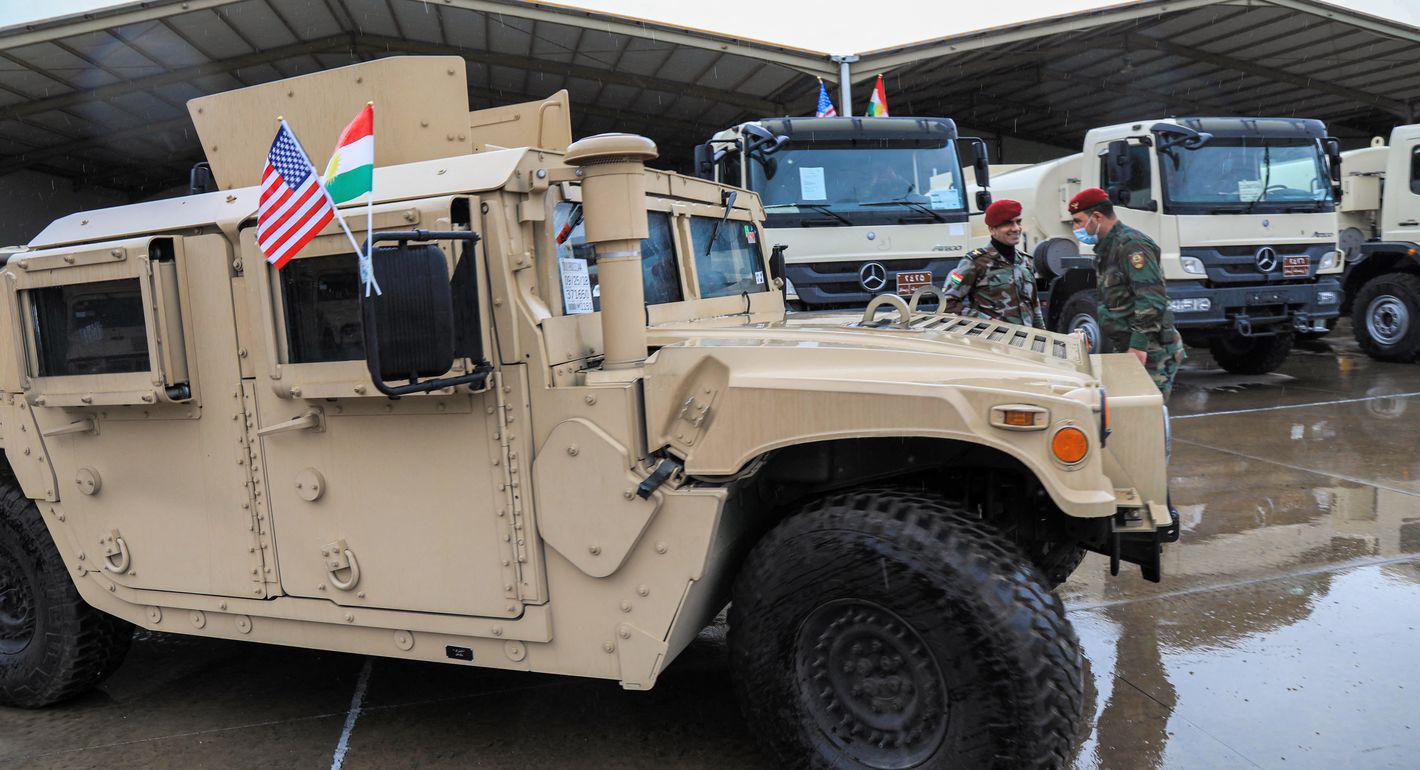
After passing both houses of Congress, the 2024 National Defense Authorization Act (NDAA)—the annual U.S. defense bill—was signed into law by President Joe Biden on December 22. The final version included a provision to equip Iraqi security forces and Kurdish Peshmerga forces with air defense systems to “counter attack by missiles, rockets, and unmanned systems.” This marks the culmination of an effort by U.S. Congressman Don Bacon, who met with Iraqi Kurdistan Interior Minister Reber Ahmed in June 2023, and introduced the amendment in July during a markup of the defense bill. According to Bacon, the goal of the measure was to help Iraqi Kurds defend “against Iran’s continued [missile] and drone strikes”; since the Kurdish Region of Iraq (KRI) is not an independent state, it cannot acquire air defense systems on its own.
The legislation does not target Türkiye directly, but Ankara is expected to approach the issue with intense skepticism, although so far it has remained silent. Despite strong relations with the Kurdistan Democratic Party (KDP)-dominated KRI, Ankara may not want air defense systems to be deployed in an area where it easily carries out airstrikes against the Kurdistan Workers’ Party (PKK), which it considers a terrorist organization. The 2024 NDAA refers to the Peshmerga in general, but Kurdish security forces are divided along partisan lines between the KDP and the Sulaymaniyah-based Patriotic Union of Kurdistan (PUK). Ankara fears the possibility that the PUK may gain control of new air defense systems—particularly worrisome given the close relations between the PUK and the Syrian Democratic Forces (SDF), which Türkiye sees as an offshoot of the PKK.
There is precedent for such concern that the SDF could benefit from these systems: last March, a helicopter crash in Duhok killed at least nine SDF members, including a senior commander of the SDF’s anti-terrorism unit, who were traveling to Sulaymaniyah. It is believed that the helicopter was bought by the PUK with the help of United States during the Iraq war. The lesson Ankara has learned from this incident is that military equipment can easily fall into enemy hands, and that new air defense systems could be used to thwart Türkiye’s anti-PKK operations.
Nevertheless, Türkiye may cautiously turn a blind eye to the deployment of these systems to maintain its ability to move freely in anti-PKK operations and establish military outposts in the KRI. The United States may also try to assuage Ankara’s concerns by arguing that the systems will be deployed against Iran and to protect the U.S. presence in the region. Meanwhile, given the deterioration of U.S.- Türkiye relations over recent years, Ankara may not want to open a new area of tension with Washington. It can also count on the fact that the United States is unlikely to authorize the use of air defenses against a NATO ally, or that the KDP would use such systems against its close partner.
Israel's war in Gaza has added a new dimension to the issue of Kurdish air defense systems, with ongoing clashes between Iran’s proxies and the US and Israel. Since October 7, Iran-backed Iraqi militias have carried out almost two hundred attacks on U.S. targets in Syria and Iraq, including the U.S.-led coalition base near Erbil International Airport. On January 15, the Islamic Revolutionary Guards Corps (IRGC) launched ballistic missile attacks on Erbil, the capital of the KRI, that killed a well-known Kurdish real estate developer and his family. After this latest attack, Iraqi Kurdish officials emphasized the urgent need for air defense systems. Amidst these escalating tensions, and as it continues its own strikes against alleged PKK associates in Syria and Iraq, Ankara may be forced to break its silence.
Mehmet Alaca is a researcher focusing on Iraq, regional Kurdish politics, and Shia militias in the Middle East. Follow him on X @mehmtalaca.
About the Author
Mehmet Alaca
Carnegie does not take institutional positions on public policy issues; the views represented herein are those of the author(s) and do not necessarily reflect the views of Carnegie, its staff, or its trustees.