

{
  "authors": [
    "Rena Netjes"
  ],
  "type": "commentary",
  "blog": "Sada",
  "centerAffiliationAll": "dc",
  "centers": [
    "Carnegie Endowment for International Peace"
  ],
  "collections": [],
  "englishNewsletterAll": "menaTransitions",
  "nonEnglishNewsletterAll": "",
  "primaryCenter": "Carnegie Endowment for International Peace",
  "programAffiliation": "MEP",
  "programs": [
    "Middle East"
  ],
  "projects": [],
  "regions": [],
  "topics": []
}
Source: Getty
The Silent Exodus from Northeast Syria
Recent field research reveals that migrants continue to flee through Ras Al-Ayn, Mabrouka, and other Syrian border towns on their way to northern Europe.
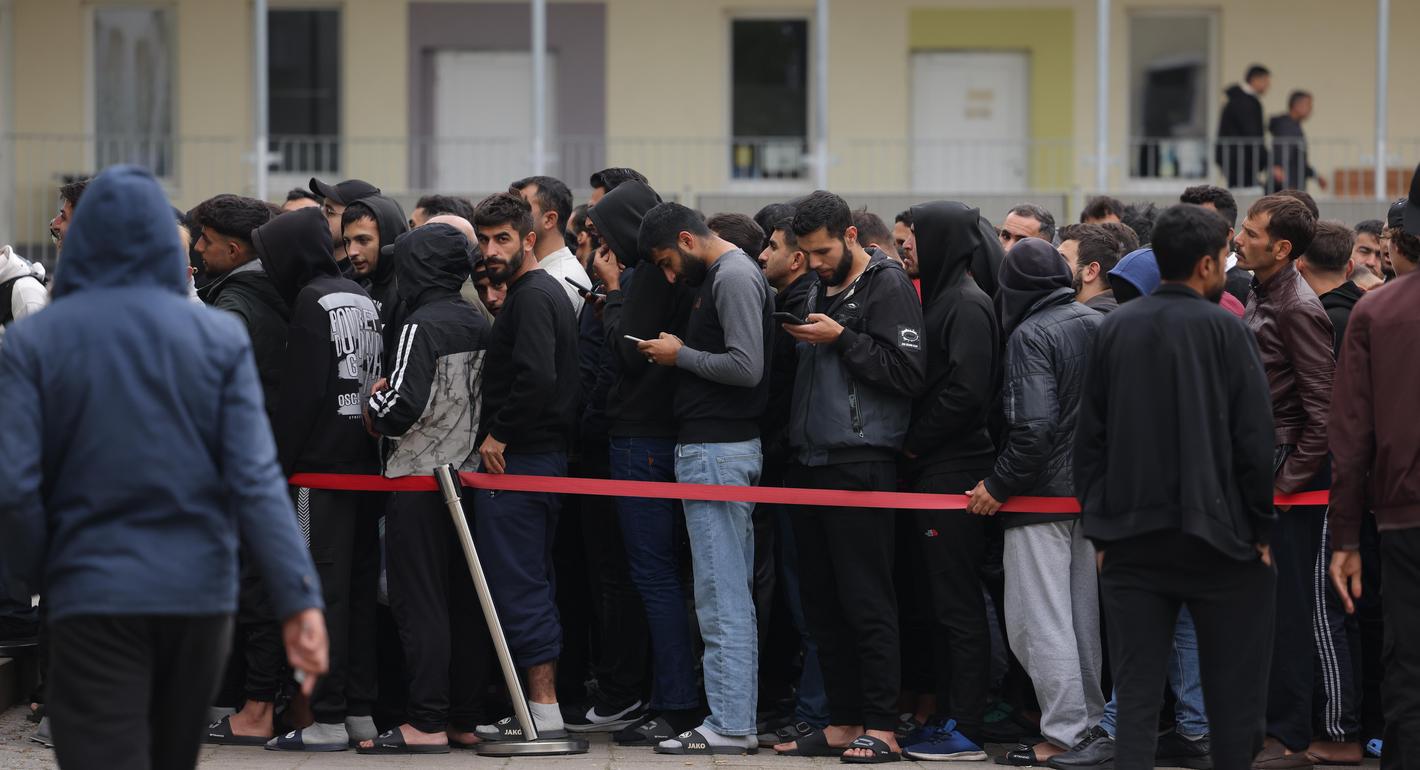
Every week in northeast Syria, after bypassing Syrian Democratic Forces (SDF) checkpoints and the Russian-controlled M4 Highway, thousands of Syrian migrants attempt to cross the border into Türkiye. This has been an ongoing phenomenon for the past four years—and based on dozens of interviews, conducted this past September in the border towns of Ras Al-Ayn and Mabrouka, the pace of migration shows no signs of slowing down.
Most migrants come from eastern Deir Ezzor, and the large number of arrivals means that police can only prevent a small minority from crossing the border. The same factors continue to drive young Syrians, including Arabs, Kurds, and Assyrians, to leave northeast Syria: compulsory recruitment in the SDF military, scarce employment prospects, economic hardship, random arrests, and a PKK-influenced school curriculum. Even the elderly are fleeing, due to fears of SDF snipers targeting people at checkpoints. These long-standing issues have only worsened in the past year, which led to an uprising in the Ogeidat tribe's region in eastern Deir Ezzor at the end of August and a notable increase in newcomers to Ras al-Ayn in the subsequent months.
Hussein Al-Raad, vice president of the local council in Ras Al-Ayn, estimates that a total of 200,000 Syrian Kurds, Arabs, and Assyrians have left SDF-controlled areas over the past four years, and that the influx has doubled since the beginning of 2023. The majority of Arab migrants are from eastern Deir Ezzor, and many are members of the Ogeidat tribe, which has resisted the SDF regime. In the past, many Kurds have fled from northeast Syria to the Kurdistan Region of Iraq, where around 260,000 refugees now reside. Yet as Mohamed Ismail of the Syrian Kurdish National Council reports, the border with the Iraqi Kurdistan is now closed, which has only increased smuggling activity in Ras Al-Ayn.
"I came here due to the dire situation for young people under 40,” one interviewee in Ras Al-Ayn noted. “Joining the SDF is often the only way to make a living, otherwise, you're branded a traitor. The youth in Deir Ezzor are desperate to avoid the bloodshed, where brothers are forced to fight each other."
The migrant route from northeast Syria continues through Istanbul and Bulgaria to Germany and the Netherlands. Researchers estimate about 3.6 million Syrian refugees are currently in Türkiye, including a significant number of Kurds. The European Union has spent large sums to harden the Bulgaria-Türkiye border, which it considers a “priority for combating illegal migration.” Yet as Yavor Serafimov, Director of the General Directorate Combating Organised Crime in Bulgaria, recently noted, this land border remains the world's second busiest and Europe's most active—and he anticipates it will claim the title of the busiest global border by 2025.
In the Netherlands, Syrians have made up a steady 40 percent of newcomers and 64 percent of family reunions in recent years. The number of migrants in Germany is increasing, and in 2023, almost 105,000 Syrians applied for asylum. In both countries, migrant arrivals remain a difficult political issue—made particularly clear by the collapse of the Dutch government in July due to controversies over its asylum policy and the influx of minors. Yet Kurdish and Arab sources in northeast Syria believe the mass exodus will only continue: people have lost hope, and everyone who can leave will do so.
Rena Netjes is an Arabist and independent researcher. She focuses mainly on northern Syria and has traveled to the different parts of region six times in recent years for field research.
About the Author
Rena Netjes
Carnegie does not take institutional positions on public policy issues; the views represented herein are those of the author(s) and do not necessarily reflect the views of Carnegie, its staff, or its trustees.