

{
  "authors": [
    "Ismail Al-Aghbari"
  ],
  "type": "commentary",
  "blog": "Sada",
  "centerAffiliationAll": "dc",
  "centers": [
    "Carnegie Endowment for International Peace"
  ],
  "collections": [],
  "englishNewsletterAll": "menaTransitions",
  "nonEnglishNewsletterAll": "",
  "primaryCenter": "Carnegie Endowment for International Peace",
  "programAffiliation": "MEP",
  "programs": [
    "Middle East"
  ],
  "projects": [],
  "regions": [],
  "topics": []
}
Source: Getty
Cyberbullying on the Rise in Yemen
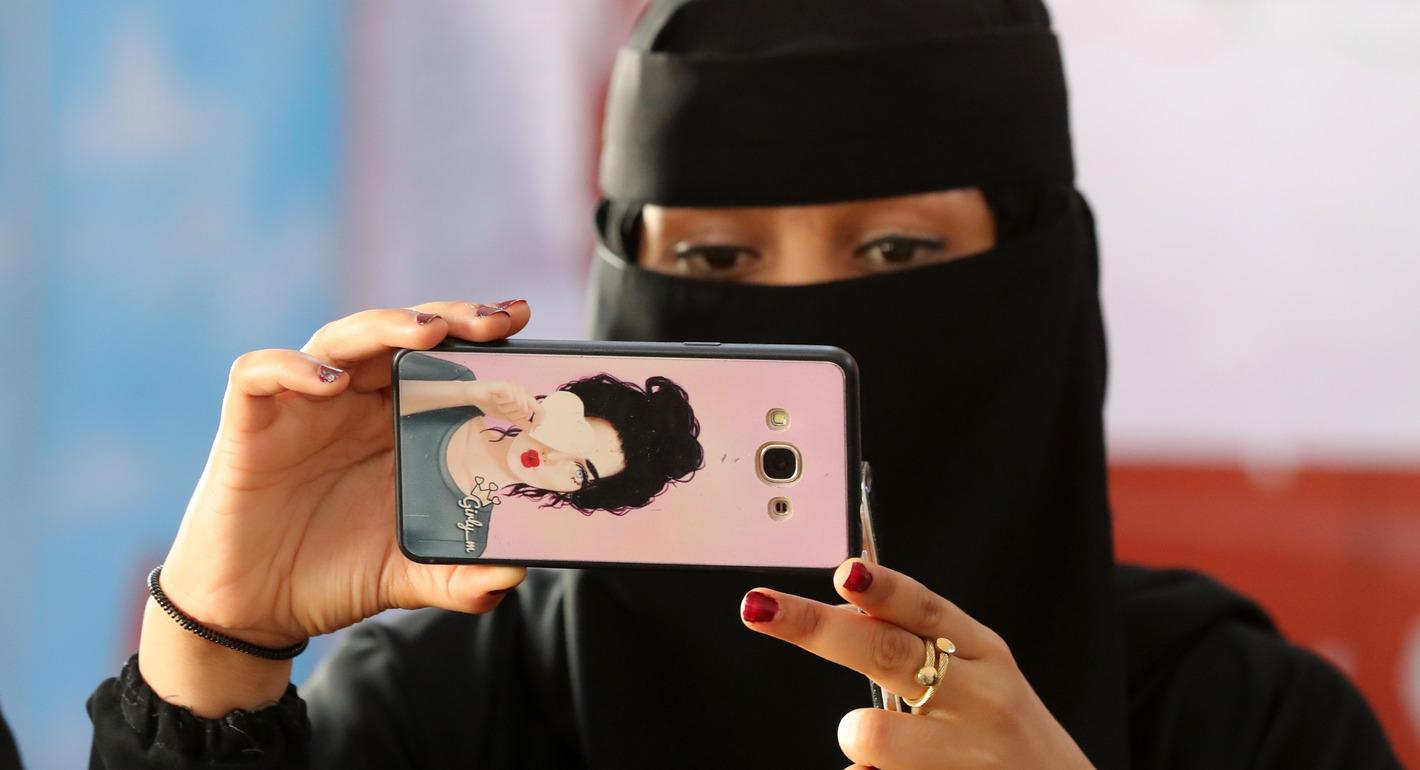
In the absence of protective laws or regulations, Yemeni citizens—and particularly women—are increasingly exposed to online harassment.
Following a recent appearance in an online advertisement, the Yemeni artist Abdel Nasser al-Arasi became the victim of a cyberbullying campaign, mocked for his skin color, appearance, and performance. Unfortunately, Al-Arasi’s experience was not an isolated incident: as the number of social media users in Yemen has grown, so too has the prevalence of cyberbullying. This phenomenon has primarily affected Yemeni artists, activists, and media professionals—the most visible and outspoken critics on public issues—who are increasingly ridiculed for their skin color, weight, and clothing choices. This disturbing trend has also coincided with the growing reach of social media influencers, whose content has only increased online polarization among internet users.
A growing crisis
Cyberbullying has surged alongside the increase of internet users in Yemen, which reached 9.10 million by the beginning of 2023, 27 percent of whom are active on social media platforms.
In an interview for Sada, Yemeni activist Sahar Khaldoun noted that some activists feel compelled to refrain from posting on social media or even suspend their accounts due to online harassment—which can take the form of direct threats, fabricated images, and defamation. Khaldoun also pointed out that bullying oftentimes moves beyond the digital realm and threatens social media users in their real lives, posing an even more terrifying risk.
Heightened vulnerability of women
A March 2022 survey carried out by Manasati 30, an online questionnaire platform for Yemeni youth, showed that women are significantly more likely to be targeted online, with 69 percent of female respondents reporting experience of cyberbullying—compared to 32 percent of male respondents, whom the survey also revealed to be more likely to engage in bullying behavior themselves. Furthermore, 70 percent of respondents said that cyberbullying against women is rooted in the contradiction between their digital identities and societal perceptions of women, while 69 percent cited the absence of laws to deter cyberbullying.
According to Na'aim Khaled, a female journalist who has been repeatedly bullied, Yemeni society values local customs over the idea of gender equality, which is viewed as a challenge to established traditions. If a woman expresses her opinions on social media or deviates from traditional gender norms, she becomes subject to vehement online attacks—behavior that usually intensifies if the woman is a journalist or works in the media.
An Ungoverned Cyberspace
The surge of digital bullying in Yemen is also linked to the absence of laws that can effectively prevent abuse on social media platforms and protect users. Lawyer Ziad Al-Debai, who specializes in cases of cyberbullying and electronic extortion, explained that in certain cases digital bullying escalates to blackmail, which is punishable under Law No. 12 of 1994. The law includes several provisions that punish various forms of digital crimes and misconduct, including electronic piracy (Art. 257), defamation (Art. 292), and extortion (Art. 313). However, Al-Debai notes that these laws are not specifically suited to combat cyberbullying, because they are enshrined within the Press and Publications Law No. 25 of 1990, under articles pertaining to “Prohibitions on Publications and Penal Provisions.”
With the persistent rise of cyberbullying in Yemen, there is an urgent need to issue laws that can protect internet users and establish strict penalties for perpetrators. The necessity for such a legal framework becomes even more pressing as cross-border cybercrimes evolve in sophistication and technical complexity.
Ismail al-Aghbari is a Yemeni journalist and human rights activist, who has worked for many local and international platforms. His investigative reporting focuses on issues of humanitarianism, peace, coexistence.
About the Author
Ismail Al-Aghbari
Carnegie does not take institutional positions on public policy issues; the views represented herein are those of the author(s) and do not necessarily reflect the views of Carnegie, its staff, or its trustees.