

Report
- +2
George Perkovich, Jessica Tuchman Mathews, Joseph Cirincione, …

Source: Getty
As painful experience in Iraq, North Korea, Libya and Iran has shown, the rules that govern nuclear exports, safeguard nuclear materials, and control and eliminate nuclear weapons are not self-enforcing. States and international agencies must struggle to mobilize the power needed to enforce and adapt these rules as conditions change.
As painful experience in Iraq, North Korea, Libya and Iran has shown, the rules that govern nuclear exports, safeguard nuclear materials, and control and eliminate nuclear weapons are not self-enforcing. States and international agencies must struggle to mobilize the power needed to enforce and adapt these rules as conditions change.
In 1995, one hundred and seventy-three states reaffirmed their renunciation of nuclear weapons in return for the explicitly reaffirmed commitment by the United States, China, France, Russia, and the United Kingdom to eventually liminate their nuclear arsenals. All states did so with the understanding that while the treaty was clearly imperfect, it nonetheless made them all safer.
But the world has changed dramatically in the last ten years. We have seen terrorism, wars, nuclear black markets, and states cheating on, and even leaving, the NPT. Perhaps today’s greatest threat stems from the wide availability of highly enriched uranium and plutonium, the fissile materials that are the fuel of nuclear bombs. These materials have become more accessible to terrorists through the poor security at nuclear stockpiles in the former Soviet republics and in dozens of other countries.
There is also danger that new nations could acquire nuclear weapons by exploiting the NPT’s failure to define specifically what constitutes the "peaceful" application of nuclear capabilities. As the treaty has been interpreted, countries can acquire technologies that bring them to the very brink of nuclear weapon capability without explicitly violating the agreement, and can then leave the treaty without penalty.
There are also newer concerns. Fifteen years after the end of the Cold War, the majority of countries feel that the five original nuclear weapon states do not intend to fulfill their end of the NPT bargain—the pledge to eliminate nuclear weapons. That growing conviction erodes the willingness among members of this majority to live up to their side of the bargain—much less to agree to strengthen the regime.
For all these reasons and more, there are rising doubts about the sustainability of the nonproliferation regime. Nations with ample technological ability to develop nuclear weapons may be reconsidering their political decisions not to do so.
All of these developments show that in spite of major successes much more needs to be done to reduce the possibility of nuclear catastrophe. All nations—including the three unwilling to sign the Non-Proliferation Treaty—need to be covered. Access to weapons material and the means of producing it needs to be far more tightly limited everywhere. Nonproliferation rules must be extended to individuals and corporations.
The Bush administration has correctly drawn international attention to the need for serious enforcement. For many years, too much attention had been paid to obtaining signatures on treaties, and not enough to achieving compliance with them. The absence of a collective political will to stop bad actors–by force if necessary–undermined deterrence. The United States itself had routinely made proliferation concerns secondary to other strategic and economic issues in relations with key states such as Pakistan, Israel, and Iraq.
However, the current Bush strategy–like the one it replaced–has proven insufficient. Stopping the spread of nuclear weapons requires more international resolve than previous administrations could muster, but it also demands more genuine international teamwork than the current administration recognizes. Nuclear weapons and fissile materials are problems wherever they are, not just in a handful of "evil" states. The threat cannot be eliminated by removing whichever foreign governments the United States finds most threatening at any given time. History has shown again and again that today’s ally can become tomorrow’s problem state. Moreover, terrorists will seek nuclear weapons and materials wherever they can be found, irrespective of a state’s geopolitical orientation.
The United States cannot defeat the nuclear threat alone, or even with small coalitions of the willing. It needs sustained cooperation from dozens of diverse nations—including the leading states that have forsworn nuclear weapons, such as Argentina, Brazil, Germany, Japan, South Africa, and Sweden—in order to broaden, toughen, and stringently enforce nonproliferation rules. To get that cooperation, the nuclear weapon states must show that tougher nonproliferation rules not only benefit the powerful but constrain them as well.
Success will depend on the United States’ ability to marshal legitimate authority that motivates others to follow. As Francis Fukuyama notes, "Other people will follow the American lead if they believe it is legitimate; if they do not, they will resist, complain, obstruct, or actively oppose what we do."
Recent events, most dramatically the war in Iraq, have undermined America’s legitimacy. With societies bristling at U.S. government rhetoric and action, elected leaders in key countries distance themselves from U.S. initiatives. Even when others share U.S. views of the nuclear threat, they may balk at following U.S. policies because they do not see Washington acting on their priorities, for example, the Comprehensive Test Ban Treaty. In Robert Kagan’s words, "The United States can neither appear to be acting only in its self-interest, nor can it, in fact, act as if its own national interest were all that mattered."
Six Shared Obligations
Global nuclear security requires universal compliance with the norms and rules of a toughened nuclear nonproliferation regime. Compliance means more than signatures on treaties, or declarations of good intent – it means actual performance. Universal means that nonproliferation norms and rules must be extended not only to states that have joined the treaties, but to all states, and to non-state actors as well. Six obligations form the core of the universal compliance strategy.
Make Nonproliferation Irreversible
We must revise the rules managing the production of nuclear weapon-usable materials, and clarify and tighten the terms by which states can withdraw from the NPT.
Devalue the Political and Military Currency of Nuclear Weapons
All states must diminish the role of nuclear weapons in security policies and international politics. The nuclear weapon states must do more to make their nonproliferation commitments irreversible, especially through the steady verified dismantlement of nuclear arsenals.
Secure All Nuclear Materials
All states must maintain robust standards for securing, monitoring, and accounting for all fissile materials in any form.
Stop Illegal Transfers
States must establish enforceable prohibitions against efforts by individuals, corporations, and states to assist others in secretly acquiring the technology, mate-rial, and know-how needed to develop nuclear weapons.
Commit to Conflict Resolution
States that possess nuclear weapons must use their leadership to resolve regional conflicts that compel or excuse some states’ pursuit of security by means of nuclear, biological, or chemical weapons.
Solve the Three-State Problem
India, Israel, and Pakistan should be persuaded to accept the same nonproliferation obligations accepted by the weapon state signatories to the NPT. The three states should not be rewarded with trade in nuclear power reactors, but should receive cooperation to strengthen nuclear material security and reactor safety.
The new proliferation challenges make it clear beyond denial that the present nonproliferation regime needs fixing. This is a time that demands systemic change: a new strategy to defeat old and new threats before they become catastrophes. Only by forging this balance of obligations involving all states and all actors can we erect a defense in depth to the dangers from the spread of nuclear weapons
Joseph Cirincione is the Director for Non-Proliferation at the Carnegie Endowment. This article is adapted from Universal Compliance: A Strategy for Nuclear Security.

Former Senior Associate, Director for NonProliferation
Recent Work


George Perkovich, Jessica Tuchman Mathews, Joseph Cirincione, …
Joseph Cirincione
Carnegie does not take institutional positions on public policy issues; the views represented herein are those of the author(s) and do not necessarily reflect the views of Carnegie, its staff, or its trustees.

Morocco and Algeria, each in its own way, are having to navigate the global economic fallout of the U.S.-Israeli military campaign against Iran.

Yasmine Zarhloule

Despite Morocco’s hopes that its film industry would reap rewards, the blockbuster’s success will be tainted by controversy surrounding filming in occupied Western Sahara.

Sarah Yerkes
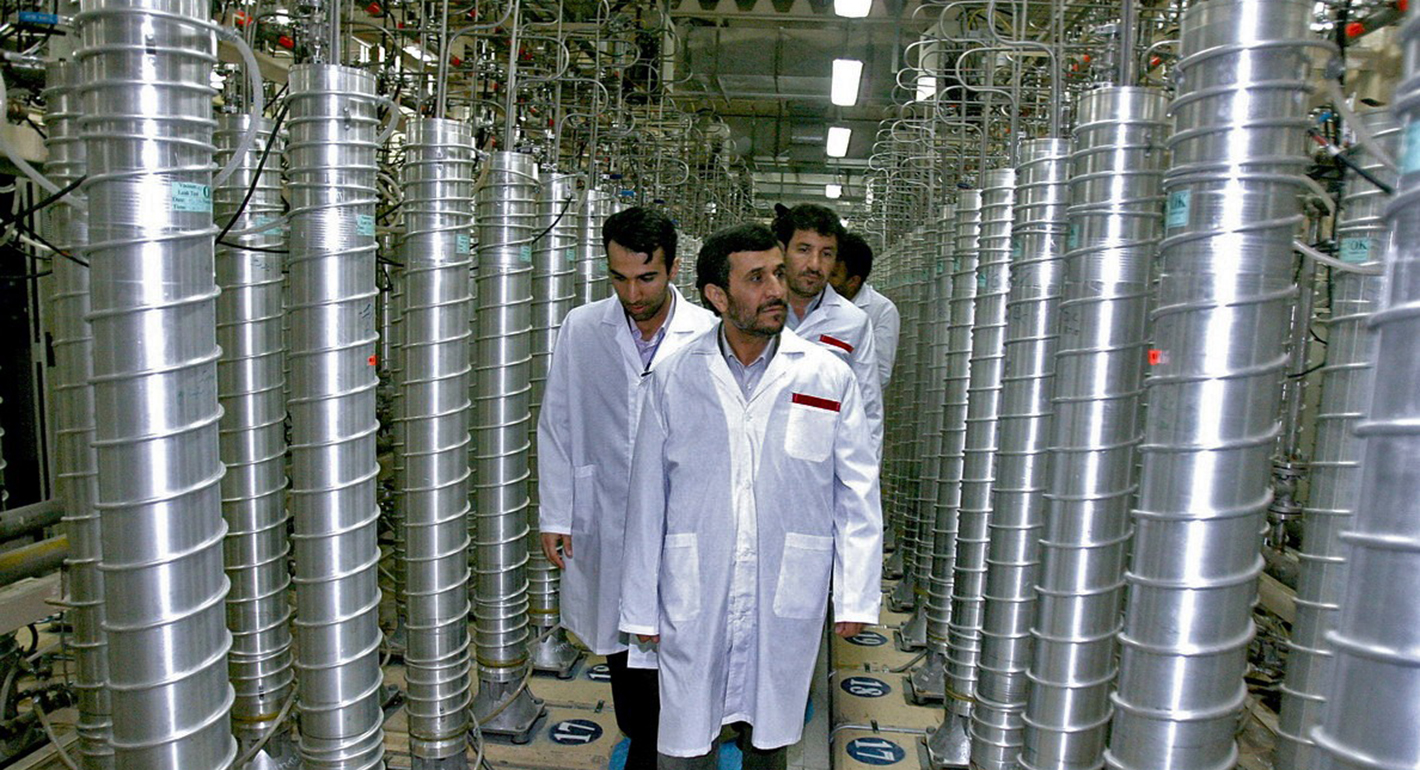
The nuclear weapons threshold is increasingly important for proliferation strategy and policy. Policymakers should better understand the implications of the threshold phenomenon in the current international security environment and plausible strategies to deal with the growing challenge that it presents.


Ariel (Eli) Levite, Toby Dalton

Networks—from international payments platforms to key economic sectors—underlie many aspects of U.S. power. But they are suffering under an extractive approach to foreign policy.
Daniel W. Drezner
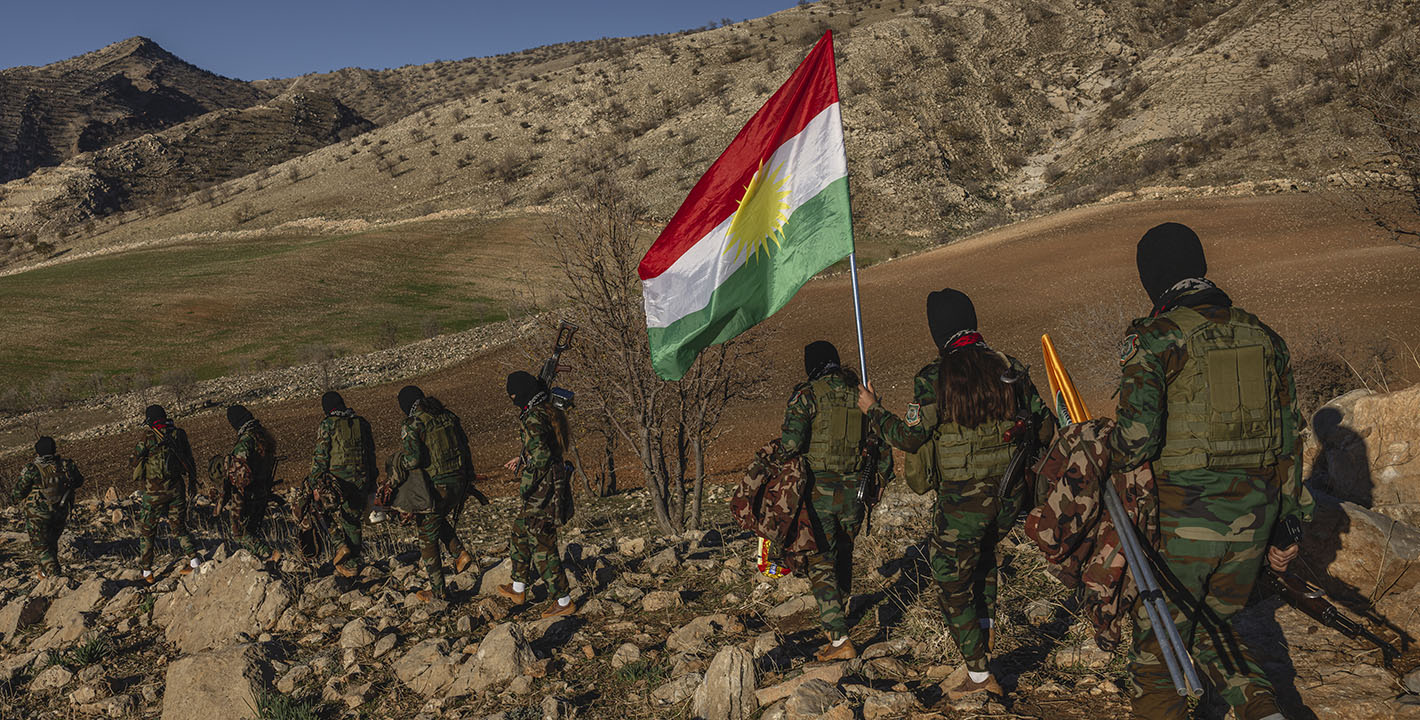
Following its deal with the United States, Iran may act against Iraq-based dissidents.
Wladimir van Wilgenburg