• Research
  • Emissary
  • About
  • Experts
Carnegie Global logoCarnegie lettermark logo
DemocracyIran
  • Donate
{
  "authors": [
    "Minxin Pei"
  ],
  "type": "legacyinthemedia",
  "centerAffiliationAll": "dc",
  "centers": [
    "Carnegie Endowment for International Peace"
  ],
  "collections": [],
  "englishNewsletterAll": "asia",
  "nonEnglishNewsletterAll": "",
  "primaryCenter": "Carnegie Endowment for International Peace",
  "programAffiliation": "AP",
  "programs": [
    "Asia"
  ],
  "projects": [],
  "regions": [
    "East Asia",
    "China"
  ],
  "topics": [
    "Climate Change",
    "Foreign Policy"
  ]
}
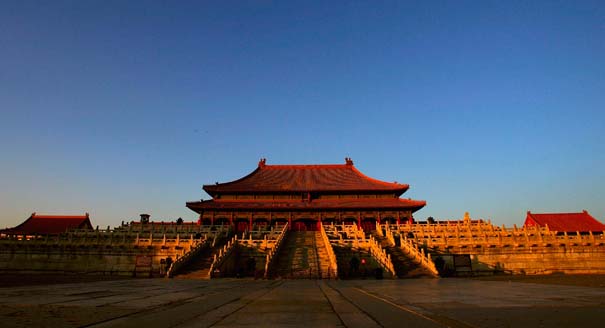
Source: Getty

In The Media

Out Into the World

Although there are numerous areas of shared interest between the U.S. and China, China's approach to international responsibility is likely to be à la carte. And in a international system where Washington can no longer set the rules, striking a deal with the Chinese will be more difficult.

Link Copied
By Minxin Pei
Published on Jan 5, 2009
Program mobile hero image

Program

Asia

The Asia Program in Washington studies disruptive security, governance, and technological risks that threaten peace, growth, and opportunity in the Asia-Pacific region, including a focus on China, Japan, and the Korean peninsula.

Learn More

Source: Newsweek

For years, western leaders have been trying to figure out how to integrate China into the international system. It turns out that the Western debate has paralleled one inside China itself.
 
In 2005, when the West first started asking China to abide by international rules in Africa, take a lead in climate-change talks, contribute more to international security and abandon its mercantilist trade policy, Beijing didn't respond well. Who could blame it? Until recently, Chinese leaders had been obsessed with domestic priorities and rarely considered the foreign ramifications. When they did, they figured their greatest international contribution would be to feed and house 1.3 billion Chinese.
 
A conspiracy-minded minority in Beijing still views the West's requests with suspicion. This group is best represented by Jiang Yong, director of the Center of Economic Security at the China Institute of Contemporary International Relations (an affiliate of the Ministry of State Security). Writing in mid-2007, Jiang warned that Washington's calls for China to accept more international responsibility were really just a way to frustrate China's rise. Because the existing global economic order and its rules were established by the West, Jiang argued, they serve the West's interests, not China's. Were China to comply with the WTO's intellectual-property protections, for example, it would trap China in its role as a low-tech, low-cost manufacturer. Rules on environmental protection and resource conservation, similarly, would hurt Chinese economic development. To Jiang, it all amounted to a subtle strategy of keeping China down.
 
Few prominent thinkers publicly embrace such theories. That said, none believe Beijing does things purely on the West's terms, either. The furthest moderates are ready to go is to accept China's new obligations as a reality and argue that China should honor them the best it can.
 
As Shi Yinhong, a professor of international relations at Beijing's Renmin University, wrote in a People's Daily online forum at the end of 2007, while China need not dance to the West's tune, it risks alienating other countries—even in the developing world—if it keeps refusing to become a "responsible stakeholder." Liu Jianfei, a professor at the Central Party School in Beijing, echoed this perspective in a newspaper interview in March 2008. Shi and Liu's view, which has become dominant in Beijing, sees accepting a bigger global role as necessary, like it or not. The trick is to do so on China's terms. Foreign Minister Yang Jiechi's statement to the National People's Congress in March 2008 best reflects this "realist" perspective. Yang argued that China should take on more international responsibility—but in an à la carte way that serves its own interests and that it helps define.
 
This idea has found many adherents, including Qin Yaqing, executive vice president of the Chinese Foreign Affairs University. In a March interview with a liberal Chinese business publication, Qin noted that China and the West share more common ground on some issues (climate change, energy security and environmental protection) than on others (humanitarian intervention)—implying that China should cooperate on the former but not the latter. Other areas of cooperation might include promoting Asian economic integration and helping resolve the North Korean nuclear problem. China also needs to ensure that any important reform in the existing international system serves its interests. But above all, Beijing's foreign policy should continue to serve China's key interest: economic development.
 
The dominance of this realist school is a mixed blessing for Washington. The good news is that Chinese leaders now understand that it's in their interest for China to act like a good global citizen. That means they'll be receptive to overtures to cooperate in areas where U.S. and Chinese priorities overlap. The bad news is that China sees its international standing rising while America's declines—and will drive a hard bargain before making any concessions. Gone are the days when the United States set the rule. China will now insist that its engagement with the international system proceed on its own terms. As experienced business people will tell you, the Chinese are tough negotiators even when in a position of weakness. Now that the global balance of power has shifted in their favor, striking deals will be still be possible—but the costs may be much higher.

About the Author

Minxin Pei

Former Adjunct Senior Associate, Asia Program

Pei is Tom and Margot Pritzker ‘72 Professor of Government and the director of the Keck Center for International and Strategic Studies at Claremont McKenna College.

    Recent Work

  • In The Media
    How China Can Avoid the Next Conflict

      Minxin Pei

  • In The Media
    Small Change

      Minxin Pei

Minxin Pei
Former Adjunct Senior Associate, Asia Program
Minxin Pei
Climate ChangeForeign PolicyEast AsiaChina

Carnegie does not take institutional positions on public policy issues; the views represented herein are those of the author(s) and do not necessarily reflect the views of Carnegie, its staff, or its trustees.
More Work from Carnegie Endowment for International Peace

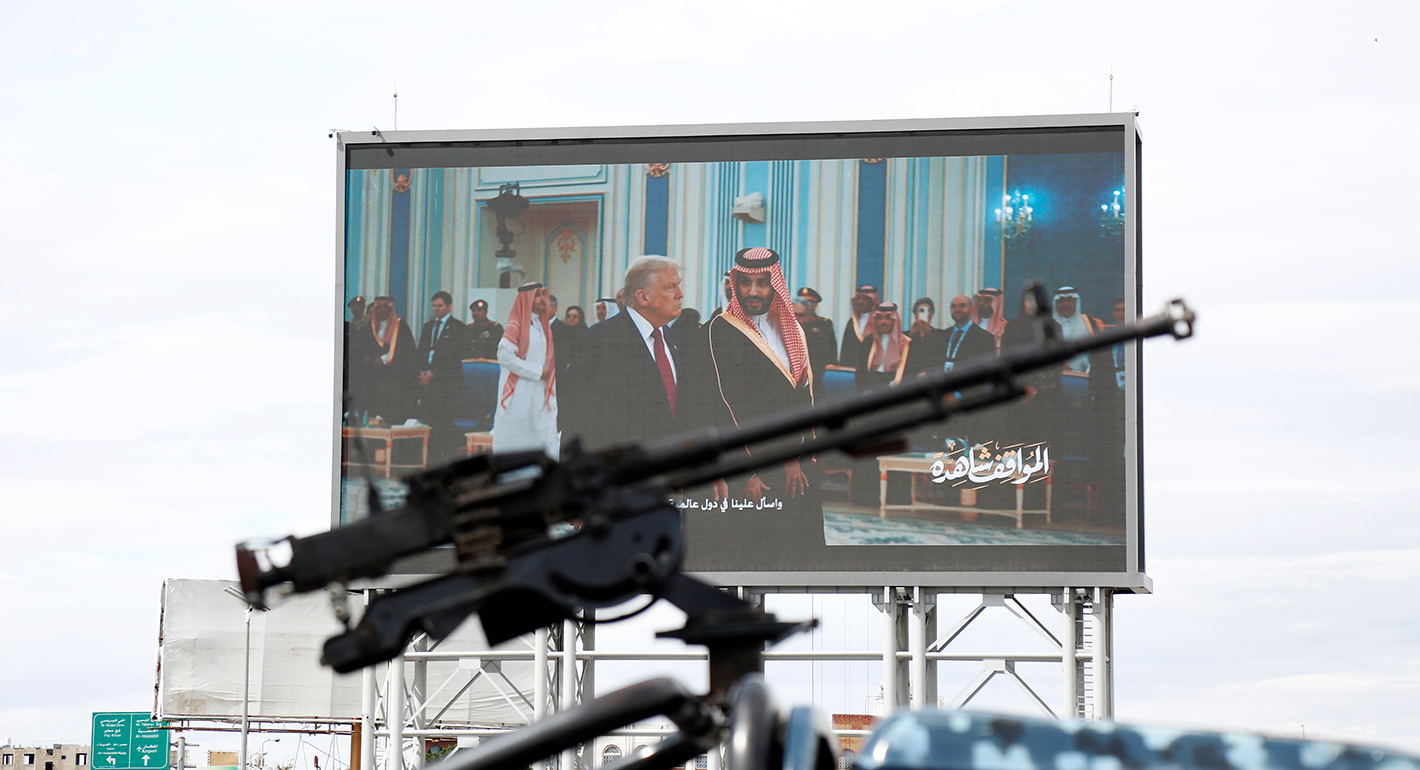
  •  A machine gun of a Houthi soldier mounted on a police vehicle next to a billboard depicting the U.S. president Donald Trump and Mohammed Bin Salman, the Crown Prince and Prime Minister of Saudi Arabia, during a protest staged to show support to Iran against the U.S.-Israel war on March 27, 2026 in Sana'a, Yemen.
    Collection
    The Iran War’s Global Reach

    As the war between the United States, Israel, and Iran continues, Carnegie scholars contribute cutting-edge analysis on the events of the war and their wide-reaching implications. From the impact on Iran and its immediate neighbors to the responses from Gulf states to fuel and fertilizer shortages caused by the effective shutdown of the Strait of Hormuz, the war is reshaping Middle East alliances and creating shockwaves around the world. Carnegie experts analyze it all.

  •  A machine gun of a Houthi soldier mounted on a police vehicle next to a billboard depicting the U.S. president Donald Trump and Mohammed Bin Salman, the Crown Prince and Prime Minister of Saudi Arabia, during a protest staged to show support to Iran against the U.S.-Israel war on March 27, 2026 in Sana'a, Yemen.
    Article
    Amid Iran War, Gulf Countries Slow the Pace of Reforms

    The return of war as the organizing factor in Middle Eastern politics has predictable consequences: governments are prioritizing regime stability and becoming averse to political and social reform.


      • Sarah Yerkes

      Sarah Yerkes, Amr Hamzawy

  • Commentary
    Carnegie Politika
    Power, Pathways, and Policy: Grounding Central Asia’s Digital Ambitions

    Central Asia’s digital ambitions are achievable, but only if policy is aligned with the region’s physical constraints.

      Aruzhan Meirkhanova
  • Commentary
    Strategic Europe
    Taking the Pulse: Can NATO Survive the Iran War?

    Donald Trump has repeatedly bashed NATO and European allies, threatening to annex Canada and Greenland and deploring their lack of enthusiasm for his war of choice in Iran. Is this latest round of abuse the final straw?

      • Rym Momtaz

      Rym Momtaz, ed.

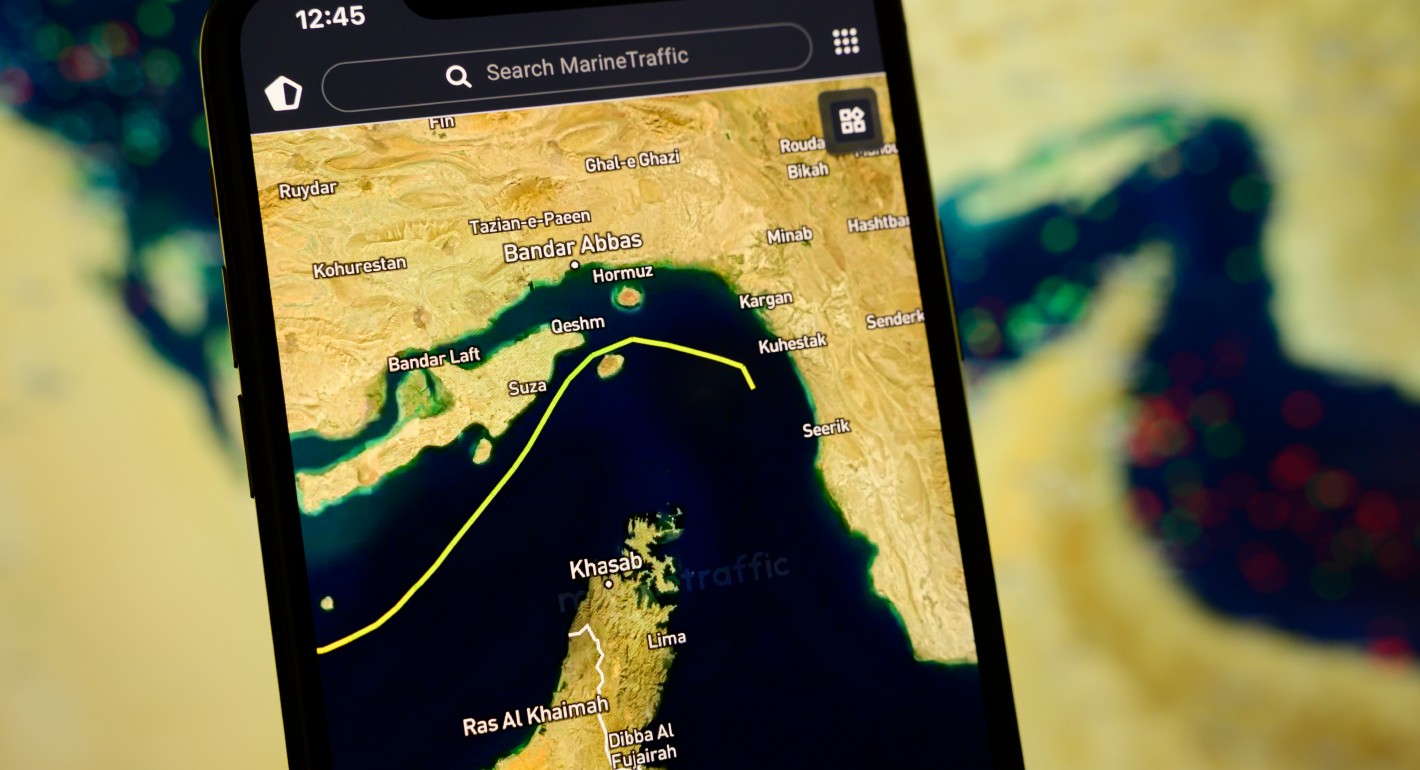
  • Map of Hormuz shipping traffic on a smartphone screen
    Commentary
    Emissary
    “It’s Not Like Turning a Switch On and Off”

    Why the Iran ceasefire isn’t a quick fix to the Strait of Hormuz energy crisis.

      Helima Croft, Aaron David Miller
Get more news and analysis from
Carnegie Endowment for International Peace
Carnegie global logo, stacked
1779 Massachusetts Avenue NWWashington, DC, 20036-2103Phone: 202 483 7600Fax: 202 483 1840
  • Research
  • Emissary
  • About
  • Experts
  • Donate
  • Programs
  • Events
  • Blogs
  • Podcasts
  • Contact
  • Annual Reports
  • Careers
  • Privacy
  • For Media
  • Government Resources
Get more news and analysis from
Carnegie Endowment for International Peace
© 2026 Carnegie Endowment for International Peace. All rights reserved.