• Research
  • Emissary
  • About
  • Experts
Carnegie Global logoCarnegie lettermark logo
DemocracyIran
  • Donate
{
  "authors": [
    "Thomas Carothers"
  ],
  "type": "other",
  "centerAffiliationAll": "dc",
  "centers": [
    "Carnegie Endowment for International Peace",
    "Malcolm H. Kerr Carnegie Middle East Center"
  ],
  "collections": [
    "Democracy and Governance"
  ],
  "englishNewsletterAll": "democracy",
  "nonEnglishNewsletterAll": "",
  "primaryCenter": "Carnegie Endowment for International Peace",
  "programAffiliation": "DCG",
  "programs": [
    "Democracy, Conflict, and Governance"
  ],
  "projects": [],
  "regions": [
    "North America",
    "United States",
    "Egypt",
    "Gulf",
    "Levant",
    "Maghreb"
  ],
  "topics": [
    "Political Reform",
    "Democracy"
  ]
}
Source: Getty

Other

Democracy Promotion Under Obama: Finding a Way Forward

The Obama administration can find a positive new way forward on democracy promotion by changing how the United States supports democracy abroad rather than what emphasis to place on it relative to other interests.

Link Copied
By Thomas Carothers
Published on Feb 23, 2009
Program mobile hero image

Program

Democracy, Conflict, and Governance

The Democracy, Conflict, and Governance Program is a leading source of independent policy research, writing, and outreach on global democracy, conflict, and governance. It analyzes and seeks to improve international efforts to reduce democratic backsliding, mitigate conflict and violence, overcome political polarization, promote gender equality, and advance pro-democratic uses of new technologies.

Learn More

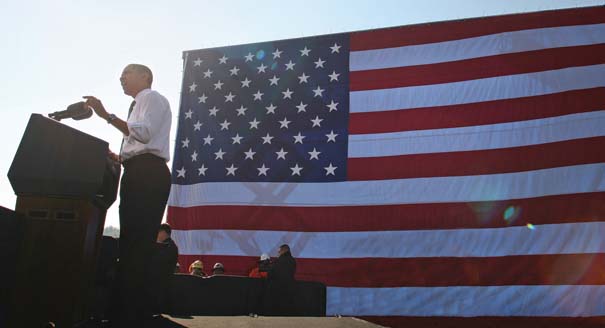
Democracy Promotion Under Obama: Finding a Way ForAs President Barack Obama and his team define the contours of a new U.S. foreign policy, one of their many challenges is to reformulate U.S. policy on democracy promotion. President George W. Bush elevated the profile of U.S. democracy promotion but then badly tarnished it. By relentlessly associating it with the Iraq war and regime change, he caused many in the world to see it as a hypocritical cover for aggressive interventionism serving U.S. security needs.

By casting the war on terrorism as a global “freedom agenda,” yet cultivating close ties with autocratic regimes helpful on counterterrorism, he provoked justifiable charges of double standards. And by condoning U.S. abuses of the rule of law and human rights against persons caught in America’s antiterrorism net, he badly damaged America’s standing as a global symbol of democracy.

Some of President Obama’s initial actions offer a valuable start in a necessary process of dissociating the United States from this unfortunate legacy. Just by being elected, Obama sent a ringing signal to the world of the renewal
of American democracy and the power of the democratic idea.

His immediate order to close the Guantánamo Bay detention facility within a year and additional subsequent actions to reverse other legally problematic parts of the war on terrorism added momentum to the rejuvenation of America’s global democratic standing. His sober approach to Iraq—talking about it as a daunting policy challenge rather than as a shining example of U.S. democracy promotion—halts a long, painful delegitimization of the democracy promotion concept. His expressed openness to diplomatic engagement with hostile governments has put the regime-change line to rest.

Key Conclusions

  • The Bush’s administration’s highly problematic legacy on democracy promotion and general pessimism about the global state of democracy create pressure on the Obama administration to pull the United States substantially back from supporting democracy abroad.
     
  • Although dissociating U.S. democracy support from the errors of the Bush approach is crucial, a broad realist corrective of U.S. policy is not necessary.
     
  • The way forward for Obama will be more about changing how the United States goes about supporting
    democracy abroad than about what emphasis to place on democracy relative to other interests.
     
  • Cardinal values of Obama’s political philosophy and style—non-confrontational, measured, persistent,
    bipartisan, cooperative, effective, and empowering—provide a natural basis for a new framework to help the United States regain its place as a respected, trusted, and influential ally of democracy around the world.


About the Author

Thomas Carothers

Harvey V. Fineberg Chair for Democracy Studies; Director, Democracy, Conflict, and Governance Program

Thomas Carothers, director of the Carnegie Endowment for International Peace’s Democracy, Conflict, and Governance Program, is a leading expert on comparative democratization and international support for democracy.

    Recent Work

  • Article
    How Anger Over Corruption Keeps Driving Global Politics
      • McKenzie Carrier

      Thomas Carothers, McKenzie Carrier

  • Commentary
    When Do Mass Protests Topple Autocrats?
      • McKenzie Carrier

      Thomas Carothers, McKenzie Carrier

Thomas Carothers
Harvey V. Fineberg Chair for Democracy Studies; Director, Democracy, Conflict, and Governance Program
Thomas Carothers
Political ReformDemocracyNorth AmericaUnited StatesEgyptGulfLevantMaghreb

Carnegie does not take institutional positions on public policy issues; the views represented herein are those of the author(s) and do not necessarily reflect the views of Carnegie, its staff, or its trustees.
More Work from Carnegie Endowment for International Peace

  • flood wall
    Commentary
    Emissary
    BRIC Is Critical for U.S. National Security. After a Yearlong Legal Battle, It’s Back.

    Its reinstatement should be celebrated, but it retains some major shortcomings.

      Leonardo Martinez-Diaz
  • Man standing next to a pile of burned cars
    Commentary
    Emissary
    The Myriad Problems With the Iran Ceasefire

    Four Middle East experts analyze the region’s reactions and next steps.

      • Andrew Leber
      • Eric Lob
      • +1

      Amr Hamzawy, Andrew Leber, Eric Lob, …
  •  A machine gun of a Houthi soldier mounted on a police vehicle next to a billboard depicting the U.S. president Donald Trump and Mohammed Bin Salman, the Crown Prince and Prime Minister of Saudi Arabia, during a protest staged to show support to Iran against the U.S.-Israel war on March 27, 2026 in Sana'a, Yemen.
    Collection
    The Iran War’s Global Reach

    As the war between the United States, Israel, and Iran continues, Carnegie scholars contribute cutting-edge analysis on the events of the war and their wide-reaching implications. From the impact on Iran and its immediate neighbors to the responses from Gulf states to fuel and fertilizer shortages caused by the effective shutdown of the Strait of Hormuz, the war is reshaping Middle East alliances and creating shockwaves around the world. Carnegie experts analyze it all.

  •  A machine gun of a Houthi soldier mounted on a police vehicle next to a billboard depicting the U.S. president Donald Trump and Mohammed Bin Salman, the Crown Prince and Prime Minister of Saudi Arabia, during a protest staged to show support to Iran against the U.S.-Israel war on March 27, 2026 in Sana'a, Yemen.
    Article
    Amid Iran War, Gulf Countries Slow the Pace of Reforms

    The return of war as the organizing factor in Middle Eastern politics has predictable consequences: governments are prioritizing regime stability and becoming averse to political and social reform.
      • Sarah Yerkes

      Sarah Yerkes, Amr Hamzawy

  • Commentary
    Strategic Europe
    Taking the Pulse: Can NATO Survive the Iran War?

    Donald Trump has repeatedly bashed NATO and European allies, threatening to annex Canada and Greenland and deploring their lack of enthusiasm for his war of choice in Iran. Is this latest round of abuse the final straw?

      • Rym Momtaz

      Rym Momtaz, ed.

Get more news and analysis from
Carnegie Endowment for International Peace
Carnegie global logo, stacked
1779 Massachusetts Avenue NWWashington, DC, 20036-2103Phone: 202 483 7600Fax: 202 483 1840
  • Research
  • Emissary
  • About
  • Experts
  • Donate
  • Programs
  • Events
  • Blogs
  • Podcasts
  • Contact
  • Annual Reports
  • Careers
  • Privacy
  • For Media
  • Government Resources
Get more news and analysis from
Carnegie Endowment for International Peace
© 2026 Carnegie Endowment for International Peace. All rights reserved.