• Research
  • Emissary
  • About
  • Experts
Carnegie Global logoCarnegie lettermark logo
DemocracyIran
  • Donate
{
  "authors": [
    "Ashley J. Tellis",
    "Michael Krepon"
  ],
  "type": "legacyinthemedia",
  "centerAffiliationAll": "dc",
  "centers": [
    "Carnegie Endowment for International Peace"
  ],
  "collections": [],
  "englishNewsletterAll": "ctw",
  "nonEnglishNewsletterAll": "",
  "primaryCenter": "Carnegie Endowment for International Peace",
  "programAffiliation": "SAP",
  "programs": [
    "South Asia"
  ],
  "projects": [],
  "regions": [
    "North America",
    "United States",
    "East Asia",
    "China",
    "Caucasus",
    "Russia"
  ],
  "topics": [
    "Security",
    "Military"
  ]
}
Source: Getty

In The Media

Another Wake-up Call

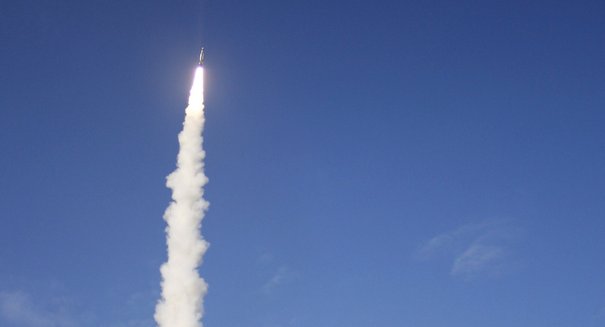
To counter the threat posed by debris from space weapons tests, space-faring nations should enact a Code of Conduct that bans further destructive tests of anti-satellite weapons.

Link Copied
By Ashley J. Tellis and Michael Krepon
Published on Mar 10, 2009
Program mobile hero image

Program

South Asia

The South Asia Program informs policy debates relating to the region’s security, economy, and political development. From strategic competition in the Indo-Pacific to India’s internal dynamics and U.S. engagement with the region, the program offers in-depth, rigorous research and analysis on South Asia’s most critical challenges.

Learn More

Source: Space News

Another Wake-up CallDebris poses a clear, present and growing danger to space operations. The latest wake-up call to take steps to address this danger was provided by the Feb. 10 collision between a dead Cosmos satellite and a revenue-producing Iridium satellite. This dreaded event may have produced the second worst debris field in the history of the space age. Debris travels at 10 times the speed of a rifle bullet at altitudes where hundreds of satellites used for intelligence gathering, personal communications and Earth observation operate. If a single piece of debris the size of a child's marble strikes one of these satellites, the international space station or the space shuttle it would strike with the equivalent force of a 1 ton safe dropped from a five-story building.

Some debris is inevitably released during every space launch. Extremely large spikes in space debris have been caused by space weapon tests designed to kill satellites on impact. In 1985, the administration of then U.S. President Ronald Reagan carried out a destructive anti-satellite weapon test, turning an aging U.S. weather satellite into 300 pieces of trackable debris. One lethal debris fragment from this test came within a mile of the newly launched international space station — 14 years later. It took 19 years for the debris caused by this test to burn out of the Earth's atmosphere. After this experience, the Pentagon lost enthusiasm for debris-producing anti-satellite weapon tests.

Continue reading this article here.

About the Authors

Ashley J. Tellis

Former Senior Fellow

Ashley J. Tellis was a senior fellow at the Carnegie Endowment for International Peace.

Michael Krepon

Michael Krepon co-founded the Stimson Center in 1989. He worked previously in the executive branch and on Capitol Hill.

Authors

Ashley J. Tellis
Former Senior Fellow
Michael Krepon

Michael Krepon co-founded the Stimson Center in 1989. He worked previously in the executive branch and on Capitol Hill.

SecurityMilitaryNorth AmericaUnited StatesEast AsiaChinaCaucasusRussia

Carnegie does not take institutional positions on public policy issues; the views represented herein are those of the author(s) and do not necessarily reflect the views of Carnegie, its staff, or its trustees.
More Work from Carnegie Endowment for International Peace

  • A shadow man holds a shadow drone against a blue sky with clouds.
    Article
    The New Revolution in Military Affairs

    How Ukraine is driving doctrinal change in modern warfare.

      • Andriy Zagorodnyuk

      Andriy Zagorodnyuk

  • Commentary
    Carnegie Politika
    What’s Having More Impact on Russian Oil Export Revenues: Ukrainian Strikes or Rising Prices?

    Although Ukrainian strikes have led to a noticeable decline in the physical volume of Russian oil exports, the rise in prices has more than made up for it.

      • Sergey Vakulenko

      Sergey Vakulenko

  • Shipping port at dawn from above
    Commentary
    Emissary
    The U.S. Export-Import Bank Was Built for a Different Era. Here's How to Fix It.

    Five problems—and solutions—to make it actually work as a tool of great power competition.

      • Afren Akhter

      Afreen Akhter

  • Commentary
    Carnegie Politika
    Russia Is Meddling for Meddling’s Sake in the Middle East

    The Russian leadership wants to avoid a dangerous precedent in which it is squeezed out of Iran by the United States and Israel—and left powerless to respond in any meaningful way.

      Nikita Smagin

  • Man speaking into two mics
    Commentary
    Emissary
    Three Scenarios for the Gulf States After the Iran War

    One is hopeful. One is realistic. One is cautionary.

      • Andrew Leber

      Andrew Leber, Sam Worby

Get more news and analysis from
Carnegie Endowment for International Peace
Carnegie global logo, stacked
1779 Massachusetts Avenue NWWashington, DC, 20036-2103Phone: 202 483 7600Fax: 202 483 1840
  • Research
  • Emissary
  • About
  • Experts
  • Donate
  • Programs
  • Events
  • Blogs
  • Podcasts
  • Contact
  • Annual Reports
  • Careers
  • Privacy
  • For Media
  • Government Resources
Get more news and analysis from
Carnegie Endowment for International Peace
© 2026 Carnegie Endowment for International Peace. All rights reserved.