• Research
  • Emissary
  • About
  • Experts
Carnegie Global logoCarnegie lettermark logo
DemocracyIran
  • Donate
{
  "authors": [
    "George Perkovich"
  ],
  "type": "other",
  "centerAffiliationAll": "dc",
  "centers": [
    "Carnegie Endowment for International Peace",
    "Carnegie Europe",
    "Carnegie Russia Eurasia Center"
  ],
  "collections": [
    "Transatlantic Cooperation",
    "U.S. Nuclear Policy"
  ],
  "englishNewsletterAll": "ctw",
  "nonEnglishNewsletterAll": "",
  "primaryCenter": "Carnegie Endowment for International Peace",
  "programAffiliation": "NPP",
  "programs": [
    "Nuclear Policy"
  ],
  "projects": [],
  "regions": [
    "North America",
    "United States",
    "Eastern Europe",
    "Western Europe",
    "Germany",
    "Europe"
  ],
  "topics": [
    "Nuclear Policy"
  ]
}
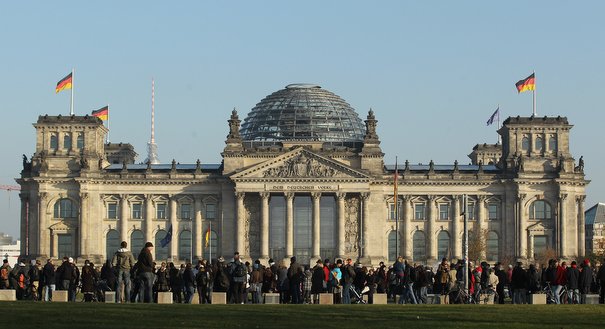
Source: Getty

Other

Nuclear Weapons in Germany: Broaden and Deepen the Debate

Recent arguments against a withdrawal of U.S. nuclear weapons from Germany are based on anachronistic perceptions regarding NATO’s nuclear weapons capacity, but bring up important points concerning broader implications for nuclear disarmament.

Link Copied
By George Perkovich
Published on Feb 17, 2010
Program mobile hero image

Program

Nuclear Policy

The Nuclear Policy Program aims to reduce the risk of nuclear war. Our experts diagnose acute risks stemming from technical and geopolitical developments, generate pragmatic solutions, and use our global network to advance risk-reduction policies. Our work covers deterrence, disarmament, arms control, nonproliferation, and nuclear energy.

Learn More

The London-based Centre for European Reform released a brief last week by Franklin Miller, George Robertson, and Kori Schake criticizing the new German government for proposing the withdrawal of all U.S. nuclear weapons from Germany. The authors’ international standing makes their essay worthy of debate. A new paper by George Perkovich analyzes their main arguments.
 

Key Conclusions

  • U.S. nuclear weapons in Europe are often deemed critical for the defense of NATO’s territory, but the bombs are antiquated and operationally unnecessary. What really matters for U.S. and NATO security are reliable commitments to collective defense, the capability to deter today’s threats, and better relations between NATO and Russia
  • No state—including Germany and the United States—should unilaterally revise NATO’s deterrence strategies, but it will equally debilitate the alliance if states cling to an outmoded nuclear posture.
  • NATO should take special care to reassure Turkey and Eastern European states that it will deploy the capabilities best suited to deter Iranian and Russian coercion. This will likely involve political subversion, asymmetric low-intensity violence, cyber-harassment, and energy-supply blackmail, rather than nuclear weapons.
  • Redefining a secure, defensive balance of conventional forces between NATO and Russia is a complicated challenge and almost no high-level leadership has been devoted to the issue. There is no chance to reduce or eliminate tactical nuclear weapons in NATO and Russia without addressing the overall military-security relationship between them.

“Thinking in terms of nuclear deterrence, and especially in terms of bombs on German soil, obscures the broader challenge of reinvigorating NATO and extending deterrence against lower-scale threats,” writes Perkovich. “The moral hazard in Europe today is not in taking useless tactical nuclear weapons out, it is in pretending that they can protect allies from twenty-first century threats and doing too little in the meantime to develop capabilities and diplomatic strategies to deny those threats.”

About the Author

George Perkovich

Japan Chair for a World Without Nuclear Weapons, Senior Fellow

George Perkovich is the Japan Chair for a World Without Nuclear Weapons and a senior fellow in the Carnegie Endowment for International Peace’s Nuclear Policy Program. He works primarily on nuclear deterrence, nonproliferation, and disarmament issues, and is leading a study on nuclear signaling in the 21st century.

    Recent Work

  • Paper
    How to Assess Nuclear ‘Threats’ in the Twenty-First Century

      George Perkovich

  • Commentary
    “A House of Dynamite” Shows Why No Leader Should Have a Nuclear Trigger

      George Perkovich

George Perkovich
Japan Chair for a World Without Nuclear Weapons, Senior Fellow
George Perkovich
Nuclear PolicyNorth AmericaUnited StatesEastern EuropeWestern EuropeGermanyEurope

Carnegie does not take institutional positions on public policy issues; the views represented herein are those of the author(s) and do not necessarily reflect the views of Carnegie, its staff, or its trustees.

More Work from Carnegie Endowment for International Peace

  •  A machine gun of a Houthi soldier mounted on a police vehicle next to a billboard depicting the U.S. president Donald Trump and Mohammed Bin Salman, the Crown Prince and Prime Minister of Saudi Arabia, during a protest staged to show support to Iran against the U.S.-Israel war on March 27, 2026 in Sana'a, Yemen.
    Collection
    The Iran War’s Global Reach

    As the war between the United States, Israel, and Iran continues, Carnegie scholars contribute cutting-edge analysis on the events of the war and their wide-reaching implications. From the impact on Iran and its immediate neighbors to the responses from Gulf states to fuel and fertilizer shortages caused by the effective shutdown of the Strait of Hormuz, the war is reshaping Middle East alliances and creating shockwaves around the world. Carnegie experts analyze it all.

  • Commentary
    Strategic Europe
    Taking the Pulse: Can NATO Survive the Iran War?

    Donald Trump has repeatedly bashed NATO and European allies, threatening to annex Canada and Greenland and deploring their lack of enthusiasm for his war of choice in Iran. Is this latest round of abuse the final straw?

      • Rym Momtaz

      Rym Momtaz, ed.

  • A person faces away from the camera wearing a yellow jacket with "PRESS" printed across the back
    Paper
    The Impact of Ending U.S. International Media Assistance

    The future looks bleak for independent media worldwide, but there is a robust infrastructure of knowledge, organizations, and people to build upon.

      Daniel Sabet, Susan Abbott

  • Map of Hormuz shipping traffic on a smartphone screen
    Commentary
    Emissary
    “It’s Not Like Turning a Switch On and Off”

    Why the Iran ceasefire isn’t a quick fix to the Strait of Hormuz energy crisis.

      Helima Croft, Aaron David Miller

  • Commentary
    Diwan
    The United States and Iran Have Agreed to a Two-Week Ceasefire

    Spot analysis from Carnegie scholars on events relating to the Middle East and North Africa.

      Michael Young

Get more news and analysis from
Carnegie Endowment for International Peace
Carnegie global logo, stacked
1779 Massachusetts Avenue NWWashington, DC, 20036-2103Phone: 202 483 7600Fax: 202 483 1840
  • Research
  • Emissary
  • About
  • Experts
  • Donate
  • Programs
  • Events
  • Blogs
  • Podcasts
  • Contact
  • Annual Reports
  • Careers
  • Privacy
  • For Media
  • Government Resources
Get more news and analysis from
Carnegie Endowment for International Peace
© 2026 Carnegie Endowment for International Peace. All rights reserved.