• Research
  • Emissary
  • About
  • Experts
Carnegie Global logoCarnegie lettermark logo
DemocracyIran
  • Donate
{
  "authors": [],
  "type": "pressRelease",
  "centerAffiliationAll": "dc",
  "centers": [
    "Carnegie Endowment for International Peace"
  ],
  "collections": [],
  "englishNewsletterAll": "ctw",
  "nonEnglishNewsletterAll": "",
  "primaryCenter": "Carnegie Endowment for International Peace",
  "programAffiliation": "SAP",
  "programs": [
    "South Asia"
  ],
  "projects": [],
  "regions": [
    "South Asia",
    "Pakistan",
    "East Asia",
    "China"
  ],
  "topics": [
    "Nuclear Policy"
  ]
}
REQUIRED IMAGE

REQUIRED IMAGE

Press Release

United States should pressure China to stop nuclear sale to Pakistan

Concerns are growing about China’s potential sale of two nuclear reactors to Pakistan. The United States should oppose the transaction in its current form and pressure China to reverse course.

Link Copied
Published on Jul 19, 2010
Program mobile hero image

Program

South Asia

The South Asia Program informs policy debates relating to the region’s security, economy, and political development. From strategic competition in the Indo-Pacific to India’s internal dynamics and U.S. engagement with the region, the program offers in-depth, rigorous research and analysis on South Asia’s most critical challenges.

Learn More

WASHINGTON, July 19—Concerns are growing about China’s potential sale of two nuclear reactors to Pakistan. The United States should oppose the transaction in its current form and pressure China to reverse course, contends a new paper by Ashley J. Tellis. While some observers believe that the recent U.S.–India civil nuclear deal complicates Washington’s ability to credibly resist the China–Pakistan agreement, the two deals are fundamentally different.
   
Key findings:

  • The U.S.–India deal was public. Unlike the secret Sino–Pakistani agreement, the U.S.-India deal was publicly debated in both countries.

  • China risks reneging on its obligations. When China joined the Nuclear Suppliers Group in 2004, it agreed not to sell nuclear material to non-nuclear-weapon states that do not accept full-scope safeguards. A sale to Pakistan violates those terms.

  • Deal undermines the nonproliferation regime. While the United States requested a special waiver from the Nuclear Suppliers Group to sell nuclear material to India, China has given no indication that it has such plans for Pakistan.

  • The United States can make a difference. In the past, Washington has successfully pressured Beijing—both multilaterally and bilaterally—to halt nuclear sales to Pakistan.


“The record of the last decade suggests that the United States has been successful in impeding problematic Chinese nuclear sales to Pakistan whenever it has remonstrated with Beijing at very high levels of government in both capitals,” Tellis writes. “There is no reason why President Obama cannot sustain this record of American achievement if he invests time and attention on this issue, given the emphasis he has placed on managing nuclear proliferation.”

###


NOTES

  • Click here to read the commentary online

  • Ashley J. Tellis is a senior associate in the Carnegie South Asia program. He specializes in international security, defense, and Asian strategic issues and was intimately involved in the negotiations associated with the U.S.-India civil nuclear agreement. Previously, he was a senior adviser to the U.S. ambassador to India and was a special assistant to the president and senior director for strategic planning and Southwest Asia in the NSC.

  • The Carnegie South Asia Program offers in-depth expertise on a range of issues relating to South Asia, including nonproliferation, international security, and political and economic development.

  • Press Contact: David Kampf, 202-939-2233, pressoffice@ceip.org
Nuclear PolicySouth AsiaPakistanEast AsiaChina

Carnegie does not take institutional positions on public policy issues; the views represented herein are those of the author(s) and do not necessarily reflect the views of Carnegie, its staff, or its trustees.

More Work from Carnegie Endowment for International Peace

  • Article
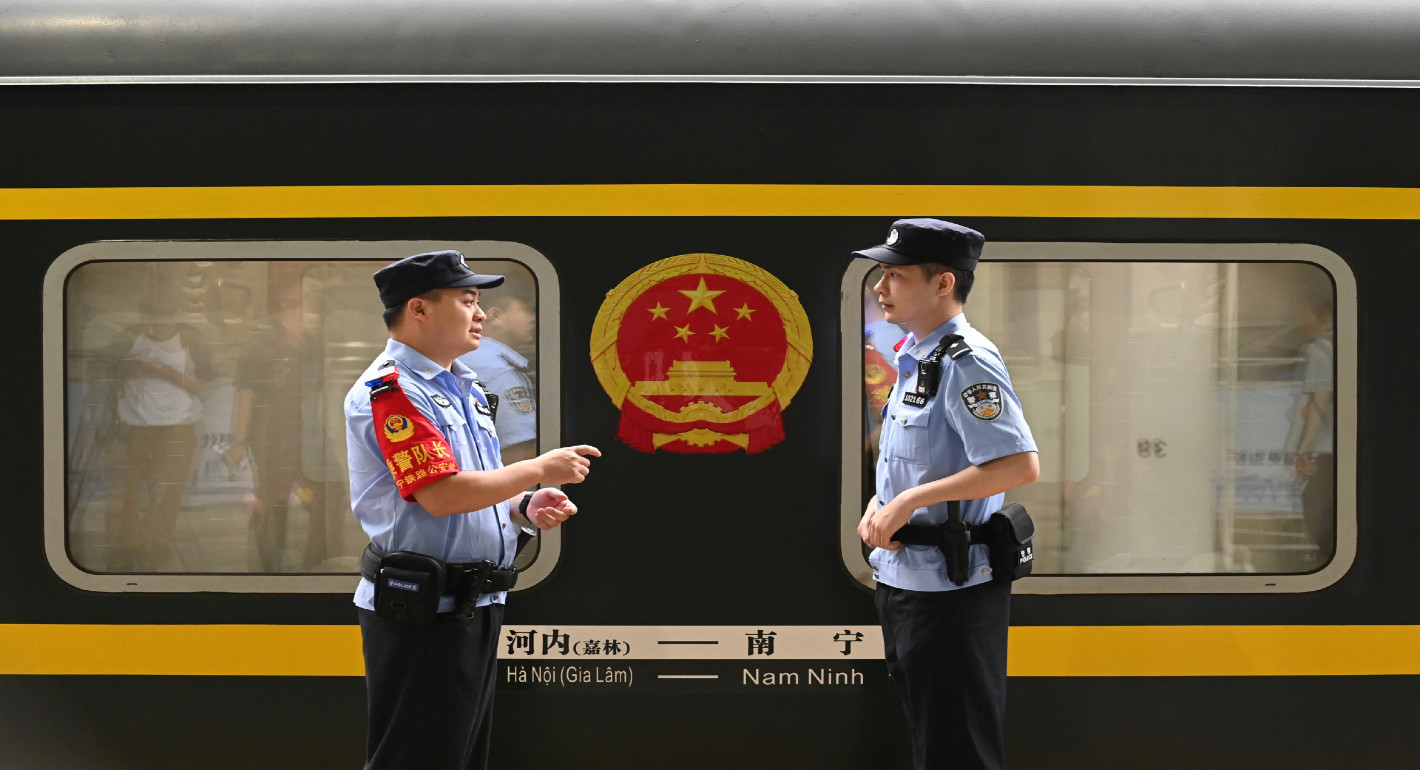
    Leveraging Internal Security Cooperation with Vietnam Offers a Glimpse of Future Chinese Diplomacy with Southeast Asia

    Despite long-standing differences, China and Vietnam are reinforcing common ground for collaboration, especially in public security. This internal security–centered diplomacy offers a strengthened road map for how China moves forward with Southeast Asia.

      Sophie Zhuang

  • Commentary
    China’s Energy Security Doesn’t Run Through Hormuz but Through the Electrification of Everything

    Across Asia, China is better positioned to withstand energy shocks from the fallout of the Iran war. Its abundant coal capacity can ensure stability in the near term. Yet at the same time, the country’s energy transition away from coal will make it even less vulnerable during the next shock.


      • Damien Ma

      Damien Ma

  • Commentary
    Emissary
    In Its Iran War Debate, Washington Has Lost the Plot in Asia

    The United States ignores the region’s lived experience—and the tough political and social trade-offs the war has produced—at its peril.

      Evan A. Feigenbaum

  • Commentary
    China Financial Markets
    What GDP Means in a Soft Budget Economy Like China

    The GDP measure is an attempt to measure value creation in an economy. This measure, however, can vary greatly between economies that have disciplinary mechanisms that force them to recognize investment losses quickly and economies that don’t, and can postpone this recognition for many years.

      Michael Pettis

  • Commentary
    Carnegie Politika
    The Afghanistan–Pakistan War Poses Awkward Questions for Russia

    Not only does the fighting jeopardize regional security, it undermines Russian attempts to promote alternatives to the Western-dominated world order.

      Ruslan Suleymanov

Get more news and analysis from
Carnegie Endowment for International Peace
Carnegie global logo, stacked
1779 Massachusetts Avenue NWWashington, DC, 20036-2103Phone: 202 483 7600Fax: 202 483 1840
  • Research
  • Emissary
  • About
  • Experts
  • Donate
  • Programs
  • Events
  • Blogs
  • Podcasts
  • Contact
  • Annual Reports
  • Careers
  • Privacy
  • For Media
  • Government Resources
Get more news and analysis from
Carnegie Endowment for International Peace
© 2026 Carnegie Endowment for International Peace. All rights reserved.