

In The Media
David Rothkopf
{
  "authors": [
    "David Rothkopf"
  ],
  "type": "legacyinthemedia",
  "centerAffiliationAll": "",
  "centers": [
    "Carnegie Endowment for International Peace",
    "Carnegie Europe"
  ],
  "collections": [],
  "englishNewsletterAll": "",
  "nonEnglishNewsletterAll": "",
  "primaryCenter": "Carnegie Endowment for International Peace",
  "programAffiliation": "",
  "programs": [],
  "projects": [],
  "regions": [
    "South Asia",
    "India",
    "Pakistan",
    "Asia"
  ],
  "topics": [
    "Security",
    "Foreign Policy"
  ]
}
Source: Getty
The tragic floods in Pakistan provide an opportunity for a worldwide push towards diplomacy and development in the Indus River Valley. Such efforts would help stabilize the fragile relationship between Pakistan and India.
Source: Foreign Policy

On one level, those problems are associated with the ever-present possibility of future floods, a threat that exists because of inadequate flood control infrastructure, flood warning mechanisms, and flood response resources within the country. On another level, as highlighted in Steve Solomon's insightful August 15 op-ed in the New York Times, perhaps an even greater problem in the years ahead -- due to both population growth and melting Himalayan glaciers that might even be a culprit in the current disaster -- will be linked to potential water scarcity, droughts, and resulting food shortages in the same region.
But there is a third looming problem, also addressed but not fully explored in Solomon's piece. That is the problem associated with the fact that the waters of the Indus are shared -- which is to say competed for -- by Pakistan and India. The less water for irrigation, drinking and energy production in the region, the more likely it is that there is conflict between these two nuclear states. Indeed, despite the ethnic and political tensions that have existed between these countries since Pakistan's founding, it could well be that water rather than religion or border disputes is the most likely trigger of future fighting, a prospect made deeply unsettling given the arsenal these two massive nations possess.
The U.S. and the international community have responded generously in the wake of the Pakistan flood crisis. America's $7.5 billion aid effort is a step in the right direction. But it is only a tiny fraction of the several tens of billions that are needed to better manage and preserve the water resources in this fragile, vital region. Further, it is clear that money alone will not solve the problem. Existing treaty relationships between India and Pakistan on the use of the water from the Indus are being strained to breaking by dam projects and shifting demand.
Perhaps this is one of those moments where it might be possible to harness the awareness raised by the current disaster and the sensitivities heightened by rising tensions to produce a different kind of response, one that if managed properly could also produce much larger benefits. Few relationships on the planet are as important or as potentially dangerous as that between India and Pakistan. Further, as we have seen in Afghanistan or in the recent Mumbai terror attacks, it is a relationship with growing ramifications and multiplying risks. Seeking to stabilize it -- daunting a prospect as that seems given its history -- must be a top foreign policy priority for all the world's powers. Further, for the United States, for whom both countries are increasingly important to a host of our international interests, playing an active role in resolving this distant and growing resource crisis is not only in our direct national interest, it could be a model for helping to address a proliferating set of similar challenges that seem likely in the very near future.
President Obama is planning a trip to India in the fall. Top American diplomats are engaged in both countries constantly at the moment. The U.N. and other international agencies are deeply engaged due to the current flood crisis. Perhaps the time is right to propose a massive, multilateral Indus River Valley Development Initiative. Perhaps such an initiative could provide an area of common interest to promote a constructive dialogue between India and Pakistan (after all, notes Solomon, agreements such as the 1960 Indus Waters Treaty do exist even if they have been somewhat strained by time and circumstance). Perhaps with a redouble initiative and ingenuity a consortium of nations can fashion a program via which the United States, other major powers, and multilateral organizations can marshal the massive resources such an initiative would take. The effort could and should cover modernization of flood control infrastructure and capabilities, irrigation systems, and the efficient, smart production of the region's under-tapped but mismanaged hydro-power resources. It could provide technical assistance, education programs to train those who will be needed to manage the resources at the local, regional and national levels and it would also provide jobs in a region where the absence of jobs creates human kindling for extremism and border tensions. It might also include other elements like sharing the kind of satellite imagery and resources that are essential to understanding and managing long-term water issues and thus anticipating and defusing future tensions where possible.
Obama needs to make his trip to India count. The relationship with India is one of the most important the United States will have in the century ahead. Given the shared interests, commitment to democracy, and shared language of the two countries, his trip should signal a real commitment on the part of the United States to making the deepening of U.S.-India ties a centerpiece of U.S. foreign policy, a true "special relationship" that goes well beyond the hyperbole typical to diplomatic labeling of such bilateral links. One challenge of the trip will be finding the "big deliverable" or "big deliverables" that will show there is more than rhetoric binding the two nations. The Bush Administration did this effectively with the U.S.-India nuclear deal. Obama should do it with a package of programs including those in the areas of economic links, relaxing export controls, defense cooperation, energy and climate initiatives, and so on.
The challenge associated with the urgent business of building that relationship is that it is sure to cause stress in our vital dealings with the Pakistanis. (Much as our vital dealings with the Pakistanis associated with the war in Afghanistan and against extremists who reside with Pakistan has caused tensions in the U.S.-India relationship.) Among the most delicate diplomatic balancing acts we face is finding ways to build both relationships in ways that do not add complications.
Both Pakistan and India have very compelling motivations to find solutions to the water problems that divide them and tie them together. The U.S. and the world -- for humanitarian reasons and for the common sensical reasons associated with trying to defuse tensions in a part of the planet that lives under the threat of nuclear war -- also ought to work on something in this area. Begin with a conference. Find common ground. Build from there. Make real commitments. Treat the matter with the urgency it warrants. It could be a rare chance to turn a crisis into a much-needed breakthrough.
The Indus River Valley is a common artery shared by two of the world's great nations. Either we ensure that water flows freely through it or we run the very real risk that in the not too distant future more blood and tears will.

Former Visiting Scholar
David Rothkopf was a visiting scholar at the Carnegie Endowment as well as the former CEO and editor in chief of the FP Group.
Recent Work
David Rothkopf
David Rothkopf
Carnegie does not take institutional positions on public policy issues; the views represented herein are those of the author(s) and do not necessarily reflect the views of Carnegie, its staff, or its trustees.

In the Philippines, Duterte-era discourse emphasizing sovereignty, anti-Western skepticism, and strongman diplomacy mirrors tenets of populist foreign policy around the world.

Aries A. Arugay
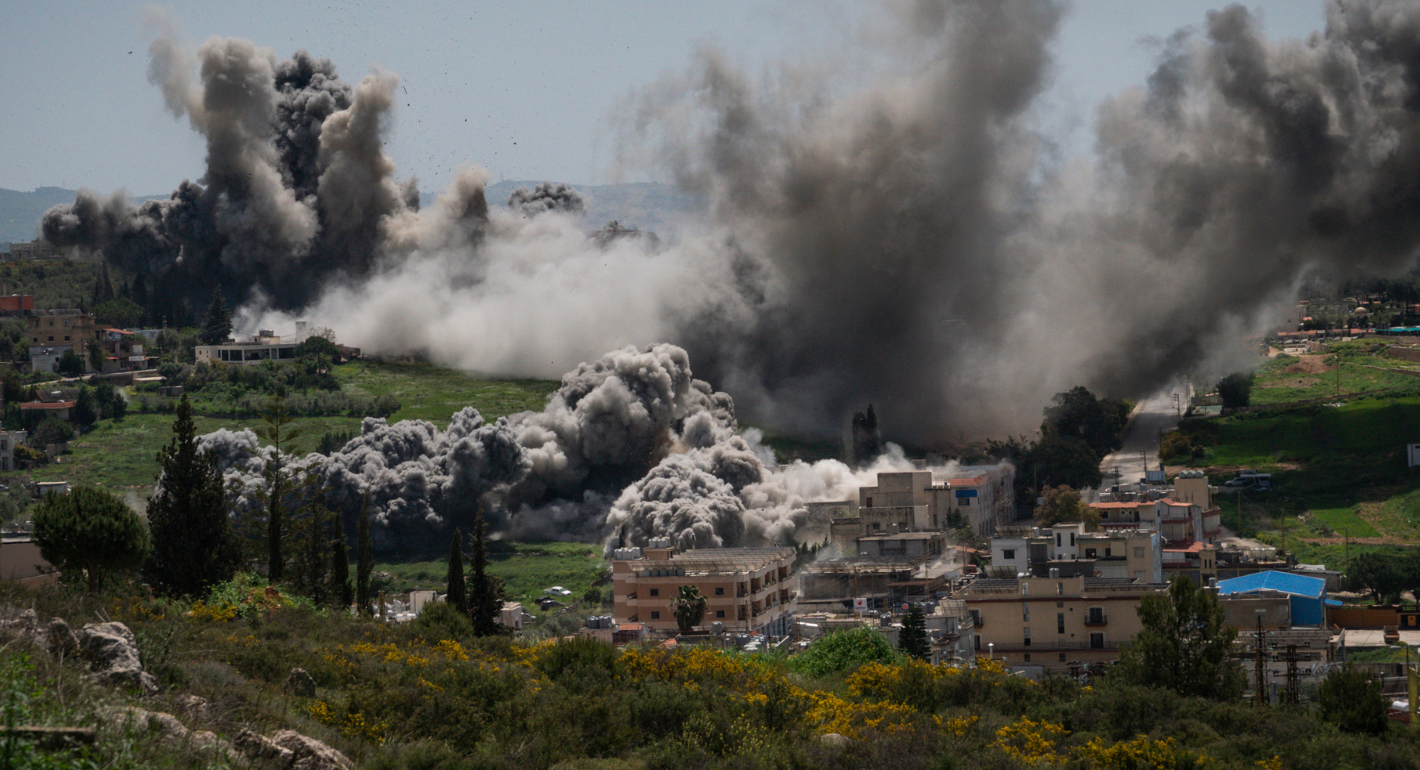
Europe has been standing by while its Southern neighborhood is being redrawn by force. To establish a path to peace between Israel and Lebanon, it’s time for Europeans to get involved with hard power.

Rym Momtaz

After four years of war, there is no one who can stand up to the security establishment, and President Vladimir Putin is increasingly passive.

Tatiana Stanovaya

How Ukraine is driving doctrinal change in modern warfare.

Andriy Zagorodnyuk
Although Ukrainian strikes have led to a noticeable decline in the physical volume of Russian oil exports, the rise in prices has more than made up for it.

Sergey Vakulenko