• Research
  • Emissary
  • About
  • Experts
Carnegie Global logoCarnegie lettermark logo
DemocracyIran
  • Donate
{
  "authors": [
    "Michael Pettis"
  ],
  "type": "legacyinthemedia",
  "centerAffiliationAll": "dc",
  "centers": [
    "Carnegie Endowment for International Peace"
  ],
  "collections": [],
  "englishNewsletterAll": "asia",
  "nonEnglishNewsletterAll": "",
  "primaryCenter": "Carnegie Endowment for International Peace",
  "programAffiliation": "AP",
  "programs": [
    "Asia"
  ],
  "projects": [],
  "regions": [
    "Western Europe"
  ],
  "topics": [
    "Economy",
    "Trade"
  ]
}
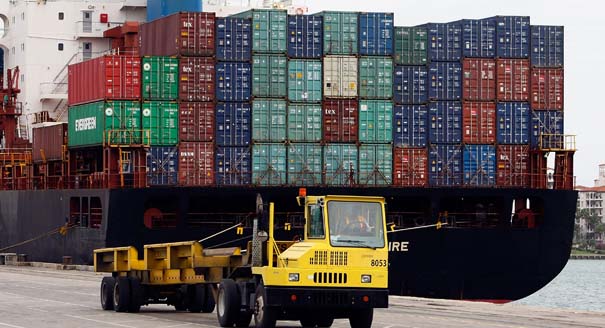
Source: Getty

In The Media

A Deficit Driven by Excess Consumption Must Eventually Reverse

Trade deficits generated by credit-fueled consumption are unsustainable, and can be reversed by either shifts in the policies of surplus-producing countries abroad or by crippling austerity at home.

Link Copied
By Michael Pettis
Published on Dec 16, 2011
Program mobile hero image

Program

Asia

The Asia Program in Washington studies disruptive security, governance, and technological risks that threaten peace, growth, and opportunity in the Asia-Pacific region, including a focus on China, Japan, and the Korean peninsula.

Learn More

Source: Economist

A Deficit Driven by Excess Consumption Must EventuTrade deficits, or more concretely current account deficits, have to be financed by net capital inflows, and it is really the cause of the deficit and the nature of the financing that determines whether or not persistent trade deficits are harmful. If a country is running a trade deficit mainly because domestic investment levels are very high, the high investment levels should generate enough growth in the economy that the costs of servicing the foreign capital inflow can easily be covered. In that case many years of trade deficits are unlikely to be a problem. 

If a country is running large and persistent trade deficits, however, because a surge in domestic credit has boosted consumption levels excessively and so reduced savings levels, then the resulting increase in debt is clearly unsustainable and will have eventually to be resolved by a reversal in the trade deficit. This is the problem countries like Spain are facing. What is often not recognised is that the credit-fueled consumer boom in Spain was actually caused as much by consumption-repressing policies in Germany as by domestic distortions, and so without a reversal in German polices (and surplus countries historically never accept their responsibility for having created trade distortions), the only way Spain can resolve the persistent trade deficits is via default, devaluation, or very high levels of unemployment for many years. This is a classic kind of "bad" persistent trade deficit.

About the Author

Michael Pettis

Nonresident Senior Fellow, Carnegie China

Michael Pettis is a nonresident senior fellow at the Carnegie Endowment for International Peace. An expert on China’s economy, Pettis is professor of finance at Peking University’s Guanghua School of Management, where he specializes in Chinese financial markets. 

    Recent Work

  • Commentary
    What GDP Means in a Soft Budget Economy Like China

      Michael Pettis

  • Commentary
    What’s New about Involution?

      Michael Pettis

Michael Pettis
Nonresident Senior Fellow, Carnegie China
Michael Pettis
EconomyTradeWestern Europe

Carnegie does not take institutional positions on public policy issues; the views represented herein are those of the author(s) and do not necessarily reflect the views of Carnegie, its staff, or its trustees.

More Work from Carnegie Endowment for International Peace

  • Humanoid robots follow technicians to learn job skills at the data collection area of an embodied AI robot innovation center on September 14, 2025 in Shaoxing, Zhejiang Province of China.
    Paper
    The AI Labor Debate: Three Views on the Future of Work

    AI could hollow out jobs, reshape them gradually, create entirely new ones—or do all three at once. The case for starting to act now doesn’t depend on knowing which.

      • Teddy Tawil

      Teddy Tawil

  • Commentary
    Carnegie Politika
    Russia’s Coal Industry Is Running on Borrowed Time

    Powerful lobbyists and inertia led to Russia’s coal-mining sector missing an excellent opportunity to solve its structural problems.

      Alexey Gusev

  • Commentary
    Strategic Europe
    France, Italy, and Spain Should Use Force in Lebanon

    Europe has been standing by while its Southern neighborhood is being redrawn by force. To establish a path to peace between Israel and Lebanon, it’s time for Europeans to get involved with hard power.

      • Rym Momtaz

      Rym Momtaz

  • Commentary
    Carnegie Politika
    What’s Having More Impact on Russian Oil Export Revenues: Ukrainian Strikes or Rising Prices?

    Although Ukrainian strikes have led to a noticeable decline in the physical volume of Russian oil exports, the rise in prices has more than made up for it.

      • Sergey Vakulenko

      Sergey Vakulenko

  • Shipping port at dawn from above
    Commentary
    Emissary
    The U.S. Export-Import Bank Was Built for a Different Era. Here's How to Fix It.

    Five problems—and solutions—to make it actually work as a tool of great power competition.

      • Afren Akhter

      Afreen Akhter

Get more news and analysis from
Carnegie Endowment for International Peace
Carnegie global logo, stacked
1779 Massachusetts Avenue NWWashington, DC, 20036-2103Phone: 202 483 7600
  • Research
  • Emissary
  • About
  • Experts
  • Donate
  • Programs
  • Events
  • Blogs
  • Podcasts
  • Contact
  • Annual Reports
  • Careers
  • Privacy
  • For Media
  • Government Resources
Get more news and analysis from
Carnegie Endowment for International Peace
© 2026 Carnegie Endowment for International Peace. All rights reserved.