

Paper
Ashley J. Tellis
{
  "authors": [
    "Ashley J. Tellis"
  ],
  "type": "legacyinthemedia",
  "centerAffiliationAll": "dc",
  "centers": [
    "Carnegie Endowment for International Peace"
  ],
  "collections": [],
  "englishNewsletterAll": "ctw",
  "nonEnglishNewsletterAll": "",
  "primaryCenter": "Carnegie Endowment for International Peace",
  "programAffiliation": "SAP",
  "programs": [
    "South Asia"
  ],
  "projects": [],
  "regions": [
    "North America",
    "United States"
  ],
  "topics": [
    "Security",
    "Military",
    "Nuclear Policy"
  ]
}
Source: Getty
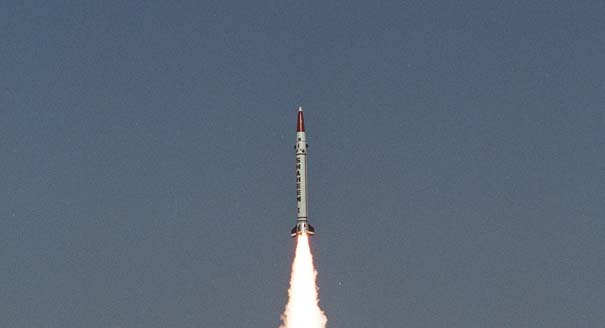
The global order has changed since the end of the Cold War, and with more nuclear-armed states than ever, it is time to adapt old tenets of nuclear deterrence for the 21st century.
Source: NPR's Talk of the Nation

Today that's not the case. Power is shared by a wide variety of actors, by the nine or more countries with nuclear capabilities, by the growing populations in China and India, but also by countries in control of water, food, and mineral resources.
Still, the Cold War is the best example we have of how to manage the discrepancies in wealth and power and the conflicts they're bound to inspire.
We've been talking with Graham Allison and Cheng Li about lessons from the Cold War for the new world order, and we're joined now by Ashley Tellis, a senior associate at the Carnegie Endowment for International Peace, previously served as senior advisor to the ambassador at the U.S. embassy in New Delhi and joins us here at the Wilson Center. And it's good of you to be with us today.ASHLEY TELLIS: Thank you.
CONAN: And what role do you think nuclear weapons will play as the U.S. and other nations move ahead into these new patterns of competition?
TELLIS: I think nuclear weapons are not going to go away. I think that is the one thing we can say with certainty. If we are lucky, we will be able to bring down the size of the inventories to more stabilizing proportions. But I don't think we should pretend that we will be able to eradicate these weapons anytime soon.
So nuclear weapons will remain against - they will remain as a backdrop to all the international politics that transact themselves both in Asia and beyond.
CONAN: And you say drawing down stockpiles. Well, perhaps Russia and the United States will. Pakistan is building them as fast as it can.
TELLIS: In fact, that's going to be one of the big challenges of managing what the future nuclear regime looks like, because the established nuclear powers, especially the United States and Russia, will probably see progressive declines in their nuclear stockpiles.
But the regime that has been constructed to manage this reduction is a regime that is unlimited only to these two states. And so the challenge, I think, for the future is how do you expand this regime to bring in other nuclear powers that currently stand outside it.
CONAN: That's - the regime is the Non-Proliferation Treaty. It's - India broke out first, then Pakistan followed suit, as it was compelled, it felt compelled to do so. Israel, of course, had nuclear weapons outside the NPT already. Now there's North Korea and the advent of Iran.
The nuclear crises between the United States and the Soviet Union over the course of - the long course of the Cold War, scary enough. These new calculations, the kinds of psychological games that people will play with their nuclear weapons, because we're not accusing anybody, but the United States and the Russians played those games for many years.
TELLIS: I think that's a reality that we simply have to live with, and there are two dimensions to it. We want to make certain that as these states continue to maintain their nuclear arsenals, those arsenals remain secure, that control over those arsenals does not break down so that weapons get into the hands of irresponsible actors. That's, I think, the first objective that we need to meet.
The second is that we need to make certain that these arsenals are essentially safe against attacks that might be mounted by others, and that is the old problem of deterrent stability that we had during the Cold War. I think if we manage a solution with respect to both security and safety, we will have done the best we can in these circumstances.
CONAN: So deterrence and mutually assured destruction - MAD, as it used to be known - these are elements of the Cold War which are, well, proliferating today but still prominent.
TELLIS: Well, they may not have - we may not have the equivalent of MAD because MAD was a very peculiar condition that grew out of the fact that the United States and the Soviet Union had huge arsenals that were capable of comprehensive societal destruction.
In the case of countries like Pakistan, India, North Korea, comprehensive societal destruction may not be at issue. But the fact is the use of any nuclear weapon would be catastrophic, and certainly by the standards of modern societies would constitute unacceptable destruction.
And therefore what deterrence essentially means is that we have to ensure that none of these weapons ever get used. That is the fundamental political objective in the second nuclear age.
This interview was broadcast on National Public Radio's Talk of the Nation.
Former Senior Fellow
Ashley J. Tellis was a senior fellow at the Carnegie Endowment for International Peace.
Recent Work
Ashley J. Tellis
Ashley J. Tellis
Carnegie does not take institutional positions on public policy issues; the views represented herein are those of the author(s) and do not necessarily reflect the views of Carnegie, its staff, or its trustees.
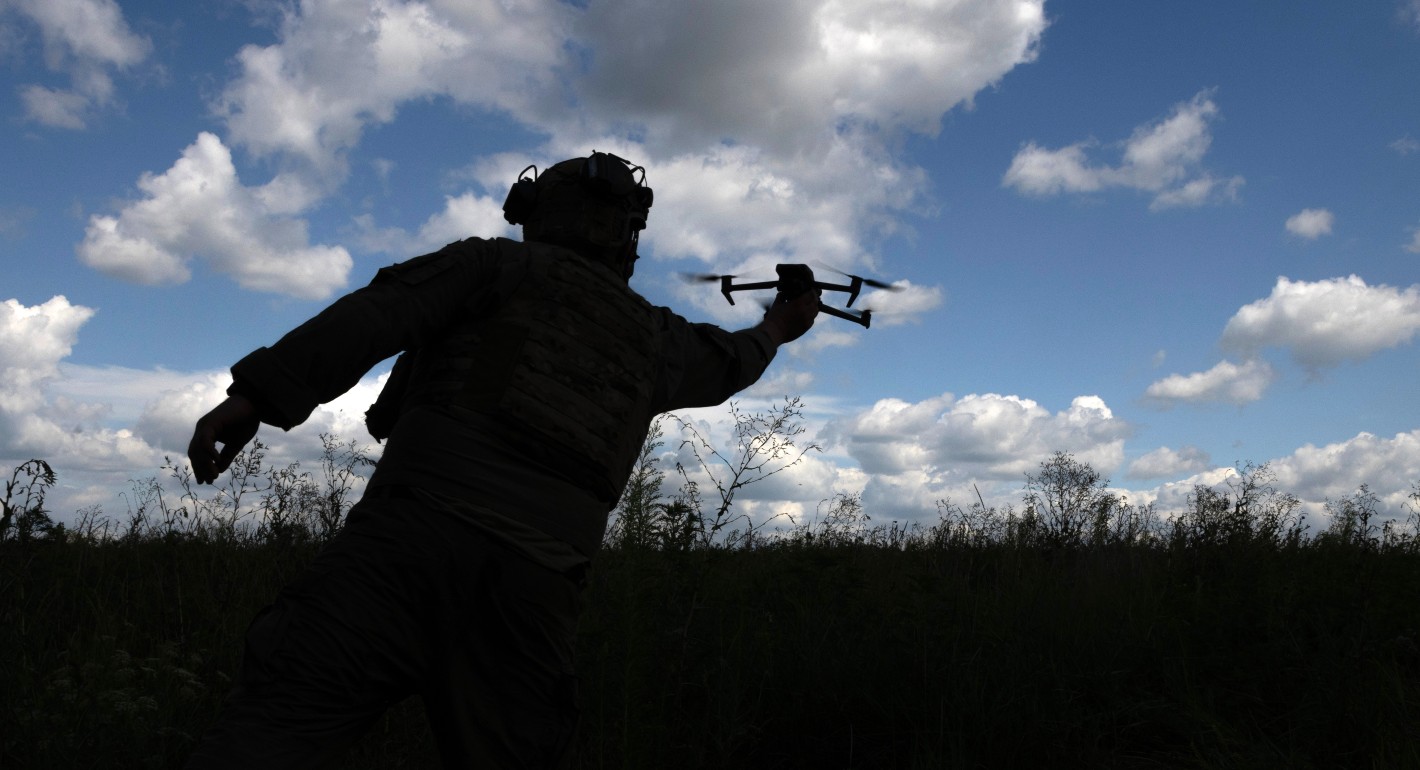
How Ukraine is driving doctrinal change in modern warfare.
Andriy Zagorodnyuk
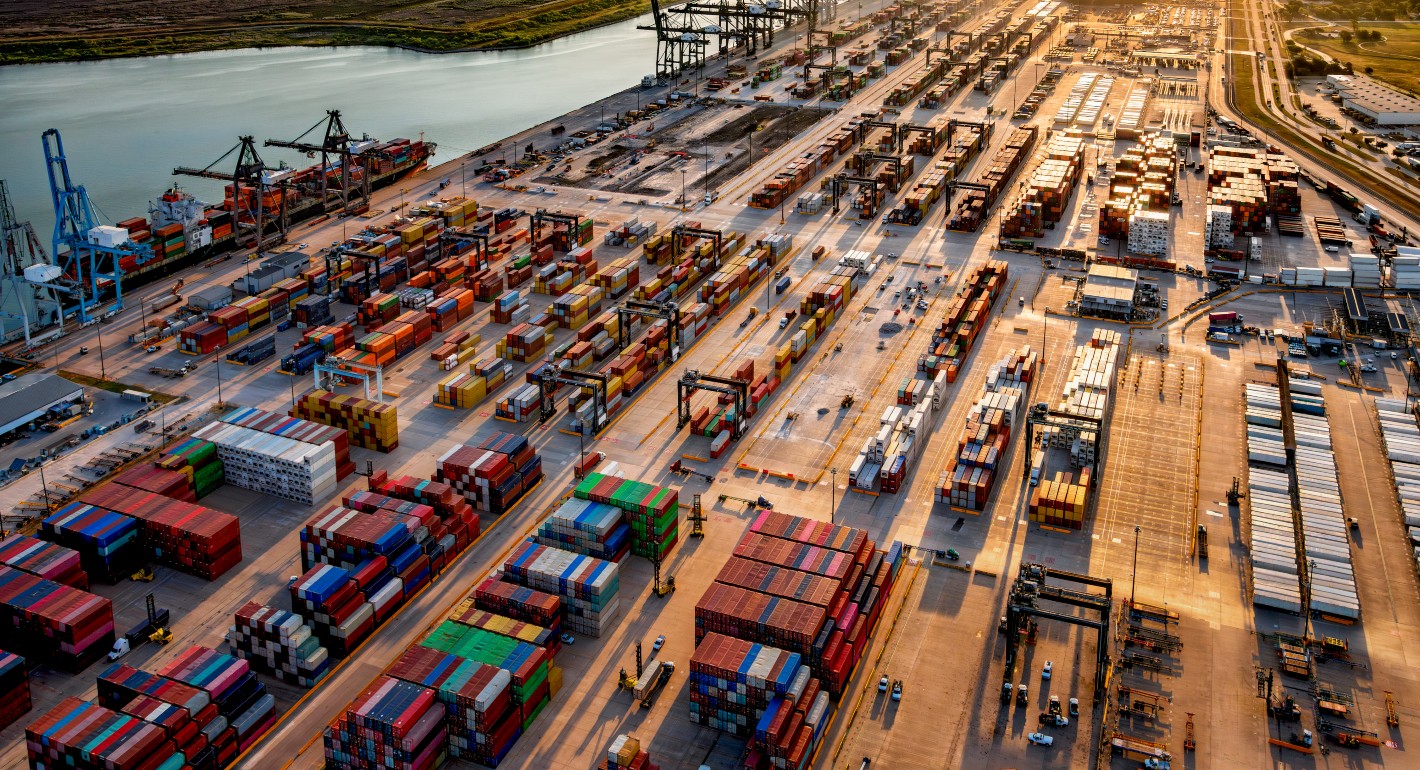
Five problems—and solutions—to make it actually work as a tool of great power competition.
Afreen Akhter
The Russian leadership wants to avoid a dangerous precedent in which it is squeezed out of Iran by the United States and Israel—and left powerless to respond in any meaningful way.

Nikita Smagin
One is hopeful. One is realistic. One is cautionary.

Andrew Leber, Sam Worby
In Ukraine, Gaza, and Iran, AI warfare has come to dominate, with barely any oversight or accountability. Europe must lead the charge on the responsible use of new military technologies.

Raluca Csernatoni