

In The Media
Vikram Nehru
{
  "authors": [
    "Vikram Nehru"
  ],
  "type": "legacyinthemedia",
  "centerAffiliationAll": "dc",
  "centers": [
    "Carnegie Endowment for International Peace"
  ],
  "collections": [],
  "englishNewsletterAll": "asia",
  "nonEnglishNewsletterAll": "",
  "primaryCenter": "Carnegie Endowment for International Peace",
  "programAffiliation": "AP",
  "programs": [
    "Asia"
  ],
  "projects": [],
  "regions": [
    "Southeast Asia"
  ],
  "topics": [
    "Political Reform",
    "Democracy"
  ]
}
Source: Getty
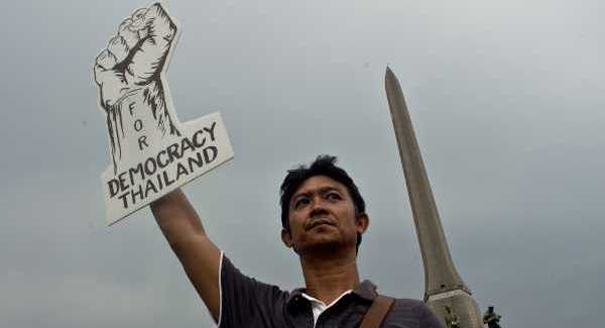
Thailand’s coup is rooted in the clash between the rising voice of the rural poor and the established power of the Bangkok elite. The resolution of this clash will determine the character of Thai democracy.
Source: Diplomat
Carnegie’s Vikram Nehru sat down with Shannon Tiezzi of the Diplomat to discuss the recent ouster of Thailand’s democratically elected government by the Thai military and constitutional court. In the interview, he explained why this coup is unique in Thailand’s long history of over a dozen coups, and examined the rising political power of the rural poor in the north and northeast of the country, the role of the monarchy in Thai politics and the coup, the implications of the coup for the region, and the steps that will be necessary to reach a democratic resolution. In particular, he emphasized the importance of ensuring political voice for both the increasingly influential rural poor and for the established Bangkok elite. How any proposed resolution handles the issue of federalism, the entrenched role of the Bangkok elite, and the establishment and entrenchment of non-partisan political institutions that stand above the fray will be the key issues to watch and will determine the nature and trajectory of Thailand’s democracy going forward, he concluded.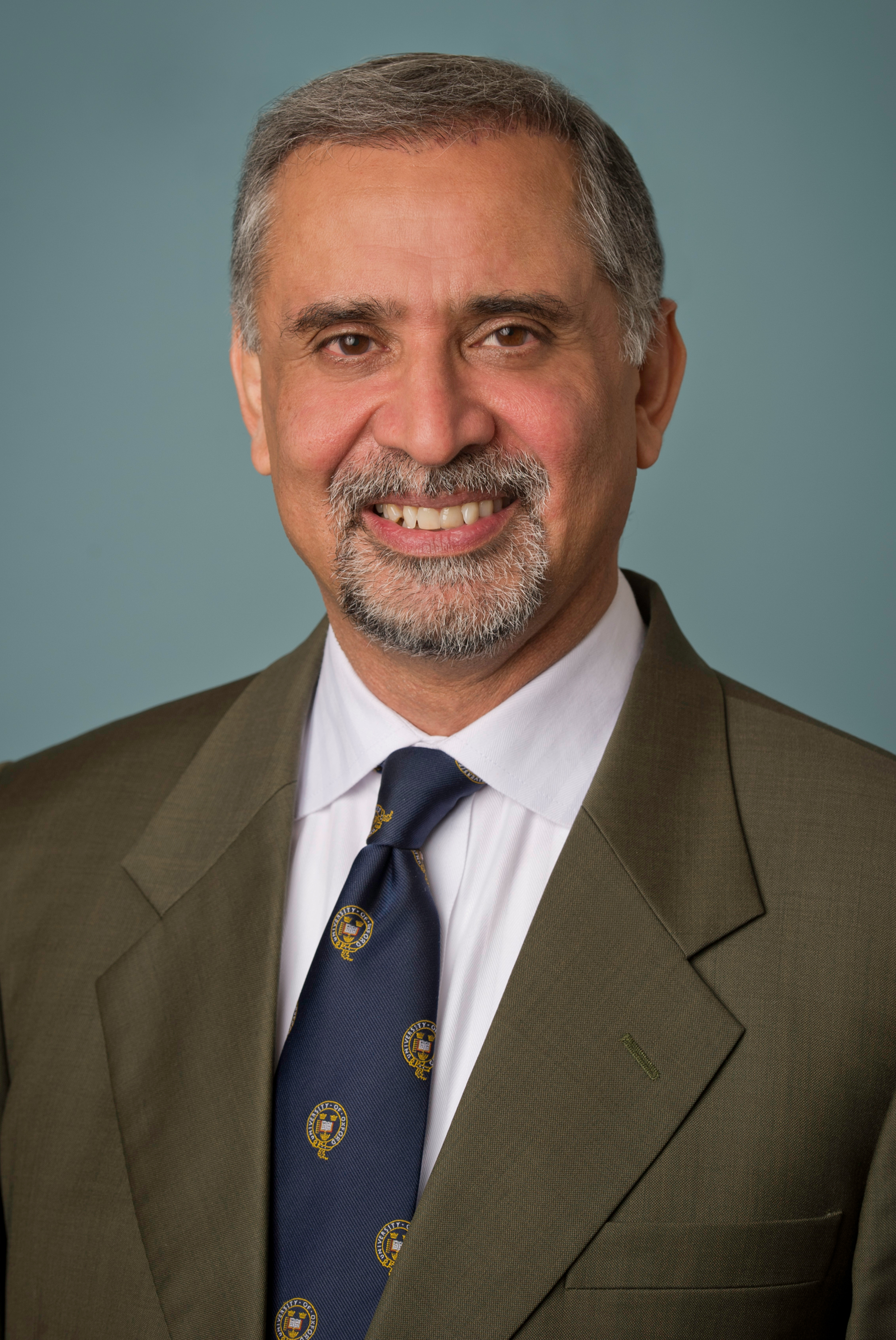
Former Nonresident Senior Fellow, Asia Program
Nehru was a nonresident senior fellow in the Carnegie Asia Program. An expert on development economics, growth, poverty reduction, debt sustainability, governance, and the performance and prospects of East Asia, his research focuses on the economic, political, and strategic issues confronting Asia, particularly Southeast Asia.
Recent Work
Vikram Nehru
Vikram Nehru
Carnegie does not take institutional positions on public policy issues; the views represented herein are those of the author(s) and do not necessarily reflect the views of Carnegie, its staff, or its trustees.
The Russian state has opted for complete ideological control of the internet and is prepared to bear the associated costs.

Maria Kolomychenko
In the Philippines, Duterte-era discourse emphasizing sovereignty, anti-Western skepticism, and strongman diplomacy mirrors tenets of populist foreign policy around the world.
Aries A. Arugay

After four years of war, there is no one who can stand up to the security establishment, and President Vladimir Putin is increasingly passive.

Tatiana Stanovaya
It’s true that many Armenians would vote for anyone just to be rid of Pashinyan, whom they blame for the loss of Nagorno-Karabakh, but the pro-Russia opposition is unlikely to be able to channel that frustration into an electoral victory.
Mikayel Zolyan
Montenegro and Albania are frontrunners for EU enlargement in the Western Balkans, but they can’t just sit back and wait. To meet their 2030 accession ambitions, they must make a strong positive case.


Dimitar Bechev, Iliriana Gjoni