Commentary
Yukon Huang, Isaac B. Kardon, Matt Sheehan
{
  "authors": [
    "Yukon Huang"
  ],
  "type": "legacyinthemedia",
  "centerAffiliationAll": "dc",
  "centers": [
    "Carnegie Endowment for International Peace",
    "Carnegie China"
  ],
  "collections": [],
  "englishNewsletterAll": "asia",
  "nonEnglishNewsletterAll": "",
  "primaryCenter": "Carnegie Endowment for International Peace",
  "programAffiliation": "AP",
  "programs": [
    "Asia"
  ],
  "projects": [],
  "regions": [
    "East Asia",
    "China"
  ],
  "topics": [
    "Economy"
  ]
}
Source: Getty
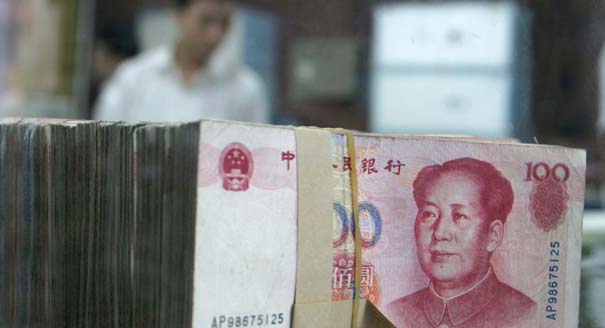
Whether shadow banking really is a danger or merely evidence of a maturing financial system depends on its magnitude and risk profile.
Source: Financial Times
Does shadow banking pose a grave threat to China’s economy – or is it merely a sign of a maturing financial system?
The answer depends on the size and risk profile of the sector. In China, according to estimates, it has doubled its share of new credit issued by banks and non-bank sources from about 20 per cent in 2008 to 40 per cent by June 2013, at which point it accounted for about a quarter of China’s outstanding credit stock.
Definitions of shadow banking vary but for risk-assessment purposes it is useful to include only systemically important activities linked to the formal banking sector. Estimates in line with this definition place shadow banking at about 50-60 per cent of China’s gross domestic product or about 25-30 per cent of banking assets. The Financial Stability Board estimates that the sector represents 117 per cent of GDP and 52 per cent of banking assets worldwide, more than double their respective levels in China, where the concerns are more about its rapid growth than its overall size.
These numbers may make for good headlines but they are not helpful for assessing risks. Broadly, there are two ways in which shadow banking can exacerbate risks. The first is by lending to financially weak borrowers. For this to become a serious problem, such lending must also be big relative to the size of the economy, which is not the case for many shadow banking activities in China. The second form of risk comes from strong interconnections with the formal banking system.
Some forms of shadow banking, such as “entrust loans” and “bankers’ acceptances”, are relatively less risky. In the case of entrust loans – loans between related companies with all of the risks borne by the lending company – this is because asymmetries of information are lower. In the case of bankers’ acceptances – promissory notes guaranteed by a bank and redeemable for cash at maturity, usually six months – it is because they require more documentation and are often backed by deposits or other collateral.
But there is a genuine concern with “trust companies”. Unlike banks, trusts are prohibited from taking deposits but can make high-interest but riskier loans, purchase securities or invest in private equity, which they then sell on to investors in the form of “trust products” with enticing interest rates.
There are two fears about trusts. One is outdated, the other overstated. The former is that they are a way for banks to avoid limits on their lending by moving loans off balance sheet. Recent regulation in China has restricted such activity to just 20 per cent of trust assets.
The more pertinent concern is that trusts are overinvested in risky areas such as property and raw materials. While less than 40 per cent (and falling) of trust assets are invested in these areas, credit risks are often higher for trusts than banks because they serve weaker businesses.
But co-operation between banks and trusts has been scaled back; and, with tighter regulations, potential spillover effects have declined. The trust sector amounts to less than 8 per cent of bank assets. And it is likely that only a small portion of any losses would be absorbed by the banks. Moreover, if investors lose confidence in the trust market, their money will simply flow back into bank deposits because of China’s capital controls. So a loss of confidence in shadow banking will, if anything, increase liquidity and reduce the cost of capital for banks.
The final component of shadow banking is wealth management products, often mistaken for a type of deposit. Unlike other forms of shadow banking they do not involve new lending. They are a distribution channel for investing in a range of existing assets such as bonds, trust products and equity. This merely shifts the ownership of existing debt rather than creating new debt. However, while they may not have introduced extra credit risk, they have generated other vulnerabilities.
What sets wealth management products apart is their close ties to banks, which creates spillover risks. Banks are now required to restrict the share of non-traditional credit assets in their wealth management portfolio, and all products must be explicitly tied to an underlying asset.
Overall, the exposure of the traditional banking system to risky shadow banking activities is much less than alarmists imply. The real concerns are more focused in the activities of trust companies and banks’ wealth management products but even here the risks are often exaggerated. These two activities amount to 36 per cent of GDP or about 15 per cent of bank assets. Yet this is an overstatement of the size of these activities as there is double-counting of wealth management products’ investment in trust products, which could account for as much as 30 per cent of their assets. Further, more than half of wealth management product investments are in safe interbank assets and government and financial bonds.
Ultimately the much-hyped, high-risk parts of the sector are unlikely at present to exceed 15 per cent of GDP or about 6 per cent of bank assets. It would take truly disastrous performance and lackadaisical crisis management by Beijing for these assets to pose a serious threat to the stability of China’s banking system.
This article was originally published in the Financial Times.

Senior Fellow, Asia Program
Huang is a senior fellow in the Carnegie Asia Program where his research focuses on China’s economy and its regional and global impact.
Recent Work


Yukon Huang, Isaac B. Kardon, Matt Sheehan
Yukon Huang, Genevieve Slosberg

AI could hollow out jobs, reshape them gradually, create entirely new ones—or do all three at once. The case for starting to act now doesn’t depend on knowing which.

Teddy Tawil

Powerful lobbyists and inertia led to Russia’s coal-mining sector missing an excellent opportunity to solve its structural problems.
Alexey Gusev

Five problems—and solutions—to make it actually work as a tool of great power competition.

Afreen Akhter

Despite long-standing differences, China and Vietnam are reinforcing common ground for collaboration, especially in public security. This internal security–centered diplomacy offers a strengthened road map for how China moves forward with Southeast Asia.
Sophie Zhuang
As the war between the United States, Israel, and Iran continues, Carnegie scholars contribute cutting-edge analysis on the events of the war and their wide-reaching implications. From the impact on Iran and its immediate neighbors to the responses from Gulf states to fuel and fertilizer shortages caused by the effective shutdown of the Strait of Hormuz, the war is reshaping Middle East alliances and creating shockwaves around the world. Carnegie experts analyze it all.