

Commentary
Despite public disputes over trade and immigration, the strategic partnership’s foundations remain sturdy.
Sameer Lalwani
{
  "authors": [
    "Thomas Carothers",
    "Lina Khatib",
    "Marwan Muasher",
    "Douglas H. Paal",
    "Andrew S. Weiss"
  ],
  "type": "questionAnswer",
  "centerAffiliationAll": "dc",
  "centers": [
    "Carnegie Endowment for International Peace",
    "Carnegie China",
    "Malcolm H. Kerr Carnegie Middle East Center",
    "Carnegie Russia Eurasia Center"
  ],
  "collections": [
    "China’s Foreign Relations"
  ],
  "englishNewsletterAll": "menaTransitions",
  "nonEnglishNewsletterAll": "",
  "primaryCenter": "Carnegie Endowment for International Peace",
  "programAffiliation": "MEP",
  "programs": [
    "Middle East"
  ],
  "projects": [
    "Eurasia in Transition"
  ],
  "regions": [
    "North America",
    "United States",
    "Middle East",
    "Israel",
    "Iraq",
    "Palestine",
    "Syria",
    "East Asia",
    "China",
    "Eastern Europe",
    "Ukraine",
    "Gulf",
    "Levant"
  ],
  "topics": [
    "Political Reform",
    "Security",
    "Democracy",
    "Arms Control",
    "Economy",
    "Foreign Policy"
  ]
}
Source: Getty
The world can be an awfully dangerous and unpredictable place.
The world can be an awfully dangerous and unpredictable place. As news was breaking that the United States initiated airstrikes against militants in Iraq, fears were mounting about the Russian troops amassed near the border with Ukraine, momentarily eclipsing headlines of the war in Gaza, the insurgency in Syria, tensions in Asia, and other global concerns. And every day seems to bring more bad news as instability rages on.
But is the level of turmoil really unique? Or does it just feel like it?
Carnegie experts from around the world assess the situation and today’s foremost geopolitical hotspots. It’s some much-needed sober analysis during heady times.
Thomas Carothers: When crisis cascades hit the international system, as has happened over the past half year, it is always difficult to judge the lasting significance of the roiling events that suddenly dominate the news. None of the current flashpoints is undermining the overall international order yet they are all of considerable significance beyond the harm they are inflicting because they are manifestations of longer-term, deep-reaching trends in the international system.
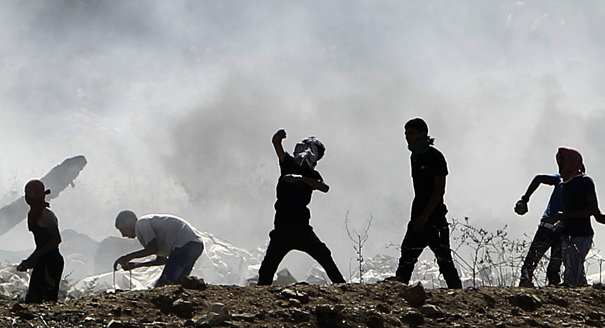
The tensions in the South China Sea are a reflection of the ongoing rise of China and the rebalancing of the basic security order in Asia. The crisis in Ukraine is the final nail in the coffin of the major U.S. effort of the past five years to build a broadly cooperative relationship with Russia.The civil wars in Iraq and Syria are part of an ominous larger wave of spiraling conflict in the Arab world, and a clear indication that the main locus of radical jihadism has moved from al-Qaeda in South Asia to various groups in the Middle East. The fighting between Israel and Gaza highlights the fact that the failed peace process between Israel and the Palestinians leaves in place not a workable status quo but a fundamental conflict that will keep descending into violence.
In different ways, these flashpoints all underline the continued diffusion of power away from the United States to other actors, whether to different regional powers or to nonstate actors. They remind us that such diffusion will multiply the sources of violent conflict in the world. They also are a sober tonic for anyone who started to believe that military force was somehow on its way out in international relations.
Professor Steven Pinker may be right about the overall decline in violence in the world when looked at in a larger historical perspective. But these multiple flashpoints make clear that violence, or the threat of violence by actors of many different types, will continue to shape different parts of the international landscape for the foreseeable future.
Andrew S. Weiss: We don’t really know how worried to be about the risk of a Russian invasion. President Barack Obama told the New York Times’s Thomas Friedman in early August that Russian President Vladimir Putin “could invade” at any time, and NATO Secretary General Anders Fogh Rasmussen has said that “there is a high probability” of Russian military action.
These jitters reflect the fact that Moscow is building up its troop presence along the border and Ukrainian forces are putting serious pressure on the separatists in and around their two main strongholds in eastern Ukraine. Will Putin just stand by and abandon his proxies? Would Putin be humiliated if they’re slaughtered by an enemy that has been thoroughly demonized by the Russian state-controlled media?At the same time, Moscow may have other tools short of invasion that can help buy time or keep the Ukrainians off-balance in Donetsk and Luhansk. There’s also a growing suspicion that Putin doesn’t actually want key separatist leaders or the radical nationalists who went to Ukraine to fight coming back to Russia itself. They could become a destabilizing factor for him at home.
Ukrainian President Petro Poroshenko is keen to wrap up the military operations in the east so that he can focus on his reform agenda, the dismal economic situation facing the country, and a parliamentary election that he wants to hold in October. One interesting wrinkle for Ukraine will be the growing political influence of the paramilitary and irregular volunteer units that have done most of the fighting. These fighters—and just as importantly the oligarchs and regional power brokers who financed their battalions—are going to become a force unto themselves in Ukrainian politics in coming months.
Marwan Muasher: Unfortunately there is no lasting end to the conflict in sight.
A ceasefire that lasts for more than a few days is likely to be reached eventually. But it will probably be similar to previous ones, and there’s little hope that it will move the peace process forward.
Israel is pursuing tactical objectives to appease public fears and hardliners in the Israeli cabinet—all at the expense of Palestinians. If Israel’s intention is to disarm or weaken Hamas, it’s probably going to walk away empty-handed. Three ground incursions in the last six years (and another war against Hezbollah in Lebanon in 2006) all failed to achieve the goals of disarming and weakening its opponents.In fact, Hamas is proving that it has been able to strengthen its military capabilities over time. It is clearly better prepared this time around. While the rockets launched against Israel have not resulted in much physical damage, they may begin to shatter the false sense of security enjoyed by many Israelis. And Israeli soldiers have lost their lives in the fighting.
Hamas is also gaining popularity as a result of Israel’s latest moves. For the first time in years, Hamas is more popular than Fatah in polls. The pictures of civilian deaths, particularly of women and children, on Arab television networks have been horrific and markedly shifted the public mood in favor of Hamas. Israel’s claim of exercising caution to limit civilian casualties is widely disregarded across the Arab world.
Without addressing the core issue of the conflict—Israel’s occupation—there is little hope that this cycle won’t just keep repeating itself. It is safe to expect future incursions, followed by ceasefires that won’t last, followed by yet more incursions. And Palestinians in Gaza and elsewhere will continue to bear the brunt of these actions. It’s no wonder most people see little prospect of a breakthrough that would finally end the occupation.
Lina Khatib: With its advance in Iraq in recent months, the militant Islamic State managed to link the territories under its control in both Iraq and Syria, erasing the border and declaring a caliphate. The group’s control in both countries is likely to endure, but it won’t necessarily expand significantly.
The Islamic State uses a mixture of violence and negotiation to seize territory. Its hybrid strategy was on display in both Iraq and Syria, including its decision to form alliances with local clans and tribes.In Iraq, the group’s appeal among the Sunni tribes it relied on for its rapid advance comes mainly from widespread grievances against the Iraqi government. Sunnis have been discriminated against by all levels of the government, and the Islamic State offers those tribes a chance to exact revenge. It deliberately incites sectarian hatred to rally Iraqi Sunnis against Shias.
The U.S. airstrikes against the Islamic State in Kurdish areas will prevent the group’s fighters from advancing north, but they will not solve the larger problem that the Islamic State enjoys local buy-in among Iraqi Sunnis. Forming an inclusive government should be the top priority for Iraq’s newly elected prime minister. As long as the Iraqi government does not engage in serious reform efforts that rethink its structure and policies, the Islamic State will continue to use the sectarian card to its advantage.
In Syria, the conflict grinds on. Fear and exhaustion are causing many to remain silent in the face of the Islamic State, while others, in a bid for self-preservation, are seeking to ally with the group that appears to be the strongest, richest, and most durable. Some Al-Qaeda fighters are also defecting, strengthening the Islamic State’s reach and resources, while the moderate opposition and Jabhat al-Nusra have not been able to stand up to the Islamic State.
Although the Syrian government has recently changed its stance toward the group and is attacking the Islamic State’s stronghold in Raqqa, fighting the group is not the Assad regime’s priority. Instead, the regime will focus its energy on maintaining control over the key areas already under its authority, leaving the east for the Islamic State. This is partly because neither the Syrian army nor the Islamic State is capable of completely overwhelming the other militarily.
As long as the regime continues to terrorize and starve its own people, while the moderate Syrian opposition fails to deliver tangible political and military results, the Islamic State will continue to hold the areas under its control in the east.
The opportunities that have played out to the advantage of the Islamic State remain strong, meaning that the Islamic State is likely to continue to deepen its roots in the areas already under its control in Syria and Iraq. The prospect of eradicating the group in both countries is far-fetched.
Marwan Muasher: The expectations of the last three years in the Arab world have given way to reality. The term “Arab Spring” was always too simplistic as transformational processes inevitably take time and defy black-and-white expectations. The Arab Awakening will need to be judged over decades—not years—and there will be different outcomes in different countries depending on the choices they make.
One thing is clear: you reap what you sow. Decades of artificially induced stability were always unsustainable. Arab regimes resorted to brute force to prolong their own rule, preventing the healthy development of societies. This left problems lurking just beneath the surface, and once the lid was opened slightly, the backlash was fast and powerful.
But a pluralistic and democratic society will not simply emerge because an authoritarian leader is toppled. Without properly developing institutions that can support a democratic culture and defend the rule of law, frustration will mount again and often lead to catastrophic outcomes.
The rise of the Islamic State is a case in point. The group doesn’t control parts of Iraq because it has superior military capabilities—it has made rapid gains because it is operating in an environment where people feel marginalized and are therefore willing to support any force that could redress basic grievances. This is why there is no purely military solution to the problem. There must be a political process that addresses the root causes of the instability, ensuring the Sunni community feels like it has a say in its leaders and the country’s future.
Restoring the status quo ante in the Arab world—even if it were possible—would merely re-create the same conditions that led to the chaos we see today. Those who want a better future have to start building the pillars of democratic societies.
Despite the turmoil in the region, the Arab world is not condemned to instability and violence. Tunisia has already demonstrated what a commitment to pluralism and inclusion can produce in three short years. But old forces must realize that the old Arab order is done—forever. Either new leaders will share power, develop inclusive policies, defend the rule of law, offer sound economic plans, and establish meaningful institutions to fight corruption or more chaos lies ahead.
The choice is the Arab world’s to make.
Douglas Paal: The risk of conflict in Asian waters has been rising for more than the four years. But it is still a relatively small risk.
All the players are essentially cautious governments that are trying to avoid crossing redlines. The lingering concern is whether they clearly understand where the redlines are as they maneuver for advantage. Misjudgment is the key variable that can push tensions to the point of conflict.China, for its part, is now the most self-confident in the region and has built up capabilities and resources over the past two decades that surpass those of its neighbors.
Beijing believes it must redress the damage to its interests that history has bequeathed. In Beijing’s thinking, encroachments occurred on China’s territorial claims by neighbors and imperialists, often in periods of China’s own self-imposed isolation. So the Chinese do not think of themselves as being aggressive but as being reactive to the actions of others at a time when they can now better defend their interests.
Thomas Carothers: The cascade of international crises has multiple implications for the United States and the world.
First, these events highlight the fact that U.S. power is now constantly being tested by rising actors seeking to determine how much ability and will the United States has to maintain order. The U.S. response to a test in one region will resound loudly as an example to actors in other regions.
Second, the idea of a pivot to Asia may have had some appeal when the Obama administration floated it, but any notion that the United States will not keep facing fundamental security challenges in the Middle East, Europe, and elsewhere outside of Asia is now clearly an illusion. What the pivot should therefore actually consist of is completely unclear.
Following from that is a third implication. The U.S. policy establishment likes to try to frame U.S. security in terms of one overarching challenge—such as the war on terrorism—and mobilize resources accordingly. Yet what the United States faces in the world are quite different security challenges that require wholly different types of responses.
Washington needs to move away from the habit of configuring its foreign policy machinery for one big thing—we have to be equally adept, equipped, and prepared to put forward masterful strategic diplomacy in Asia; shrewd diplomatic, economic, and political responses to Russia; effective efforts to deal with the spread of jihadist actors in the Arab world and sub-Saharan Africa; and much else.
The long-standing habit of thinking about a single doctrine or an overarching approach for U.S. foreign policy is badly outdated.

Harvey V. Fineberg Chair for Democracy Studies; Senior Fellow, Democracy, Conflict, and Governance Program
Thomas Carothers, a senior fellow in the Carnegie Endowment for International Peace’s Democracy, Conflict, and Governance Program, is a leading expert on comparative democratization and international support for democracy.
Former Director, Middle East Center
Khatib was director of the Carnegie Middle East Center in Beirut. Previously, she was the co-founding head of the Program on Arab Reform and Democracy at Stanford University’s Center on Democracy, Development, and the Rule of Law.

Vice President for Studies
Marwan Muasher is vice president for studies at Carnegie, where he oversees research in Washington and Beirut on the Middle East. Muasher served as foreign minister (2002–2004) and deputy prime minister (2004–2005) of Jordan, and his career has spanned the areas of diplomacy, development, civil society, and communications.

Distinguished Fellow, Asia Program
Paal previously served as vice chairman of JPMorgan Chase International and as unofficial U.S. representative to Taiwan as director of the American Institute in Taiwan.
James Family Chair, Vice President for Studies
Andrew S. Weiss is the James Family Chair and vice president for studies at the Carnegie Endowment for International Peace, where he oversees research on Russia, Ukraine, and Eurasia. His graphic novel biography of Vladimir Putin, Accidental Czar: the Life and Lies of Vladimir Putin, was published by First Second/Macmillan in 2022.
Carnegie does not take institutional positions on public policy issues; the views represented herein are those of the author(s) and do not necessarily reflect the views of Carnegie, its staff, or its trustees.

Despite public disputes over trade and immigration, the strategic partnership’s foundations remain sturdy.

Sameer Lalwani
It signals a new era of tech diffusion and warfare.

Steve Feldstein

With its public finances in shambles, the far right polling at 35 percent ahead of the 2027 presidential election, and a growing protest movement, is France’s crisis a threat to the EU’s geopolitical awakening?

Rym Momtaz, ed.

Putin’s conservative staffing policies and search for ever greater control have cemented parliament’s transformation into a bureaucratic appendage of the executive branch.

Andrey Pertsev

Russia’s AI-driven propaganda campaigns operate in a fragmented, chaotic, and often illogical manner. That’s not necessarily a problem for the Kremlin, though: It’s much easier to mimic genuine public debate that way.

Ilya Klishin