

Article
Understanding the climatic pain points is necessary for policymakers hoping to minimize the war’s negative environmental consequences.
Alejandro Martin Rodriguez, Joy Arkeh, Sarah Yerkes
{
  "authors": [
    "Marwan Muasher",
    "Kim Ghattas"
  ],
  "type": "legacyinthemedia",
  "centerAffiliationAll": "dc",
  "centers": [
    "Carnegie Endowment for International Peace",
    "Malcolm H. Kerr Carnegie Middle East Center"
  ],
  "collections": [],
  "englishNewsletterAll": "menaTransitions",
  "nonEnglishNewsletterAll": "",
  "primaryCenter": "Carnegie Endowment for International Peace",
  "programAffiliation": "MEP",
  "programs": [
    "Middle East"
  ],
  "projects": [],
  "regions": [
    "Middle East",
    "Lebanon",
    "Levant"
  ],
  "topics": [
    "Political Reform",
    "Foreign Policy"
  ]
}
Source: Getty
The international community should move beyond military aid to support Lebanon’s real strengths: its moderate, pluralist, and vibrant society.
Source: Project Syndicate
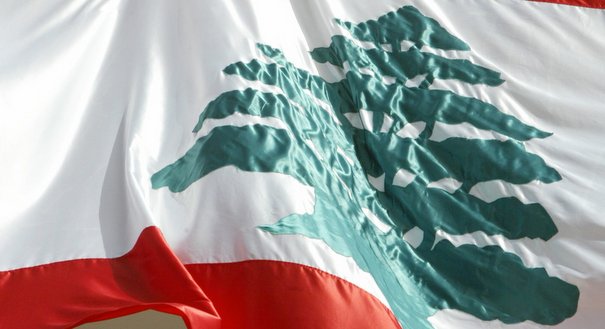
Global debate in recent weeks has centered on US President Barack Obama’s initiative to prevent the advance of the Islamic State. But another force has emerged as an unlikely rampart against the barbaric and delusional leaders of the self-proclaimed caliphate: Lebanese pluralism. Indeed, despite the shortcomings of its political system, Lebanon can provide a template for managing cultural diversity and rejecting radicalism in an unstable and fragmented setting.
Last month, the Lebanese army showed considerable fortitude as it fought Islamic State militants in the village of Arsal, near the border with Syria. Though the army has sustained heavy losses – including two soldiers that were beheaded – it has managed to compel the militants, who were operating inside a Syrian refugee camp, largely to withdraw. And it continues to fight when the need arises. International aid is now flowing toward the army, with Saudi Arabia alone pledging more than $3 billion.
But the international community should move beyond military aid to support Lebanon’s real strengths: its moderate, pluralist, and vibrant society. After all, that is what has enabled the country, against all odds, to avoid all-out conflict, making it a beacon – however faint – of hope in a crisis-ravaged region.
Lebanon’s resilience has confounded expectations, given its lack of a shared national identity – a result of deep social divisions that resemble, to some extent, those besetting Iraq – and notoriously weak state institutions. In fact, Lebanon’s political system has been paralyzed by disagreements over Syria’s civil war, the consequences of which have been pouring over the Lebanese border. The country has not had a president since May; the parliament is not functioning; and the cabinet is practically powerless.When the Islamic State arrived at the border, however, most of Lebanon’s political parties, media, and civil society rallied together. Billboards were erected appealing to Sunnis to preserve moderation. Media outlets informally agreed not to provide a platform to radical militants. And performing-arts festivals featuring international figures went ahead – signaling the Lebanese people’s refusal to give in to radicalism and violence.
Moreover, the army received an outpouring of public support, which is understandable, given the lack of any other unifying institution. Even the Shia militant group Hezbollah, which caused deep fissures in Lebanon by helping to shore up Syrian President Bashar al-Assad’s forces, supported the army’s campaign (though the desire to allow others to die fighting Assad’s opponents was undoubtedly a key motivation).
Ironically, the weakness of the Lebanese state may be contributing to the strength of its civil society. In Lebanon, unlike in other Arab countries, no single religious group enjoys a majority. Shias and Sunnis compete to ally themselves with the Christian community, recognizing its vital social and political role in the country.
Lebanon’s acceptance of cultural diversity and pluralism has enabled the country to emerge whole from 15 years of civil war, to withstand decades of Syrian and Israeli occupation, and finally to stand up to the Islamic State. It may have taken years of violence, but Christians, Sunnis, and Shias seem to have internalized the lesson that they cannot impose their will on one another.
Today, Lebanon is bustling with the cosmopolitan spirit and energy that once characterized the entire region. And the impact of its people’s creative activities is increasingly visible worldwide, with, for example, the fashion designer Elie Saab dressing Hollywood stars and Lamia Joreige’s art being exhibited in the permanent collection of London’s Tate Modern. Furthermore, pluralism and moderation remain the dominant forces in the country; tellingly, the Islamic State could not find a single Lebanese to volunteer to be its emir of Lebanon.
But this inspiring model is under threat, as Lebanon struggles to cope with massive debt and the spread of abject poverty in rural areas, especially among Sunnis. Making matters worse, more than a million Syrian refugees have poured into Lebanon – the equivalent, in proportional terms, of 80 million Mexicans suddenly arriving in the United States.
Such a large refugee population can easily transform – and destabilize – a society, especially one as fragmented as Lebanon’s. Indeed, it can even provide a conduit – if inadvertently – for the Islamic State to penetrate the country. Yet the international community has provided only 40% of the funds that Lebanon needs to cope with the crisis.
If Lebanon manages to weather the current crisis with its pluralistic system, cultural vibrancy, and creativity intact, its prospects of achieving political maturity are promising. Given the importance of such progress not just for Lebanon, but also for its regional neighbors, the international community would do well to find ways to ensure that the country can hold its ground not only politically and militarily, but also culturally.
Lebanon must be able to continue inspiring its regional neighbors, and to provide a template for effective pluralism in the Middle East. That is important today; it will be even more important when the Arab world emerges from its current turmoil and starts to re-establish a stable sociopolitical order.

Vice President for Studies
Marwan Muasher is vice president for studies at Carnegie, where he oversees research in Washington and Beirut on the Middle East. Muasher served as foreign minister (2002–2004) and deputy prime minister (2004–2005) of Jordan, and his career has spanned the areas of diplomacy, development, civil society, and communications.

Author of Black Wave and FT contributing editor
Kim Ghattas is an Author of Black Wave and FT contributing editor.
Carnegie does not take institutional positions on public policy issues; the views represented herein are those of the author(s) and do not necessarily reflect the views of Carnegie, its staff, or its trustees.

Understanding the climatic pain points is necessary for policymakers hoping to minimize the war’s negative environmental consequences.



Alejandro Martin Rodriguez, Joy Arkeh, Sarah Yerkes

Huawei pushed hard to enter the Egyptian data centers market, until the Americans made a better offer.

Angie Omar

The books, podcasts, and films that explain the world it made.

Andrew Leber
U.S. trading partners in Asia are closely watching the dispute for signs of how it may affect their own interests.
Barbara Weisel

The aftermath of the Ceuta crisis shows Europe has drawn the wrong lessons. Rather than doubling down on failed migration policies, the EU needs to address the underlying roots of such episodes.

Richard Youngs