• Research
  • Emissary
  • About
  • Experts
Carnegie Global logoCarnegie lettermark logo
DemocracyIran
  • Donate
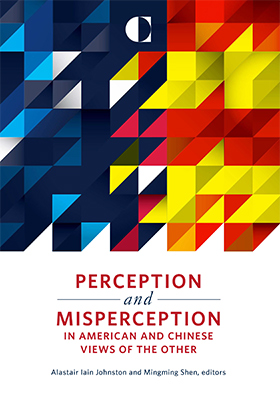
Perception and Misperception in American and Chinese Views of the Other
Report

Perception and Misperception in American and Chinese Views of the Other

The underlying beliefs that people in the United States and China hold toward each other in the security realm are likely to influence, directly or indirectly, each side’s foreign policy with regard to the bilateral relationship.

Link Copied
Published on Sep 22, 2015

Additional Links

BriefFull Text
Program mobile hero image

Program

Asia

The Asia Program in Washington studies disruptive security, governance, and technological risks that threaten peace, growth, and opportunity in the Asia-Pacific region, including a focus on China, Japan, and the Korean peninsula.

Learn More

The underlying beliefs that people in the United States and China hold toward each other in the security realm are likely to influence, directly or indirectly, each side’s foreign policy with regard to the bilateral relationship. In-depth analyses of elite and public opinion survey data from the United States and China on a wide range of security issues provide nuanced and far-reaching insights into the potential effects of these attitudes on the U.S.-China relationship.

Key Findings

  • There are substantial gaps in American and Chinese perceptions of the basic traits and characteristics that each side exhibits. However, at the individual level, strong in-group exceptionalism does not necessarily predict out-group denigration.
     
  • A considerable part of the Chinese population appears to believe that China should not take on a world leadership role, or if it does, it should jointly lead the world with the United States. These attitudes are associated both with older respondents and with those in their thirties and early forties.
     
  • In general, mistrust of the external world on the Chinese side stems from educational socialization and media messaging.
     
  • Tea Party supporters in the United States demonstrate very low levels of trust toward China and, as a result, advocate much tougher economic and military policies. However, the Tea Party is less interested in interfering in the internal affairs of China than other elements of the population.

Analyzing the Results

  • Credible reassurance signals from the United States may be well received if aimed at individuals in the Chinese government, even if said individuals espouse a strong belief in Chinese exceptionalism.
     
  • The younger cohort of Chinese citizens has yet to influence Chinese politics and policy, and there may be some basis for expecting that this group could be more accepting of a continued, dominant U.S. role in international politics.
     
  • Efforts to affect Chinese beliefs about the United States may be limited by the powerful socializing effects of the Chinese government–controlled education and propaganda systems.
     
  • If the U.S. Congress and the next president are beholden to the Tea Party for electoral success, then there might be more conflict in the security and economic realms but somewhat less support for the United States’ cost-imposing policies on China’s internal affairs.
Read Full Text
North AmericaUnited StatesEast AsiaChinaForeign Policy

Carnegie does not take institutional positions on public policy issues; the views represented herein are those of the author(s) and do not necessarily reflect the views of Carnegie, its staff, or its trustees.

More Work from Carnegie Endowment for International Peace

  • Commentary
    Strategic Europe
    How to Join the EU in Three Easy Steps

    Montenegro and Albania are frontrunners for EU enlargement in the Western Balkans, but they can’t just sit back and wait. To meet their 2030 accession ambitions, they must make a strong positive case.

      Dimitar Bechev, Iliriana Gjoni

  • Fire damage is pictures as US President Joe Biden (out of frame) visits to an area devastated by wildfires in Lahaina, Hawaii on August 21, 2023.
    Article
    The United States Has an Internal Displacement Problem

    By reorganizing federal disaster policy around the rights of displaced people, the United States could unlock additional federal resources, accelerate the rebuilding of lives and livelihoods, and reduce suffering and economic disruption.

      • Kayly Ober

      Kayly Ober

  • A demonstrator holds a tablet displaying a message as they occupy a road in protest against plans by the main opposition Kuomintang (KMT) and the Taiwan People's Party (TPP) to expand the parliamentary powers during the vote for the Parliament reform bill, outside the Parliament in Taipei on May 24, 2024. T
    Article
    Digital Hegemony and the Reification of Taiwan’s “Unification-Independence” Dichotomy

    Governments now deploy online platforms to shape public opinion and influence collective cognition. This is acutely apparent between China and Taiwan.

      Frank Cheng-Shan Liu

  • flood wall
    Commentary
    Emissary
    BRIC Is Critical for U.S. National Security. After a Yearlong Legal Battle, It’s Back.

    Its reinstatement should be celebrated, but it retains some major shortcomings.

      Leonardo Martinez-Diaz

  • Article
    Leveraging Internal Security Cooperation with Vietnam Offers a Glimpse of Future Chinese Diplomacy with Southeast Asia

    Despite long-standing differences, China and Vietnam are reinforcing common ground for collaboration, especially in public security. This internal security–centered diplomacy offers a strengthened road map for how China moves forward with Southeast Asia.

      Sophie Zhuang

Get more news and analysis from
Carnegie Endowment for International Peace
Carnegie global logo, stacked
1779 Massachusetts Avenue NWWashington, DC, 20036-2103Phone: 202 483 7600Fax: 202 483 1840
  • Research
  • Emissary
  • About
  • Experts
  • Donate
  • Programs
  • Events
  • Blogs
  • Podcasts
  • Contact
  • Annual Reports
  • Careers
  • Privacy
  • For Media
  • Government Resources
Get more news and analysis from
Carnegie Endowment for International Peace
© 2026 Carnegie Endowment for International Peace. All rights reserved.