

Other
- +5
Frances Z. Brown, Zainab Usman, Erin Jones, …
{
  "authors": [
    "Aqil Shah"
  ],
  "type": "other",
  "centerAffiliationAll": "dc",
  "centers": [
    "Carnegie Endowment for International Peace"
  ],
  "collections": [],
  "englishNewsletterAll": "ctw",
  "nonEnglishNewsletterAll": "",
  "primaryCenter": "Carnegie Endowment for International Peace",
  "programAffiliation": "SAP",
  "programs": [
    "South Asia"
  ],
  "projects": [],
  "regions": [
    "South Asia",
    "Southeast Asia"
  ],
  "topics": [
    "Political Reform",
    "Democracy"
  ]
}
Source: Getty
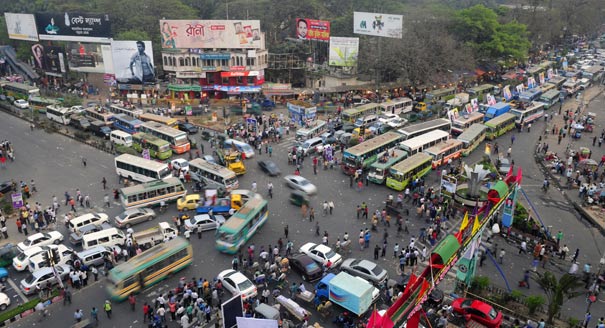
The success of democracy in Bangladesh will depend on the political elites’ ability to abandon their zero-sum rivalry and demonstrate commitment to democratic norms in their attitudes and behavior.
Source: Current History
Since Bangladesh made a transition to democracy in 1991, the country has held three competitive elections that resulted in a turnover of power from the incumbents to the opposition. Consolidating democracy in Bangladesh would be an important achievement because of the dearth of stable democracies in Muslimmajority countries. But equating elections with democracy or assuming that alternations in power would automatically result in the consolidation of a liberal democracy is a mistake that some social scientists call the “electoralist fallacy.” Democracy is consolidated and truly becomes the “only game in town” when elected governments govern within the bounds of the rule of law and the political opposition respects the procedures and norms of the democratic game...
Former Visiting Scholar, South Asia Program
Aqil Shah was a visiting scholar in the South Asia Program at the Carnegie Endowment for International Peace.
Recent Work

Frances Z. Brown, Zainab Usman, Erin Jones, …
Aqil Shah
Carnegie does not take institutional positions on public policy issues; the views represented herein are those of the author(s) and do not necessarily reflect the views of Carnegie, its staff, or its trustees.

Despite public disputes over trade and immigration, the strategic partnership’s foundations remain sturdy.

Sameer Lalwani

Putin’s conservative staffing policies and search for ever greater control have cemented parliament’s transformation into a bureaucratic appendage of the executive branch.

Andrey Pertsev

Ex-president Gurbanguly Berdimuhamedov remains interested in politics, but his son Serdar, Turkmenistan’s current president, is becoming increasingly independent and willing to break with his father’s legacy. If their covert rivalry goes too far, both risk losing power.

Galiya Ibragimova

A notable degree of participative democracy has firmly arrived in Europe. But to have more far-reaching impact, democratic deliberation needs to move into a radically new phase.

Richard Youngs

Economic recovery has brought Sri Lanka a modicum of stability, but domestic strains and great-power rivalry could test how long it lasts.
Avinash Paliwal