

Commentary
Evan A. Feigenbaum
{
  "authors": [
    "Evan A. Feigenbaum"
  ],
  "type": "legacyinthemedia",
  "centerAffiliationAll": "dc",
  "centers": [
    "Carnegie Endowment for International Peace"
  ],
  "collections": [],
  "englishNewsletterAll": "asia",
  "nonEnglishNewsletterAll": "",
  "primaryCenter": "Carnegie Endowment for International Peace",
  "programAffiliation": "AP",
  "programs": [
    "Asia"
  ],
  "projects": [],
  "regions": [
    "South Asia",
    "India",
    "Pakistan",
    "East Asia",
    "China",
    "Central Asia",
    "Kazakhstan",
    "Kyrgyz Republic",
    "Tajikistan",
    "Turkmenistan",
    "Uzbekistan",
    "Russia",
    "Eastern Europe",
    "Belarus"
  ],
  "topics": [
    "Economy",
    "Trade",
    "Foreign Policy",
    "Global Governance"
  ]
}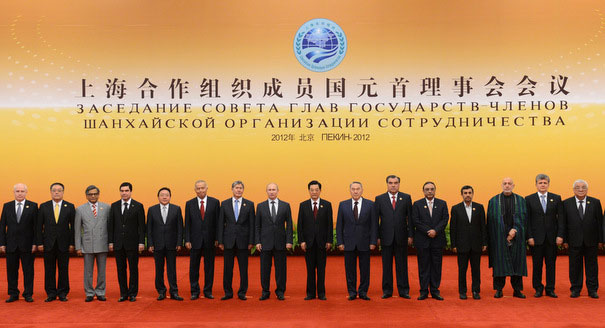
Source: Getty
The Shanghai Cooperation Organization will likely become less functional and coherent as the group gets bigger. Form will start to drive function, and the group will begin to search for a purpose.
Source: Voice of America
Speaking to the Voice of America, Carnegie’s Evan Feigenbaum explained why the Shanghai Cooperation Organization (SCO) is likely to become weaker, less coherent, and more diffuse as it expands to include India and Pakistan and potentially other partners in future. He argued that all such institutions weaken when form begins to drive function rather than the other way around. That has been the experience across Asia since the end of the Cold War. Feigenbaum explored the origin of the SCO in a single, focused function: the settlement of border and territorial disputes among China and four Central Asian neighbors. As it has grown to include Uzbekistan and various observers and dialogue partners, the SCO has lost focus and become less functional.
Beyond the SCO itself, Feigenbaum also discussed motivations and drivers for Chinese and Indian strategies and policies in Central Asia. And he reflected on some aspects of the U.S. experience with the SCO from his tenure as Deputy Assistant Secretary of State for the region during the George W. Bush administration.
This broadcast was originally published by Voice of America.

Vice President for Studies
Evan A. Feigenbaum is vice president for studies at the Carnegie Endowment for International Peace, where he oversees work at its offices in Washington, New Delhi, and Singapore on a dynamic region encompassing both East Asia and South Asia. He served twice as Deputy Assistant Secretary of State and advised two Secretaries of State and a former Treasury Secretary on Asia.
Recent Work
Evan A. Feigenbaum
Evan A. Feigenbaum
Carnegie does not take institutional positions on public policy issues; the views represented herein are those of the author(s) and do not necessarily reflect the views of Carnegie, its staff, or its trustees.

This piece argues that the present Indian strategy, based on opportunistic diversification and utilization of limited strategic reserves, remains inadequate when confronting supply disruptions. It evaluates India’s options in the short, medium, and long terms.

Vrinda Sahai

Despite long-standing differences, China and Vietnam are reinforcing common ground for collaboration, especially in public security. This internal security–centered diplomacy offers a strengthened road map for how China moves forward with Southeast Asia.
Sophie Zhuang

Climate mobility interventions can vary, but they all present opportunities to unlock transformative results that mitigate costs associated with inaction.

Alejandro Martin Rodriguez

Despite having the resources and expertise, the Russian space industry missed the opportunity to offer the United States or China a mutually rewarding partnership in the lunar race.
Georgy Trishkin

Four Middle East experts analyze the region’s reactions and next steps.



Amr Hamzawy, Andrew Leber, Eric Lob, …