

Commentary
The acknowledgment has sparked fears of a new arms race with China and Russia.
Chris O’Meara

The number of organizations and projects focused on influence operations has grown dramatically in recent years. This growth is encouraging, but its pace brings challenges.
The number of organizations and projects focused on influence operations has grown dramatically in recent years. Around the world, hundreds of new think tanks, fact-checking organizations, tech start-ups, and other public and private initiatives have begun working to identify, analyze, or counter influence operations.
This growth is encouraging, but its pace brings challenges. Because many in the field are not familiar with each other’s work, they often duplicate efforts and miss opportunities to collaborate.1 Funders and policymakers also find themselves lacking a high-level map of the work being done in specific regions and disciplines, making it hard to channel resources to areas of greatest need.
To facilitate sectoral awareness, the Partnership for Countering Influence Operations (PCIO) created a catalogue of 460 counter–influence operations initiatives.2 It builds on prior work such as the Credibility Coalition’s CredCatalogue of more than 250 initiatives, RAND’s list of tools for fighting disinformation online, and the DisinfoCloud list of tools. The PCIO’s dataset is now the largest publicly available directory of its kind, though it is not exhaustive.3 The dataset categorizes initiatives by location, type of organization, and focus area, and includes a brief self-description. Below we summarize our major initial findings.
The vast majority of initiatives in our dataset are located in North America (44 percent) or Europe (37 percent). There are two likely reasons for this. First, North American and European countries may have more resources to fund this type of work—from large tech companies, wealthy governments, major foundations, and so on. Second, our research was probably skewed toward these geographic areas due to our own limited linguistic capability and networks to reach people in Africa, Asia, and Latin America.

Societies on these continents presumably face an equal or even greater threat from influence operations compared to the Western world. It is therefore important to extend resources (including outreach) to actors interested in countering influence operations in these regions. Moreover, cross-region collaboration could help to spread knowledge of emerging malicious techniques and potential countermeasures. To facilitate new partnerships and support, future research should aim to identify more initiatives outside of North America and Europe.
Nearly half of all initiatives in our dataset are housed in civil society organizations (including think tanks, NGOs, charities, and other nonprofits). A large role for civil society is appropriate, because influence operations prey on societal vulnerabilities that cannot be fully addressed by governments or companies alone. However, civil society’s leadership in this field also represents a vulnerability. Reliance on short-term donations and grants makes it very difficult for leaders to plan and conduct projects and recruit and retain personnel.4 If donors were to shift attention to other areas, a large portion of the counter–influence operations field could quickly disappear.
Only a small fraction of initiatives in our dataset (5 percent) are government-run. This is striking because experts overwhelmingly believe that governments should lead the counter–influence operations effort, according to a PCIO meta-analysis of policy papers published since 2016. Our research could have undercounted governmental initiatives—for example, those that are not publicly announced or clearly labeled as focused on influence operations. Regardless, governments should aim to become more visible leaders in the field.

The initiatives in our dataset perform a variety of different functions. The two most prevalent were fact-checking and supporting journalism (38 percent), and longer-term academic research (38 percent).5 In contrast, only a few initiatives focused on actively disrupting influence operations (3 percent) or investigating specific influence operations campaigns (6 percent).

Ideally, initiatives would focus on objectives and practices that are most effective in countering influence operations and their negative effects. For example, the abundance of fact-checking might suggest it is seen as the most effective way to combat influence operations. Unfortunately, the field still lacks solid understanding of the effectiveness of different counter–influence operations policies and practices.6 Until this is remedied, funders and policymakers may want to invest in a broad basket of counter–influence operations efforts—perhaps bolstering areas that are relatively underresourced today.
Initiatives vary greatly in how they describe the problem they tackle. Terms included disinformation (26 percent), influence operations (9 percent), propaganda (8 percent), misinformation (6 percent), and information operations (2 percent). This fragmentation is consistent with the PCIO’s other research, which found that experts and policymakers lack a common language for discussing influence operations.7
This causes two main challenges. First, confusion about terms and concepts can inhibit collaboration among stakeholders. Second, lack of clarity on defining the problem makes it harder to agree on common standards for investigations and research. The PCIO is working to address these challenges by convening community stakeholders (for example, through our recently launched Influence Operations Researchers’ Guild) and conducting research on definitions.
Our dataset highlights the scale and spectrum of effort currently focused on identifying, understanding, and countering influence operations. It also reveals key gaps in geographic coverage, governmental leadership, societal resilience, and terminological consistency.
This dataset has collected the individual initiatives in one place, much like a bag of puzzle pieces. The next step should be connecting as many of them together as possible. Better collaboration across initiatives can improve their effectiveness and help identify new types of solutions.
1 See Victoria Smith and Natalie Thompson, “Survey on Countering Influence Operations Highlights Steep Challenges, Great Opportunities,” Carnegie Endowment for International Peace, December 7, 2020, https://carnegieendowment.org/2020/12/07/survey-on-countering-influence-operations-highlights-steep-challenges-great-opportunities-pub-83370.
2 The list is not an endorsement of the activities undertaken by the initiatives contained within it. The initiatives were identified through open-source research and recommendations from partners and contacts in the field. Initiatives were assessed for inclusion on our list if they had a stated mission, focused project or history of publications related to researching or countering influence operations.
3 The rate of growth in the field, the broad spectrum of activities and the languages involved pose significant barriers to compiling a comprehensive dataset. For example, our dataset contains 176 initiatives focused on fact-checking and journalism, whereas Duke Reporter’s Lab has identified over 300. See [link]
4 See Smith and Thompson, “Survey on Countering Influence Operations.”
5 Initiatives can have multiple focus areas, so our figures add up to more than 100 percent.
6 In recognition of this gap, the PCIO has begun a Measurements Project. It brings together academics and researchers to investigate ways to measure the effects of influence operations and activities designed to counter them.
7 Smith and Thompson, “Survey on Countering Influence Operations.”
Victoria Smith
Former Nonresident Senior Research Analyst, Technology and International Affairs Program
Victoria Smith was a nonresident senior research analyst at the Partnership for Countering Influence Operations at the Carnegie Endowment for International Peace.
Carnegie does not take institutional positions on public policy issues; the views represented herein are those of the author(s) and do not necessarily reflect the views of Carnegie, its staff, or its trustees.

The acknowledgment has sparked fears of a new arms race with China and Russia.

Chris O’Meara
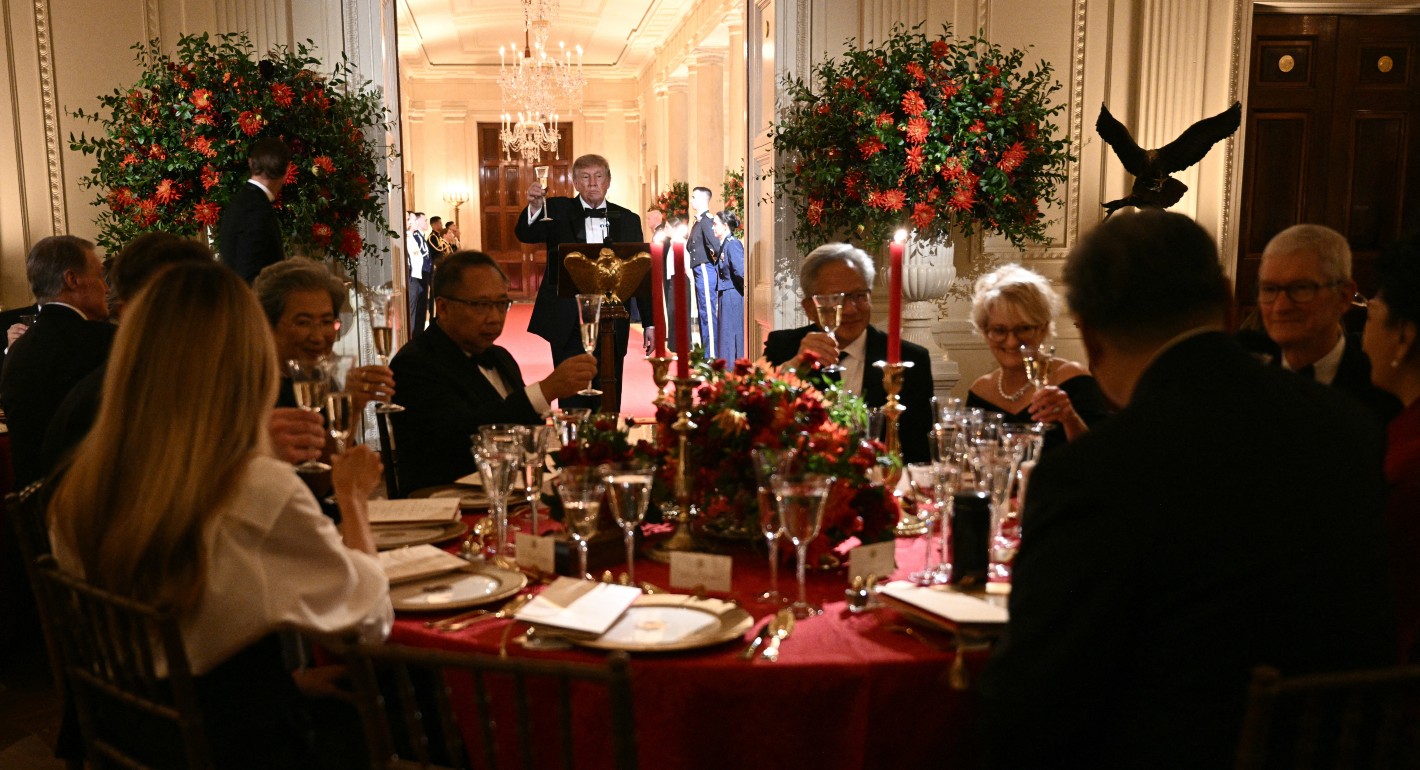
The summit may be remembered as a fatal blunder, when Washington, Beijing, and the AI industry collectively chose ceremony over action.
Jeffrey Prescott

Germany, India, and other middle powers can’t build frontier AI alone, and they risk being cut off if they depend on the United States or China. The way through is to build the capacity for a frontier sprint while hoping never to use it.


Anton Leicht, Sam Winter-Levy
AI technology has proliferated extensively and offers authoritarian leaders three crucial advantages: scale, speed, and efficiency. As a result, it has undoubtedly become a crucial tool of repression. But AI tools also give individuals and activists the means to organize, resist, and hold their governments accountable. Today, it is far more difficult for autocratic leaders to hide their corrupt practices and govern in darkness.

Steve Feldstein, Shreya Joshi

As the U.S. stumbles in its war with Iran, we are likely to see an acceleration of its disengagement from the region.

Michael Young