

Commentary
Rafiah Al Talei
{
  "authors": [
    "Rafiah Al Talei"
  ],
  "type": "commentary",
  "centerAffiliationAll": "dc",
  "centers": [
    "Carnegie Endowment for International Peace",
    "Malcolm H. Kerr Carnegie Middle East Center"
  ],
  "collections": [],
  "englishNewsletterAll": "menaTransitions",
  "nonEnglishNewsletterAll": "",
  "primaryCenter": "Carnegie Endowment for International Peace",
  "programAffiliation": "MEP",
  "programs": [
    "Middle East"
  ],
  "projects": [],
  "regions": [
    "Middle East",
    "Gulf"
  ],
  "topics": [
    "Political Reform",
    "Democracy"
  ]
}
Source: Getty
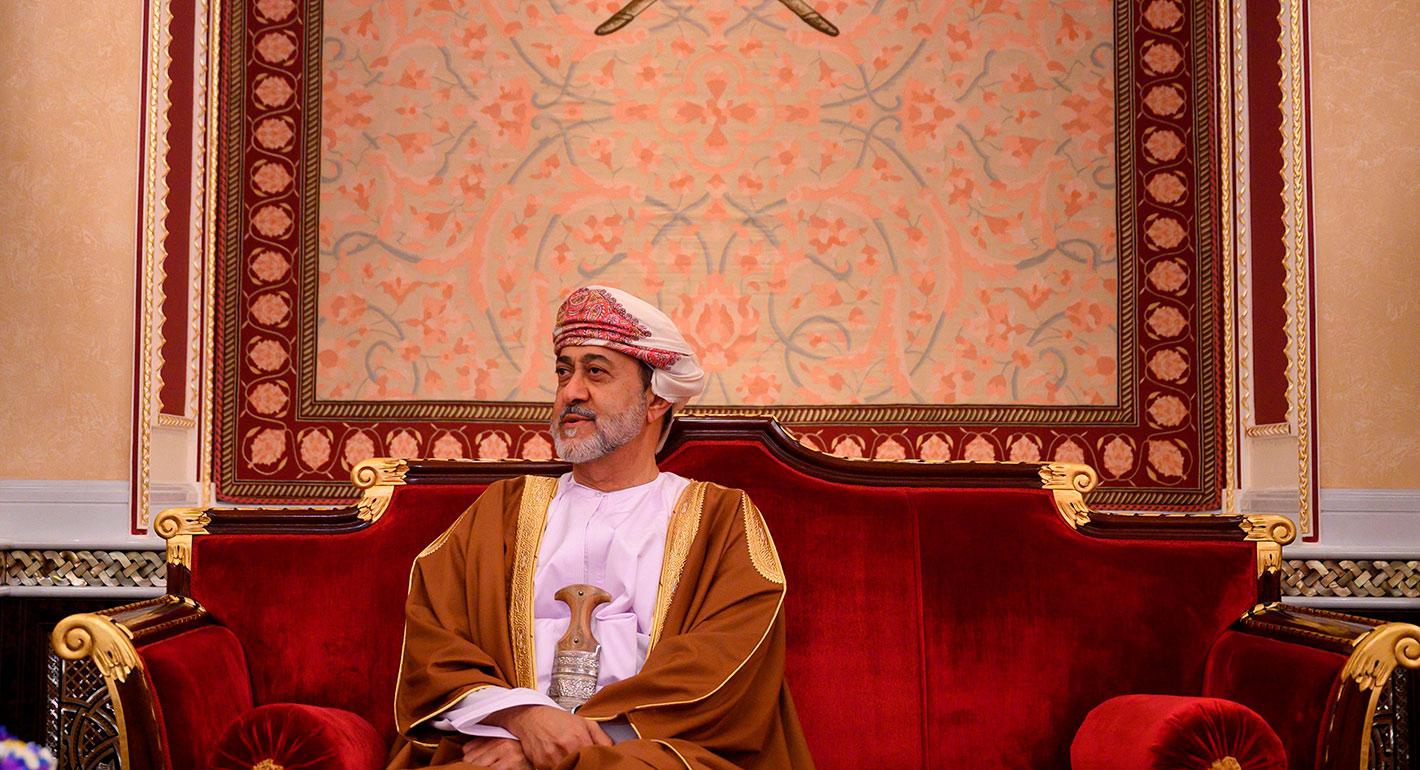
In an unexpected constitutional decree, Oman’s new sultan created a crown prince position and reconfigured the powers of the country’s two-chamber assembly. But to create real change, he would have to empower the consultative council to truly represent citizens.
On January 11, 2021, Omani Sultan Haitham bin Tariq issued a new constitutional decree creating the position of crown prince and laying down mechanisms to ensure stable transfers of power. Sultan Haitham’s decree came one year after he himself took power—following the death of longtime former sultan Qaboos bin Said—in what was then an informal process among the royal family.
Omanis’ reactions to this move have varied. Some think that having a crown prince would consolidate Oman’s position in the Gulf region, where other monarchies have a crown prince, by presenting Oman’s royal family as an old, strong, stable ruling family. Others think that Oman has moved away from its particular Muslim tradition—known as Ibadi Islam—whose proponents have spent much of the tradition’s history fighting against institutionalizing such hereditary systems.
By establishing the crown prince position, Sultan Haitham is minimizing speculation and doubt around power transfers in Oman. But for the country to see any real change, the sultan would need to also grant powers to the country’s two-chamber legislature, the Council of Oman.
The new State Basic Law—Oman’s new constitution—marks Sultan Haitham’s first anniversary as the country’s ruler and clarifies who will succeed the sultan and take the throne next. According to Article 5, the sultan should be a male member of the royal family and must be “Muslim, mature, rational and a legitimate son of Omani Muslim parents.”
The sultan is expected to name his eldest son, Dhi Yazan bin Haitham, the first crown prince in the country’s history. The new crown prince currently serves as the minister of sports, culture, and youth. His new position is likely to affect the political hierarchy within the royal family, and the role of a crown prince could significantly impact political decisionmaking in the country.
In addition to appointing a crown prince, the new State Basic Law introduces new rules on how the Council of Oman—whose two chambers include an appointed Council of State and an elected Consultative Council—will work. But the new constitution specifies essentially the same duties as the old constitution—approving or amending laws, discussing development plans and the state’s budget, and proposing draft laws.
To change the current political status, Omanis expect and demand that Sultan Haitham issue a new decree or law granting both chambers of the Council of Oman new powers and privileges that allow its members to act and represent people freely.
After witnessing Arab Spring protests in 2011 over unemployment, corruption, and political reform, Oman does not allow political parties or other forms of political representation. As a result, many were hoping that this new constitution would elevate the status of Oman’s council to a legislative institution able to hold the rest of the government accountable.
On an optimistic note, the new State Basic Law does answer some old demands for government accountability. It creates a committee under the sultan to evaluate the performances of ministers and other leading officials. The new promulgation also includes provisions to support the state’s financial and administrative oversight body, and it creates an independent higher committee to supervise elections.
Now the question is whether the Council of Oman can win the power to translate these new articles into law and enforce them with legal guarantees that support and protect public liberties, full political participation for citizens, and an active and free civil society.
Former Editor-in-Chief, Sada, Middle East Program
Rafiah Al Talei was the editor-in-chief for Sada in Carnegie’s Middle East Program.
Recent Work
Rafiah Al Talei
Rafiah Al Talei
Carnegie does not take institutional positions on public policy issues; the views represented herein are those of the author(s) and do not necessarily reflect the views of Carnegie, its staff, or its trustees.

Ex-president Gurbanguly Berdimuhamedov remains interested in politics, but his son Serdar, Turkmenistan’s current president, is becoming increasingly independent and willing to break with his father’s legacy. If their covert rivalry goes too far, both risk losing power.

Galiya Ibragimova

A notable degree of participative democracy has firmly arrived in Europe. But to have more far-reaching impact, democratic deliberation needs to move into a radically new phase.

Richard Youngs
Today’s global democratic recession is partly rooted in a common perception that democracies have a delivery problem, with many citizens in both autocracies and democracies alike now believing that strongmen can achieve better governance outcomes. But a study of four countries in Africa reveals that democratic-leaning governments have demonstrated better governance performance than autocratic governments.


Sarah Yerkes, Natalie Triche, Amr Hamzawy
Fatima El Mansouri is the country’s first female prime minister. She’s also a privileged insider in a largely ceremonial position.
Sarah Yerkes

The domestic impacts of how long it is taking to end the war in Ukraine have pushed the French electorate to the political extremes and compromised the country’s diplomatic capacity.

Rym Momtaz