This article, which examines Türkiye’s approach to Ukraine and China, is part of an ongoing series on U.S. statecraft and the Global South developed by the Carnegie Endowment’s American Statecraft Program. For other articles in the series, click here.
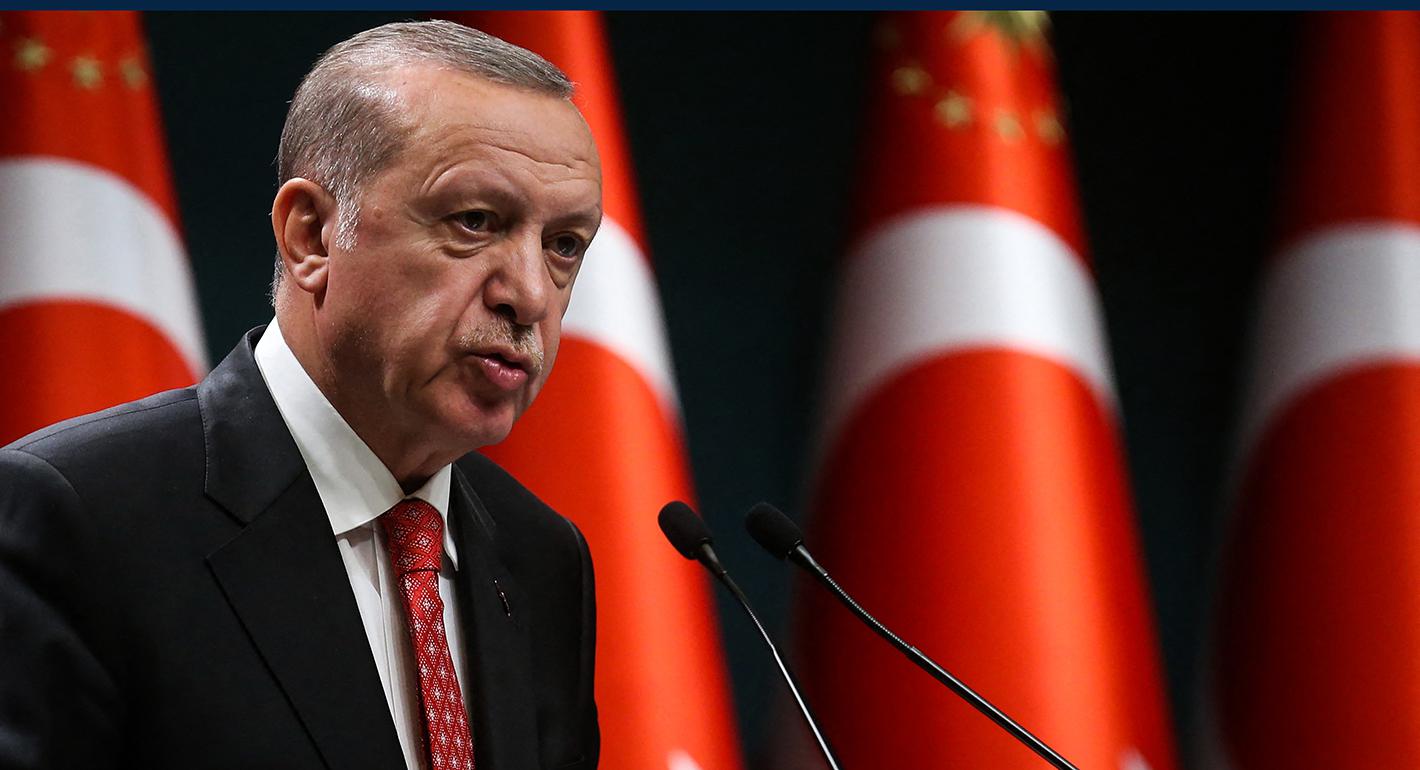
In September 2022, Turkish President Recep Tayyip Erdoğan mooted the possibility that Türkiye might join the Shanghai Cooperation Organization, a defense bloc led by China.1 A few days later, he flew to New York City and delivered a speech to the UN General Assembly arguing that Türkiye is a core part of NATO and Euro-Atlantic security.2 To Ankara, those two facets of its foreign policy—its status as a NATO ally and its engagement with organizations that challenge the West—are not contradictory. They are part and parcel of the country’s “360-degree foreign policy,” an approach that prioritizes flexibility and strategic independence, with the aim of regenerating Türkiye’s historical role as a major world power. 3 This was no doubt among the calculations that led Ankara to distinguish itself from the West in its harsh criticism of Israel's retaliatory actions in Gaza in 2023.
Türkiye’s Approach to the War in Ukraine
Unlike many emerging powers, the war in Ukraine directly affects Türkiye, which is not only a NATO member but also geographically situated close to the fighting.
Throughout the eighteenth and nineteenth centuries, Türkiye suffered as Russia slowly but surely annexed parts of its empire in southeastern Europe and around the Black Sea to the Caucasus. Today, Türkiye’s geography gives it a strong incentive to want to see Moscow deterred from such future land grabs and creates a competition for influence between Türkiye and Russia over countries like Georgia, Azerbaijan, and even those in Central Asia.
But geography also links Türkiye’s economic and energy dependencies on Russia, which make Ankara wary of Russian reprisals. Russia sends Türkiye millions of tourists a year and nearly half of Türkiye’s gas.4 If Türkiye alienates Russia, Moscow can threaten to cut off lucrative Russian tourism, for example, as it did in 2015 after Türkiye downed a Russian plane operating in Syria and again in 2022 in response to Türkiye’s provision of Bayraktar TB-2 armed drones to Ukraine.5 Moscow can also seek retribution in Syria by disrupting Türkiye’s efforts to keep the war at bay along its southern border.
Ankara has thus forged a policy that is nominally pro-Ukraine yet open to continued relations with Russia. Ankara has been a strong advocate of Ukraine’s aspiration to join NATO and an outspoken critic of Russia’s 2014 annexation of Crimea, which is home to a Turkic Tatar community. Prior to the 2022 invasion, Türkiye signed deals with Ukraine to deepen cooperation in the defense industry. Since the war began, it has supported the Ukrainian military by restricting Russian access to the Black Sea, closing off its airspace to Russian jets flying to Syria, and equipping the Ukrainian military with Bayraktar TB-2 drones and armored vehicles.6 The powerful Bayraktar drones helped Ukraine beat back Russia’s advance on Kyiv in the first weeks—so much so that Ukrainian soldiers wrote a song about them.7 Türkiye has also supported all Ukraine-related resolutions at the UN General Assembly, including resolutions to suspend Russia’s membership in the UN Human Rights Council and to make Russia liable for war reparations—both of which received almost no support from other emerging powers.8
Ankara has not, however, signed on to the Western sanctions regime. Türkiye has been dealing with sanctioned neighbors—Iran, Iraq, Syria, and now Russia—since the end of the Cold War. This has come at a great cost to Türkiye’s economic, commercial, and energy needs, accentuating Ankara’s distaste for sanctions as a tool in international relations, especially extraterritorial sanctions not legitimized by a UN Security Council resolution. This experience also factors into its desire not to burn bridges with Moscow. Nevertheless, Türkiye itself faces sanctions over its purchase of Russian S-400 air defense system in 2020.
Economic ties with Russia have thus grown during the war, with cargo transport through Türkiye to Russia tripling in the first six months of 2022, and Turkish exports to Russia jumping over 60 percent in 2022 compared to the previous year. 9 Some of this cargo included parts and semiconductors used by the Russian military, prompting Washington to send a delegation of Treasury Department officials to urge Ankara to disrupt the flow of these goods.10 The pressure apparently worked, and Ankara eventually clamped down on the shipments.11
Ankara has also cast itself as a mediator in the war. Türkiye successfully facilitated the Black Sea Grain Initiative, which eased global food shortages for a year until Russian President Vladimir Putin withdrew from the deal in July 2023. Ankara has also become a preferred venue for diplomacy between the West and Russia. CIA chief William Burns and his Russian counterpart Sergei Naryshkin met there in November 2022, for example.12
Turkish chief of intelligence İbrahim Kalın has said that Türkiye does not equate engagement with the Kremlin to approval of Russian actions.13 But Kalın also said that Türkiye does not see Russia as a threat. “The fact that we are a NATO member, that we are part of the Western alliance doesn’t prevent us from having a good relationship,” Kalın said.14 Erdoğan has also recently said he trusts the Russians as much as the West.15
Türkiye’s Approach to China
Türkiye has also remained hesitant of Washington’s push to counter China, but Ankara’s relationship with Beijing is neither warm nor as comprehensive as is the case with many other emerging powers.
Prior to purchasing the Russian S-400 missile defense system, Ankara had announced its intention to buy a Chinese air and missile defense system. But it eventually walked the decision back, angering Beijing.16 Türkiye also has long-standing tension with Beijing over China’s treatment of its Uyghur population.
Washington’s efforts to leverage these points of tension into a tougher Turkish policy on China have largely failed, however. Türkiye is looking toward China for a boost in its economy and infrastructure.17 Türkiye imports more from China than from any other country except Russia, although the European Union as a collective remains its largest trading partner.18 It is also in the Belt and Road Initiative (BRI), and receives Chinese investment for bridges, railroads, and power plants. It hopes to use China’s support to become a transcontinental transportation hub that connects Beijing with London.19 Ankara has also turned to Huawei to develop its domestic technology sector, and Chinese investment has increased over the past few years. Nevertheless it remains low compared to European investments, especially from Germany and the Netherlands.20 Moreover, Chinese investments have not developed as sharply as Ankara would have hoped, and some Turkish officials have been wary of the BRI’s “debt diplomacy.”21
Throughout the Cold War, Turkish foreign policy was anchored in Western institutions, most critically through NATO. This was beneficial to Türkiye’s security and economic development. More recently, Türkiye has joined many voices from the Global South calling for reforms to make the system more just and representative. Erdoğan has quipped that “the world is bigger than five”—a reference to the exclusionary nature of membership in the UN Security Council.22
Ankara values alternatives to Western-dominated international organizations. Unlike other NATO nations, Türkiye has expressed an interest in joining both the Shanghai Cooperation Organization and the BRICS group.23 Ankara sees these groupings as vehicles to amplify Turkish influence on the world stage and build out alternatives to the current system.
Like many other emerging powers, Türkiye seeks a middle course with a flexible foreign policy. Ankara dreams of making itself a global power center again and will seek to leverage strategic competition to create space for its return to the world stage. It is unlikely to turn against Beijing but will seek to deepen relations with the United States when it can, while leaving itself enough room to adapt to changing geopolitical circumstances.
22 “’Peace Has No Losers,’ Erdogan Says, Vowing to Step Up Efforts to End War in Ukraine,” United Nations News, September 19, 2023, https://news.un.org/en/story/2023/09/1141047.
Alper Coşkun is a senior fellow in the Europe Program and leads the Türkiye and the World Project at the Carnegie Endowment for International Peace in Washington, DC.
Beatrix Geaghan‑Breiner
Former Research Analyst, American Statecraft Program
Beatrix Geaghan-Breiner was a research analyst with the American Statecraft Program at Carnegie.
Carnegie does not take institutional positions on public policy issues; the views represented herein are those of the author(s) and do not necessarily reflect the views of Carnegie, its staff, or its trustees.
More Work from Carnegie Endowment for International Peace
The Alliance is being pulled toward a NATO 3.0 model by two structural drivers: the changing character of warfare, made visible by the war in Ukraine, and the redistribution of transatlantic burden-sharing as the United States gives greater priority to homeland security and the Indo-Pacific.
Turkey is positioning itself as a key player in a postwar reassurance force for Ukraine, especially in the Black Sea. But Ankara’s relationships with Moscow and Washington mean it faces a tough choice.